
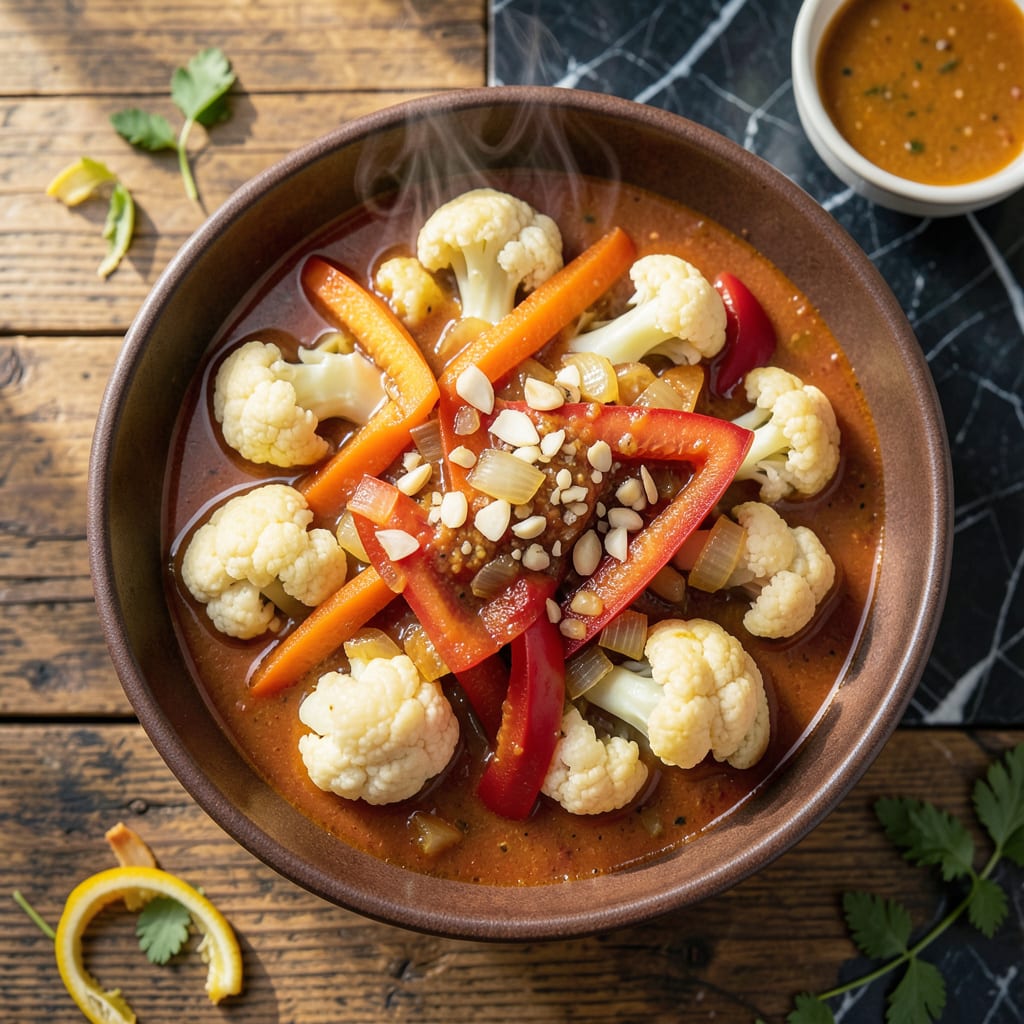
This lightened curry delivers all the aromatic flavors of traditional versions without the extra fat.
By using fresh vegetables and carefully selected spices, this dish proves that healthy eating can still be deeply satisfying. The result is a spiced bowl that’s as nourishing as it is delicious.
Ingredients for Low Fat Vegetable Curry
Fresh veggies and warm spices create this aromatic, lightened bowl of goodness.
| Ingredient | Amount | Notes |
|---|---|---|
| Cauliflower Florets 🥬 | 4 cups | Fresh or frozen, cut into bite-sized pieces |
| Carrots 🥕 | 2 whole | Peeled and sliced into rounds |
| Red Bell Pepper 🌶️ | 1 whole | Diced into 1-inch pieces |
| Yellow Onion 🧅 | 1 whole | Finely diced for base flavor |
| Garlic Cloves 🧄 | 4 cloves | Minced for aromatic depth |
| Fresh Ginger Root 🌿 | 1 tbsp | Peeled and finely grated |
| Light Coconut Milk 🥥 | 1 can | 13.5 oz can, well shaken |
| Vegetable Broth 🥣 | 1 ½ cups | Low-sodium preferred for control |
| Diced Tomatoes 🍅 | 1 can | 14.5 oz can, fire-roasted preferred |
| Curry Powder 🌶️ | 2 tbsp | Mild or hot, to taste preference |
| Ground Turmeric 🧂 | 1 tsp | For color and earthy flavor |
| Ground Cumin 🌿 | 1 tsp | Toasted briefly for depth |
| Cayenne Pepper 🔥 | ¼ tsp | Adjust for heat preference |
| Fresh Cilantro 🌿 | ½ cup | Chopped, for garnish |
| Lime Wedges 🍈 | 4 pieces | For serving brightness |
The spices are everything here. Penzeys or Whole Foods bulk bins are my go-to for freshly ground curry powder—it loses its punch fast once opened. Cauliflower and carrots should be firm and bright (frozen works in a pinch, just thaw first). For the coconut milk, Native Forest or Thai Kitchen light are solid choices if you want to keep the fat down without sacrificing creaminess.
No curry powder? Mix 1 tbsp cumin + 1 tbsp coriander + 1 tsp turmeric + 1 tsp ginger for a close approximation. Out of fresh ginger? Ground ginger at half the amount works. Out of cauliflower? Broccoli or sweet potatoes hold up well. If you want more heat, add an extra pinch of cayenne or a diced jalapeño (seeds removed for milder flavor).
Leftovers actually taste better the next day. Keeps 4-5 days in the fridge, freezes for 3 months. I always make extra—perfect for lunch the next day (just add a splash of water when reheating).
Why You’ll Love This Recipe
- One Pot Wonder: I toss in the cauliflower, carrots, and bell pepper, let them simmer, and dinner’s ready—minimal cleanup, maximum flavor.
- Garlic Infused: The garlic cloves and onion create a rich, aromatic base that makes every bite of this curry ridiculously satisfying.
- Meal Prep Magic: I make a big batch on Sunday, and it tastes just as good reheated for lunch all week long.
- Budget Friendly: Honestly, a bag of cauliflower and a few carrots stretch further than I expected, and it’s packed with nutrients.
Step-by-Step Instructions for Low Fat Vegetable Curry
Here’s the method I use to build layers of flavor without excess fat.
Step 1: Bloom the Spices for Maximum Flavor
Heat a large pot or Dutch oven over medium heat. Add the finely diced yellow onion and cook for 3-4 minutes until it turns translucent and begins to soften. I like to let it get just slightly golden at the edges for depth.
Add the 4 cloves minced garlic cloves and 1 tbsp peeled and finely grated fresh ginger root. Stir constantly for 30 seconds until fragrant—don’t let the garlic burn. Then add the 2 tbsp curry powder, 1 tsp ground turmeric, 1 tsp ground cumin, and 0.25 tsp cayenne pepper, stirring for another 30 seconds to toast the spices until they darken slightly and release their oils.
Step 2: Build the Vegetable Base
Add the 2 peeled and sliced carrots to the pot and cook for 2 minutes, stirring occasionally. Then add the 1 diced red bell pepper and 4 cups cauliflower florets. Stir to coat all the vegetables in the spice mixture.
Pour in the 1 can diced tomatoes (with juices) and cook for 3-4 minutes, stirring occasionally, until the tomatoes begin to break down and the mixture thickens slightly. This step develops the base flavors that will carry through the entire dish.
Step 3: Simmer in Liquid Until Tender
Pour in the 1.5 cups vegetable broth and 1 can well-shaken light coconut milk. Stir well to combine, making sure to scrape up any browned bits from the bottom of the pot. Bring the mixture to a gentle simmer.
Reduce the heat to medium-low and let it simmer, partially covered, for 15-20 minutes or until the carrots are tender when pierced with a knife and the cauliflower florets are easily speared with a fork. Stir occasionally to prevent sticking.
Step 4: Finish and Serve
Taste and adjust seasoning if needed. The flavors should be well-balanced with a noticeable but not overwhelming heat from the cayenne. If the curry is too thick, add a splash of water or additional broth to reach your desired consistency.
Remove from heat and stir in 0.5 cup chopped fresh cilantro, reserving a small handful for garnish. Ladle the curry into bowls and serve with the remaining cilantro sprinkled on top and 4 pieces lime wedges on the side for a bright, citrusy finish.
Pro Tips For Making Low Fat Vegetable Curry
- Roast Veggies First: Toss the cauliflower, carrots, and bell pepper with a little oil and roast at 400°F for 15 minutes before adding to the curry—it deepens their flavor without extra fat.
- Sauté Onions Slow: Cook the onions and garlic on medium-low until golden, about 8-10 minutes; rushing this step leaves them raw-tasting in the final dish.
- Skip the Peeling: I learned this the hard way—carrots and bell peppers don’t need peeling, just a good wash, since their skins soften fully during cooking.
- Use Water Wisely: If the curry gets too thick, add a splash of water or low-sodium broth instead of oil to keep it light while adjusting consistency.
Serving Suggestions for This low fat vegetable curry
Rice Pairings
I love serving this over steamed basmati rice—about ½ cup per serving is perfect. The light, fluffy texture soaks up the aromatic sauce beautifully. For a healthier twist, cauliflower rice works surprisingly well, adding only 20 calories per cup instead of 200. 💪
Bread Options
Whole wheat naan or pita bread makes a great side for scooping up every last bit of sauce. Warm the bread in a 350°F oven for 2-3 minutes before serving. I often pick up fresh naan from my local Trader Joe’s.
Fresh Garnishes
Beyond the cilantro and lime, I love adding thinly sliced scallions or shredded cabbage for crunch. A handful of toasted cashews adds protein and texture without much fat. Just 2 tbsp per bowl gives that perfect finish.
Salad Sides
A simple cucumber raita on the side cools the palate—mix 1 cup Greek yogurt with ½ cup diced cucumber and a pinch of salt. Or try a mango salsa for sweet contrast. Both add freshness that balances the spices. 🥗
Beverage Pairings
I reach for sparkling water with lime to cleanse the palate between bites. For tea lovers, chai or mint green tea complements the warming spices. A light Riesling wine works if you prefer something with alcohol.
Nutrition Facts
Frequently Asked Questions
Can I use regular coconut milk instead of light?
Yes, but it will increase the fat content. For a lighter version, stick with light coconut milk which cuts the fat by about half. You can also dilute regular coconut milk with water in a 1:1 ratio for similar results.
How can I make this spicier?
Add an extra pinch of cayenne or include 1 diced jalapeño with the vegetables. For more depth, stir in ½ tsp red pepper flakes when toasting the spices. Adjust to taste as you go.
What if my curry is too thick?
Stir in extra vegetable broth or water, ¼ cup at a time, until it reaches your desired consistency. Simmer for 2-3 minutes after adding liquid to blend flavors.

- 8 Bean Soup Recipe Crock Pot: Hearty Vegetable Medley in One Pot - September 25, 2026
- 4C Bread Crumbs Meatballs Recipe: Crispy Crust and Juicy Centers - September 25, 2026
- 6 Oz Chocolate Chip Cookie Recipe: Perfectly Balanced Crispy Edges and Chewy Hearts - September 25, 2026