
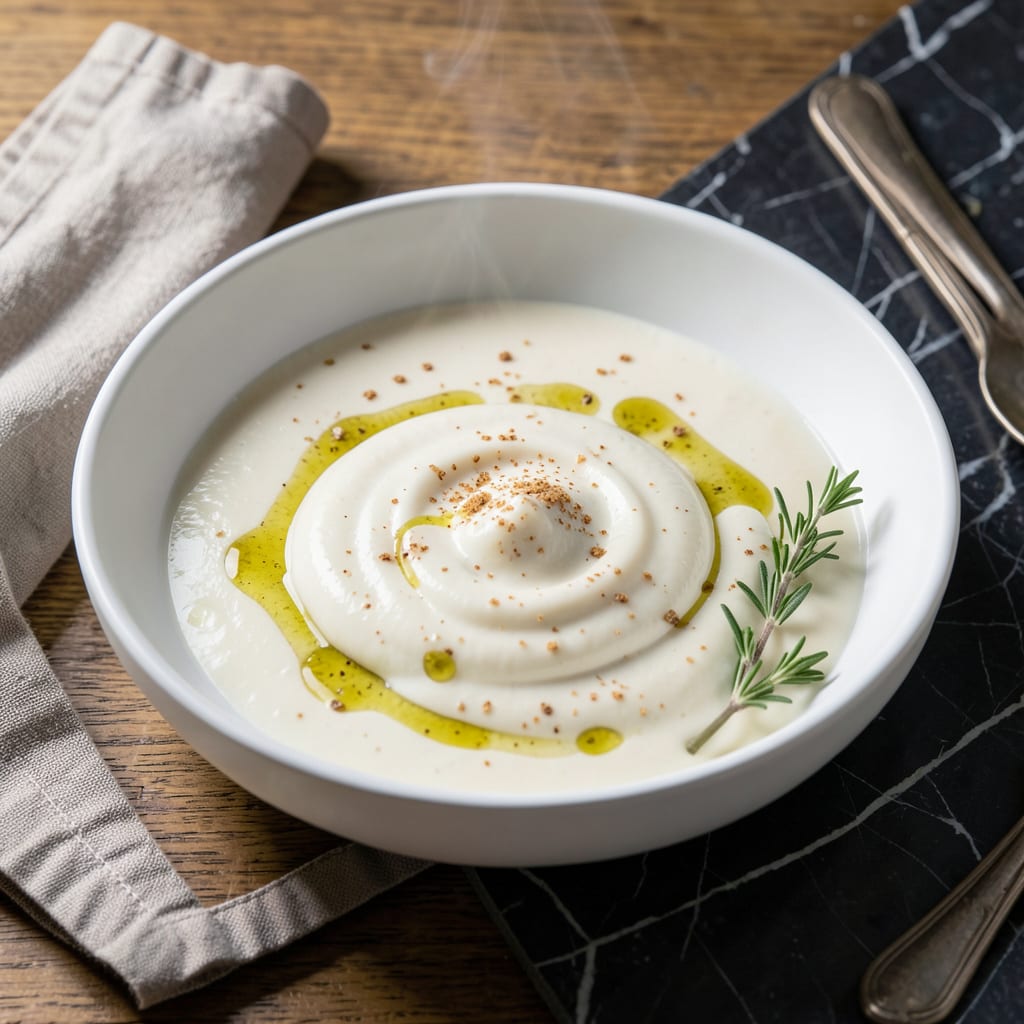
Creating a rich, creamy white gravy without dairy or excess fat is absolutely achievable with this proven technique. This version delivers the classic velvety smooth texture you expect while keeping it light and health-conscious.
Using simple pantry staples and a straightforward method, you’ll have a restaurant-quality sauce ready in minutes. It pairs perfectly with biscuits, chicken fried steak, or mashed potatoes without the guilt.
Ingredients for Low Fat White Gravy
Nine pantry staples create this light yet luxurious sauce in minutes.
| Ingredient | Amount | Notes |
|---|---|---|
| All-Purpose Flour 🌾 | ¼ cup | For thickening base |
| Low-Sodium Vegetable Broth 🥣 | 2 cups | Warm, for smooth blending |
| Unsweetened Almond Milk 🥛 | 1 cup | Or other plant-based milk |
| Olive Oil 🫒 | 1 tbsp | Light or extra-virgin |
| Garlic Powder 🧄 | ½ tsp | For depth of flavor |
| Onion Powder 🧅 | ½ tsp | Complements garlic well |
| Salt 🧂 | ½ tsp | Adjust to taste |
| Black Pepper 🌶️ | ½ tsp | Freshly ground preferred |
| Nutritional Yeast 🍃 | 1 tbsp | Adds umami depth |
[recipeingredientscaler]
The broth is critical here. Low-sodium vegetable broth (like Pacific Foods or Imagine) prevents salt overload while building flavor. Nutritional yeast adds a subtle cheesy note—Bragg or Bob’s Red Mill are reliable. For the oil, any neutral option works, but light olive oil avoids overpowering the delicate flavor. Warm your liquids before whisking to prevent lumps.
No almond milk? Unsweetened soy or oat milk works equally well. Substitute chicken broth if dairy isn’t a concern (but keep it low-sodium). For extra richness, replace 1 tbsp flour with cornstarch—mix it with cold liquid first. The seasonings are flexible: white pepper for a milder bite, or a pinch of turmeric for color.
Store in an airtight container for up to 5 days in the fridge. Reheat gently with a splash of water or broth to restore consistency. Freeze portions for up to 3 months (thaw overnight before reheating).
Why You’ll Love This Recipe
- Minimal Effort: I just whisk flour into olive oil, then slowly add broth and almond milk—no fancy techniques required.
- Garlicky Comfort: The garlic powder gives it that warm, savory depth without overpowering the creamy base.
- Weeknight Hero: It’s my go-to for quick dinners, pairing perfectly with roasted veggies or mashed potatoes.
- Budget Friendly: A handful of pantry staples stretch into a rich, satisfying gravy that costs pennies per serving.
Step-by-Step Instructions for Low Fat White Gravy
This method ensures a silky texture while keeping the gravy light and dairy-free.
Step 1: Create the Roux Base
Heat the 1 tbsp olive oil in a medium saucepan over medium heat until it shimmers but doesn’t smoke. The oil should just ripple when you tilt the pan—this indicates the perfect temperature for the next step.
Whisk in the 0.25 cup all-purpose flour immediately. The mixture will look dry at first but will come together into a thick paste. Cook for 1-2 minutes, stirring constantly, until the roux turns a light golden color and releases a nutty aroma.
This step removes the raw flour taste and builds the foundation for your gravy. If it browns too quickly, reduce the heat slightly—you want a light color for this preparation.
Step 2: Gradually Incorporate the Liquids
Slowly pour in the 2 cups low-sodium vegetable broth while whisking vigorously to prevent lumps from forming. The mixture will thicken almost immediately as the roux absorbs the liquid.
Add the 1 cup unsweetened almond milk in the same manner, maintaining constant movement with your whisk. The combination should create a smooth, velvety base. If any small lumps appear, simply whisk more vigorously—they’ll dissolve as the mixture heats through.
Bring the mixture to a gentle simmer over medium heat. You’ll see small bubbles breaking the surface around the edges of the pan—this indicates proper thickening has begun.
Step 3: Season and Develop Flavor
Add the 0.5 tsp garlic powder, 0.5 tsp onion powder, 0.5 tsp salt, and 0.5 tsp black pepper. These dry seasonings will bloom in the hot liquid, releasing their full potential.
Stir in the 1 tbsp nutritional yeast for that essential umami depth that replaces traditional dairy richness. The mixture will take on a slightly creamy appearance as the yeast dissolves.
Reduce heat to low and let the gravy simmer for 3-4 minutes. This final cooking time allows the flavors to meld completely and the gravy to reach its ideal consistency.
Step 4: Adjust and Finish
Taste and adjust seasoning if needed—remember that low-sodium broth may require additional salt. The gravy should coat the back of a spoon thickly but still pour easily.
If the mixture is too thick, whisk in additional almond milk 1 tablespoon at a time until you reach the desired consistency. If it’s too thin, simmer for another 1-2 minutes to reduce slightly.
Remove from heat when the gravy has a smooth, velvety texture and a rich, savory aroma. It will thicken slightly more as it cools. Serve immediately over your favorite dishes while still warm.
Pro Tips For Making Low Fat White Gravy
- Whisk Constantly: Keep that whisk moving the entire time you’re adding the almond milk and broth—lumps form fast with low-fat recipes, and once they’re there, they’re stubborn to remove.
- Toast the Flour: Cook the flour in olive oil for 1-2 minutes before adding liquids. I learned this the hard way—raw flour taste lingers if you skip this step.
- Use Warm Liquid: Heat your almond milk and broth before adding them to the roux. Cold liquids seize up the flour and make smooth gravy nearly impossible.
- Add Garlic Late: Stir in the garlic powder after the roux is formed but before the liquids go in—this prevents bitterness while keeping the flavor bright.
Storing and Reheating This Dish
Refrigerator Storage
Let your gravy cool to room temperature within 2 hours of cooking. Transfer to an airtight container—I use glass jars with tight lids. Store in the fridge at 40°F or below for up to 5 days. The flavors deepen overnight as the spices meld. ❄️
Freezer Storage
For longer storage, freeze in 1-cup portions using freezer-safe containers or heavy-duty zip-top bags. Leave ½ inch headspace for expansion. It keeps well for up to 3 months without texture or flavor degradation.
Stovetop Reheating
Pour the gravy into a saucepan and heat over medium-low heat. Add 1-2 tbsp almond milk or broth to restore creaminess. Stir frequently until reaching 165°F. This prevents scorching and maintains the smooth texture. 🔥
Microwave Reheating
Transfer a single portion to a microwave-safe bowl and cover loosely. Heat on 50% power in 30-second intervals, stirring between each. Add a splash of liquid if it thickens too much. Always check temperature before serving.
Consistency Tips
If your gravy separates slightly after storage, vigorous whisking while reheating will bring it back together. For thicker results, simmer uncovered for an extra 1-2 minutes. If too thin, a slurry of 1 tsp flour + 1 tbsp cold water whisked in will fix it.
Frequently Asked Questions
Can I use regular milk instead of plant-based?
You can, but it will add fat and calories. Stick to skim milk to keep it light. Plant-based versions work best for a truly dairy-free result.
Why did my gravy turn out lumpy?
Lumps form when flour isn’t fully dissolved. Whisk vigorously while adding liquids, or strain it through a fine-mesh sieve. Heat gradually to prevent clumping.
How can I make it gluten-free?
Replace the all-purpose flour with cornstarch or arrowroot powder. Mix 2 tbsp with cold liquid first, then whisk into the hot broth.
Can I make this ahead of time?
Yes! Prepare it up to 2 days ahead. Store in an airtight container and reheat gently with a splash of broth.

- 8 Bean Soup Recipe Crock Pot: Hearty Vegetable Medley in One Pot - September 25, 2026
- 4C Bread Crumbs Meatballs Recipe: Crispy Crust and Juicy Centers - September 25, 2026
- 6 Oz Chocolate Chip Cookie Recipe: Perfectly Balanced Crispy Edges and Chewy Hearts - September 25, 2026