
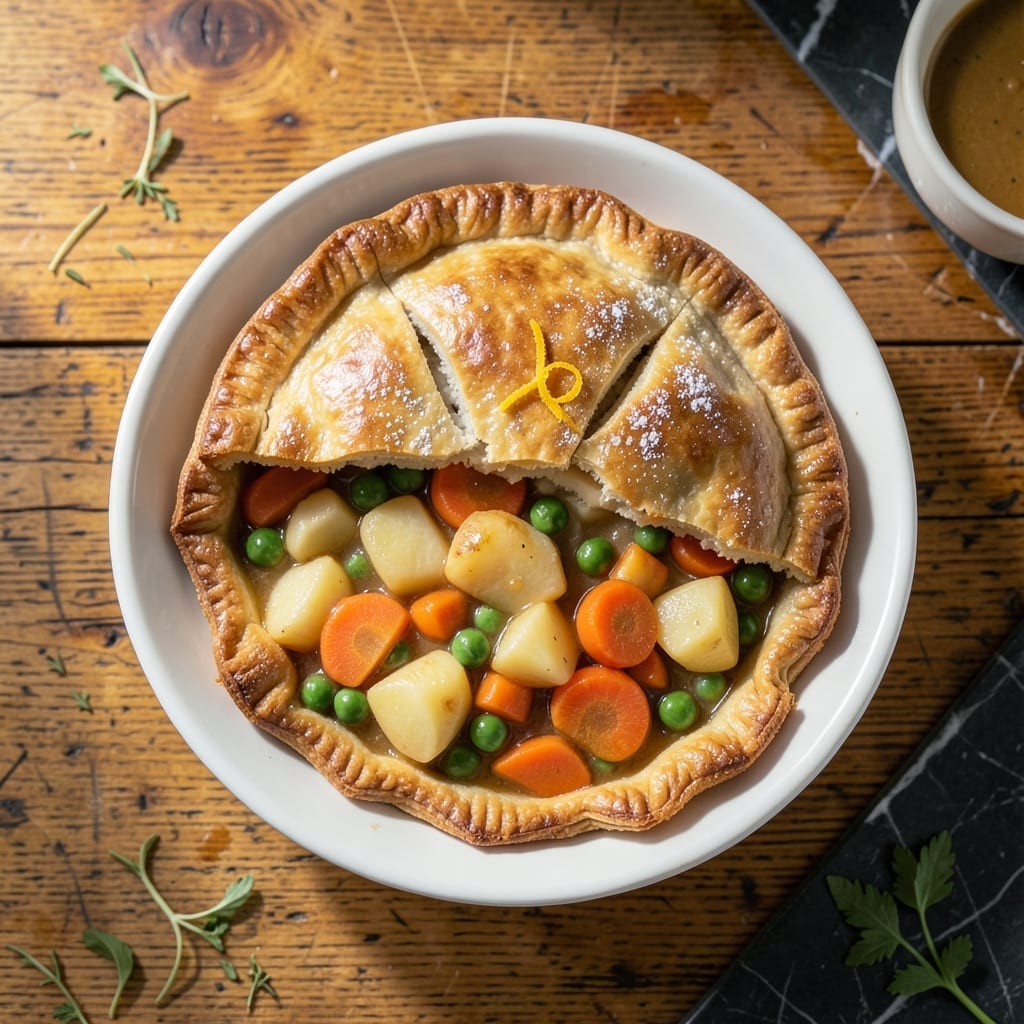
This low sodium pot pie delivers the comforting flavors you love without the excess salt. I’ve perfected a version that keeps the filling rich and satisfying while maintaining a flaky crust that shatters with every bite.
The secret lies in using fresh ingredients and herbs to build flavor naturally. Carrots, peas, and potatoes create a hearty base, while a light roux thickens the filling to the perfect consistency. The crust comes together with simple techniques for that coveted golden finish.
What you get is a complete meal that’s both nourishing and delicious. Each serving offers tender vegetables in a velvety sauce, all encased in that signature flaky pastry. It’s proof that reducing sodium doesn’t mean sacrificing taste or texture.
Bake until golden and serve warm. The aroma alone will have everyone gathering at the table.
Ingredients for Low Sodium Pot Pie
Fresh herbs and simple pantry staples make this comforting dish come alive.
| Ingredient | Amount | Notes |
|---|---|---|
| All-Purpose Flour 🌾 | 2 cups | Plus extra for dusting |
| Unsalted Butter 🧈 | ¾ cup | Cold, cubed for crust |
| Ice Water 💧 | ¼ cup | For pie dough |
| Carrots 🥕 | 2 whole | Peeled and diced |
| Potatoes 🥔 | 2 whole | Peeled and cubed |
| Frozen Peas 🌿 | 1 cup | No need to thaw |
| Unsalted Chicken Broth 🥣 | 1 ½ cups | Low-sodium or homemade |
| Whole Milk 🥛 | ½ cup | For creamy filling |
| Unsalted Butter 🧈 | 2 tbsp | For roux |
| All-Purpose Flour 🌾 | 2 tbsp | For roux |
| Fresh Thyme 🌿 | 1 tbsp | Chopped, or 1 tsp dried |
| Fresh Rosemary 🍃 | 1 tbsp | Chopped, or 1 tsp dried |
| Garlic Cloves 🧄 | 2 cloves | Minced for flavor |
| Onion 🧅 | 1 whole | Diced, yellow or white |
| Black Pepper 🌶️ | ½ tsp | Freshly ground preferred |
The crust needs that cold unsalted butter—don’t skimp on quality here. Land O’Lakes or Plugrá are solid choices, but any unsalted kind works. The all-purpose flour is pretty standard (I use King Arthur), but make sure it’s fresh. For the filling, the veggies should be firm and fresh—Whole Foods or your local farmers market will have the best selection.
No fresh thyme or rosemary? Dried herbs work at one-third the amount. If you’re avoiding dairy, swap the milk for unsweetened almond milk and use coconut oil instead of butter. The chicken broth can be homemade or store-bought low-sodium—just check the label for hidden salt. Frozen peas are a great shortcut (I always keep a bag in the freezer).
The dough can rest in the fridge for up to 2 days, or freeze it for 1 month. Leftovers keep well for 3-4 days—just reheat in the oven to keep the crust crisp. This actually tastes even better the next day once the flavors meld.
Why You’ll Love This Recipe
- One Pan Wonder: I toss the flour, butter, and ice water for the crust, then pile in carrots and potatoes—minimal dishes, maximum cozy.
- Rich Without Salt: The unsalted butter and fresh veggies let the natural sweetness shine, and honestly, I don’t miss the salt one bit.
- Feeds a Crowd: This makes six generous portions, so I stash half in the freezer for those no-time-to-cook nights.
- Budget Friendly: A handful of pantry staples and affordable veggies stretch into a filling meal that’s light on my wallet.
Step-by-Step Instructions for Low Sodium Pot Pie
Here’s the method I use for achieving that perfect flaky crust and rich filling every time.
Step 1: Make the Flaky Pie Crust
In a large bowl, combine the 2 cups All-Purpose Flour with the 0.75 cup Unsalted Butter that’s been cubed and chilled. I use my fingers to work the butter into the flour until the mixture resembles coarse crumbs with some pea-sized butter pieces visible.
This is the secret to flakiness—those cold butter bits create steam pockets as the crust bakes. Gradually add the 0.25 cup Ice Water, 1 tablespoon at a time, mixing just until the dough comes together. Don’t overwork it or the crust will be tough. Shape into a disk, wrap in plastic, and chill for 30 minutes.
Step 2: Prepare the Hearty Filling Base
While the dough chills, peel and dice the 2 whole Carrots and 2 whole Potatoes into uniform ½-inch pieces. Dice the 1 whole Onion and mince the 2 cloves Garlic Cloves. These consistent sizes ensure everything cooks evenly.
In a large skillet, melt the 2 tbsp Unsalted Butter over medium heat. Add the diced onion and cook for 3-4 minutes until it turns translucent. Then add the garlic, chopped 1 tbsp Fresh Thyme, and chopped 1 tbsp Fresh Rosemary, stirring for 30 seconds until fragrant.
Step 3: Create the Creamy Roux and Simmer
Sprinkle the 2 tbsp All-Purpose Flour over the onion mixture and stir to coat. Cook for 1-2 minutes to remove the raw flour taste. This creates your roux—the base that will thicken the filling beautifully.
Slowly pour in the 1.5 cups Unsalted Chicken Broth while whisking constantly to prevent lumps. Add the diced carrots and potatoes, then bring to a simmer. Cook for 10-12 minutes until the vegetables are just tender. Stir in the 1 cup Frozen Peas and 0.5 cup Whole Milk, then season with 0.5 tsp Black Pepper.
Step 4: Assemble and Bake to Golden Perfection
Roll out the chilled dough on a lightly floured surface to fit your pie dish. Pour the filling into the crust-lined dish. For a traditional look, I cut the remaining dough into strips to create a lattice top, but a full top crust works too. Crimp the edges and cut a few slits for steam to escape.
Bake at 375°F for 40-45 minutes until the crust is golden brown and the filling is bubbling. Let it rest for 10 minutes before serving—this allows the filling to set slightly so your first slice comes out clean. The contrast of the crisp, flaky crust with the creamy filling is what makes this dish special.
Pro Tips For Making Low Sodium Pot Pie
- Chill the Dough: Let your pie crust rest in the fridge for at least 30 minutes before rolling—unsalted butter needs this time to firm up, or you’ll fight a sticky mess.
- Par-Cook the Veggies: Sauté carrots and potatoes for 5-7 minutes first to drive off excess moisture, or your filling will turn the crust soggy.
- Skip the Salted Butter: Sounds obvious, but I’ve seen people grab the wrong stick—unsalted butter is non-negotiable when you’re controlling sodium, and it lets the veggies’ natural sweetness shine.
- Vent the Top: Cut 3-4 small slits in the crust before baking, or steam will build up and leave your pot pie with a dense, gummy texture under the lid.
Common Mistakes When Making Great low sodium pot pie
Overworking the Dough
When making the crust, handle the dough as little as possible. Overworking develops gluten, which makes the crust tough instead of flaky. I mix just until it comes together, then stop.
Soggy Bottom Crust
To prevent a soggy bottom, blind-bake your crust for 10 minutes before adding the filling. This creates a barrier. Also, avoid overfilling—stick to 1.5 cups of filling max in a standard pie dish. 💡
Lumpy Roux
Whisk constantly when adding the 1.5 cups Unsalted Chicken Broth to your roux. If lumps form, switch to a fork and break them up immediately. The mixture should be smooth before simmering.
Undercooked Vegetables
Dice your carrots and potatoes uniformly, about ½-inch pieces. This ensures even cooking. If they’re still firm after 10-12 minutes, cover and cook for 3-4 minutes longer.
Dry Filling
If your filling seems too thick after baking, stir in 2-3 tbsp Whole Milk before assembling. The peas will release moisture during baking, but the roux needs to be just right.
Let the filling cool slightly before adding to the crust to prevent the bottom from getting soggy. ✨
Nutrition Facts
Frequently Asked Questions
Can I use store-bought crust to save time?
Yes, but check labels carefully. Most pre-made crusts contain added salt, so look for unsalted or low-sodium versions. Homemade still gives the best flaky texture though.
How do I boost flavor without adding salt?
Fresh herbs like thyme and rosemary add depth. Garlic, black pepper, and a splash of lemon juice also enhance taste naturally. Don’t forget the unsalted chicken broth—it’s flavorful on its own.
Can I make this ahead and freeze it?
Assemble the pie but don’t bake. Wrap tightly and freeze for up to 1 month. Bake straight from frozen, adding 10-15 minutes to the cooking time.
My filling is too runny. How can I fix it?
Simmer the filling for an extra 5 minutes to thicken. If already baked, mix 1 tbsp cornstarch with cold water, stir into the filling, and reheat. The roux should coat the back of a spoon.

- 4C Bread Crumbs Meatballs Recipe: Crispy Crust and Juicy Centers - September 25, 2026
- 6 Oz Chocolate Chip Cookie Recipe: Perfectly Balanced Crispy Edges and Chewy Hearts - September 25, 2026
- 6-Inch Coffee Cake Recipe: Vanilla Bean Swirls and Buttery Streusel Topping - September 25, 2026