
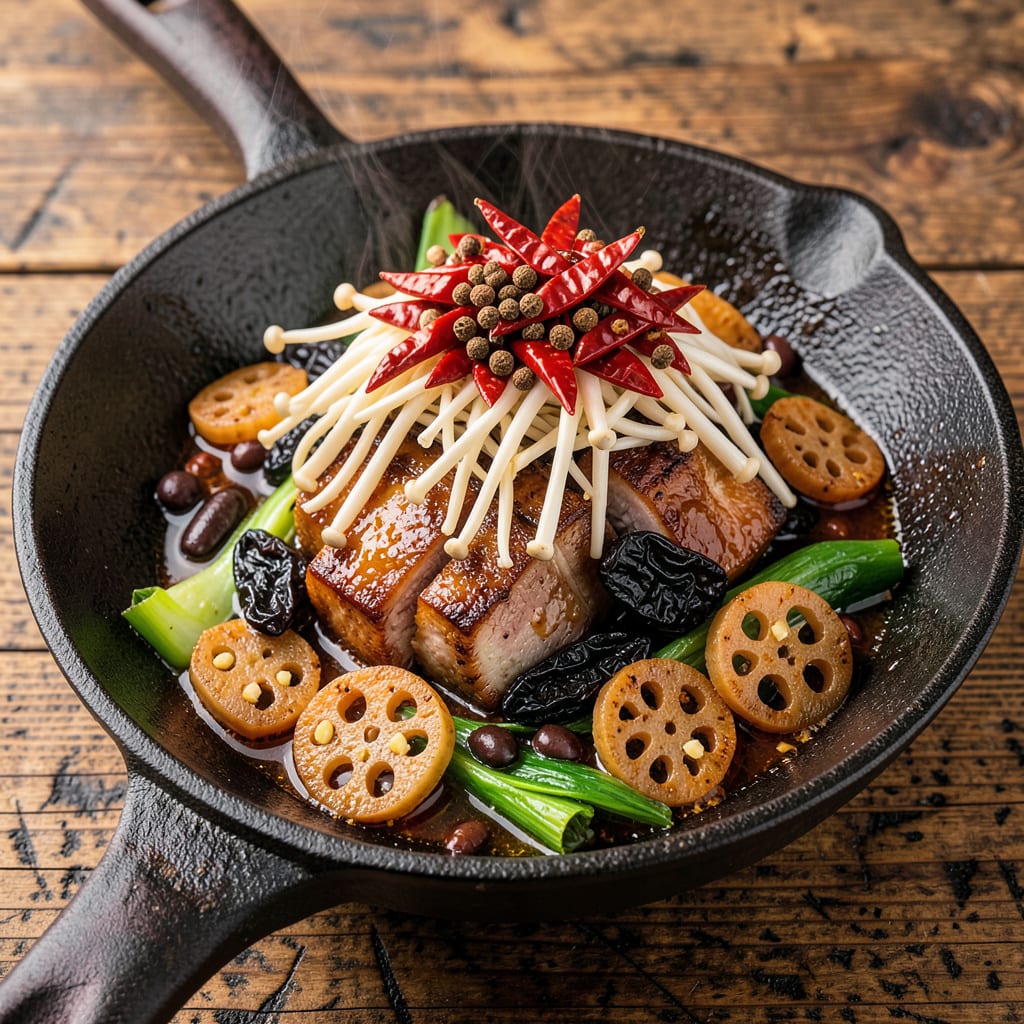
Few dishes deliver the bold, electrifying contrast of numbing-spicy flavors like Sichuan mala dry pot. This recipe brings the authentic takeout experience to your kitchen, combining crisp-tender proteins and vegetables with a complex sauce that balances fiery chili heat and Sichuan peppercorn’s signature tingling sensation.
The technique lies in layering flavors: first blooming whole spices in hot oil, then building the sauce with fermented black beans and doubanjiang before quickly searing your choice of proteins and vegetables. The result is a dry pot with just enough sauce to coat each ingredient without sogginess—perfect for scooping over steamed rice or enjoying straight from the wok.
Ingredients for Mala Dry Pot
This professional-grade ingredient list delivers the authentic numbing-spicy complexity of Sichuan mala dry pot at home.
| Ingredient | Amount | Notes |
|---|---|---|
| Sichuan Peppercorns 🌶️ | 1 tbsp | Whole, for tingling numbing effect |
| Dried Red Chili Peppers 🌶️ | ½ cup | Facing Heaven or Tien Tsin preferred |
| Fermented Black Beans 🫘 | 2 tbsp | Rinsed and chopped |
| Pixian Doubanjiang 🟤 | 3 tbsp | Authentic Sichuan chili bean paste |
| Light Soy Sauce 🫒 | 2 tbsp | Low-sodium preferred |
| Shaoxing Wine 🍶 | 3 tbsp | Dry sherry as substitute |
| Chicken Thighs 🍗 | 1 ½ lb | Boneless, skinless, cut into bite-sized pieces |
| Lotus Root 🌱 | 1 whole | Peeled and sliced into rounds |
| Napa Cabbage 🥬 | ½ whole | Cut into 2-inch pieces |
| Wood Ear Mushrooms 🍄 | ½ cup | Rehydrated and sliced |
| Bamboo Shoots 🎋 | ½ cup | Julienned, canned or fresh |
| Garlic Cloves 🧄 | 6 cloves | Minced for maximum aroma |
| Fresh Ginger 🌿 | 1 tbsp | Julienned, skin removed |
| Green Onions 🧅 | 4 whole | Cut into 2-inch segments |
| Vegetable Oil 🫒 | ½ cup | High smoke point for stir-frying |
| Cornstarch 🌾 | 2 tbsp | For velveting protein |
| White Granulated Sugar 🍬 | 1 tsp | Balances intense flavors |
The Sichuan peppercorns and dried chilies form the flavor foundation. Authentic Facing Heaven chilies are ideal, available at Asian specialty markets or online retailers like The Mala Market. Pixian doubanjiang is non-negotiable—Lee Kum Kee’s version is widely accessible but lacks the depth of authentic Sichuan brands. For fermented black beans, Koon Chun offers reliable quality. The lotus root and wood ear mushrooms provide essential texture contrast; fresh is optimal, but canned substitutes work when properly rinsed and drained (pat dry thoroughly).
Protein substitutions are flexible: pork shoulder or tofu work equally well with the marinade. Shaoxing wine can be replaced with dry sherry at equal volume, though the flavor profile will shift slightly. For gluten-free adaptation, use tamari instead of soy sauce and verify all sauces are wheat-free. The cornstarch velveting step is critical—potato starch works as a 1:1 substitute but yields a slightly different mouthfeel. Adjust chili quantity based on heat tolerance, but maintain the Sichuan peppercorn ratio for authentic mala sensation.
Prepped ingredients can be refrigerated for up to 8 hours before cooking, though the lotus root may oxidize slightly (soak in water with lemon juice). The completed dish holds well for 2-3 days refrigerated, though the mala sensation diminishes over time. Reheat gently in a wok with a splash of water to restore texture. For optimal results, serve immediately with steamed jasmine rice to balance the intense flavors.
Why You’ll Love This Recipe
- One-Pan Magic: I toss everything in, let the Pixian doubanjiang caramelize with the fermented black beans, and call it dinner. No extra bowls, no fancy techniques—just my wok and 15 minutes of active time.
- That First Bite: The Sichuan peppercorns hit with that electric tingle while the dried chilies bring slow-building heat. It’s the kind of dish where you pause mid-meal just to appreciate how the numbing spice plays with the salty-sweet soy glaze.
- Feeds My Chaotic Life: Honestly, I’ve served this to last-minute guests, packed it for lunch all week, and even made it my “I don’t want to cook” takeout replacement. The flavors deepen overnight, so leftovers might taste better than day one.
- Pantry Hero: Between us, I keep these ingredients stocked because they’re cheap, last forever, and turn $5 worth of tofu or potatoes into a restaurant-worthy meal. No fresh herbs required—just that jar of doubanjiang waiting in the fridge.
Step-by-Step Instructions for Mala Dry Pot
Master the authentic Sichuan technique for achieving the perfect balance of numbing heat and aromatic complexity.
Step 1: Prepare the Mala Oil Base
Heat the 0.5 cup vegetable oil in a wok over medium-low heat until it reaches 300°F. Add the 1 tbsp Sichuan peppercorns and 0.5 cup dried red chili peppers, stirring constantly for 2-3 minutes until the oil turns deep red and becomes fragrant. The peppercorns should darken slightly but not burn.
Remove the wok from heat and let the oil infuse for 5 minutes. This resting period allows the numbing compounds from the peppercorns and capsaicin from the chilies to fully transfer into the oil. Strain the oil through a fine-mesh sieve, reserving both the infused oil and the solids separately – you’ll use both components.
Step 2: Velvet the Chicken and Prepare Vegetables
Toss the 1.5 lb chicken thighs with the 2 tbsp cornstarch and 1 tbsp Shaoxing wine until evenly coated. Let it marinate for 10 minutes while you prepare the remaining ingredients. This velveting process creates a protective coating that keeps the chicken moist during high-heat cooking.
Prepare the vegetables: slice the 1 whole lotus root into ¼-inch rounds, cut the 0.5 whole napa cabbage into 2-inch pieces, and julienne the 0.5 cup bamboo shoots. Keep all prepared ingredients within easy reach – the cooking process moves quickly once started.
Step 3: Build the Flavor Foundation
Return the infused oil to the wok over medium-high heat. Add the reserved chili-peppercorn solids along with the 2 tbsp fermented black beans, 3 tbsp Pixian doubanjiang, 6 cloves garlic cloves, and 1 tbsp fresh ginger. Stir-fry for 2-3 minutes until the mixture becomes deep mahogany in color and releases a complex aroma.
Deglaze with the remaining 2 tbsp Shaoxing wine, scraping up any browned bits from the bottom of the wok. Add the 2 tbsp light soy sauce and 1 tsp white granulated sugar, cooking for an additional 1 minute until the sauce thickens slightly. This creates the rich, savory-sweet base that defines mala flavor.
Step 4: Cook the Protein and Vegetables
Increase heat to high and add the velveted chicken. Stir-fry for 3-4 minutes until the chicken turns opaque and develops a light crust. Push the chicken to one side of the wok and add the prepared vegetables: lotus root, napa cabbage, 0.5 cup wood ear mushrooms, and bamboo shoots.
Stir-fry everything together for 4-5 minutes until the vegetables begin to soften but retain some crispness. The chicken should be fully cooked through and the vegetables should be vibrant in color with slightly charred edges. Add the 4 whole green onions during the last 30 seconds of cooking to preserve their fresh flavor.
Step 5: Finish and Serve
Toss all ingredients thoroughly to ensure even coating with the mala sauce. Cook for an additional 1-2 minutes until everything is heated through and the sauce has reduced to a glossy consistency that clings to the ingredients. The final dish should have a visible sheen from the oil and a thick, aromatic sauce coating each piece.
Transfer to a heated serving dish immediately. The mala dry pot is best enjoyed fresh, while the numbing heat from the Sichuan peppercorns and the fiery chilies are at their peak intensity. Serve with steamed rice to balance the intense flavors, and provide additional rice for those who prefer to moderate the heat level.
Storing and Reheating mala dry pot
Refrigerator Storage
Let your mala dry pot cool completely before transferring to an airtight container. I use glass containers with snap-tight lids to preserve the complex aromas. The dish will keep in the fridge for 2-3 days, though I notice the numbing sensation from the Sichuan peppercorns diminishes slightly each day. 🌡️
For best results, store the sauce and ingredients separately if possible. The vegetables tend to soften over time, so keeping them apart from the sauce helps maintain some texture. When ready to eat, simply reheat and toss together again.
Freezer Storage
This dish freezes surprisingly well for up to 1 month. Portion into freezer-safe bags, removing as much air as possible before sealing. I recommend quart-sized bags for individual servings. The flavors actually deepen during freezing, though the texture of some vegetables may change slightly.
Label your bags with the date—mala dry pot doesn’t show obvious freezer burn, but the flavors are best within 4 weeks. Thaw overnight in the fridge before reheating for most even results.
Stovetop Reheating
My preferred method is reheating in a wok or skillet over medium heat. Add 2-3 tablespoons of water to prevent sticking and cover for the first 2 minutes. This helps restore the sauce’s glossy consistency while gently warming the ingredients.
Stir frequently and cook for an additional 3-4 minutes until everything is heated through. The aroma will tell you when it’s ready—the Sichuan peppercorns will release their signature tingling scent when properly reheated. 🔥
Microwave Reheating
For quick meals, microwave individual portions in 30-second intervals at 70% power. Stir between each interval and add 1 teaspoon of water if the sauce appears dry. This gentle approach prevents the chilies from becoming bitter or the vegetables from turning mushy.
It typically takes about 2-3 minutes total to reach the ideal temperature. The microwave won’t restore the crispness of fresh-cooked ingredients, but it preserves the essential mala flavors remarkably well.
Reviving the Mala Sensation
If the numbing heat seems diminished after storage, I add a fresh sprinkle of ½ teaspoon ground Sichuan peppercorns when reheating. A quick stir with 1 teaspoon chili oil also helps revive the signature heat. The original complexity returns beautifully with these small adjustments.
Serve reheated mala dry pot with fresh steamed rice to balance the intensified flavors. The rice absorbs any excess oil that might separate during storage, creating a perfect harmony of textures. 💛
Nutrition Facts
Frequently Asked Questions
What’s the best substitute for Pixian doubanjiang?
If you can’t find authentic Pixian doubanjiang, use a mix of 2 tbsp chili garlic sauce and 1 tbsp hoisin sauce as a substitute. While it won’t have the exact depth, it provides similar sweetness and heat. For best results, add 1 tsp toasted sesame oil to mimic the complex aroma.
Can I make this less spicy for sensitive palates?
Reduce the dried chilies to ¼ cup and remove all seeds before cooking. Keep the Sichuan peppercorns for the signature numbing effect without overwhelming heat. You can also serve the dish with extra steamed rice to balance the spice.
What’s the secret to getting that restaurant-style crispy texture?
The key is high heat and proper velveting. Make sure your wok is ripping hot before adding ingredients, and don’t overcrowd the pan. The cornstarch coating on the chicken creates that perfect crispy exterior while keeping the inside juicy.
Can I prepare ingredients ahead of time?
Yes! Chop all vegetables and velvet the chicken up to 8 hours in advance. Store separately in the fridge in airtight containers. The lotus root may oxidize slightly—soak it in cold water with a splash of vinegar to maintain color.
Why does my sauce turn out watery instead of clinging to ingredients?
This usually happens if the heat isn’t high enough during the final tossing stage. Cook uncovered on high heat for the last 2 minutes, stirring constantly. The sauce should reduce to a glossy consistency that coats each piece beautifully.

- 8 Bean Soup Recipe Crock Pot: Hearty Vegetable Medley in One Pot - September 25, 2026
- 4C Bread Crumbs Meatballs Recipe: Crispy Crust and Juicy Centers - September 25, 2026
- 6 Oz Chocolate Chip Cookie Recipe: Perfectly Balanced Crispy Edges and Chewy Hearts - September 25, 2026