
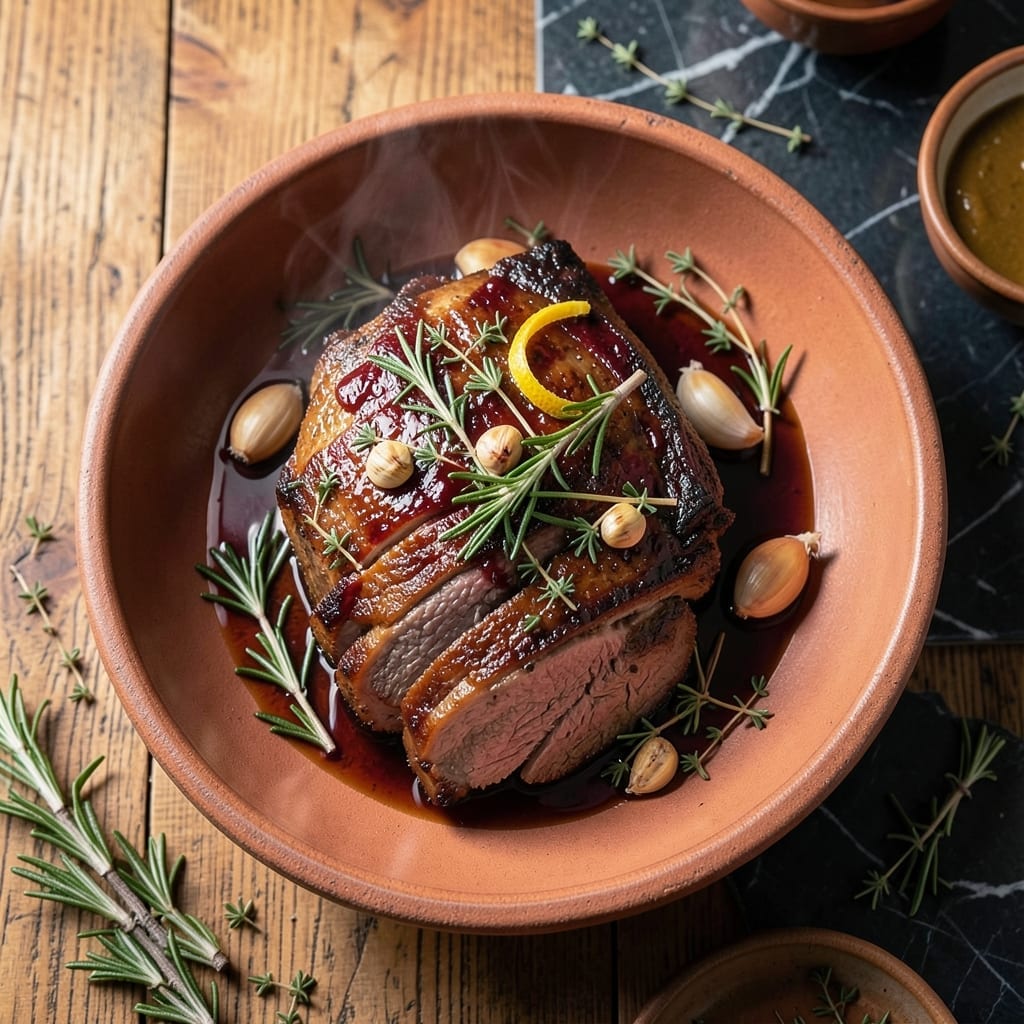
This marinated pot roast transforms tough cuts into a fall-off-the-bone masterpiece through a simple overnight soak. The Dutch oven finish locks in flavors while breaking down the meat into tender perfection.
I developed this method after years of testing different marinades and cooking times. The key is balance—acidic elements tenderize while herbs and garlic infuse deep, complex flavors into every bite.
What emerges from the oven is meat so tender it nearly dissolves at the touch of a fork, surrounded by a rich, aromatic broth that begs to be soaked up with crusty bread.
Serve with mashed potatoes or roasted vegetables for a complete meal that satisfies completely. This technique delivers consistent results every time.
Ingredients for Marinated Pot Roast
These quality ingredients transform a humble cut into a showstopping centerpiece with minimal effort.
| Ingredient | Amount | Notes |
|---|---|---|
| Chuck Roast 🥩 | 3 lb | Well-marbled, trimmed of excess fat |
| Red Wine Vinegar 🍷 | ½ cup | For marinade acidity |
| Extra-Virgin Olive Oil 🫒 | ¼ cup | Divided for marinade and searing |
| Garlic Cloves 🧄 | 6 cloves | Peeled and smashed |
| Fresh Rosemary Sprigs 🌿 | 3 whole | Stems removed, chopped |
| Fresh Thyme Sprigs 🍃 | 4 whole | Leaves stripped from stems |
| Bay Leaves 🌿 | 2 whole | Dried, for braising liquid |
| Kosher Salt 🧂 | 2 tbsp | Diamond Crystal preferred |
| Black Peppercorns 🌶️ | 1 tbsp | Freshly cracked for marinade |
| Beef Stock 🥩 | 2 cups | Low-sodium preferred for control |
| Yellow Onion 🧅 | 1 whole | Large, roughly chopped |
| Carrots 🥕 | 3 whole | Peeled and cut into chunks |
| Celery Stalks 🌿 | 2 whole | Cut into large pieces |
| Tomato Paste 🍅 | 2 tbsp | For depth in braising liquid |
| Dijon Mustard 🟡 | 1 tbsp | Smooth, for marinade complexity |
The chuck roast is non-negotiable—look for heavy marbling (those white fat streaks) at your butcher or Whole Foods. This fat renders down during the long braise, basting the meat from within. Avoid leaner cuts like round or sirloin; they’ll dry out. For the herbs, fresh rosemary and thyme are ideal, but high-quality dried from Penzeys works in a pinch (use half the quantity).
No red wine vinegar? Apple cider vinegar is a fine substitute—same acidity, slightly fruitier. Out of fresh herbs? Dried Italian seasoning at half the amount covers the bases. Beef stock can be swapped for mushroom or vegetable broth, though the flavor will be less robust. The tomato paste can be omitted in a true emergency, but don’t skip it—it adds essential umami depth.
The marinade can be prepped 24 hours ahead—in fact, it’s better that way. Store the roast in its marinade in the fridge, turning once or twice. After cooking, leftovers keep for 4-5 days refrigerated or freeze beautifully for 3 months. Reheat gently to preserve the tender texture.
Why You’ll Love This Recipe
- Set and Forget: I toss the chuck roast with olive oil, vinegar, garlic, and rosemary in the morning, and dinner practically cooks itself.
- Rich and Deep: The red wine vinegar and fresh rosemary give the meat this complex, tangy-herby flavor that’s anything but boring.
- Sunday Supper Star: It’s my go-to for feeding a crowd or meal prepping—equally at home on a fancy table or in a weekday lunchbox.
- Leftovers for Days: Honestly, it tastes even better the next day in sandwiches or over mashed potatoes, and it stretches a budget beautifully.
Step-by-Step Instructions for Marinated Pot Roast
Master the technique for tender, flavorful results with this proven method.
Step 1: Marinate the Chuck Roast with Aromatics
In a large bowl, whisk together 0.5 cup red wine vinegar, 0.25 cup extra-virgin olive oil, 1 tablespoon Dijon mustard, 2 tablespoons kosher salt, and 1 tablespoon black peppercorns until fully emulsified. The vinegar tenderizes while the mustard adds depth.
Add the 3 lb chuck roast to the marinade, turning to coat all sides. Submerge 6 cloves garlic cloves, 3 whole fresh rosemary sprigs, and 4 whole fresh thyme sprigs into the liquid. Cover and refrigerate for 8-12 hours, flipping the roast halfway through for even flavor penetration.
Step 2: Sear the Meat and Build the Braising Foundation
Remove the chuck roast from the marinade (reserve the liquid) and pat thoroughly dry. This step ensures a proper sear. Heat a Dutch oven over medium-high heat with 1 tablespoon extra-virgin olive oil until shimmering.
Sear the roast on all sides for 4-5 minutes per side until deeply browned. The fond created here will enrich the braising liquid. Transfer the roast to a plate and reduce heat to medium.
Step 3: Deglaze and Prepare the Braising Liquid
In the same Dutch oven, add 1 whole yellow onion, 3 whole carrots, and 2 whole celery stalks. Cook for 5 minutes until the vegetables begin to soften and develop color.
Stir in 2 tablespoons tomato paste and cook for 2 minutes to deepen its flavor. Pour in the reserved marinade and 2 cups beef stock, then add 2 whole bay leaves. Bring to a simmer while scraping up any browned bits.
Step 4: Braise to Fall-Off-The-Bone Tenderness
Return the seared chuck roast to the Dutch oven, ensuring it’s mostly submerged in the liquid. Cover and transfer to a preheated 325°F oven. Braise undisturbed for 2.5-3 hours.
Check for doneness when the meat yields easily to a fork and reaches an internal temperature of 195-200°F. The connective tissue should have melted into gelatin, creating a rich, unctuous sauce.
Step 5: Rest and Serve with Braising Vegetables
Carefully transfer the roast to a cutting board and tent with foil. Let it rest for 15 minutes to allow the juices to redistribute. Skim excess fat from the braising liquid and adjust seasoning if needed.
Slice the roast against the grain and serve with the braised vegetables and reduced sauce. The meat should pull apart effortlessly with a fork, and each bite should be infused with the deep, aromatic flavors from the marinade and braising process.
Pro Tips For Making Marinated Pot Roast
- Sear the Chuck: I learned this the hard way—browning the chuck roast in batches over medium-high heat before marinating locks in way more flavor than just tossing it raw into the liquid.
- Crush the Garlic: Smash the garlic cloves with the flat of your knife before adding them to the marinade. Sounds weird, but it works: the exposed surface infuses the oil and vinegar way better than whole cloves.
- Skip the Vinegar Overload: Red wine vinegar is potent—stick to about 3 tablespoons for a 3-pound roast. After ruining a batch with too much, I finally figured out it can make the meat tough if overdone.
- Rest Before Slicing: Give the roast a solid 15 minutes under foil after cooking—yes, even if you’re impatient like me. It keeps the juices from running all over the cutting board.
Regional Styles of This Recipe
Texas Style
Down in the Lone Star State, they prefer a bold, smoky twist. I like to add 1 tbsp smoked paprika and 1 tsp chipotle powder to the marinade for that signature Texas heat. Use mesquite wood chips in your smoker or grill for extra depth.
French Daube
This Provençal version swaps the vinegar for 1 cup dry red wine and adds 4 oz pancetta to the braising liquid. I toss in 8 oz pearl onions and 4 oz mushrooms for an earthy, sophisticated flavor profile. Serve with crusty baguette.
Italian Stracotto
Northern Italy’s take uses 1 cup Chianti instead of vinegar and adds 2 tbsp balsamic vinegar for sweetness. I include 1 can crushed San Marzano tomatoes in the braise. The result is a rich, tomato-forward sauce perfect over polenta. 💛
Asian Fusion
For an Eastern twist, replace the vinegar with ½ cup soy sauce and add 2 tbsp grated ginger, 3 tbsp brown sugar, and 2 star anise pods to the marinade. I like to include 8 oz shiitake mushrooms in the braising liquid.
Mississippi Pot Roast
This viral sensation uses 1 packet ranch seasoning, 1 packet au jus mix, and 8 pepperoncini peppers in the slow cooker. I add 2 tbsp butter on top before cooking. The result is tangy, peppery, and irresistibly tender. 🔥
New England Boiled Dinner
This variation keeps the marinade simple but adds 2 lb baby potatoes, 1 lb parsnips, and 1 small cabbage to the braising liquid. I use 4 cups chicken stock instead of beef for a lighter broth. Serve with whole grain mustard.
Nutrition Facts
Frequently Asked Questions
Can I use a different cut of beef?
Stick with chuck for best results. Its marbling ensures tenderness after long cooking. Brisket works too, but avoid lean cuts like round—they’ll dry out during the 2.5-3 hour braise.
How long can I marinate the roast?
Overnight (8-12 hours) is ideal for flavor without over-tenderizing. Up to 24 hours is fine, but beyond that the vinegar can make the meat mushy. Always refrigerate during marinating.
Can I make this in a slow cooker?
Yes! Sear the meat first, then cook on low for 8-10 hours or high for 5-6 hours. Add the vegetables halfway through. The Dutch oven method gives better browning, though.

- 4C Bread Crumbs Meatballs Recipe: Crispy Crust and Juicy Centers - September 25, 2026
- 6 Oz Chocolate Chip Cookie Recipe: Perfectly Balanced Crispy Edges and Chewy Hearts - September 25, 2026
- 6-Inch Coffee Cake Recipe: Vanilla Bean Swirls and Buttery Streusel Topping - September 25, 2026