
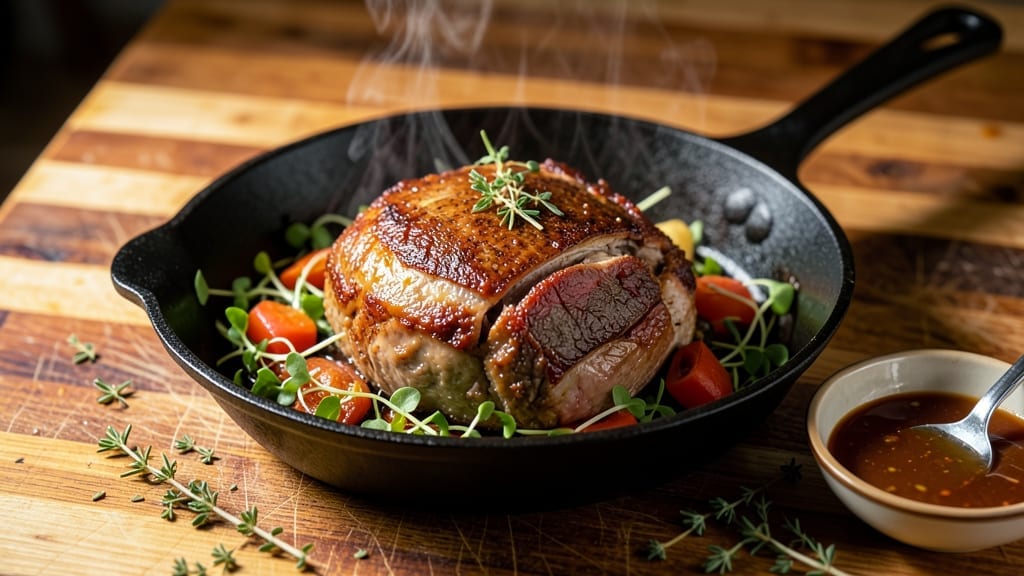
Martha Stewart’s Dutch oven pot roast recipe delivers the kind of deeply satisfying meal that transforms tough cuts of beef into melt-in-your-mouth perfection. The secret lies in slow-cooking with aromatics and a splash of liquid, allowing the meat to tenderize while developing rich, caramelized flavors that cling to every bite.
This method transforms a simple chuck roast into a centerpiece-worthy dish that smells like home from the moment it hits the oven.
What makes this recipe truly special is the Dutch oven itself—a heavy, lidded pot that traps heat and moisture perfectly, ensuring the meat stays juicy while the vegetables absorb all those flavorful juices.
You’ll start by searing the beef to lock in juices and build a flavorful crust, then simmer everything together for hours until the meat falls apart at the touch of a fork. The result is a dish that’s hearty enough for a family dinner but elegant enough for company.
By the time you serve this pot roast, you’ll have tender, fork-tender beef swimming in a rich gravy, surrounded by perfectly cooked carrots and potatoes that soak up every last bit of flavor.
The aroma alone will have everyone gathering at the table, and the first bite delivers on that promise of slow-cooked comfort. This is the kind of meal that becomes a weekly tradition once you try it.
The beauty of this recipe is its versatility—it works equally well for a casual weeknight dinner or a special occasion. Leftovers reheat beautifully, making it perfect for meal prep or feeding a crowd.
Whether you’re a seasoned home cook or new to Dutch oven cooking, this method delivers foolproof results every time.
Ingredients for martha stewart dutch oven pot roast
Six ingredients transform tough beef into melt-in-your-mouth Dutch oven perfection.
| Ingredient | Amount | Notes |
|---|---|---|
| Chuck Roast 🥩 | 3 lb | Well-marbled for tenderness |
| Yellow Onion 🧅 | 1 whole | Chopped into large pieces |
| Carrots 🥕 | 1 ½ lb | Whole, peeled, cut into chunks |
| Russet Potatoes 🥔 | 2 lb | Cut into 2-inch chunks |
| Garlic Cloves 🧄 | 6 cloves | Smashed, skin on |
| Beef Broth 💧 | 3 cups | Low-sodium preferred |
| Red Wine 🍷 | 1 cup | Dry, like Cabernet Sauvignon |
| Tomato Paste 🍅 | 2 tbsp | Squeeze tube or canned |
| All-Purpose Flour 🌾 | 2 tbsp | For gravy thickening |
| Fresh Thyme 🌿 | 2 sprigs | Or 2 tsp dried thyme |
| Fresh Rosemary 🌿 | 1 sprig | For earthy depth |
| Olive Oil 🫒 | 2 tbsp | For searing beef |
| Salt 🧂 | 2 tsp | Kosher or sea salt |
| Black Pepper 🌶️ | 1 tsp | Freshly cracked |
| Bay Leaves 🍃 | 2 whole | Removed before serving |
The chuck roast is non-negotiable here—it’s the only cut with enough fat and connective tissue to become fork-tender. Costco or Walmart usually have it pre-cut into chunks, which saves time. If you’re buying a whole roast, ask the butcher to trim excess fat but leave the marbling. The yellow onion should be sweet, not bitter—Vidalias or Maui onions work best. Carrots and potatoes? Grab the organic bagged ones from Trader Joe’s—they’re pre-washed and cut into uniform chunks, so no peeling or chopping. For the garlic, fresh is best, but if you’re in a pinch, jarred minced garlic (not the garlic powder kind) works in a bind.
No red wine? Beef broth with a splash of balsamic vinegar mimics the acidity and depth. Fresh thyme and rosemary are ideal, but dried works at one-third the amount—just make sure it’s labeled as culinary, not ornamental. The tomato paste can be the squeeze tube kind (like Trader Joe’s) or canned—just measure it out. For the flour, King Arthur or Bob’s Red Mill are reliable brands. Want extra richness? Add 1 tbsp of Worcestershire sauce with the broth. The bay leaves? Toss them in whole—they’ll infuse flavor without needing to be removed if you’re not picky about bits in your gravy.
This pot roast tastes even better the next day—3-4 days in the fridge, 6 months frozen. Portion it before freezing for easy leftovers. The gravy thickens as it cools, so add a splash of broth if it’s too stiff when reheating. Serve with crusty bread to soak up every last drop of that caramelized goodness. The Dutch oven? It’s your new best friend—Le Creuset or Lodge are the gold standards, but any heavy, lidded pot works.
Why You’ll Love This Recipe
- One-Pot Magic: I swear by this recipe when I don’t want to wash a million dishes. Chuck roast, onions, carrots, and potatoes all cook together in the Dutch oven—just add broth and herbs, then walk away. The veggies soften perfectly while the meat falls apart, and cleanup? One pot, one spatula, done.
- Garlic-Kissed Tenderness: That slow-cooked chuck roast with minced garlic cloves? It’s the kind of rich, savory flavor that makes you want to lick the spoon. The onions caramelize just enough to add depth, while the potatoes soak up all the juices—like a hug in a bowl.
- Weeknight Workhorse: Between us, this is my go-to for busy nights, potlucks, or when I need to feed a crowd without stress. Double the recipe and you’ve got leftovers for days—reheat with a splash of broth, and it’s just as good the second time. (Yes, even on a Tuesday night.)
- Budget-Friendly Feast: A chuck roast stretches farther than you’d think, especially when paired with potatoes and carrots that bulk it up. I’ve fed four people for under $15, and honestly? No one ever complains about the portions. It’s the kind of meal that makes frugal cooking feel like a win.
Step-by-step instructions for Dutch oven pot roast
Here’s how to create a restaurant-quality pot roast with tender meat and flavorful caramelized bits.
Sear the Chuck Roast for Maximum Flavor
Heat a Dutch oven over medium-high heat and add the 2 tablespoons olive oil. Once shimmering, place the 3 lb chuck roast in the pan, fat-side down. Press down gently with a spatula for 1 minute to prevent curling—this ensures even contact with the hot surface. Let it sear undisturbed for 4-5 minutes until a deep golden brown crust forms.
Flip the roast and sear the other side for another 3-4 minutes. The goal is to develop that rich, caramelized crust that will dissolve into the sauce later. Remove the roast and set it aside on a plate, leaving all the beautiful browned bits in the pan.
Build the Flavor Base with Vegetables and Aromatics
In the same Dutch oven, add the chopped 1 whole yellow onion and the 1.5 lb carrots cut into chunks. Cook for 5 minutes, stirring occasionally, until the onions soften slightly and begin to caramelize. Add the 2-inch russet potato chunks and cook for another 3 minutes, stirring to prevent sticking.
Push the vegetables to the sides of the pan and add the 6 smashed garlic cloves, 2 sprigs fresh thyme, 1 sprig fresh rosemary, 2 whole bay leaves, 2 teaspoons salt, and 1 teaspoon black pepper. Stir everything together for 30 seconds to toast the garlic and release the aromatic oils from the herbs.
Create the Rich Sauce Foundation
Sprinkle the 2 tablespoons all-purpose flour evenly over the vegetables and stir vigorously for 1 minute to coat everything. This creates a roux that will thicken the sauce as it cooks. Pour in the 1 cup red wine and scrape up all the browned bits from the bottom of the pan—this is where all the flavor lives.
Let the wine simmer for 3-4 minutes until reduced by half. Add the 2 tablespoons tomato paste and stir well to incorporate. Pour in the 3 cups beef broth and bring everything to a gentle simmer. Return the seared chuck roast to the pot, placing it on top of the vegetables.
Slow-Cook to Perfection
Cover the Dutch oven with a tight-fitting lid and transfer it to a preheated 325°F oven. Cook for 3 hours, turning the roast occasionally to ensure even cooking. The meat should become fork-tender and easily pull apart when tested with a fork.
After 3 hours, remove the lid and increase the oven temperature to 375°F. Cook uncovered for another 20-30 minutes to allow the sauce to thicken and the top of the roast to develop a golden crust. The vegetables should be tender and the sauce should coat the back of a spoon.
Rest and Serve with Gravy
Remove the pot roast from the oven and transfer it to a cutting board. Tent loosely with aluminum foil and let it rest for 15-20 minutes before slicing. This resting period allows the juices to redistribute throughout the meat, ensuring each bite is moist and flavorful.
Strain the cooking liquid through a fine-mesh sieve into a saucepan and simmer over medium heat for 5-7 minutes to reduce slightly if needed. Serve the sliced pot roast with the rich gravy ladled over the top, accompanied by the tender vegetables. This dish tastes even better the next day as the flavors continue to develop!
Pro Tips For Making Martha Stewart Dutch Oven Pot Roast
- Sear the Roast First: After browning the onions and garlic, pull the pot out and sear the chuck roast in batches—hot oil and a few minutes per side create a crust that locks in flavor. I used to skip this, and the stew tasted flat; now it’s the thing that makes the whole dish sing.
- Cut Potatoes Uniformly: Martha’s recipe calls for potatoes, but if they’re all different sizes, the small ones turn to mush while the big ones stay raw. Aim for 1.5-inch chunks—no smaller, no larger—and they’ll cook evenly without falling apart.
- Deglaze Before Adding Broth: After searing the meat, don’t just dump in the broth—scrape up those browned bits with a wooden spoon first. That crust packs deep flavor, and skipping it means missing out on the richest part of the stew.
- Add Potatoes Early: Toss the potatoes in halfway through cooking, not at the end. They need time to soak up the liquid and soften properly—if you add them too late, they’ll stay dense and undercooked, no matter how long you simmer.
Perfect pairings for this martha stewart dutch oven pot roast
Classic Side Dishes
Martha Stewart’s pot roast pairs beautifully with creamy mashed potatoes—whip up 2 lbs Yukon Gold potatoes with ½ cup butter, ½ cup warm milk, and ½ cup sour cream for velvety texture.
For a lighter option, try buttery egg noodles—simmer 1 lb fresh egg noodles until al dente, then toss with 2 tbsp melted butter and a pinch of salt. 🥔
Roasted Brussels sprouts add a crisp contrast—toss 1 lb halved sprouts with 2 tbsp olive oil, ½ tsp smoked paprika, and ¼ tsp salt, then roast at 425°F for 20 minutes. The caramelized edges complement the roast’s richness perfectly.
Breads to Soak Up Gravy
A crusty baguette is essential for mopping up that luscious gravy. Toast slices until golden, then rub with a garlic clove for extra flavor. For a heartier option, serve homemade dinner rolls—use King Arthur bread flour and let them rise overnight for maximum softness. 🍞
Wine Pairings
A bold red wine like Cabernet Sauvignon or Merlot mirrors the dish’s deep, savory notes. I recommend a Napa Valley Cabernet with its dark fruit and earthy undertones. For white wine lovers, a full-bodied Chardonnay with oak aging stands up to the richness. 🍷
Beer Pairings
A malty amber ale or dark lager cuts through the dish’s richness. Try Fat Tire or Guinness—their roasted malt flavors harmonize with the caramelized beef. For a lighter option, a crisp pilsner like Heineken cleanses the palate between bites. 🍺
Finishing Touches
Garnish the pot roast with fresh parsley for a pop of color and brightness. A sprinkle of flaky sea salt enhances the caramelized edges. For extra decadence, drizzle the gravy with truffle oil—just ½ tsp adds luxurious depth. 💫
Nutrition facts
Frequently asked questions
Can I use a different cut of beef instead of chuck roast?
While chuck roast is ideal for its marbling and tenderness, you can substitute with chuck roll or bottom round roast—just increase cooking time by 30-45 minutes. Avoid lean cuts like sirloin; they won’t become tender enough. The key is fat content for moisture during slow cooking.
Why does the meat need to rest before slicing?
Resting for 15-20 minutes lets the juices redistribute throughout the meat instead of pooling on your plate. When you slice immediately, the meat loses its natural moisture and becomes dry. This step is especially critical for tougher cuts like chuck roast, where the resting time makes all the difference.
Can I make this pot roast in a slow cooker instead?
Brown the meat first in a skillet, then transfer everything to a 6-quart slow cooker with the same ingredients. Cook on Low for 8 hours or High for 5-6 hours. The Dutch oven method gives slightly better caramelization, but the slow cooker is more hands-off. Just add ½ cup extra broth since slow cookers evaporate more liquid.
How do I prevent the vegetables from turning mushy?
Add the potatoes last (after 3 hours of cooking) to avoid overcooking. For carrots, cut them into 1-inch chunks instead of larger pieces. If using onions, remove them after 30 minutes of cooking—they’ll soften faster. The secret is timing: vegetables should be tender but still hold their shape.
What if I don’t have red wine?
No problem! Replace it with 1 cup beef broth + 1 tablespoon balsamic vinegar for acidity. For extra depth, add ½ teaspoon soy sauce or 1 teaspoon Worcestershire sauce. The wine’s purpose is to deglaze the pan and add richness, so these substitutes work perfectly.

- Baked Potatoes in Crock Pot Recipe: Buttery Interiors and Crispy Top Magic - November 1, 2026
- Braised Beef Short Ribs Recipe: Crock Pot Fall-Off-Bone Magic in 6 Hours - November 1, 2026
- Crock Pot Cocoa Recipe: Velvety Warmth With Hidden Spice Magic - November 1, 2026