
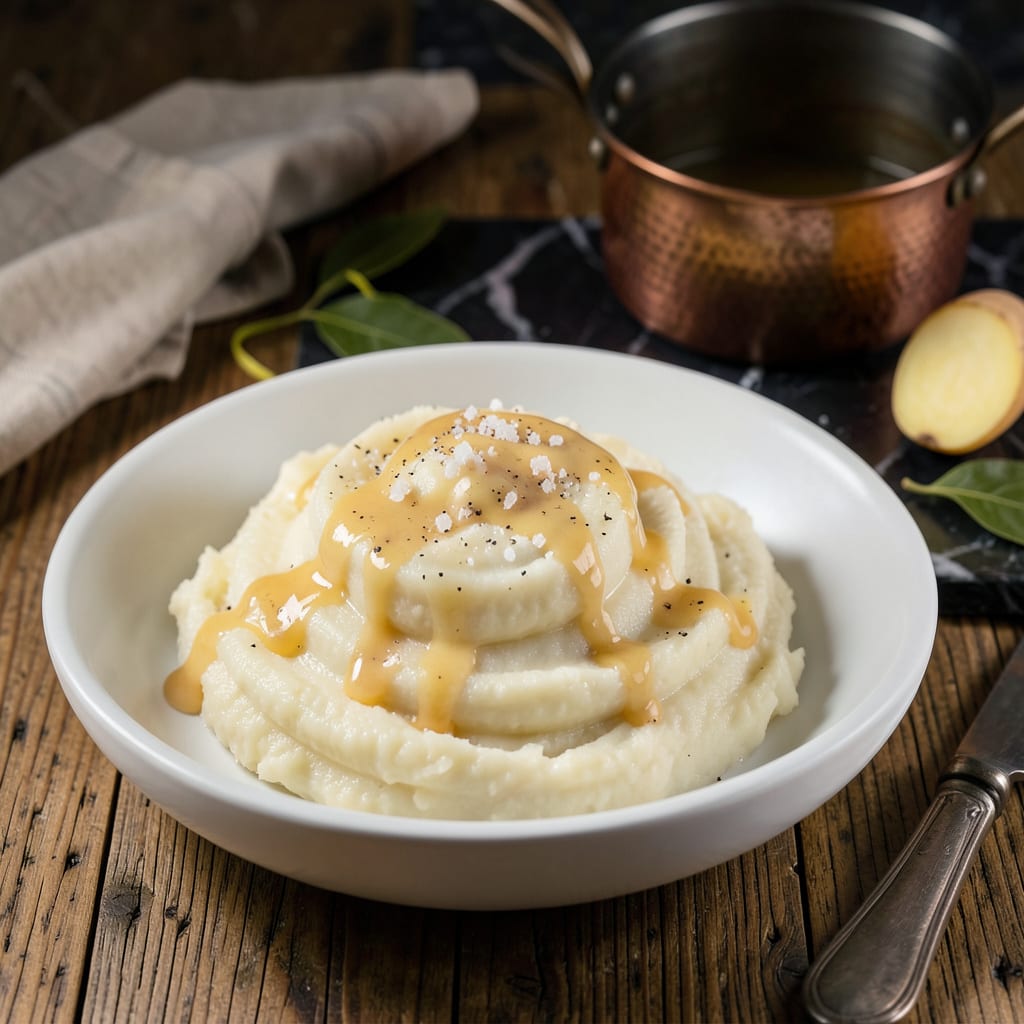
Achieving restaurant-quality mashed potatoes at home requires precision, not luck. This method delivers the ultra-smooth, buttery texture Gordon Ramsay is famous for—no lumps, no gumminess, just perfect creaminess every time. The secret lies in the potato selection and a high-fat ratio that transforms simple ingredients into something extraordinary.
The technique is straightforward but exacting: boil the potatoes until fork-tender, rice them while hot, then fold in warm butter and cream at the right moment. What emerges is mashed potatoes so velvety they rival those served in Michelin-starred kitchens. Serve immediately for the best texture and flavor impact.
Ingredients for Mashed Potato Recipe Gordon Ramsay
Precision ingredients yield Gordon Ramsay’s signature ultra-smooth, restaurant-quality mashed potatoes with unmatched creaminess and depth.
| Ingredient | Amount | Notes |
|---|---|---|
| Yukon Gold Potatoes 🥔 | 2 ½ lb | Peeled, cut into 1-inch chunks |
| Unsalted Butter 🧈 | 1 cup | European-style preferred, cubed |
| Heavy Cream 🥛 | 1 cup | Warm to room temperature |
| Whole Milk 🥛 | ½ cup | Warm to room temperature |
| Kosher Salt 🧂 | 1 ½ tsp | Diamond Crystal preferred |
| Freshly Ground White Pepper 🌶️ | ½ tsp | For clean pepper flavor |
| Fresh Chives 🌿 | 2 tbsp | Finely minced, for garnish |
| Garlic Cloves 🧄 | 2 cloves | Minced, optional for depth |
| Bay Leaves 🌿 | 2 whole | For potato cooking water |
| Nutmeg 🌰 | 0.125 tsp | Freshly grated preferred |
[recipeingredientscaler]
The potatoes are non-negotiable: Yukon Golds provide the ideal starch-to-moisture ratio for velvety texture. European-style butter (like Plugrá or Kerrygold) delivers superior fat content and flavor. Source potatoes from farmers markets or well-stocked grocers—avoid pre-cut or waxy varieties. The cream and milk must be full-fat; low-fat versions compromise the luxurious mouthfeel this recipe demands. Professional kitchens use Diamond Crystal kosher salt for its clean, consistent salinity.
For dietary adaptations, substitute vegetable broth for milk to maintain richness in dairy-free versions. Vegan butter (like Miyoko’s) works at a 1:1 ratio, though texture may vary slightly. White pepper is preferred for its subtle heat without visible specks, but black pepper can substitute in equal measure. Fresh nutmeg is optimal, but pre-ground (stored in airtight containers) suffices. Garlic and chives are optional but recommended for layered flavor—fresh only.
Prepare potatoes immediately before cooking to prevent oxidation. The mashed potatoes hold at 170°F in a heatproof bowl over simmering water for up to 2 hours. Avoid refrigeration, as it alters the starch structure. For make-ahead convenience, reheat gently with additional warm cream or butter, stirring vigorously to restore creaminess. Leftovers (unlikely) keep 3 days refrigerated but are best enjoyed fresh for optimal texture.
Why You’ll Love This Recipe
- One-Pot Magic: I love that this entire recipe happens in a single pot—boil the Yukon Golds, drain, then mash right there with the butter and cream. No extra bowls, no fuss.
- Buttery Cloud Texture: The combo of heavy cream and whole milk gives these mashed potatoes that ridiculous fluffy-creamy balance, while the butter adds this rich, velvety finish. Honestly, it’s the little things—like how the salt makes every bite pop.
- Holiday or Tuesday Night: I’ve served these at Thanksgiving and also just because it’s Wednesday and we needed comfort food. They pair with roast chicken or a simple steak, and my kids devour them either way.
- Leftovers? Even Better: Between us, the leftovers might be my favorite part—reheat them with a splash of milk, and they’re just as good. Plus, Yukon Golds are budget-friendly, so feeding a crowd doesn’t break the bank.
Step-by-Step Instructions for Ultra-Creamy Mashed Potatoes
Master the technique for restaurant-quality results with this precise, professional approach.
Step 1: Prepare and Cook the Potatoes
Place the 2.5 lb Yukon Gold Potatoes (peeled and cut into 1-inch chunks) in a large pot. Add cold water to cover by 2 inches, then add the 2 whole Bay Leaves and 1.5 tsp Kosher Salt. Bring to a rolling boil over high heat, then reduce to medium and simmer for 15-18 minutes until the potatoes are fork-tender but not falling apart.
Watch for visual cues: the potato edges should soften and the pieces should easily slide off a fork when pierced. Avoid overcooking, as this leads to waterlogged potatoes that dilute your final texture. Drain immediately in a colander and return the potatoes to the warm pot to evaporate any remaining moisture.
Step 2: Infuse the Dairy Components
While the potatoes cook, combine the 1 cup Heavy Cream and 0.5 cup Whole Milk in a small saucepan with the 2 cloves Garlic Cloves (minced). Warm over low heat until small bubbles form around the edges—approximately 180°F. Do not boil. Remove from heat, cover, and let steep for 5 minutes to infuse the garlic flavor.
Strain the warm dairy mixture through a fine-mesh sieve to remove the garlic solids. This step ensures smooth texture while capturing the aromatic essence. Return the infused liquid to the saucepan and keep warm over very low heat—you want it hot but not simmering when added to the potatoes.
Step 3: Rice and Incorporate the Butter
Pass the drained potatoes through a ricer or food mill directly into a clean, warm mixing bowl. For ultra-smooth results, work in batches and avoid pressing the very last starchy bits through. Immediately add the 1 cup Unsalted Butter (cubed and at room temperature) to the hot riced potatoes.
Using a silicone spatula, gently fold the butter into the potatoes until fully melted and incorporated. The residual heat from the potatoes should be sufficient—avoid mechanical mixing at this stage to prevent developing gluten. The mixture should appear glossy and slightly sticky, with no visible butter pools remaining.
Step 4: Emulsify with Warm Dairy
Gradually pour the warm infused dairy mixture into the potato-butter base while gently folding with the spatula. Add approximately ¼ cup at a time, allowing each addition to fully absorb before continuing. This controlled incorporation prevents a soupy consistency while building a stable emulsion.
After adding all the liquid, switch to a whisk and fold vigorously for 30-45 seconds to develop the ideal creamy texture. The mashed potatoes should hold soft peaks when the whisk is lifted. Season with the 0.5 tsp Freshly Ground White Pepper and 0.125 tsp Nutmeg, then fold once more to distribute evenly.
Step 5: Finish and Serve Immediately
Taste and adjust the seasoning if needed—remember that potatoes require generous salt to taste properly seasoned. Transfer the mashed potatoes to a warmed serving bowl and create a shallow well in the center. Sprinkle with the 2 tbsp Fresh Chives (finely minced) for fresh contrast and visual appeal.
Serve immediately while still steaming. The ideal consistency should be velvety smooth with a slight sheen, holding its shape when scooped but melting effortlessly in the mouth. For make-ahead preparation, press plastic wrap directly onto the surface to prevent skin formation and reheat gently with additional cream if needed.
Serving Suggestions for Leftovers
Classic Roast Pairings
These mashed potatoes were practically designed for Sunday roast dinners. I love serving them alongside herb-crusted prime rib or rosemary garlic lamb—the creamy texture cuts through the richness of the meat perfectly. For a complete plate, add roasted root vegetables like carrots and parsnips. 🍽️
Holiday Feast Centerpiece
At Thanksgiving or Christmas, this becomes the star of the table. Pair with herb-roasted turkey and sausage stuffing, then drizzle everything with homemade gravy. The potatoes form the perfect base for soaking up all those delicious pan juices. I always make a double batch for leftovers.
Steakhouse Experience
For a restaurant-quality meal at home, serve with a perfectly seared ribeye (medium-rare, please) and red wine reduction. The contrast between the crispy steak crust and velvety potatoes is magical. Add sautéed mushrooms for an umami boost that complements the buttery mash.
Vegetarian Plate Elevation
These potatoes transform simple veggie dishes into gourmet meals. Try them with portobello mushroom steaks and balsamic glaze, or alongside stuffed bell peppers. The richness satisfies even dedicated meat lovers. I often add extra chives for freshness against earthy vegetables.
Comfort Food Classics
Nothing beats these mashed potatoes with fried chicken and country gravy—it’s my ultimate comfort meal. For a British twist, serve with bangers and onion gravy. The potatoes act as a blank canvas that makes every bite more luxurious.
Presentation Tips
For elegant plating, pipe the potatoes into swirls using a large star tip, then brown the peaks with a kitchen torch. Garnish with microgreens or edible flowers for color. I use a warmed serving dish to maintain temperature—nothing ruins perfect mash faster than a cold plate. ✨
Nutrition Facts
Frequently Asked Questions
Why use Yukon Gold potatoes instead of Russets?
Yukon Golds have the perfect balance of starch and moisture for ultra-smooth results. Russets can turn gluey, while waxy potatoes like reds become gummy. The Gold’s natural buttery flavor also reduces the need for extra fat.
Can I make this ahead for holiday meals?
Yes, but with careful handling. Prepare through Step 4, then press plastic wrap directly onto the surface. Reheat in a double boiler with 2 tbsp extra warm cream, whisking vigorously to restore the silky texture.
What’s the trick to avoiding gluey texture?
Three critical steps: rice while hot, use room-temperature butter, and fold—never whip. Overworking releases starch that creates gumminess. The ricer is non-negotiable for professional results.
How do I adjust for dietary restrictions?
For dairy-free, substitute vegan butter (like Miyoko’s) and full-fat coconut cream. Use vegetable broth instead of milk. Note: texture may be slightly denser, so add 1 extra tbsp cream when reheating.
Why warm the dairy before adding?
Cold liquid shocks the starches, creating a pasty consistency. Warm dairy (180°F) blends seamlessly for that signature velvety finish. This also helps the butter emulsify properly rather than pooling at the bottom.

- 8 Bean Soup Recipe Crock Pot: Hearty Vegetable Medley in One Pot - September 25, 2026
- 4C Bread Crumbs Meatballs Recipe: Crispy Crust and Juicy Centers - September 25, 2026
- 6 Oz Chocolate Chip Cookie Recipe: Perfectly Balanced Crispy Edges and Chewy Hearts - September 25, 2026