
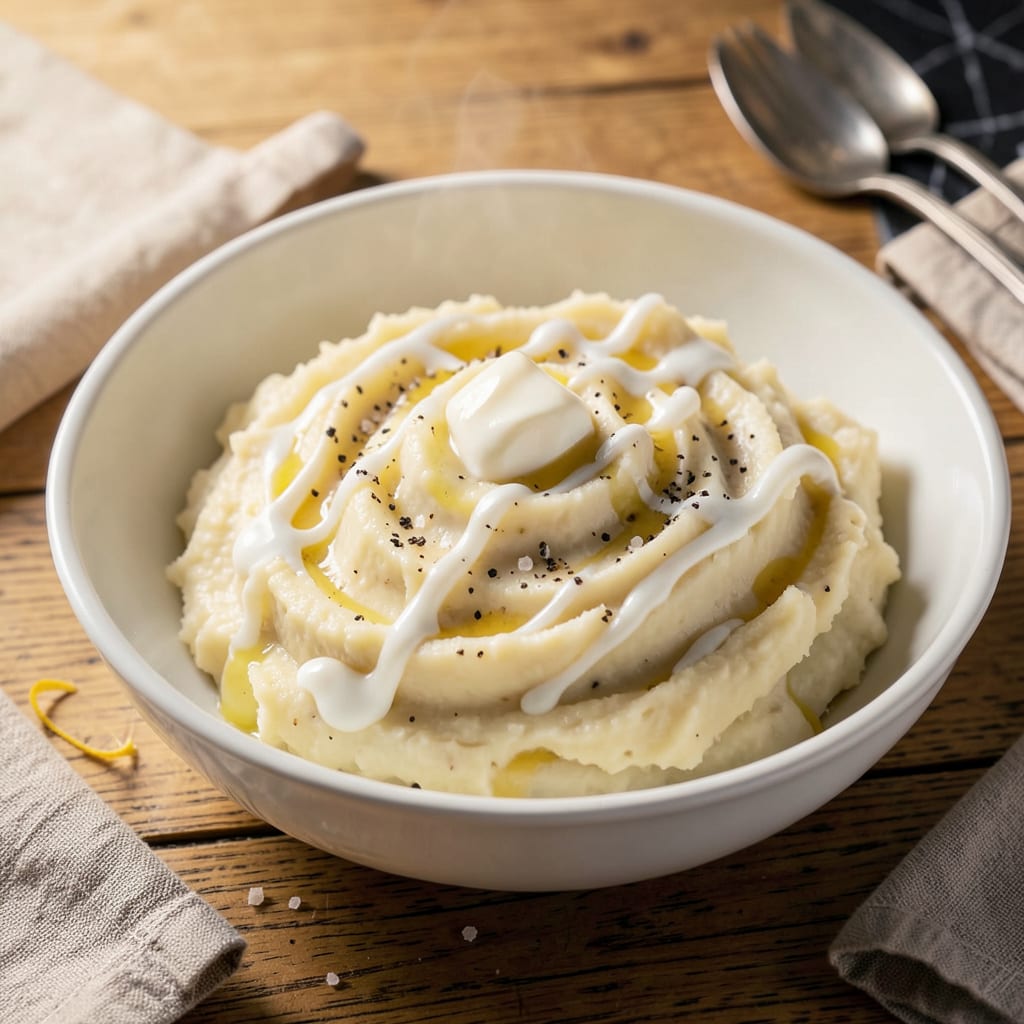
There’s a reason restaurant mashed potatoes taste superior—they rely on professional techniques and rich dairy blends. This recipe delivers that same ultra-creamy, velvety texture by combining cream cheese and sour cream for unmatched richness without heaviness.
The secret lies in the ratio: cream cheese adds body and tang while sour cream contributes lightness. Cooked properly, these potatoes achieve that perfect balance—fluffy yet substantial, with a depth of flavor that basic butter-and-milk versions can’t match. Ideal for holiday tables or weeknight comfort.
Ingredients for Mashed Potato Recipe with Cream Cheese and Sour Cream
These carefully selected ingredients transform humble potatoes into restaurant-quality, ultra-creamy comfort food with professional depth and texture.
| Ingredient | Amount | Notes |
|---|---|---|
| Russet Potatoes 🥔 | 2 ½ lb | Peeled and cut into 1-inch cubes |
| Cream Cheese 🧀 | 8 oz | Full-fat, softened to room temperature |
| Sour Cream 🥛 | ½ cup | Full-fat for optimal creaminess |
| Unsalted Butter 🧈 | ½ cup | Cut into 1-tbsp pieces, chilled |
| Whole Milk 🥛 | ½ cup | Warm to room temperature |
| Kosher Salt 🧂 | 1 ½ tsp | Diamond Crystal preferred for precision |
| Freshly Ground Black Pepper 🌶️ | ½ tsp | Coarse grind for texture |
| Garlic Cloves 🧄 | 3 cloves | Minced to fine consistency |
| Fresh Chives 🌿 | 2 tbsp | Finely chopped, for garnish |
| Heavy Cream 🥛 | ¼ cup | Optional, for additional richness |
The dairy components are critical for achieving the signature texture. Philadelphia Cream Cheese and Daisy Sour Cream are preferred for their consistent fat content and neutral acidity. Potatoes should be Russet variety—their high starch content yields the fluffiest results. For butter, European-style (like Plugrá) adds superior richness due to higher fat content. Professional kitchens typically use Diamond Crystal kosher salt for its clean flavor and precise measurement properties.
Substitutions must maintain fat content for proper texture. Neufchâtel cheese can replace cream cheese at a 1:1 ratio, though tanginess may increase slightly. Greek yogurt (full-fat) works as a sour cream alternative, but strain it first to prevent excess moisture. For dairy-free adaptations, Kite Hill cream cheese and coconut cream offer the closest results, though flavor profiles will differ. The heavy cream is optional but recommended for holiday preparations—omit for lighter weeknight versions.
Prepared mashed potatoes hold remarkably well. Store in an airtight container with plastic wrap pressed directly onto the surface to prevent skin formation. Refrigerated, they maintain quality for 4-5 days; reheat gently with additional milk or butter. For make-ahead convenience, the mixture can be prepared through the ricer step, then refrigerated up to 24 hours before finishing. Freezing is not recommended as it compromises the creamy texture. Garnish with chives immediately before serving for optimal freshness and visual appeal.
Why You’ll Love This Recipe
- I’ll be real: the best part is leaving the skins on. Just scrub those russets, boil them whole, and you’ve got extra texture with zero extra work—plus, more nutrients stay put.
- No Peeling Required: I’ll be real: the best part is leaving the skins on. Just scrub those russets, boil them whole, and you’ve got extra texture with zero extra work—plus, more nutrients stay put.
- That Creamy Tang: Here’s what sold me—the sour cream cuts through the richness of the cream cheese and butter, so it’s decadent but not heavy. First bite, and you’ll notice the difference from regular mashed potatoes.
- Holiday or Tuesday: This is my go-to whether I’m feeding 12 at Thanksgiving or just my picky nephew on a random weeknight. The leftovers? Even better the next day, stirred into soup or as a lazy shepherd’s pie topping.
Step-by-Step Instructions for Creamy Mashed Potatoes
This method delivers perfectly smooth, restaurant-quality results with minimal effort and maximum flavor.
Step 1: Prepare and Cook the Potatoes
Place the 2.5 lb Russet Potatoes (peeled and cut into 1-inch cubes) in a large pot. Cover with cold water by 1 inch and add 1 tablespoon of the kosher salt. The cold water start ensures even cooking throughout each piece.
Bring to a boil over high heat, then reduce to medium and simmer uncovered for 12-15 minutes until the potatoes are fork-tender. You’ll know they’re done when a knife slides through with no resistance and the cubes begin to break apart at the edges. Drain immediately in a colander and return to the pot.
Let the potatoes sit in the colander for 2 minutes to allow excess moisture to evaporate. This step prevents watery mashed potatoes and ensures maximum creaminess in the final product.
Step 2: Infuse the Dairy Mixture
While the potatoes cook, combine the 0.5 cup whole milk, 8 oz cream cheese, and 3 cloves garlic cloves (minced) in a small saucepan. Warm over medium-low heat for 3-4 minutes, stirring constantly, until the cream cheese melts completely and the mixture reaches 160°F.
Remove from heat and whisk in the 0.5 cup sour cream until fully incorporated. The residual heat will temper the sour cream without curdling. This infusion process ensures the garlic flavor distributes evenly and the dairy components blend seamlessly into the potatoes.
Step 3: Mash and Incorporate Fat
Return the drained potatoes to their cooking pot and mash with a potato masher or ricer until mostly smooth with some texture remaining. Immediately add the warm dairy mixture and 0.5 cup unsalted butter (cut into pieces) to the potatoes.
Fold gently with a silicone spatula until the butter fully melts and the mixture becomes creamy. Avoid overworking at this stage to prevent gummy texture. The residual heat from the potatoes will help incorporate the fats evenly without additional cooking.
Step 4: Season and Adjust Consistency
Stir in the remaining 0.5 tsp kosher salt and 0.5 tsp freshly ground black pepper. For ultra-luxurious texture, gradually whisk in the 0.25 cup heavy cream until reaching your desired consistency. The mashed potatoes should hold soft peaks when the spatula is lifted.
Taste and adjust seasoning if needed. Remember that the flavors will meld slightly as they rest. For serving, transfer to a warmed bowl and create swirls with the back of a spoon for an elegant presentation.
Step 5: Rest and Garnish
Cover the mashed potatoes loosely with foil and let rest for 5 minutes before serving. This brief resting period allows the starches to fully absorb the dairy, creating an even creamier texture. The surface will develop a slight skin that can be stirred in or left for textural contrast.
Just before serving, sprinkle with the 2 tbsp fresh chives and an additional grind of black pepper if desired. The chives add a fresh, oniony brightness that cuts through the richness while enhancing the restaurant-style presentation promised in the title.
Regional Styles of This Dish
Southern Comfort Style
Down South, we take our mashed potatoes seriously by adding a touch of sharp cheddar cheese to the mix. After incorporating the cream cheese and sour cream, fold in 1 cup shredded cheddar until melted. The tangy cheese balances the richness beautifully. I like to finish with a sprinkle of smoked paprika for that classic Southern warmth. 🌶️
New England Creamery
In New England, they embrace the dairy even more by using local Vermont cream cheese and adding 2 tablespoons maple syrup to the mixture. This creates a subtle sweetness that pairs perfectly with holiday meals. The key is using dark amber maple syrup for depth without overpowering the potatoes.
Southwest Spiced
For a Tex-Mex twist, stir in 1 teaspoon ground cumin and ½ teaspoon chipotle powder with the dairy mixture. Top with crumbled cotija cheese and fresh cilantro instead of chives. This version holds its own next to smoky barbecue or spicy chili. The cream cheese base keeps it creamy while handling bold flavors.
Pacific Northwest
Out West, they incorporate local flavors by mixing in 2 tablespoons roasted garlic puree and topping with crispy fried shallots. The garlic adds earthy depth while the shallots provide crunch. I recommend using Tillamook cream cheese for that authentic Pacific Northwest creaminess.
Midwest Heartland
The Midwest stays true to comfort food roots by adding ½ cup grated Parmesan and a splash of heavy cream for extra richness. They often serve these with a brown butter drizzle on top. This version reminds me of my grandmother’s holiday table—simple but utterly satisfying.
California Fresh
On the West Coast, they lighten things up with zested lemon peel and fresh dill mixed into the potatoes. The citrus brightens the dish while keeping that ultra-creamy texture. I love serving this version with grilled fish or roasted vegetables. The cream cheese base still delivers that luxurious mouthfeel. ✨
Nutrition Facts
Frequently Asked Questions
Can I make these ahead of time?
Prepare the recipe through the mashing step, then transfer to an airtight container. Press plastic wrap directly onto the surface to prevent skin formation. Refrigerate for up to 48 hours, then reheat gently with extra milk or butter.
Why use both cream cheese and sour cream?
The combination creates perfect balance: cream cheese adds body and tang while sour cream contributes lightness and subtle acidity. Together they deliver restaurant-quality creaminess that butter-and-milk versions can’t match.
What’s the best way to reheat leftovers?
Use a double boiler or microwave at 50% power in 30-second intervals, stirring between each. Add 1-2 tablespoons milk per cup of potatoes to restore creaminess. Avoid high heat which can make them gluey.
Can I use a hand mixer instead of mashing?
Not recommended! Over-mixing releases too much starch, creating gluey texture. A potato ricer or hand masher yields the fluffiest results. If using a mixer, pulse just 3-4 times at low speed.
How do I fix watery potatoes?
Return them to the pot and cook over low heat for 2-3 minutes, stirring constantly. Add 1 tablespoon instant mashed potato flakes to absorb excess moisture without altering flavor.

- 8 Bean Soup Recipe Crock Pot: Hearty Vegetable Medley in One Pot - September 25, 2026
- 4C Bread Crumbs Meatballs Recipe: Crispy Crust and Juicy Centers - September 25, 2026
- 6 Oz Chocolate Chip Cookie Recipe: Perfectly Balanced Crispy Edges and Chewy Hearts - September 25, 2026