
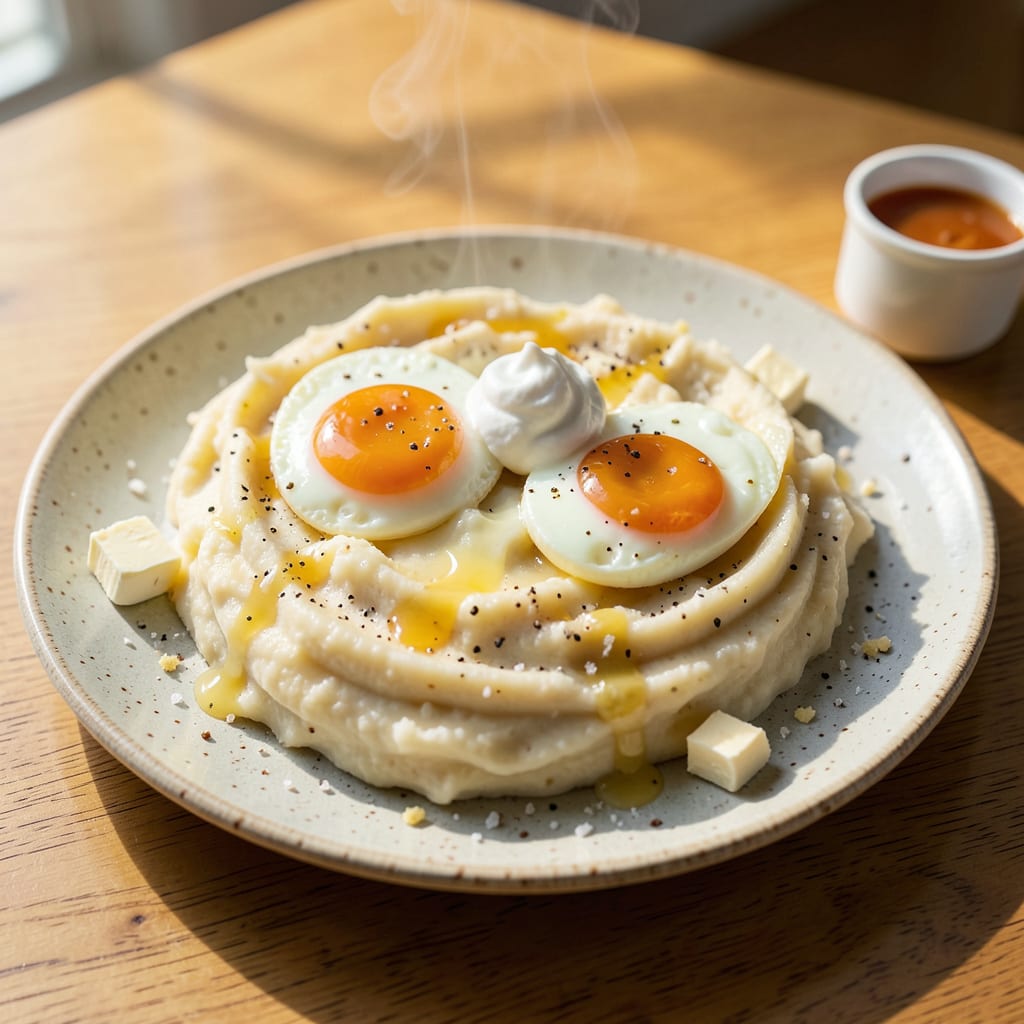
Breakfast just got simpler with this 15-minute creamy mashed potato and egg bowl. I developed this recipe for busy mornings when you need something hearty but don’t have time to fuss. The combination of velvety potatoes and perfectly cooked eggs creates a satisfying meal that’s both comforting and nutritious.
What makes this dish special is its versatility. You can serve the eggs sunny-side up on top for a runny yolk that mixes into the potatoes, or scramble them directly into the mash for a protein-packed twist. Either way, you’ll have a fast, filling breakfast that keeps you energized all morning.
Ingredients for Mashed Potatoes and Eggs
Pantry staples and fridge basics come together for this comforting breakfast in minutes.
| Ingredient | Amount | Notes |
|---|---|---|
| Yukon Gold Potatoes 🥔 | 1 ½ lb | Peeled and cubed for even cooking |
| Large Eggs 🥚 | 4 whole | Room temperature for best results |
| Unsalted Butter 🧈 | 4 tbsp | European-style for extra creaminess |
| Whole Milk 🥛 | ½ cup | Warm for smoother incorporation |
| Sour Cream 🥛 | 2 tbsp | Full-fat for richness |
| Kosher Salt 🧂 | 1 tsp | Diamond Crystal preferred |
| Freshly Ground Black Pepper 🌶️ | ½ tsp | Coarse grind for texture |
| Garlic Cloves 🧄 | 2 cloves | Minced for even distribution |
| Chives 🌿 | 2 tbsp | Freshly chopped for garnish |
| Extra-Virgin Olive Oil 🫒 | 1 tbsp | For cooking eggs |
| Grated Parmesan Cheese 🧀 | ¼ cup | Freshly grated for best flavor |
| Heavy Cream 🥛 | 2 tbsp | Optional for extra richness |
The potatoes are the foundation here. Yukon Golds give that perfect creamy texture without turning gluey—avoid russets (they’re too dry). I grab mine from Trader Joe’s or the local farmers market when I can. The butter matters too: European-style has higher fat content, which means richer potatoes. For the eggs, farm-fresh makes a difference in flavor and texture, but store-bought works in a pinch (the organic ones at Whole Foods are my go-to).
No Yukon Golds? Red potatoes work too, though they’re waxier. Swap the whole milk for half-and-half if you want extra decadence. Out of sour cream? Greek yogurt at the same amount gets you close. The Parmesan is optional but worth it—Pecorino Romano gives a sharper kick if you prefer. For a quicker version, instant mashed potatoes (the good kind, like Idahoan) can sub in, but you’ll lose some creaminess.
This reheats surprisingly well—microwave with a splash of milk to revive the texture. The mashed potatoes keep 3-4 days in the fridge, though they’re best fresh. Eggs are obviously best cooked to order, but you can prep the potatoes ahead and warm them gently. I like to make extra potatoes and repurpose them into potato pancakes the next day (just add an egg and some flour).
Why You’ll Love This Recipe
- One-Pot Magic: I boil the potatoes, soft-boil the eggs in the same water, then mash everything together—no extra pans, no extra fuss. The sour cream and butter melt right into the warm potatoes while the eggs add this rich, almost custardy depth.
- That First Bite: Honestly, the way the creamy Yukon Golds soak up the buttery milk, then hit you with that soft egg yolk? It’s like the coziest breakfast-for-dinner hug. I’ve made this three times this month because my kid asks for “the yellow mashed stuff” by name.
- Breakfast, Lunch, or Midnight Snack: Between us, I’ve served this as a lazy Sunday brunch, packed it cold in lunches (the eggs stay perfect), and even reheated it with a fried egg on top for a 2 a.m. snack. It’s the kind of dish that doesn’t judge your schedule.
- $5 Feeds Four: A bag of potatoes, a half-dozen eggs, and pantry staples—this is my “payday’s still three days away” meal. Leftovers (if there are any) reheat beautifully with a splash of milk, and the sour cream keeps it from drying out. No sad, gummy mashed potatoes here.
Step-by-Step Instructions for Mashed Potatoes and Eggs
Here’s how to create this comforting breakfast bowl with perfectly creamy potatoes and tender eggs.
Step 1: Cook and Mash the Potatoes
Place the 1.5 lb Yukon Gold Potatoes in a large pot and cover with cold water by about 2 inches. Add 1 tsp Kosher Salt and bring to a boil over high heat. Once boiling, reduce to medium heat and simmer for 12-15 minutes until the potatoes are fork-tender with no resistance in the center.
Drain the potatoes thoroughly and return them to the warm pot. Add the 4 tbsp Unsalted Butter and let it melt completely. I like to use a potato masher here – work in gentle circles until the potatoes are smooth but still have some texture. Avoid overworking or they’ll become gluey.
Step 2: Create the Creamy Base
Warm the 0.5 cup Whole Milk gently in the microwave for 30 seconds or until just warm to the touch. Pour it gradually into the mashed potatoes while stirring with a wooden spoon. This gradual addition prevents a soupy consistency.
Now stir in the 2 tbsp Sour Cream and 0.25 cup Grated Parmesan Cheese. The parmesan adds a subtle nutty depth while the sour cream contributes tangy richness. Season with 0.5 tsp Freshly Ground Black Pepper and taste – you’ll likely want to add more salt at this point, but wait until the final assembly to adjust perfectly.
Step 3: Prepare the Garlic Eggs
Heat the 1 tbsp Extra-Virgin Olive Oil in a nonstick skillet over medium heat. Add the 2 cloves Garlic Cloves (minced) and cook for 30 seconds until fragrant but not browned. Immediately add the 4 whole Large Eggs, spacing them evenly in the pan.
Cover the skillet and cook for 3-4 minutes until the whites are set but the yolks remain runny. The steam from the covered pan creates perfectly tender whites while keeping the yolks luscious. Remove from heat when the whites are opaque but still slightly jiggly in the center.
Step 4: Assemble the Breakfast Bowl
Divide the creamy mashed potatoes between two serving bowls. Create a small well in the center of each portion using the back of a spoon. Gently place two eggs in each well, allowing the runny yolks to nestle into the warm potatoes.
Drizzle any remaining garlic oil from the pan over the top. For extra richness, add the 2 tbsp Heavy Cream to the potatoes and stir briefly. Finish with a sprinkle of the 2 tbsp Chives for freshness and color contrast. The heat from the potatoes and eggs will slightly wilt the chives, releasing their delicate onion flavor.
Storing and Reheating This Dish
Fridge Storage Tips
Store your mashed potatoes in an airtight container with a piece of plastic wrap pressed directly against the surface. This prevents a skin from forming and keeps them creamy for up to 3 days. I like using glass containers because they don’t absorb odors. The eggs are best cooked fresh, but you can store cooked eggs separately for 24 hours in the fridge. 🥔
If you’re prepping ahead, keep the potatoes slightly under-seasoned. Salt draws out moisture, which can make them watery when stored. I add an extra splash of milk when reheating to restore that just-made creaminess. The garlic flavor actually intensifies over time, so go light if storing overnight.
Freezing Guidelines
Mashed potatoes freeze surprisingly well for up to 3 months. Portion them into freezer bags (I use quart-size Ziploc), flatten to 1-inch thickness, and squeeze out all air. Label with the date – they’re best used within 6 weeks for optimal texture. The eggs don’t freeze well after cooking, so plan to make those fresh.
When ready to use, thaw overnight in the fridge. Avoid microwaving from frozen as this creates hot spots. I’ve found that adding 1 tbsp heavy cream per cup of potatoes when reheating brings back that fresh-made richness.
Microwave Reheating
Place your mashed potatoes in a microwave-safe bowl and add 1-2 tbsp milk or cream. Cover with a damp paper towel and heat on 50% power for 1-minute intervals, stirring between each. This gentle approach prevents rubbery texture. For the eggs, reheat separately covered with a damp towel for just 20-30 seconds to warm without overcooking. ⏰
If you stored the potatoes and eggs together, separate them before reheating. The eggs will heat much faster than the dense potatoes. I like to warm the potatoes first, then nestle the eggs on top for the last 15 seconds to keep the yolks runny.
Stovetop Revival
For the creamiest results, reheat potatoes in a saucepan over low heat with 2 tbsp butter and ¼ cup milk. Stir constantly with a wooden spoon until heated through, about 5-7 minutes. This method lets you control the consistency better than a microwave. The eggs are best reheated in a nonstick pan with a splash of water, covered for 1 minute.
Watch the heat carefully – too high and the potatoes will scorch on the bottom while staying cold in the middle. I use a heavy-bottomed pot (like my All-Clad) for even heating. The steam from the covered pan helps revive the eggs without drying them out.
Make-Ahead Strategy
Prepare the mashed potatoes completely up to 2 days ahead and store as directed. On serving day, reheat while you cook fresh eggs. This approach gives you that just-made quality with minimal morning effort. I often make extra potatoes on Sunday to use throughout the week – they’re great in breakfast burritos too!
For meal prep, portion the cold mashed potatoes into individual containers. When ready to eat, microwave for 1 minute, stir in a splash of cream, then top with freshly cooked eggs. This method keeps the eggs at their best while still saving time. The chives are best added fresh, but you can chop and store them in a damp paper towel for 2 days.
Nutrition Facts
Frequently Asked Questions
Can I use instant mashed potatoes instead?
You can, but the texture won’t be as creamy. If using instant, prepare them with warm milk instead of water and add 2 extra tbsp butter for richness. The eggs will still taste great on top, but the overall dish may lack that homemade depth.
What’s the best way to cook the eggs for this?
Sunny-side up or poached eggs work best to keep the yolks runny. Cook them 3-4 minutes covered for set whites with liquid centers. Scrambled eggs mixed into the potatoes make a great variation too—just fold them in gently at the end.
How do I keep the potatoes warm while cooking eggs?
Cover the bowl of mashed potatoes with a clean kitchen towel. This traps heat for 10-15 minutes without drying them out. Alternatively, place the bowl over a pot of simmering water (double boiler method) to maintain warmth.
Can I make this dairy-free?
Swap the butter for olive oil, milk for unsweetened almond milk, and sour cream for dairy-free yogurt. The texture will be slightly different but still delicious. Add a pinch of nutritional yeast for cheesy flavor if desired.
Why did my potatoes turn gluey?
Overworking is the main culprit. Use a potato masher instead of a mixer, and stop when they’re smooth but still have some texture. Also, avoid using russet potatoes—stick with Yukon Golds for the creamiest results without gumminess.

- 8 Bean Soup Recipe Crock Pot: Hearty Vegetable Medley in One Pot - September 25, 2026
- 4C Bread Crumbs Meatballs Recipe: Crispy Crust and Juicy Centers - September 25, 2026
- 6 Oz Chocolate Chip Cookie Recipe: Perfectly Balanced Crispy Edges and Chewy Hearts - September 25, 2026