
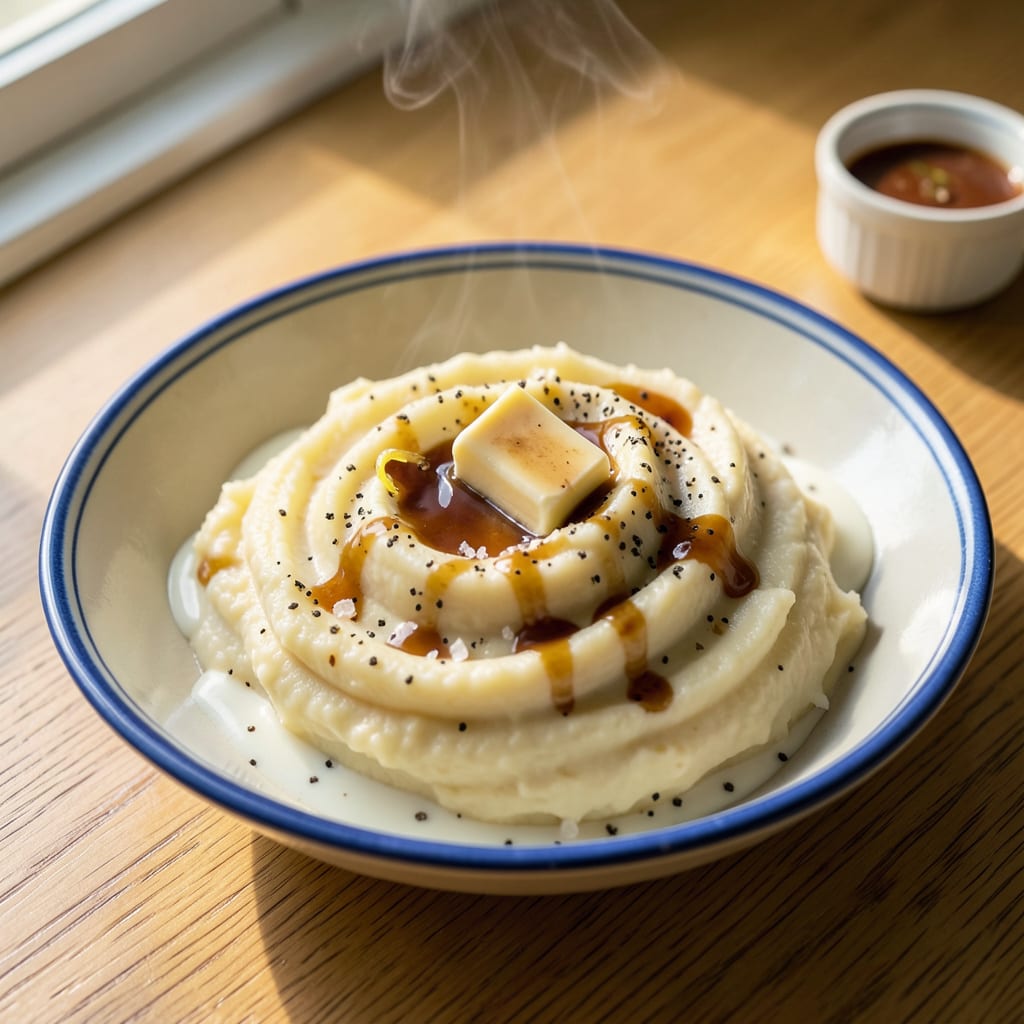
Perfectly creamy mashed potatoes don’t require a crowd—this scaled-down recipe delivers restaurant-quality results for two in just 20 minutes. The secret lies in precise timing and ingredient ratios, ensuring rich flavor without leftovers. I’ve refined this method to eliminate gluey textures while maintaining that signature velvety consistency.
Using just 5 simple ingredients (including butter and warm milk), you’ll achieve potatoes that are light yet decadent. The technique focuses on proper boiling time and gentle mashing—no electric mixers needed. Ideal as a weeknight side or elegant holiday addition, this recipe proves that small batches can deliver big comfort.
Ingredients for Mashed Potatoes for Two
Five essential ingredients combine to create restaurant-quality mashed potatoes scaled precisely for two servings.
| Ingredient | Amount | Notes |
|---|---|---|
| Yukon Gold Potatoes 🥔 | 1 lb | Peeled and cut into 1-inch cubes |
| Unsalted Butter 🧈 | 4 tbsp | European-style preferred for richness |
| Whole Milk 🥛 | ¼ cup | Warm to 110°F before incorporating |
| Sea Salt 🧂 | ¾ tsp | Diamond Crystal kosher salt preferred |
| Freshly Ground Black Pepper 🌶️ | ¼ tsp | Medium-coarse grind recommended |
Optimal quality requires Yukon Gold potatoes for their ideal starch-to-moisture ratio, yielding the creamiest texture. European-style butter (such as Plugrá or Kerrygold) provides superior fat content and flavor. The milk should be whole fat (3.25% or higher) and warmed to 110°F—this prevents the butter from resolidifying during incorporation. For salt, Diamond Crystal kosher salt offers precise seasoning control due to its larger grain size and cleaner flavor profile.
Substitutions must maintain the fat-to-starch balance. Russet potatoes can be used but require additional butter (increase to 5 tbsp) due to their lower moisture content. For dairy-free adaptations, full-fat coconut milk (canned, not carton) replaces both milk and butter at a 1:1 ratio. Vegan butter alternatives (such as Miyoko’s) work but may alter the mouthfeel slightly. Avoid low-fat milk or margarine, as both compromise the velvety consistency promised in this recipe.
Storage considerations are minimal for fresh preparation. Potatoes oxidize quickly once peeled—keep submerged in cold water until boiling. Completed mashed potatoes hold at 150°F for up to 2 hours in a heatproof bowl over simmering water. Refrigerated leftovers (uncommon with this portion size) keep for 3 days but require gentle reheating with additional milk to restore creaminess. For make-ahead convenience, prepare through boiling, then mash just before serving.
Why You’ll Love This Recipe
- One-Pot Magic: Honestly, I love that this comes together in a single saucepan—boil the Yukon Golds, drain, then mash right in the same pot. No colander, no extra bowls, just buttery goodness with minimal cleanup.
- That First Bite: The way the sea salt hits the creamy Yukon Golds, then melts into the rich butter and milk? It’s the kind of simple flavor that makes you pause mid-bite. I’ll be real: I’ve skipped fancy sides just to eat these straight from the bowl.
- Date Night or Tuesday: Between us, this is my secret for both cozy weeknights and “I need to impress someone” dinners. Pairs just as well with steak as it does with roasted chicken—or honestly, a spoon.
- No Waste, No Worry: Two servings means no sad, gluey leftovers lingering in the fridge. And at under $3 total? I’d rather make fresh than reheat yesterday’s batch any day. (Yes, even on a Tuesday night.)
Step-by-Step Instructions for Mashed Potatoes for Two
Perfectly creamy mashed potatoes require attention to detail and proper technique.
Step 1: Prepare and Cook the Yukon Gold Potatoes
Place the 1 lb Yukon Gold Potatoes (peeled and cut into 1-inch cubes) in a medium saucepan. Cover with cold water by 1 inch and add 1 teaspoon of the sea salt. The cold water start ensures even cooking throughout each piece.
Bring to a boil over high heat, then reduce to a gentle simmer. Cook for 12-15 minutes until the potatoes are fork-tender. You’ll know they’re done when a fork slides in easily with no resistance and the cubes begin to break apart at the edges. Drain immediately in a colander and return to the warm pot.
Step 2: Heat the Dairy Components
While the potatoes cook, warm the 0.25 cup whole milk to 110°F—this prevents shocking the potatoes with cold liquid. I prefer heating it in a small saucepan over low heat or in 20-second intervals in the microwave, checking with an instant-read thermometer.
Cut the 4 tbsp unsalted butter into small pieces and let it soften at room temperature. European-style butter with its higher fat content creates exceptionally rich, velvety mashed potatoes. The butter should be pliable but not melted when you incorporate it.
Step 3: Mash and Incorporate Fat and Liquid
Using a potato masher, break down the hot potatoes in the pot until they reach your desired texture. For ultra-smooth results, press the masher against the pot’s bottom and drag upward. Avoid overworking, which can make the potatoes gluey.
Add the softened butter pieces and mash until fully incorporated. The butter should disappear completely, leaving the potatoes glossy. Gradually pour in the warmed milk while continuing to mash, stopping when the potatoes reach a creamy but still slightly rustic consistency.
Step 4: Season and Adjust Consistency
Stir in the remaining 0.5 tsp sea salt and 0.25 tsp freshly ground black pepper using a silicone spatula. Taste and adjust seasoning if needed—the potatoes should have a well-balanced flavor that enhances rather than overpowers their natural sweetness.
For a silkier texture, fold the potatoes gently for 1 minute with the spatula. If they seem too thick, add warm milk 1 tablespoon at a time until reaching the perfect creamy consistency. The finished product should hold its shape when scooped but still feel luxurious on the tongue.
Step 5: Serve Immediately for Optimal Texture
Transfer the mashed potatoes to a warmed serving bowl. The residual heat will keep them creamy for 10-15 minutes, but they’re best enjoyed immediately when at their most velvety. For presentation, create a well in the center with the back of a spoon and add an extra pat of butter.
Each serving should have a smooth yet substantial mouthfeel, with the richness of the butter balanced by the potatoes’ natural earthiness. The texture should be creamy enough to spread easily but substantial enough to hold its shape when served alongside your main course.
Storing and Reheating This Dish
Short-Term Storage
If you somehow have leftovers (though this recipe is perfectly portioned), transfer them to an airtight container while still warm. Press plastic wrap directly onto the surface to prevent a skin from forming. They’ll keep in the fridge for up to 3 days, though I find they taste best within 24 hours. ❄️
Freezing Tips
Mashed potatoes freeze surprisingly well for up to 1 month. Portion into 1-cup containers and freeze flat to save space. When ready to use, thaw overnight in the fridge. I recommend adding 1 extra tablespoon of warm milk per cup when reheating to restore creaminess.
Stovetop Reheating
My preferred method: Transfer cold potatoes to a saucepan with 2 tablespoons milk or 1 tablespoon butter. Heat over low-medium while stirring constantly with a silicone spatula. This gentle approach prevents scorching and maintains that perfect creamy texture we worked so hard to achieve.
Microwave Reheating
For quick results, place potatoes in a microwave-safe bowl with 1 tablespoon milk. Cover with a damp paper towel and heat at 50% power for 1-minute intervals, stirring between each. This prevents hot spots and keeps the texture smooth rather than rubbery. 🔥
Make-Ahead Strategy
You can prep the potatoes through boiling and draining up to 6 hours ahead. Store the cooked cubes in the fridge, then mash with warm dairy components just before serving. This approach actually improves flavor as the potatoes absorb the salt more deeply during their rest.
Reviving Dry Potatoes
If your leftovers seem dry, don’t panic! Fold in 1-2 tablespoons of warm cream cheese or sour cream while reheating. The slight tang brightens the flavor while the fat restores that luxurious mouthfeel. I keep these on hand specifically for mashed potato emergencies.
Nutrition Facts
Frequently Asked Questions
Can I use russet potatoes instead of Yukon Gold?
You can, but you’ll need to adjust the recipe slightly. Russets have less moisture, so increase butter to 5 tablespoons and add 1 extra tablespoon of milk. The texture will be lighter but less creamy than Yukon Gold’s natural richness.
Why do my potatoes taste gluey?
Gluey texture usually comes from overworking the potatoes. Use a hand masher (not a mixer) and stop as soon as they’re smooth. Also, ensure you’re using warm milk—cold liquid causes starch molecules to bind excessively.
How far ahead can I make these?
For best results, make them fresh. However, you can boil and drain potatoes up to 6 hours ahead. Store covered in the fridge, then warm the milk and mash just before serving. This actually improves flavor absorption!
What’s the best way to reheat leftovers?
Stovetop works best: Heat with 1 tablespoon milk or butter per cup over low-medium heat, stirring constantly. Microwave at 50% power in 1-minute bursts with a damp towel cover to prevent drying.
Can I make this recipe vegan?
Easily! Swap butter for olive oil or vegan butter, and use full-fat coconut milk (canned) instead of dairy. The flavor will be slightly different but equally creamy. Add 1/4 teaspoon nutritional yeast for cheesy depth.

- 8 Bean Soup Recipe Crock Pot: Hearty Vegetable Medley in One Pot - September 25, 2026
- 4C Bread Crumbs Meatballs Recipe: Crispy Crust and Juicy Centers - September 25, 2026
- 6 Oz Chocolate Chip Cookie Recipe: Perfectly Balanced Crispy Edges and Chewy Hearts - September 25, 2026