
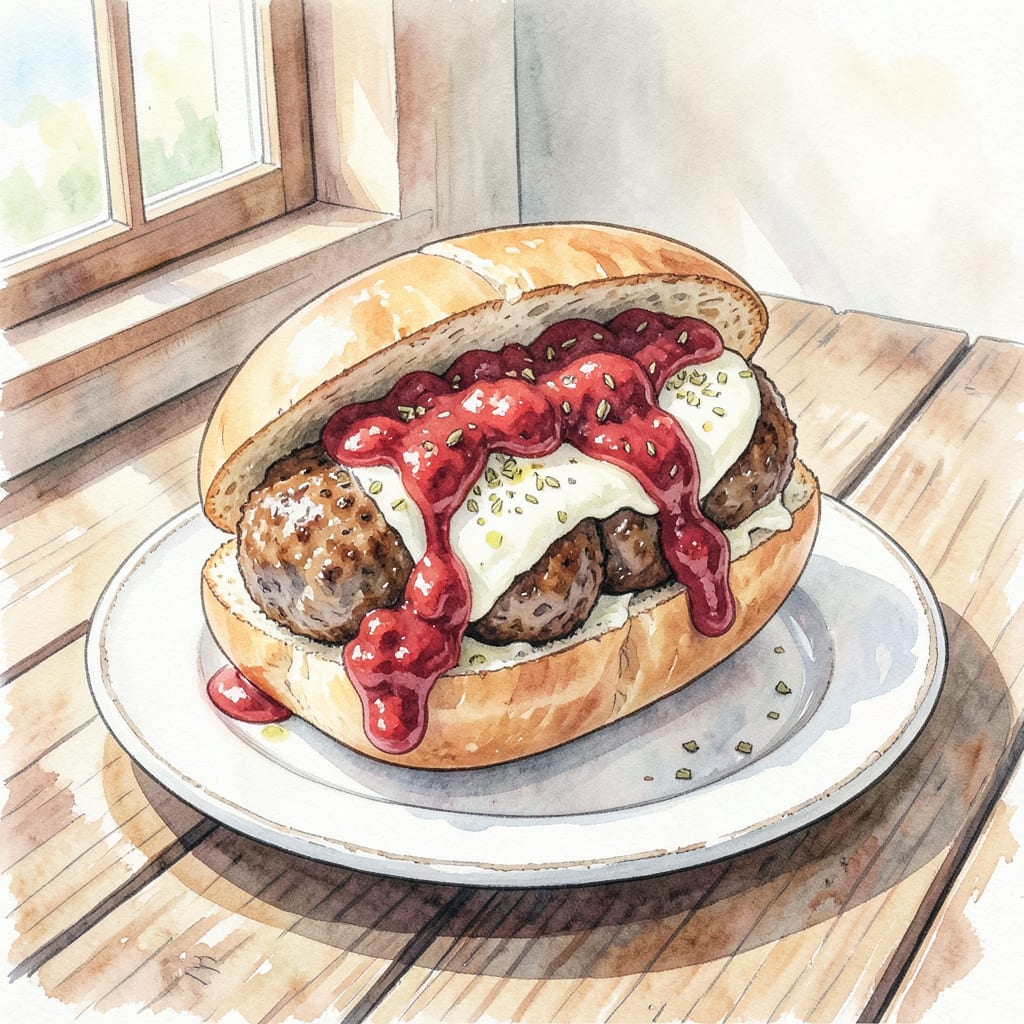
A great meatball sandwich starts with an exceptional sauce. 🔥 I’ve perfected this tangy and savory meatball sandwich sauce recipe through years of experimentation, balancing rich tomato flavor with subtle herbs and spices to create the perfect accompaniment.
This versatile sauce is easy to make and stores beautifully, allowing you to elevate your meatball sandwiches any time. Let’s get started!
Ingredients for Meatball Sandwich Sauce
Simple ingredients create rich, tangy sauce for perfect meatball sandwiches every time.
| Ingredient | Amount | Notes |
|---|---|---|
| Crushed Tomatoes 🍅 | 2 cups | San Marzano preferred |
| Olive Oil 🫒 | ¼ cup | Extra-virgin for richness |
| Garlic Cloves 🧄 | 4 cloves | Minced, not pressed |
| Dried Oregano 🌿 | 1 tsp | Mediterranean variety |
| Dried Basil 🌿 | 1 tsp | High quality, not stale |
| Salt 🧂 | ½ tsp | Kosher or sea salt |
| Black Pepper 🌶️ | ¼ tsp | Freshly ground preferred |
| Red Wine 🍷 | ½ cup | Dry red, not sweet |
| Tomato Paste 🍅 | 2 tbsp | Concentrated, not diluted |
| Sugar 🍮 | 1 tsp | Optional, for acidity |
San Marzano tomatoes make a difference here—look for DOP certification. I grab mine from Whole Foods or specialty Italian stores. For olive oil, use something you’d actually drizzle on bread—high-quality extra-virgin is worth it. The garlic can be minced ahead (keeps 5 days in the fridge).
No red wine? Beef broth with a splash of balsamic gets you close. Fresh herbs are ideal but dried works at one-third the amount. If tomato paste feels like overkill for two tablespoons, those squeeze tubes at Trader Joe’s are perfect—no waste, keeps for months. The sugar is optional—adds depth if your tomatoes are acidic.
This sauce improves with time—24 hours is best. Stores in the fridge for 5 days, freezes beautifully for 3 months. I portion it into containers so I can just grab what I need. Reheats on the stovetop or in the microwave—add a splash of water if it’s too thick.
Step-by-Step Instructions for Tangy and Savory Meatball Sandwich Sauce
Here’s the method that’ll get you perfect meatball sandwich sauce every time.
🍳 Step 1: Sauté Aromatics in Olive Oil
Heat the 0.25 cup Olive Oil in a large saucepan over medium heat. Once it shimmers, add the 4 cloves Garlic Cloves and cook for 1-2 minutes until fragrant and lightly golden. Be careful not to burn the garlic—it can go from perfect to bitter in seconds.
You’ll know it’s ready when the garlic aroma fills your kitchen and the cloves start to turn golden around the edges. This step creates the foundation of flavor for your sauce, so don’t rush it.
🍳 Step 2: Add Tomato Paste and Red Wine
Add the 2 tbsp Tomato Paste to the saucepan and stir to combine with the garlic and oil. Cook for 2-3 minutes, stirring frequently, until the paste darkens in color and develops a rich aroma. This step intensifies the tomato flavor and adds depth to your sauce.
Pour in the 0.5 cup Red Wine, scraping up any browned bits from the bottom of the pan. Let it simmer for 3-4 minutes until the liquid has reduced by half and the smell of alcohol has cooked off. The wine adds a layer of complexity and helps balance the acidity from the tomatoes.
🥘 Step 3: Combine Tomatoes and Seasonings
Add the 2 cups Crushed Tomatoes, 1 tsp Dried Oregano, 1 tsp Dried Basil, 0.5 tsp Salt, and 0.25 tsp Black Pepper to the saucepan. Stir everything together, then bring the mixture to a gentle simmer.
If you’re using the 1 tsp Sugar, add it now to help balance the acidity of the tomatoes. Let the sauce simmer uncovered for 20-30 minutes, stirring occasionally, until it thickens to your liking. You’ll know it’s ready when the sauce coats the back of a spoon and has a rich, velvety texture.
⏰ Step 4: Finish and Simmer
Reduce the heat to low and let the sauce simmer gently for another 10-15 minutes. This slow cooking process allows all the flavors to meld together and the sauce to reach its full potential. Taste and adjust the seasoning as needed.
The final sauce should be thick, rich, and full of flavor, with a beautiful balance of tanginess from the tomatoes and depth from the red wine. Use it to coat your meatball sandwiches and enjoy!
Essential Equipment for This Dish
Essential Pots and Pans
Making great meatball sandwich sauce starts with the right cookware. I swear by a heavy-bottomed saucepan that distributes heat evenly—All-Clad or Le Creuset work beautifully. The 3-quart capacity gives you enough room to simmer without constant stirring.
Immersion Blender Benefits
An immersion blender makes quick work of smoothing out your sauce while keeping it right in the pot. I use Braun‘s model for its power and ease of cleaning. This tool saves you from transferring hot sauce to a blender and back again, minimizing mess and risk of burns.
Must-Have Utensils
You’ll need a wooden spoon or silicone spatula for stirring—something that won’t scratch your cookware. I prefer Silpat-coated spatulas for their heat resistance and flexibility. A microplane grater is also handy for fresh garlic or grating Parmesan cheese directly into the sauce.
Storage Containers
Proper storage preserves your sauce’s flavor. I use glass containers with airtight lids—Pyrex works great. For freezer storage, consider flat freezer bags from Ziploc as they stack efficiently and thaw quickly. Label containers with date and contents to keep track.
Temperature Control
A candy thermometer or infrared thermometer helps monitor your sauce’s temperature. While not essential, it ensures you stay in the simmer zone (185°F – 200°F) for optimal flavor development. Some modern pots even have built-in temperature probes.
Additional Tips
Keep your tools organized and within reach. I store my saucepan, utensils, and blender together in a pot rack above my stovetop for easy access. This setup makes the sauce-making process smoother and more enjoyable. 🔥
Nutrition Facts
120kcal

- 8 Bean Soup Recipe Crock Pot: Hearty Vegetable Medley in One Pot - September 25, 2026
- 4C Bread Crumbs Meatballs Recipe: Crispy Crust and Juicy Centers - September 25, 2026
- 6 Oz Chocolate Chip Cookie Recipe: Perfectly Balanced Crispy Edges and Chewy Hearts - September 25, 2026