
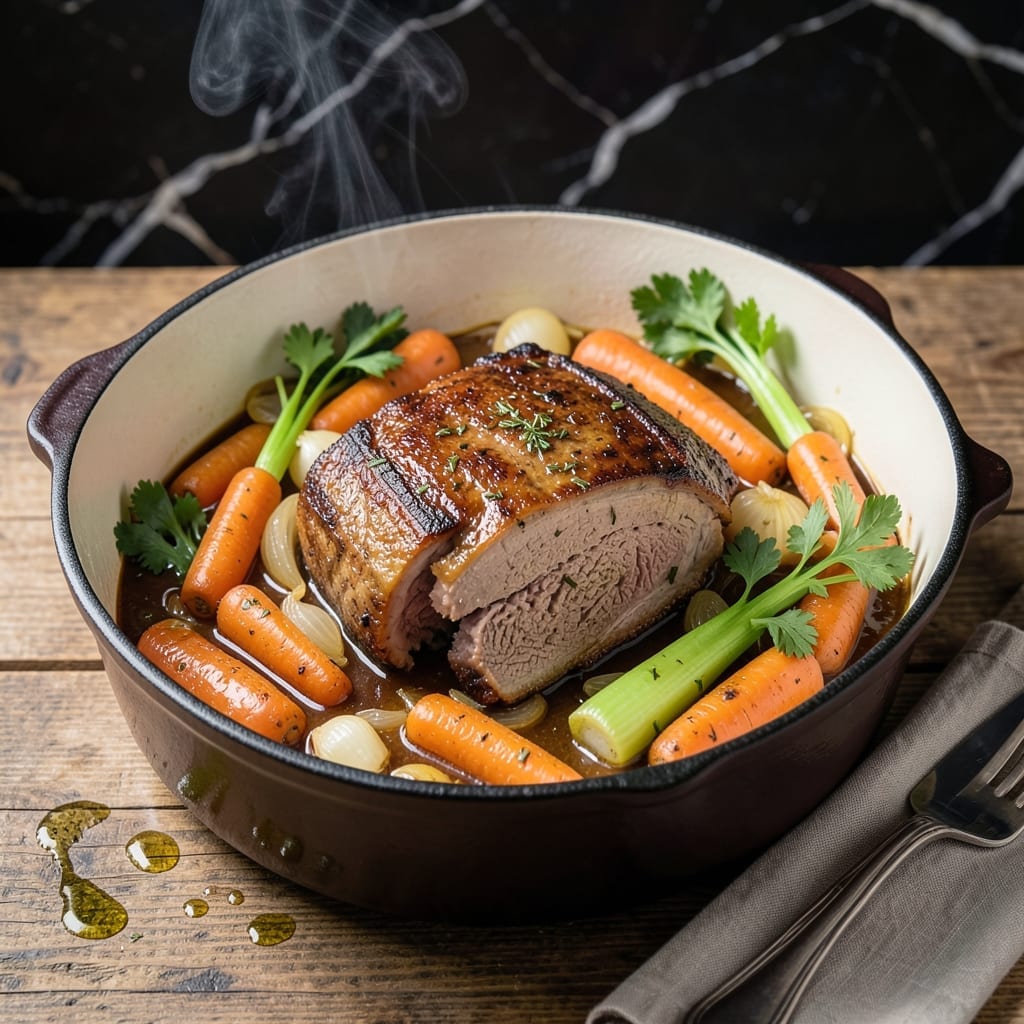
I’ve spent years perfecting this pot roast, and the secret is in the wine-infused braise. The meat comes out so tender it practically dissolves on your tongue.
This isn’t your average Sunday dinner. A slow cook in the oven with red wine, herbs, and aromatics turns a tough cut into something extraordinary.
You’ll start with a good sear to lock in flavor, then let the oven work its magic. The result? Fall-apart tender beef with a rich, velvety sauce.
Serve it with mashed potatoes or crusty bread to soak up every last drop. This is comfort food at its finest.
Ingredients for Melt in Your Mouth Pot Roast
A tough cut transforms into something extraordinary with these simple, flavor-packed ingredients.
| Ingredient | Amount | Notes |
|---|---|---|
| Chuck Roast 🥩 | 3 lb | Well-marbled, boneless preferred |
| Olive Oil 🫒 | 2 tbsp | Divided for searing and braising |
| Yellow Onion 🧅 | 2 whole | Large, roughly chopped |
| Garlic Cloves 🧄 | 6 cloves | Smashed, peeled |
| Carrots 🥕 | 4 whole | Peeled, cut into 2-inch chunks |
| Celery Stalks 🌿 | 3 whole | Cut into 2-inch pieces |
| Dry Red Wine 🍷 | 2 cups | Bold variety like Cabernet |
| Beef Broth 🥣 | 2 cups | Low-sodium preferred |
| Tomato Paste 🍅 | 2 tbsp | For depth of flavor |
| Fresh Thyme Sprigs 🌿 | 3 whole | Plus 1 tsp dried if needed |
| Fresh Rosemary Sprigs 🌿 | 2 whole | Or 1 tsp dried |
| Bay Leaves 🍃 | 2 whole | Dried, for aroma |
| Kosher Salt 🧂 | 1 ½ tsp | Plus more to taste |
| Black Pepper 🌶️ | 1 tsp | Freshly ground preferred |
The chuck roast is non-negotiable here. Look for good marbling—that fat renders down and makes the meat melt-in-your-mouth tender. Costco usually has well-marbled chuck at a good price, but your local butcher can point you to the right cut too. Don’t trim too much fat off before cooking (that’s flavor insurance). If you’re short on time, ask for pre-cut stew meat, though whole roasts give you more control.
No red wine? Substitute with beef broth plus 1 tbsp balsamic vinegar for acidity. Dried herbs work at one-third the amount of fresh. The carrots and celery can be swapped for parsnips or potatoes if that’s what you’ve got. Trader Joe’s has great pre-chopped mirepoix if you’re in a hurry. For the tomato paste, those squeeze tubes mean no waste (and they last forever in the fridge).
Pot roast actually tastes better the next day. Store in the fridge for up to 4 days or freeze for 3 months. The fat solidifies when cold—just skim it off before reheating. Leftovers make amazing sandwiches (trust me on this).
Why You’ll Love This Recipe
- Set It and Forget: I toss the chuck roast, onions, and carrots in the pot, cover, and let the oven do the work for hours.
- Garlic-Infused Tender: The garlic cloves melt into the meat, making every bite so tender it practically dissolves.
- Sunday or Wednesday: Honestly, it’s just as good for a lazy weekend as it is for a quick weeknight dinner.
- Leftovers for Days: One roast feeds us for two nights—sandwiches the next day are even better.
Step-by-Step Instructions for Wine-Infused Pot Roast
Here’s my foolproof method—simple steps, incredible flavor, fall-apart tender every time.
Step 1: Sear the Chuck Roast to Lock in Flavor
Pat the 3 lb chuck roast dry with paper towels and season generously with the 1.5 tsp kosher salt and 1 tsp black pepper. Heat 1 tbsp olive oil in a large Dutch oven over medium-high heat until shimmering.
Sear the roast on all sides for 4-5 minutes per side until deeply browned. This creates a flavorful crust that will enrich the braising liquid. Don’t rush this step—you want a deep mahogany color on all surfaces. Remove the meat and set aside.
Step 2: Build the Aromatic Base
In the same pot, add the remaining 1 tbsp olive oil over medium heat. Add the 2 whole yellow onion, 4 whole carrots, and 3 whole celery stalks. Cook for 5-7 minutes until the vegetables begin to soften and develop light golden edges.
Stir in the 6 cloves garlic cloves and 2 tbsp tomato paste, cooking for 1-2 minutes until the tomato paste darkens slightly. This step builds a rich foundation for the braising liquid. The mixture should look thick and deeply colored.
Step 3: Deglaze and Add Braising Liquid
Pour in the 2 cups dry red wine, scraping up all the browned bits from the bottom of the pot with a wooden spoon. Let it simmer for 3-4 minutes until reduced by half. This deglazing step captures all the concentrated flavor from searing.
Add the 2 cups beef broth, 3 whole fresh thyme sprigs, 2 whole fresh rosemary sprigs, and 2 whole bay leaves. Return the chuck roast to the pot, along with any accumulated juices. The liquid should come about halfway up the meat.
Step 4: Braise to Fall-Apart Tenderness
Bring the liquid to a gentle simmer, then reduce heat to low. Cover and cook for 3-3.5 hours, turning the roast every 45 minutes. The pot should maintain a very gentle simmer—just a few bubbles breaking the surface.
You’ll know it’s done when the meat pulls apart easily with a fork. The liquid should be reduced and intensely flavorful, with the vegetables completely tender. The internal temperature should reach 195-200°F for that perfect melt-in-your-mouth texture.
Step 5: Rest and Serve
Carefully transfer the chuck roast to a cutting board and tent loosely with foil. Let it rest for 15 minutes before slicing or shredding. This allows the juices to redistribute throughout the meat.
Meanwhile, skim any excess fat from the surface of the braising liquid. Serve the pot roast with the vegetables and sauce spooned over the top. The meat should be so tender it nearly dissolves in your mouth, with every bite infused with the rich wine and herb flavors.
Pro Tips For Making Melt In Your Mouth Pot Roast
- Sear aggressively: Crank the heat to medium-high and don’t move the chuck roast for 3-4 minutes per side—you want a deep, dark crust. I learned this the hard way after too many pale, steamed-looking roasts.
- Cut carrots thick: Use 2-inch chunks for the carrots so they hold their shape and don’t turn to mush after hours of braising. Sounds obvious, but I’ve ruined my share of vegetables by dicing them too small.
- Skip the cold roast: Let the chuck roast sit at room temperature for 30-45 minutes before searing, or the center stays tough while the outside overcooks. After burning a few dry, chewy roasts, I finally started planning ahead.
- Deglaze properly: After removing the roast, pour in a cup of beef stock and scrape the browned bits from the bottom—this adds a ton of flavor. I was skeptical until I tried it and tasted the difference in the sauce.
Troubleshooting Perfect Results
Too Much Liquid
If your braising liquid isn’t reducing, remove the lid and simmer uncovered for 15-20 minutes. I often prop the lid slightly ajar with a wooden spoon to speed up the process. The sauce should coat the back of a spoon when done. 💡
Meat Not Tender
The most common issue is not cooking long enough. If the meat isn’t fork-tender after 3 hours, continue cooking and check every 30 minutes. The internal temperature needs to reach 195-200°F for collagen to break down properly.
Dry Pot Roast
This usually means the liquid level was too low. Next time, add an extra ½ cup beef broth. Also, ensure your Dutch oven has a tight-fitting lid to trap moisture. I learned this the hard way with my first Le Creuset pot.
Bland Flavor
If the sauce tastes flat, stir in 1 tbsp tomato paste or a splash of red wine vinegar at the end.
Vegetables Mushy
Add the vegetables 1 hour into cooking if you prefer them firmer. Or, cut them into larger chunks—3-inch pieces hold up better. I often add potatoes during the last 45 minutes to prevent overcooking.
Sauce Too Greasy
After cooking, let the liquid settle for 5 minutes, then skim the fat with a spoon. For a smoother sauce, blend the vegetables into the liquid using an immersion blender. I always keep a fat separator handy for this.
Nutrition Facts
Frequently Asked Questions
What’s the best cut for this dish?
Chuck roast is ideal because of its marbling and connective tissue. It breaks down beautifully during the 3-3.5 hour braise. Avoid leaner cuts like sirloin which can dry out.
Can I use a slow cooker instead?
Yes! Sear the meat first, then transfer to a slow cooker with all ingredients. Cook on low for 8-10 hours or high for 5-6 hours. The texture will be similar but less concentrated in flavor.
How do I know when it’s done?
The meat should reach 195-200°F internally and pull apart easily with a fork. If it resists, give it more time. The collagen needs this temperature to melt properly.
Why is my sauce too thin?
Remove the lid and simmer uncovered for 15-20 minutes. For faster results, prop the lid ajar with a wooden spoon. The sauce should coat the back of a spoon when ready.

- 6 Oz Chocolate Chip Cookie Recipe: Perfectly Balanced Crispy Edges and Chewy Hearts - September 25, 2026
- 6-Inch Coffee Cake Recipe: Vanilla Bean Swirls and Buttery Streusel Topping - September 25, 2026
- 1 Hour Soup Recipe: Velvety Richness Without the Wait - September 25, 2026