
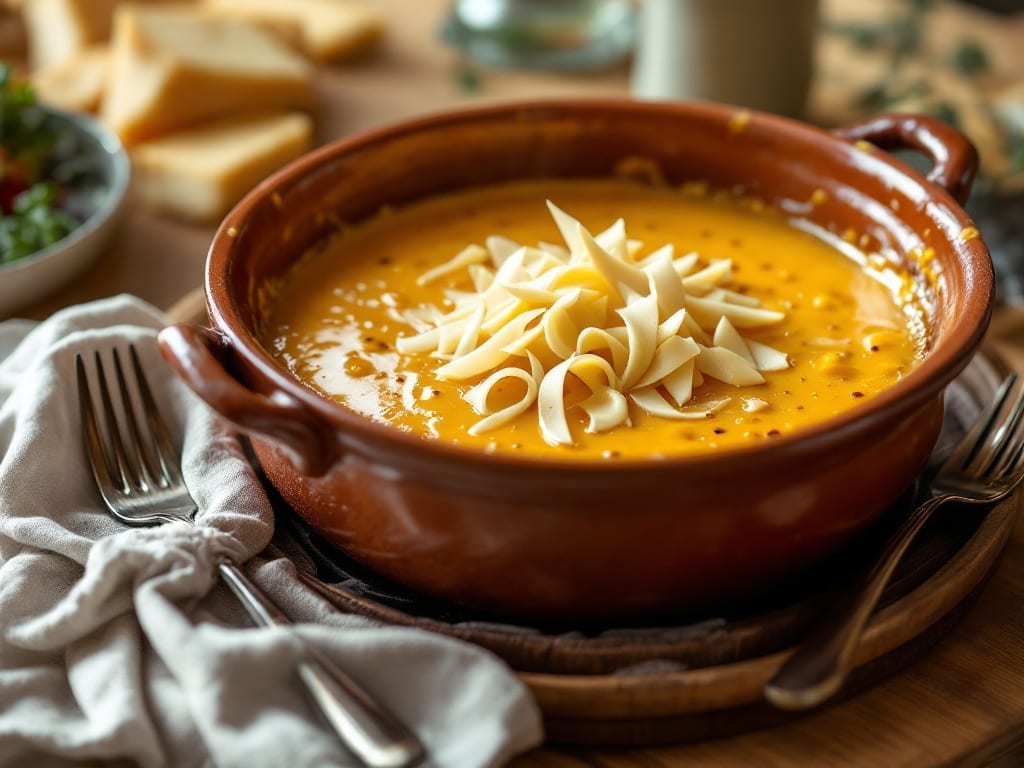
This melting pot classic Alpine fondue recipe turns a simple cheese ritual into a sizzling centerpiece that brings warmth and connection to any gathering. The secret lies in precise temperature control—maintaining that perfect liquid-golden cheese pool where every dip becomes a moment of indulgence.
I’ve perfected this technique over years of hosting, ensuring the cheese melts smoothly without breaking, creating a velvety base that clings to bread, meat, and vegetables alike.
The foundation begins with a balanced blend of Gruyère and Emmental cheeses, their nutty and slightly sweet profiles forming the heart of the dish. A splash of white wine and a touch of cornstarch keep the mixture silky and stable, while black pepper and a hint of nutmeg add depth.
The key to success? A slow, steady heat—never boiling, never rushing—so the cheese transforms into a luxurious, stretchy consistency that begs for dipping.
What makes this fondue truly special is the crispy contrast of the dippers: toasted baguette slices, tender apple wedges, and even hearty chunks of potato or chorizo.
Each bite delivers the crispy satisfaction of the dipper paired with the rich, creamy cheese, creating a harmony that feels both nostalgic and refined. The aroma alone—warm cheese mingling with wine and herbs—fills the room, turning a simple meal into an experience.
Whether you’re hosting a cozy winter evening or a lively gathering, this recipe delivers restaurant-quality results with minimal effort. The instructions walk you through every step, from cheese selection to pot maintenance, ensuring your fondue is classic in every sense. Let’s create a moment worth savoring together.
Ingredients for melting pot classic alpine fondue
Nine essential ingredients transform into a luxurious cheese ritual—crispy, creamy, and unforgettable.
| Ingredient | Amount | Notes |
|---|---|---|
| Gruyère Cheese 🧀 | 2 cups | Freshly grated, aged 18 months minimum |
| Emmental Cheese 🧀 | 1 ½ cups | Freshly grated, nutty flavor |
| Dry White Wine 🍷 | 1 cup | Sauvignon Blanc or Chardonnay |
| Cornstarch 🌾 | 1 tbsp | For smooth texture |
| Black Peppercorns 🌶️ | 1 tsp | Freshly cracked preferred |
| Ground Nutmeg 🌿 | ¼ tsp | Freshly grated for best flavor |
| Fresh Baguette 🍞 | 1 whole | Crusty, sliced into sticks |
| Apples 🍎 | 2 medium | Firm, crisp variety like Honeycrisp |
| Russet Potatoes 🥔 | 1 ½ lb | Peeled, cut into chunks |
| Chorizo 🍖 | ½ lb | Sliced into bite-sized pieces |
| Garlic Cloves 🧄 | 2 cloves | Minced for flavor boost |
| Extra-Virgin Olive Oil 🫒 | ¼ cup | For dipping pot |
The cheeses are non-negotiable. Gruyère from a specialty shop—look for the 18-month aged label—has that perfect melt and nutty depth. Emmental from the deli section (not pre-shredded) keeps things stable. I always grab mine at Whole Foods or Costco for consistency. The white wine should be dry—Sauvignon Blanc or Chardonnay—whatever you’d drink with seafood. Freshly cracked black peppercorns make all the difference; pre-ground tastes flat. For nutmeg, grate it fresh—the difference is night and day.
No crisp apples? Pears or firm pears work too—just avoid anything mealy. Potatoes should be Russets (or Yukon Golds for creamier texture), peeled and cut into even chunks so they cook uniformly. Running out of chorizo? Spicy sausage or even prosciutto adds that salty contrast. The baguette must be fresh—day-old gets soggy. Toast it just before serving so it stays crisp. For extra flavor, rub the baguette slices with a garlic clove before toasting. The olive oil is just for the pot—any good quality works here.
Cheese keeps best in the fridge for 3-4 days if stored properly—wrap tightly in parchment paper, then foil. The dippers? Toast them fresh—they lose crispness fast. Fondue reheats beautifully—just warm gently on low heat, stirring constantly. I always make extra cheese because it freezes well for up to 3 months. Portion it into freezer bags, flat as pancakes, so it thaws quickly. The wine? Drink it all—none of that fondue leftovers nonsense.
Why You’ll Love This Recipe
- One-Pot Wonder: I swear by this recipe because it’s literally one pot—no chopping, no fussing, just shred the cheeses, simmer with wine, and stir in cornstarch. That’s it. Even my college apartment days couldn’t break this.
- Nutty Wine Magic: The Gruyère and Emmental combo with dry white wine? It’s like a hug for your taste buds—creamy, sharp, and just enough acidity to cut through. I’ll be real: I’ve tried store-bought fondue, and this tastes like a real restaurant.
- Weeknight Crowd-Pleaser: Hosting a last-minute dinner? This feeds six with minimal effort. The wine adds sophistication, but the peppercorns and cornstarch keep it cozy. My roommates still ask for it after three years—(yes, even on a Tuesday night).
- Leftover Gold: The fondue thickens beautifully for dipping bread the next day, and the cheese doesn’t go bad. I’ve even turned extra into a quick quiche—because why waste that rich, melty goodness? Budget-friendly and delicious.
Step-by-step instructions for melting pot classic Alpine fondue
Here’s how to create that perfect, bubbling cheese ritual with gooey, golden dippers.
Prepare the Cheese Mixture
In a medium bowl, combine the 2 cups of freshly grated Gruyère cheese and 1.5 cups of freshly grated Emmental cheese. This combination gives you that classic Alpine flavor balance—Gruyère for nutty depth and Emmental for smooth meltability. Use a fine grater for even texture, and don’t skip the fresh grating; pre-shredded cheese has anti-caking agents that prevent proper melting.
Add the 1 tablespoon of cornstarch to the cheese mixture and toss gently with your hands or a fork. The cornstarch acts as a natural thickener, ensuring your fondue stays creamy rather than watery. Here’s the thing—don’t overmix or pack the cheese too tightly, or it’ll create lumps that won’t melt smoothly. Sprinkle in the 1 teaspoon of freshly cracked black peppercorns and 0.25 teaspoon of freshly grated ground nutmeg, then mix just until evenly distributed. The nutmeg adds that signature Alpine warmth, while the peppercorns bring a subtle kick.
Heat the Wine and Assemble the Fondue Pot
Pour the 1 cup of dry white wine into a fondue pot or heavy saucepan. I like using Sauvignon Blanc for its crisp acidity—it cuts through the richness of the cheese beautifully. Place the pot over medium-low heat and let it warm through, but don’t let it boil. You’re aiming for a gentle simmer where you can see small bubbles forming at the edges, not a rolling boil that’ll scramble your cheese.
While the wine heats, place a small bowl of cold water next to your fondue pot. This is your secret weapon for temperature control—if the cheese gets too hot, you can lower the pot into the water for a few seconds to cool it down. Once the wine is just starting to shimmer, remove it from heat and immediately add the cheese mixture all at once. Stir vigorously with a wooden spoon or fondue whisk for about 2 minutes until the cheese melts completely and the mixture becomes smooth and glossy.
Maintain the Perfect Temperature
Return the fondue pot to the heat source, but this time use a candle or fondue burner for precise control. The ideal temperature is between 160°F and 170°F—hot enough to keep the cheese melted but not so hot it burns. If you don’t have a thermometer, here’s what to watch for: the cheese should bubble gently and maintain a creamy consistency. If it starts to thicken too much, stir in 1-2 tablespoons of the reserved wine to loosen it up.
Keep the fondue pot at this temperature throughout your gathering. Real talk: the cheese will naturally thicken as it sits, so you’ll need to stir occasionally and add a splash of wine as needed to maintain that perfect dipping consistency. The key is patience—rushing the temperature will make your fondue grainy and unappetizing. Trust the process, and you’ll have that luxurious, stretchy cheese every time.
Prepare the Classic Dippers
While the fondue heats, slice the 1 whole fresh baguette into 1-inch sticks. The crust should be crispy—this is what gives you that satisfying contrast with the melted cheese. For variety, cut the 2 medium apples into wedges and the 1.5 pounds of peeled russet potatoes into 1-inch chunks. Toss the potatoes in the 0.25 cup of extra-virgin olive oil and sprinkle with a pinch of salt, then roast at 400°F for 20-25 minutes until golden and tender.
Slice the 0.5 pound of chorizo into bite-sized pieces and sauté in a dry skillet over medium heat for 3-4 minutes until crispy. The chorizo adds a smoky, spicy contrast that pairs perfectly with the creamy cheese. Finally, mince the 2 cloves of garlic and have them ready for quick dipping—they add a fresh, pungent bite that cuts through the richness. Arrange all your dippers on a platter around the fondue pot so everyone can reach easily.
Serve and Enjoy the Ritual
Once your fondue is at the perfect temperature and all dippers are ready, it’s time to gather around. The classic way to dip is to hold two bread sticks together, then quickly swirl them through the cheese before pulling them out. The bread should come out coated in that beautiful, golden-brown crust from the cheese. For the apples, dip just the tip to avoid sogginess, and the potatoes should be coated lightly to maintain their crispy exterior.
Encourage your guests to try everything—each dipper offers a different texture and flavor experience. The chorizo adds heat, the apples bring freshness, and the potatoes give you that hearty, satisfying bite. Remember, the secret to great fondue isn’t just the cheese—it’s the variety of dippers that makes it special. Serve with extra wine for toasting, and enjoy this warm, communal experience that’s been bringing people together for centuries.
Pro Tips For Making Melting Pot Classic Alpine Fondue
- Grate Cheese Coarse: I learned this the hard way—tiny cheese shavings turn fondue into a gritty mess. Use a box grater with medium holes (or pulse in a food processor) so the cheese melts smoothly. You want chunks that dissolve, not fight you.
- Wine First, Cheese Later: Skip the urge to toss everything in at once. Warm the wine alone over medium heat until it’s just simmering—about 3 minutes. This prevents the cheese from clumping like sad, lumpy snow.
- Skip the Boil: Fondue hates bubbles. Once the cheese is added, reduce heat to lowest possible and stir constantly. I used to let it bubble, and the Gruyère would separate like a sad divorce—now I just keep it at a whisper.
- Cornstarch Trick: Mix the cornstarch with cold water first (1 tsp per ½ cup liquid) to avoid clumps. Add it after the cheese melts, not before—it thickens better when the base is already smooth. (Yes, even if you’re impatient like me.)
Regional styles of melting pot classic alpine fondue
Swiss Mountain Tradition
The classic Alpine fondue we know today originated in the Swiss Alps, where it was born out of necessity during harsh winters. Shepherds and farmers would melt cheese over open fires to create a warm, filling meal using whatever bread or vegetables they had on hand.
The Gruyère and Emmental combination became iconic because these cheeses were abundant in the region and melted beautifully together. I love how this dish embodies the Swiss spirit of Gemeinschaft—community—where everyone gathers around the pot to share bites. 🏔️
In traditional Swiss homes, the fondue pot was often made of cast iron or copper, placed over a wood-burning stove. The wine used was typically local white wines like Fendant or Chasselas, which complement the cheeses perfectly.
The Swiss even have a specific fondue fork with two long tines for holding bread sticks—this prevents accidental dips and keeps the bread crispy. I keep a set of these forks on hand whenever I host fondue nights.
French Savoyard Elegance
Just across the border in France’s Savoy region, fondue evolved into a more refined dining experience. The Savoyards added beef broth to the cheese mixture, creating a richer, more complex flavor profile that became known as fondue bourguignonne.
This version often includes heartier dippers like raw potatoes, carrots, and even chunks of meat that are cooked in the broth as they’re dipped. The French also introduced the concept of fondue à l’anglaise (English-style), where the cheese is served with a side of broth for dipping.
What sets Savoyard fondue apart is the emphasis on presentation. In upscale French restaurants, the cheese is often served in a copper caquelon (fondue pot) with a candle or alcohol burner for precise temperature control.
I’ve found that using a Savoyard-style caquelon with a built-in burner gives the most authentic experience at home. The French also pair their fondue with crusty baguettes, charcuterie, and even fresh herbs like tarragon or chives for garnish.
German Alpine Twist
In Germany, particularly in the Black Forest and Bavaria regions, fondue takes on a heartier, more rustic character. The Germans often incorporate smoked cheeses like Tilsiter or Bergkäse, which add a deep, smoky flavor that pairs beautifully with the traditional Alpine cheeses.
They also use dark rye bread instead of baguettes, creating a denser, more substantial dipper that soaks up the cheese like a sponge. The Germans take their fondue seriously—it’s a staple at winter festivals and family gatherings.
One unique German tradition is Käsespätzle fondue, where small egg noodles are mixed into the melted cheese, creating a thick, creamy dish that’s more like a baked casserole than traditional fondue.
For a true German experience, I recommend adding a splash of beer (like a light Helles or Weizen) to the cheese mixture instead of wine. The beer adds a malty depth that complements the smoky cheeses perfectly. Serve with pickled vegetables and sausage slices for a complete Bavarian spread.
Modern American Adaptations
While traditional Alpine fondue remains popular, American home cooks have put their own spin on the classic recipe. One trendy variation is white wine and Gruyère fondue with a splash of hot honey for a sweet-heat twist.
I’ve also seen creative additions like chili flakes, lemon zest, or even a dash of bourbon to elevate the flavor profile. The key is balancing tradition with innovation—keeping the core technique intact while experimenting with flavors that excite your guests.
Another American adaptation is fondue bars, where guests can customize their own cheese blends using a variety of cheeses, wines, and flavorings.
Set up small fondue pots with different cheese mixtures—like sharp cheddar and ale, brie and apple cider, or blue cheese and port wine—and let everyone create their own dipping experience. This approach is perfect for parties and makes the dish feel fresh and interactive.
I’ve hosted these fondue bars at New Year’s gatherings, and they’re always a hit! 🍷
Nutrition facts
Frequently asked questions
What’s the best fondue pot for beginners?
Start with an electric fondue set—it has built-in temperature control and eliminates the guesswork of candle flames. Look for one with a 1.5-quart capacity (like the Cuisinart or Hamilton Beach models) and adjustable heat settings. These pots maintain 160°F-170°F automatically, so your cheese stays perfect without burning.
Can I make fondue without wine?
Replace the wine with 1 cup dry chicken or vegetable broth for a non-alcoholic version. For extra richness, add 1 tablespoon butter or 1/4 cup heavy cream. The key is maintaining the same liquid-to-cheese ratio—just 1 cup liquid per 3.5 cups cheese—to keep the texture smooth.
Why did my fondue get grainy?
Graininess happens when the cheese overheats or sits too long without stirring. Always melt cheese over low heat and stir constantly for 2-3 minutes until completely smooth. If it thickens later, thin with 1 tablespoon wine or broth. Pro tip: Use freshly grated cheese—pre-shredded varieties contain anti-caking agents that prevent proper melting.
What are the best vegetarian dippers besides bread?
Try roasted sweet potatoes, crispy polenta cubes, or steamed broccoli florets for hearty options. For freshness, add endive leaves or cucumber slices. The secret is to keep dippers crisp or firm—avoid soggy vegetables like tomatoes or zucchini. Serve with a side of marinara sauce for dipping too!
How do I store leftover fondue?
Cool the fondue completely, then transfer to an airtight container. It keeps in the fridge for 3-4 days—reheat gently over low heat, stirring constantly, and add a splash of wine or broth to restore creaminess. For long-term storage, freeze in 1-cup portions (flat, like pancakes) for up to 3 months. Thaw overnight in the fridge before reheating.

- Crock Pot Round Steak Recipe: Slow-Sear Crust With Juicy Center - November 6, 2026
- Candied Sweet Potatoes Crock Pot Recipe: Caramelized Sweetness With Zero Effort - November 6, 2026
- Steak Recipe Crock Pot: Juicy, Caramelized Crust in 4 Hours - November 6, 2026