
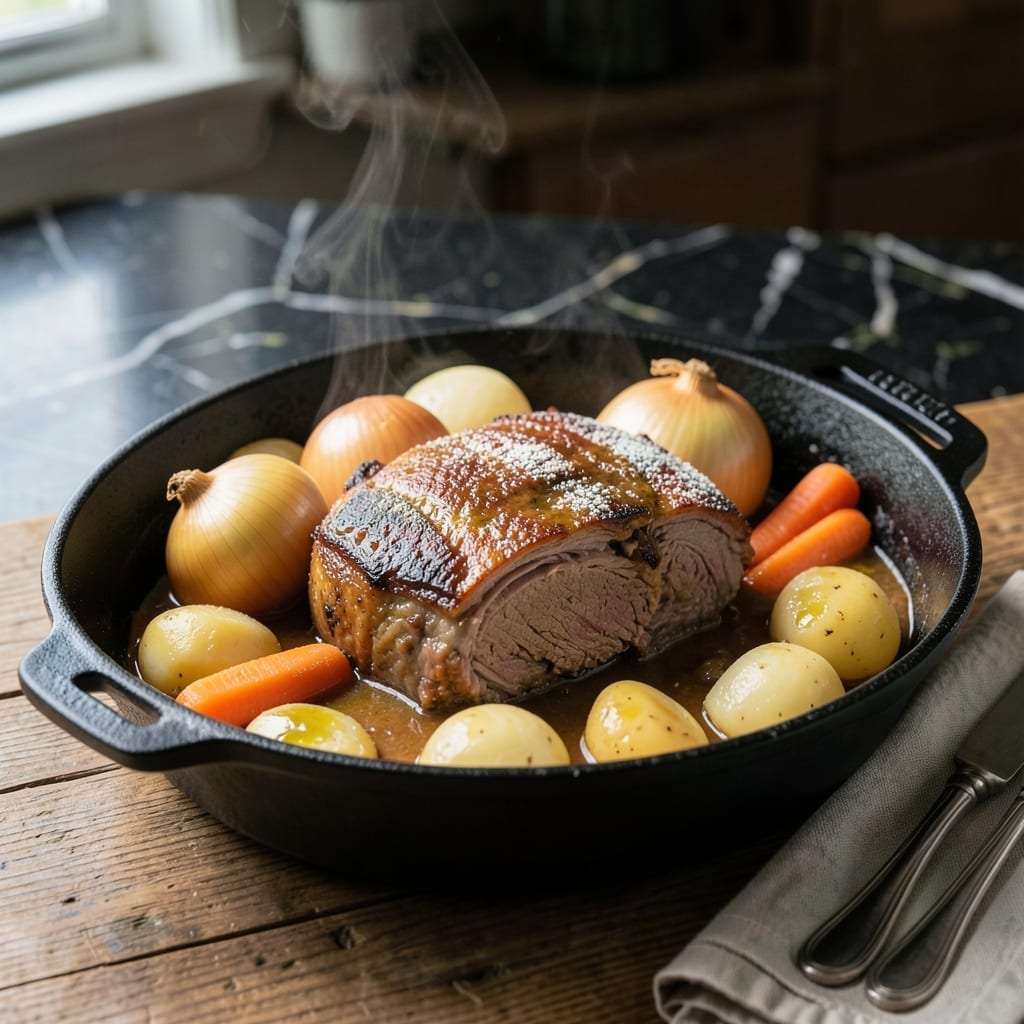
There’s a reason Mennonite pot roast has stood the test of time—it delivers tender, fall-apart meat with rich, savory depth. This slow-cooked dish transforms simple ingredients into something extraordinary through traditional methods.
I’ve perfected this recipe by sticking to the basics: a well-salted chuck roast, root vegetables, and a long, gentle braise. The key is patience, letting the flavors meld and the meat become fork-tender.
What you end up with is a hearty, satisfying meal that feels like a warm embrace on a cold day. The broth is so flavorful, it begs to be sopped up with fresh bread.
Ideal for Sunday suppers or family gatherings, this dish proves that the best meals often come from the simplest traditions.
Ingredients for Mennonite Pot Roast
Traditional ingredients transform into slow-cooked perfection with time and patience.
| Ingredient | Amount | Notes |
|---|---|---|
| Chuck Roast 🥩 | 3 lb | Well-marbled, trimmed of excess fat |
| Kosher Salt 🧂 | 2 tsp | Diamond Crystal preferred for even seasoning |
| Black Pepper 🌶️ | 1 tsp | Freshly ground for best flavor |
| All-Purpose Flour 🌾 | ¼ cup | For dredging the roast |
| Vegetable Oil 🫒 | 2 tbsp | High smoke point for searing |
| Yellow Onions 🧅 | 2 whole | Medium-sized, quartered |
| Carrots 🥕 | 4 whole | Peeled, cut into 2-inch chunks |
| Potatoes 🥔 | 4 whole | Yukon Gold, peeled and quartered |
| Celery Stalks 🥬 | 3 whole | Cut into 2-inch pieces |
| Beef Broth 💧 | 3 cups | Low-sodium preferred for control |
| Garlic Cloves 🧄 | 5 cloves | Smashed but left whole |
| Dried Thyme 🌿 | 1 tsp | Crushed between fingers to release oils |
| Bay Leaves 🍃 | 2 whole | Fresh or dried for aromatic depth |
| Tomato Paste 🍅 | 2 tbsp | For umami richness in broth |
| Red Wine 🍷 | ½ cup | Dry variety like Cabernet Sauvignon |
The chuck roast is non-negotiable—look for good marbling at your butcher or Whole Foods meat counter. This cut breaks down beautifully during the long braise. I prefer Diamond Crystal kosher salt for its clean flavor and even distribution. For the vegetables, Yukon Gold potatoes hold their shape better than russets, and fresh celery adds a subtle bitterness that balances the sweetness of the carrots.
No red wine? Beef broth with a splash of balsamic vinegar mimics the depth. Dried thyme can be swapped for fresh at triple the amount. If you’re out of tomato paste, 1 tbsp ketchup plus 1 tbsp water works in a pinch. For a richer broth, add a Parmesan rind while cooking—remove before serving. The flour dredge can be omitted for gluten-free, but the sauce will be thinner.
Leftovers taste even better the next day—store in an airtight container for up to 4 days in the fridge or freeze for 3 months. Reheat gently on the stove to preserve texture. The broth makes an excellent base for soups or gravies.
Why You’ll Love This Recipe
- Set It and Forget: I brown the chuck roast, dust it with flour, and let the oven do the rest—hardly any hands-on time.
- Crispy, Tender Magic: The flour crust locks in juices, so every bite is fall-apart tender with a golden, savory edge.
- Sunday Supper, Any Day: I serve it to company or pack it for lunch; it feels special but fits a Tuesday just as well.
- Leftovers for Days: One roast feeds us twice, and the shreds make incredible sandwiches the next day.
Step-by-Step Instructions for Mennonite Pot Roast
This traditional method delivers fork-tender meat and rich, aromatic gravy with minimal effort.
Step 1: Season and Sear the Chuck Roast
Pat the 3 lb chuck roast dry with paper towels, then season all sides generously with the 2 tsp kosher salt and 1 tsp black pepper. This creates a flavorful crust while ensuring even seasoning throughout the meat.
Dredge the roast in the 0.25 cup all-purpose flour, shaking off any excess. Heat the 2 tbsp vegetable oil in a Dutch oven over medium-high heat until shimmering. Sear the roast for 4-5 minutes per side until deeply browned on all surfaces. This develops the fond that will deepen your gravy’s flavor.
Step 2: Sauté the Vegetables and Deglaze
Remove the roast and set aside. In the same pot, add the 2 whole yellow onions, 4 whole carrots, 4 whole potatoes, and 3 whole celery stalks. Sauté for 5 minutes until the onions begin to soften and take on color.
Stir in the 2 tbsp tomato paste, cooking for 1 minute to caramelize slightly. Add the 5 cloves garlic cloves, 1 tsp dried thyme, and 2 whole bay leaves, then deglaze with the 0.5 cup red wine, scraping up all browned bits from the bottom. Simmer for 2 minutes until the liquid reduces by half.
Step 3: Braise Until Tender
Return the roast to the pot and pour in the 3 cups beef broth, ensuring the liquid comes about halfway up the meat. Bring to a simmer, then reduce heat to low. Cover and braise for 2.5-3 hours, turning the roast occasionally, until it shreds easily with a fork.
Check the liquid level periodically—if it reduces too much, add a splash of water. The vegetables should be tender, and the broth will have transformed into a rich, velvety gravy infused with the roast’s juices and aromatic herbs.
Step 4: Rest and Serve
Once the roast is fall-apart tender, transfer it to a cutting board and tent loosely with foil. Let it rest for 15 minutes to allow the juices to redistribute. Skim any excess fat from the gravy if desired, then adjust seasoning with additional salt or pepper if needed.
Slice or shred the roast and serve it with the cooked vegetables and gravy spooned over the top. The meat should be moist and flavorful, with the vegetables absorbing all the rich, savory notes from the slow-cooked broth.
Pro Tips For Making Mennonite Pot Roast
- Sear Hard First: Crank the heat to medium-high and get that chuck roast deeply browned—about 4-5 minutes per side. I learned this the hard way: a pale sear means bland gravy.
- Season the Flour: Mix 1 teaspoon each of kosher salt and black pepper into the flour before dredging. Sounds weird, but it works: every bite of the crust ends up perfectly seasoned.
- Skip the Overcrowding: Don’t cram the pot with too much oil or too many pieces at once. Steer clear of this and you’ll get a proper crust instead of steamed meat.
- Rest Before Serving: Give the roast a solid 10-15 minutes under foil after cooking. My grandmother swore by this, and she was right: the juices redistribute and the meat stays tender.
Essential Equipment for This Dish
Dutch Oven Essentials
A heavy 5-6 quart Dutch oven is non-negotiable for even heat distribution. I swear by Le Creuset or Lodge enameled cast iron—both retain heat beautifully and go from stovetop to oven seamlessly. The tight-fitting lid traps moisture for that perfect braise. 🔥
Quality Knives
Invest in a 8-inch chef’s knife for trimming fat and chopping vegetables. I use Wüsthof for its durability and precision. A paring knife helps with peeling potatoes and carrots efficiently.
Wooden Spoon
A sturdy wooden spoon won’t scratch your Dutch oven’s surface. It’s perfect for stirring the fond during deglazing. I keep one dedicated to braising dishes to avoid cross-contamination with other flavors.
Instant-Read Thermometer
While not traditional, a ThermoWorks Instant Read ensures perfect doneness. Check that your roast reaches 195-205°F internally for that fall-apart texture. It takes the guesswork out of timing.
Cutting Board
A large bamboo or plastic cutting board gives you space to prep all vegetables at once. I prefer OXO’s utility board with a non-slip base. It’s big enough to handle the roast and all the veggies without crowding.
Tongs or Meat Forks
Use 12-inch tongs or a meat fork to turn the roast during searing and braising. I love OXO’s locking tongs for their grip and control. They help you handle the heavy roast without piercing it too much. ✨
Nutrition Facts
Frequently Asked Questions
What’s the best cut of meat for this?
Use a well-marbled chuck roast for the most tender results. The fat content breaks down during the long braise, creating that signature fall-apart texture. Avoid lean cuts like round or sirloin.
Can I make this in a slow cooker?
Yes! Brown the roast first, then transfer to your slow cooker with all ingredients. Cook on low for 8-10 hours or high for 5-6 hours. The flavor will be slightly less concentrated than Dutch oven.
Why is my gravy too thin?
This usually happens if you skip the flour dredge or don’t reduce the wine enough. For a quick fix, mix 1 tbsp cornstarch with 1 tbsp cold water and stir into the gravy. Simmer for 2 minutes to thicken.
How do I store leftovers?
Keep in an airtight container in the fridge for up to 4 days or freeze for 3 months. Reheat gently on the stove to maintain texture. The flavors deepen overnight!

- 4C Bread Crumbs Meatballs Recipe: Crispy Crust and Juicy Centers - September 25, 2026
- 6 Oz Chocolate Chip Cookie Recipe: Perfectly Balanced Crispy Edges and Chewy Hearts - September 25, 2026
- 6-Inch Coffee Cake Recipe: Vanilla Bean Swirls and Buttery Streusel Topping - September 25, 2026