
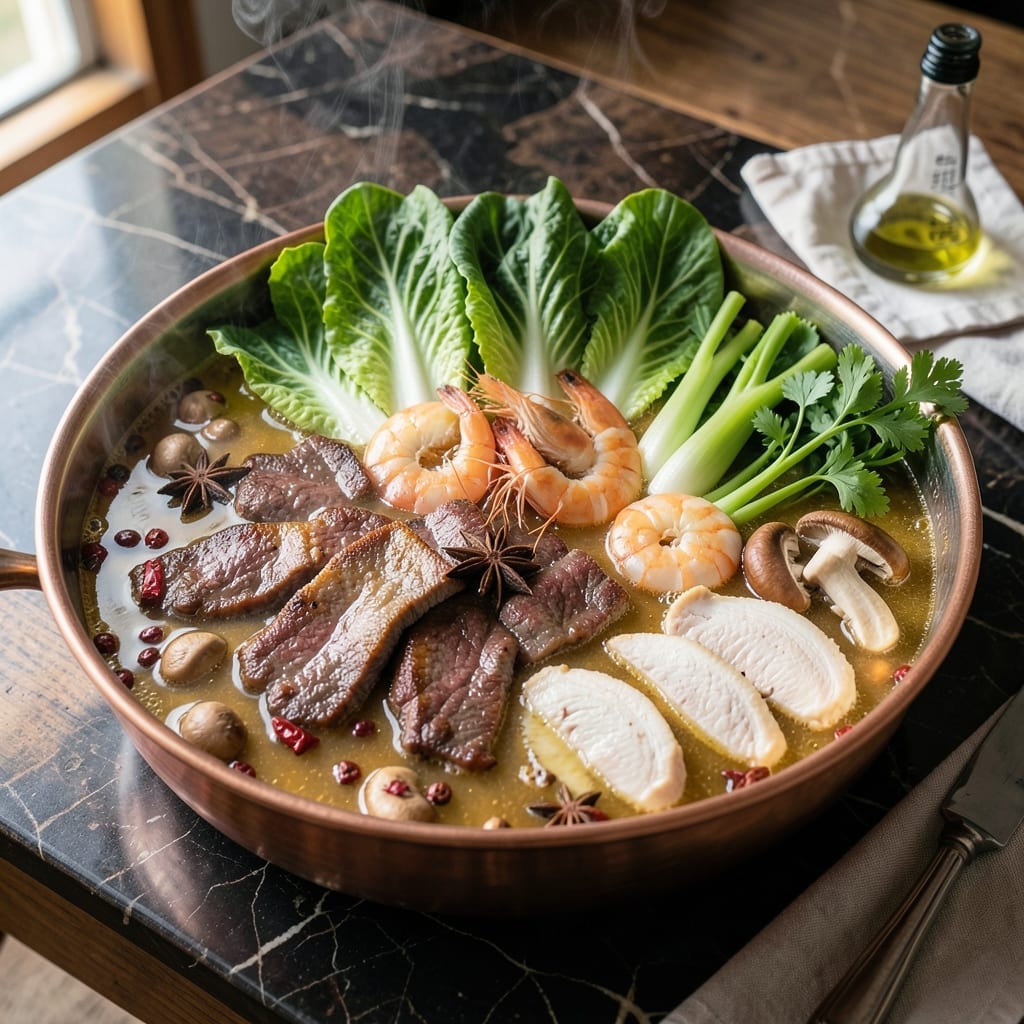
Mongolian fire pot brings the communal dining experience home with its rich, spicy broth and customizable dipping options. This traditional hot pot style invites you to cook thinly sliced meats and fresh vegetables at your table.
The secret lies in the aromatic broth, simmered with warming spices and chili for depth of flavor. I’ve streamlined the technique to deliver authentic taste without complicated steps. The result is a meal that’s as interactive as it is delicious.
You’ll enjoy tender meats, crisp vegetables, and a deeply flavorful broth that intensifies with each ingredient added. The DIY dipping sauces elevate every bite with personalized flavor combinations.
Perfect for gatherings or a special weeknight meal. This approach makes the experience accessible while maintaining traditional authenticity.
Ingredients for Mongolian Fire Pot
Rich broth, thin meats, and fresh veggies ready for your table. Nothing complicated here.
| Ingredient | Amount | Notes |
|---|---|---|
| Beef Sirloin 🥩 | 1 ½ lb | Thinly sliced against the grain |
| Chicken Breast 🍗 | 1 lb | Boneless, skinless, thinly sliced |
| Shrimp 🦐 | ½ lb | Peeled and deveined, tails on |
| Napa Cabbage 🥬 | 1 whole | Cut into 2-inch pieces |
| Bok Choy 🥬 | 4 whole | Baby or regular, halved |
| Shiitake Mushrooms 🍄 | 8 oz | Fresh or dried, rehydrated |
| Carrots 🥕 | 2 whole | Peeled and sliced thin |
| Green Onions 🧅 | 4 whole | Cut into 2-inch lengths |
| Beef Broth 🥣 | 8 cups | Low-sodium preferred |
| Sichuan Peppercorns 🌶️ | 1 tbsp | Lightly crushed for aroma |
| Star Anise Pods ✨ | 2 whole | For aromatic depth |
| Dried Red Chili Peppers 🌶️ | 6 pieces | Adjust to heat preference |
| Garlic Cloves 🧄 | 6 cloves | Smashed for broth infusion |
| Fresh Ginger 🌿 | 3 tbsp | Sliced into coins |
| Soy Sauce 🫒 | ½ cup | For dipping base |
| Sesame Oil 🫒 | 2 tbsp | Toasted for dipping sauce |
The broth is everything here. Sichuan peppercorns and star anise are non-negotiable for that authentic taste—find them at Asian markets or the international aisle. I always grab extra peppercorns since they keep forever. For the meats, slicing them paper-thin is key (ask your butcher to do it if you’re not confident). The shrimp? Wild-caught if you can swing it, but frozen works in a pinch.
No Napa cabbage? Regular cabbage or savoy are fine—just cut them thinner. Short on shiitakes? Cremini or white button mushrooms work too. If the heat from dried chilies feels like too much, reduce to 2-3 peppers or swap in mild chili flakes. The dipping sauces can be as simple as soy sauce and sesame oil (that’s my go-to) or jazzed up with minced garlic and chili paste.
Prep all your ingredients ahead—this moves fast once the pot hits the table. Broth keeps 3-4 days in the fridge, or freeze for 3 months. Leftovers? Rare, but they reheat beautifully. Just skim off any fat before storing.
Why You’ll Love This Recipe
- One Pot Wonder: I love that everything—beef, shrimp, cabbage—simmers together in one broth. No juggling pans or timing sides.
- Umami Bomb: The mix of sirloin and shrimp in that savory broth is ridiculous. Each bite tastes like it came from a restaurant kitchen.
- Weeknight Hero: I throw this together after work and it’s ready before the kids finish their homework. (Yes, even on a Tuesday night)
- Stretches Far: Leftovers taste even better the next day, and it feeds my whole family without breaking the bank.
Step-by-Step Instructions for Mongolian Fire Pot
This method brings the communal hot pot experience to your table with bold, aromatic flavors.
Step 1: Prepare the Spiced Broth Base
In a large pot, combine the 8 cups beef broth with the 1 tbsp Sichuan peppercorns, 2 whole star anise pods, and 6 pieces dried red chili peppers. Add the 6 cloves garlic cloves (lightly smashed) and 3 tbsp fresh ginger (sliced into coins).
Bring the mixture to a gentle simmer over medium heat. This slow infusion allows the spices to release their essential oils without bitterness. You’ll notice the broth transforming—it should smell intensely aromatic with a deep, warm spiciness. Let it simmer for 20 minutes to fully develop the flavors.
Step 2: Arrange the Raw Ingredients for Dipping
While the broth steeps, arrange all your dipping ingredients on a large platter. Thinly slice the 1.5 lb beef sirloin against the grain and the 1 lb chicken breast into bite-sized strips. Keep the 0.5 lb shrimp peeled with tails on for easy handling.
Cut the 1 whole napa cabbage into 2-inch pieces, halve the 4 whole bok choy, and slice the 8 oz shiitake mushrooms and 2 whole carrots thinly. The 4 whole green onions should be cut into 2-inch lengths. This uniform sizing ensures even cooking in the hot broth.
Step 3: Create the Dipping Sauces
In a small bowl, whisk together the 0.5 cup soy sauce and 2 tbsp sesame oil until fully emulsified. This simple sauce provides the perfect salty, nutty counterpoint to the spicy broth. Divide it into individual dipping bowls for each diner.
Real talk: the sauce is your safety net if the broth gets too intense. The toasted sesame oil adds a rich depth that balances the heat beautifully. For extra flair, offer additional toppings like minced garlic or chili oil on the side.
Step 4: Assemble and Enjoy the Fire Pot Experience
Transfer the spiced broth to a portable electric pot or tabletop burner set to high heat. The broth should maintain a rolling simmer—you’ll see small bubbles breaking the surface constantly. This ensures your ingredients cook quickly and evenly.
Let everyone cook their own selections directly in the communal pot. Thinly sliced meats will cook in 30-60 seconds, while vegetables like the napa cabbage and bok choy need 2-3 minutes to become tender-crisp. The beauty is in the customization—dip, swirl, and savor at your own pace.
Pro Tips For Making Mongolian Fire Pot
- Slice Against the Grain: Cut your beef sirloin into thin slices against the grain—this keeps it tender even after quick cooking in the hot broth. I learned this the hard way after chewing through rubbery beef in my first few attempts.
- Blanch the Veggies: Give your napa cabbage and bok choy a quick 30-second blanch in boiling water before adding to the pot. It softens them just enough so they cook evenly without turning to mush in the simmering broth.
- Skip the Overcrowding: Resist the urge to dump all your protein in at once—cook in batches if needed. Overcrowding drops the broth temperature, leaving shrimp rubbery and chicken undercooked.
- Prep All Ingredients: Have everything chopped, sliced, and ready to go before heating the broth. Mongolian fire pot cooks fast, and you won’t have time to prep mid-process without burning something.
Dietary Considerations for These Flavors
Gluten-Free Adaptations
This dish is naturally gluten-free if you use tamari instead of regular soy sauce in your dipping sauce. I recommend San-J brand tamari for consistent flavor. Also verify your beef broth is certified gluten-free, as some brands use wheat-based thickeners.
Low-Carb Options
Focus on the protein and non-starchy vegetables. Skip the traditional noodles and add extra napa cabbage or bok choy. The broth itself has minimal carbs, so you can enjoy it freely. Thinly sliced meats cook quickly and absorb the spicy flavors beautifully.
Dairy-Free Notes
No dairy is used in the traditional preparation, making this naturally suitable for dairy-free diets. The dipping sauces rely on soy and sesame, which are plant-based. Just double-check your broth label for hidden dairy derivatives.
Vegetarian Version
Swap the meats for extra-firm tofu (pressed and cubed), shiitake mushrooms, and baby corn. Use a rich vegetable broth instead of beef, and boost umami with 2 tbsp miso paste stirred into the simmering liquid. 🌱
Allergy Considerations
For shellfish allergies, omit the shrimp entirely. The broth contains no nuts, but always check your sesame oil label if nut allergies are severe. I keep a separate pot for allergy-sensitive guests to prevent cross-contamination.
Sodium Control
Use low-sodium beef broth and reduce the soy sauce in dipping sauces by half. Boost flavor with fresh herbs like cilantro or Thai basil instead. The spices and aromatics provide plenty of taste without extra salt. 💡
Nutrition Facts
Frequently Asked Questions
What’s the best heat setting for the pot?
Use high heat to maintain a rolling simmer. You’ll see small bubbles constantly breaking the surface, ensuring ingredients cook quickly. Thin meats need just 30-60 seconds.
Can I prepare ingredients ahead of time?
Slice all meats and vegetables up to 24 hours in advance. Store them in airtight containers in the fridge. The broth can also be made the day before and reheated.
How do I adjust the spice level?
Reduce dried chilies to 2-3 pieces for mild heat or add more for extra kick. Removing the Sichuan peppercorns after 10 minutes of simmering also tames the intensity.
What if I can’t find Sichuan peppercorns?
Substitute with 1 tsp black peppercorns plus 1/2 tsp ground cinnamon for warmth. While not identical, it adds complexity. Asian markets often carry them.

- 6 Oz Chocolate Chip Cookie Recipe: Perfectly Balanced Crispy Edges and Chewy Hearts - September 25, 2026
- 6-Inch Coffee Cake Recipe: Vanilla Bean Swirls and Buttery Streusel Topping - September 25, 2026
- 1 Hour Soup Recipe: Velvety Richness Without the Wait - September 25, 2026