
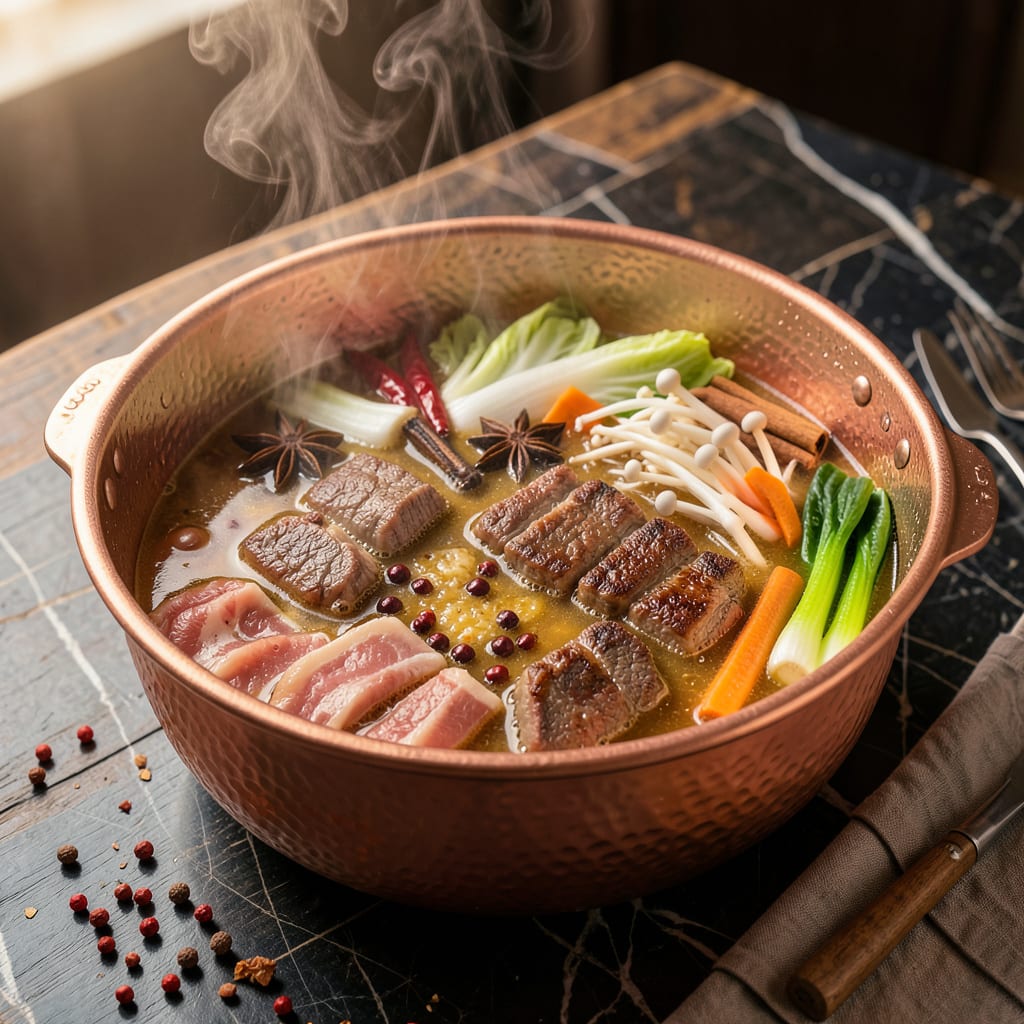
Mongolian hot pot transforms dining into an interactive experience, where a rich, spicy broth becomes the centerpiece for customizable flavors. This traditional communal meal allows each guest to cook their preferred proteins and vegetables tableside, creating a personalized feast that’s both engaging and satisfying.
The key lies in the broth—a carefully balanced blend of aromatic spices and meat bones simmered for hours to develop deep, complex flavors. Paired with fresh ingredients like thinly sliced lamb, leafy greens, and hand-pulled noodles, this recipe delivers an authentic taste of Mongolian hospitality right at your table.
Ingredients for Mongolian Hot Pot
This authentic broth foundation and tableside ingredients create a Mongolian hot pot experience with professional-grade depth and customization.
| Ingredient | Amount | Notes |
|---|---|---|
| Lamb Leg 🐑 | 2 lb | Thinly sliced against the grain |
| Beef Bones 🥩 | 3 lb | Marrow and knuckle preferred |
| Dried Red Chili Peppers 🌶️ | ½ cup | Whole, stems removed |
| Sichuan Peppercorns 🌿 | 2 tbsp | Lightly toasted for aroma |
| Star Anise Pods ✨ | 6 whole | Intact for broth infusion |
| Cinnamon Sticks 🌰 | 2 whole | 3-inch pieces preferred |
| Fresh Ginger 🫚 | 4 oz | Sliced, skin-on for depth |
| Garlic Cloves 🧄 | 12 cloves | Lightly crushed, skin-on |
| Green Onions 🧅 | 1 bunch | White and green parts separated |
| Napa Cabbage 🥬 | 1 whole | Cored, leaves separated |
| Baby Bok Choy 🥬 | 6 whole | Halved lengthwise |
| Shiitake Mushrooms 🍄 | 8 oz | Fresh, stems removed |
| Rice Noodles 🍜 | 12 oz | Dried, vermicelli style |
| Soy Sauce 🫙 | ½ cup | Low-sodium preferred |
| Shaoxing Wine 🍶 | ¼ cup | Dry sherry as substitute |
The broth quality hinges on the beef bones and aromatic spices. Source marrow bones from a trusted butcher—they should be sawed for maximum surface area. For authentic heat, Sichuan peppercorns and dried chilies must be fresh (check expiration dates). Asian markets typically carry superior-quality star anise and cinnamon sticks. The lamb should be grass-fed if possible, with visible marbling for tenderness during quick cooking. Professional kitchens often par-freeze lamb briefly before slicing for paper-thin results.
For protein alternatives, thinly sliced beef sirloin or ribeye works equally well. Vegetarian adaptations require robust mushrooms (shiitake, king oyster) and tofu varieties. Shaoxing wine substitution can use dry sherry in equal measure, though flavor nuances will differ. The noodles must be rice-based—vermicelli from brands like Three Ladies or A Taste of Thai maintain ideal texture. Soy sauce alternatives include tamari (gluten-free) or coconut aminos (lower sodium), though salt levels may require adjustment.
Broth components can be prepped 24 hours ahead—store refrigerated in separate containers. Sliced proteins and vegetables should be arranged on platters just before serving to prevent drying. Leftover broth freezes exceptionally well for 3-4 months; strain and reduce by half before freezing for concentrated flavor. Fresh herbs and aromatics lose potency quickly—purchase within 48 hours of cooking for optimal results.
Why You’ll Love This Recipe
- One-Pot Magic: I love that this entire meal happens in a single pot—just toss in the lamb leg, beef bones, and spices, then let the broth work its magic. No fancy techniques, no last-minute stress, just rich, simmering flavors that do all the heavy lifting for you.
- That Spicy-Numbing Kick: Here’s what sold me—the way the Sichuan peppercorns and dried chilies create this tingly heat that clings to the tender lamb. It’s not just spicy; it’s layered, with star anise adding this deep, almost sweet undertone that makes every bite addictive.
- Feeds a Hungry Table: Honestly, this is my go-to when friends drop by unannounced or I need to stretch a meal. The broth gets richer as it sits, so leftovers taste even better the next day—just reheat and add fresh veggies or noodles. (Yes, even on a Tuesday night.)
- Budget-Friendly Luxury: Lamb leg and beef bones sound fancy, but they’re way cheaper than steak cuts and still deliver that melt-in-your-mouth richness. I’ll be real: the broth alone feels like a restaurant splurge, but it costs me less than $20 to feed four.
Step-by-Step Instructions for Mongolian Hot Pot
This method ensures a deeply aromatic broth and perfectly prepared ingredients for an interactive dining experience.
Step 1: Prepare the Spiced Broth Base
Begin by dry-toasting the 2 tbsp Sichuan peppercorns in a large stockpot over medium heat for 2-3 minutes until fragrant. Immediately add the 3 lb beef bones and brown them on all sides, about 5-7 minutes. This initial searing develops a rich, meaty foundation for your broth.
Add the 0.5 cup dried red chili peppers, 6 whole star anise pods, 2 whole cinnamon sticks, 4 oz fresh ginger (sliced with skin on), and 12 cloves garlic cloves (lightly crushed with skins). Toast these spices for 1-2 minutes until the chili peppers darken slightly and release their aroma. Be cautious not to burn the spices, as this will create bitterness.
Step 2: Simmer and Develop the Broth
Pour in enough water to cover the bones by 2 inches (approximately 4 quarts). Add the 0.5 cup soy sauce and 0.25 cup Shaoxing wine, then bring to a boil. Once boiling, reduce heat to low and maintain a gentle simmer. Skim off any foam that rises to the surface during the first 15 minutes of simmering.
Partially cover the pot and let the broth simmer for 3-4 hours, replenishing with hot water as needed to maintain the original level. The broth should reduce slightly and develop a deep reddish-brown color. The aroma will transform from sharp to complex and layered. Strain the broth through a fine-mesh sieve, discarding the solids, and return the clear liquid to the pot.
Step 3: Prepare the Accompaniments
While the broth simmers, prepare your dipping ingredients. Thinly slice the 2 lb lamb leg against the grain into ⅛-inch thick pieces. Separate the napa cabbage into individual leaves and wash thoroughly. Halve the 6 whole baby bok choy lengthwise, keeping the core intact to hold leaves together. Remove stems from the 8 oz shiitake mushrooms and slice the caps into ¼-inch thick pieces.
Slice the green onions diagonally into 2-inch pieces, keeping white and green parts separate. Soak the 12 oz rice noodles in warm water for 20 minutes until pliable but not fully softened. Arrange all prepared ingredients on separate plates for easy access during the meal. The key is having everything ready before bringing the broth to the table.
Step 4: Assemble and Serve the Hot Pot
Return the strained broth to a gentle boil and transfer to a portable electric hot pot or fondue pot at the table. The broth should maintain a steady simmer throughout the meal. Provide each diner with a pair of chopsticks or small strainers for retrieving food from the broth.
Dinners should cook ingredients in this recommended order: rice noodles first (they take longest at 2-3 minutes), followed by lamb leg slices (1-2 minutes until just cooked through), then baby bok choy and napa cabbage (1-2 minutes until vibrant green), and finally shiitake mushrooms (2 minutes until tender). The green onions can be added in the last 30 seconds of cooking for a fresh, bright finish.
Step 5: Maintain and Enjoy the Broth
As the meal progresses, the broth will become increasingly flavorful from the cooking ingredients. Maintain the simmer by adding hot water as needed to keep the level consistent. The ideal broth temperature should create small, steady bubbles that gently agitate the ingredients without violent boiling.
Encourage diners to taste the broth periodically – its character will evolve from spicy and aromatic to rich and meaty as proteins and vegetables release their flavors. The meal typically lasts 1-2 hours, with the broth becoming more concentrated and complex toward the end. Serve with additional soy sauce for dipping and steamed rice to balance the heat.
Regional Styles of This mongolian hot pot
Inner Mongolian Style
This is the most traditional version, featuring a clear, meat-forward broth with minimal spices. The focus is on high-quality lamb bones and goat meat simmered for 6-8 hours with just ginger, garlic, and green onions. I love how this lets the natural meat flavors shine through. 💛
In Inner Mongolia, they often use wild mushrooms like morels and chanterelles instead of cultivated shiitakes. The dipping sauce is simpler too—just minced garlic in soy sauce with a splash of vinegar. This style is perfect when you want to appreciate the purity of the ingredients.
Sichuan-Influenced Version
When Mongolian hot pot meets Sichuan cuisine, the broth becomes a fiery, numbing elixir. I add extra Sichuan peppercorns (3 tbsp) and doubanjiang (2 tbsp) to the base. The broth turns deep red and develops that signature málà (numbing-spicy) sensation.
For proteins, I include thinly sliced beef tripe alongside the lamb. The dipping sauce gets an upgrade with chili oil, toasted sesame seeds, and crushed peanuts. This version is for those who love intense heat and complex layers of flavor. 🌶️
Beijing Street Food
In Beijing, hot pot becomes a quick, affordable street meal. The broth is pre-made and concentrated, often using instant beef bouillon as a base. I recreate this by reducing our standard broth by half before serving, creating a more intense flavor in less time.
The protein selection expands to include fish balls, crab sticks, and processed meats for variety. Vegetables are pre-cut and kept simple—just cabbage, tofu, and potato slices. This style is perfect for weeknight meals when you want hot pot without the long simmer. ⚡
Vegetarian Adaptation
For a plant-based version, I replace the meat broth with a rich mushroom stock using dried shiitake stems, kombu, and porcini. The spices remain the same, but I add 1 tbsp gochujang for depth. The key is simmering the mushrooms for 2 hours to extract maximum umami.
Protein alternatives include extra-firm tofu, tempeh, and king oyster mushrooms cut into “scallops.” I also add lotus root slices for texture. The dipping sauce gets a boost from black vinegar and sesame paste to compensate for the missing meat richness.
Modern Fusion Style
For contemporary twists, I’ve experimented with adding coconut milk (1 cup) to the broth for creaminess, or lemongrass and kaffir lime leaves for Thai-inspired notes. The proteins expand to include shrimp, scallops, and even thinly sliced duck breast.
The dipping sauces become more adventurous—think miso-butter blend or yuzu kosho mayo. I’ve even served this with kimchi pancakes on the side. This version works great when you want to surprise guests with unexpected flavors while keeping the interactive hot pot experience.
Quick Weeknight Version
When time is short, I use store-bought pho broth as a base and doctor it with our spice blend. Simmer for just 30 minutes with 1 lb beef bones for quick depth. The protein selection becomes simpler—just pre-sliced beef and lamb from the grocery store.
For vegetables, I rely on pre-washed baby spinach, bean sprouts, and enoki mushrooms. The dipping sauce is just soy sauce with sriracha. This version proves you can enjoy hot pot any night of the week with minimal prep. 💡
Nutrition Facts
Frequently Asked Questions
Can I make the broth ahead of time?
The broth actually benefits from being made 1-2 days in advance. This allows flavors to meld and deepen. Store it in an airtight container in the refrigerator, then reheat gently before serving.
What’s the best way to slice the meat?
For perfect texture, partially freeze the lamb for 30 minutes before slicing. Use a sharp chef’s knife and cut against the grain into ⅛-inch thick pieces. This ensures quick, even cooking at the table.
How do I adjust the spice level?
Start with half the chili peppers in the broth, then let diners add more to their bowls. For a milder version, remove seeds from chilies and reduce Sichuan peppercorns to 1 tsp. Serve yogurt or milk on the side to cool the heat.
What’s the ideal cooking order for ingredients?
Begin with noodles (2-3 minutes), then add meats (1-2 minutes), followed by leafy greens (1 minute), and finish with mushrooms (2 minutes). This prevents overcooking while keeping everything hot and ready to eat.
Can I use a regular pot instead of a hot pot?
Yes, but maintain a gentle simmer and use a portable burner for tableside cooking. A wide, shallow pot works best to accommodate multiple diners. Keep a ladle handy to skim foam as needed.

- 8 Bean Soup Recipe Crock Pot: Hearty Vegetable Medley in One Pot - September 25, 2026
- 4C Bread Crumbs Meatballs Recipe: Crispy Crust and Juicy Centers - September 25, 2026
- 6 Oz Chocolate Chip Cookie Recipe: Perfectly Balanced Crispy Edges and Chewy Hearts - September 25, 2026