
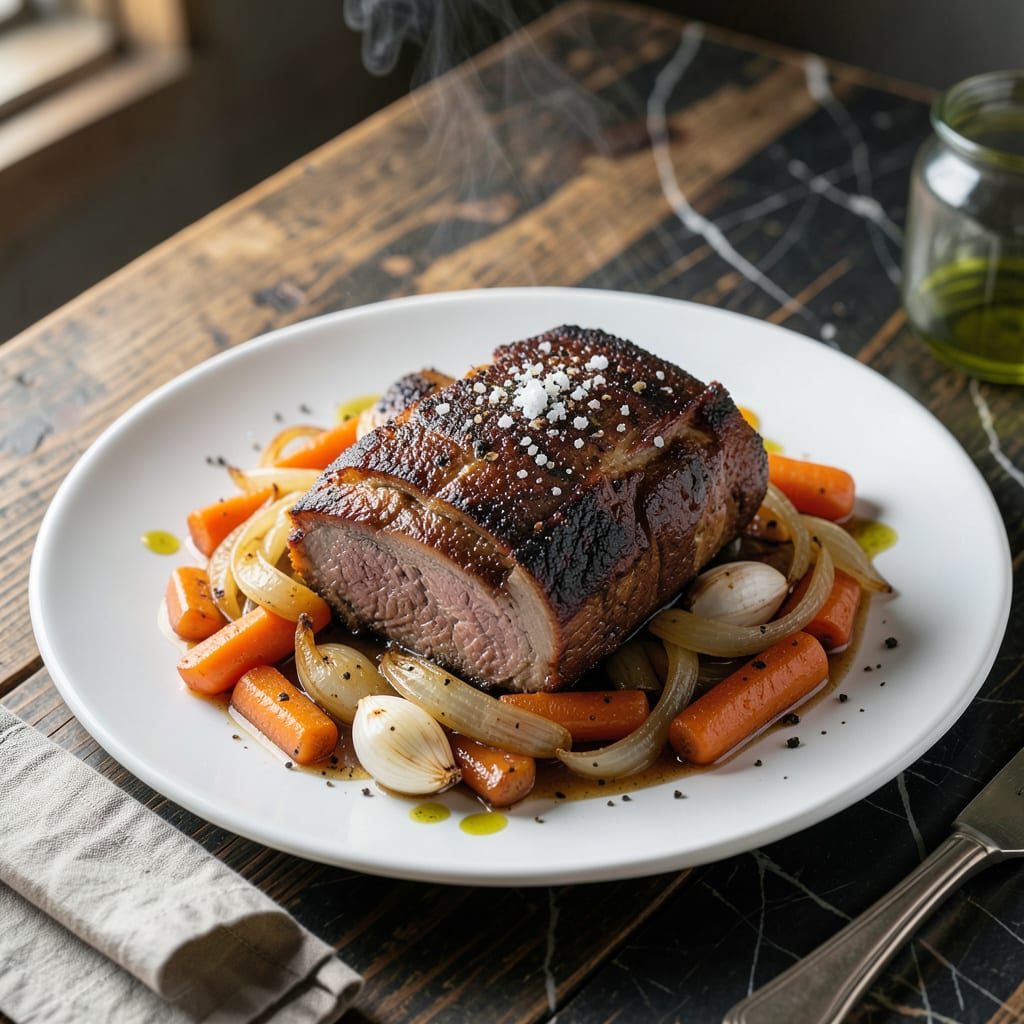
This moose pot roast transforms wild game into a tender, flavorful centerpiece for any dinner table. The slow cooking process breaks down the tough fibers, creating a melt-in-your-mouth experience that pairs perfectly with hearty root vegetables.
With a few simple ingredients and patience, you’ll achieve a dish that’s rich, satisfying, and deeply aromatic. The natural leanness of moose meat absorbs the seasonings beautifully while staying juicy and delicious.
Ingredients for Moose Pot Roast
Rich, hearty, and deeply aromatic ingredients for a wild game masterpiece.
| Ingredient | Amount | Notes |
|---|---|---|
| Moose Roast 🥩 | 2 ½ lb | Shoulder or rump, trimmed of fat |
| Kosher Salt 🧂 | 1 ½ tsp | Diamond Crystal preferred for even seasoning |
| Black Pepper 🌶️ | 1 tsp | Freshly cracked for bold flavor |
| Garlic Cloves 🧄 | 6 cloves | Smashed for maximum aroma |
| Yellow Onion 🧅 | 2 whole | Large, quartered with skin on |
| Carrots 🥕 | 4 whole | Large, peeled and cut into chunks |
| Potatoes 🥔 | 4 whole | Yukon Gold, quartered |
| Celery Stalks 🌿 | 3 whole | Cut into 2-inch pieces |
| Beef Broth 💧 | 3 cups | Low-sodium preferred for control |
| Red Wine 🍷 | 1 cup | Dry variety like Cabernet Sauvignon |
| Tomato Paste 🍅 | 2 tbsp | For depth of umami flavor |
| Dried Thyme 🍃 | 1 tsp | Crushed between fingers to release oils |
| Bay Leaves 🌿 | 2 whole | Fresh or dried, removed before serving |
| Olive Oil 🫒 | 2 tbsp | Extra-virgin for searing richness |
| All-Purpose Flour 🌾 | 2 tbsp | For thickening gravy at the end |
The moose meat is key here—source from a reputable wild game supplier or a trusted hunter. Shoulder or rump cuts work best for pot roast, as they have enough connective tissue to break down beautifully during slow cooking. Look for deep red color and minimal fat (moose is naturally lean). Local butchers in Alaska or the Upper Midwest often carry it seasonally, or order frozen from specialty online retailers.
No red wine? Beef broth with a tablespoon of balsamic vinegar mimics the acidity and depth. Out of fresh thyme? Substitute dried at one-third the amount. If you can’t find Yukon Gold potatoes, russets or sweet potatoes work well too (just adjust cooking time slightly). The tomato paste can be swapped with 2 tbsp ketchup in a pinch, though the flavor profile will be slightly sweeter.
This dish actually improves overnight. Store leftovers in an airtight container for up to 4 days in the fridge, or freeze for 3 months. The gravy may thicken when chilled—just reheat gently with a splash of broth to restore the perfect consistency.
Why You’ll Love This Recipe
- Set It and Forget: I toss the moose roast with salt, pepper, and whole garlic cloves, then let the oven do the work for hours.
- Deep, Meaty Flavor: The onion and garlic melt into the moose, creating a rich, savory broth that soaks into every bite.
- Feeds the Whole Crew: This hearty roast makes enough for a family dinner plus lunch the next day—no extra cooking required.
- Budget Stretcher: One moose roast goes a long way, and the simple seasonings keep the cost low while delivering serious flavor.
Step-by-Step Instructions for Moose Pot Roast with Root Vegetables
Transform this wild game cut into a meltingly tender masterpiece with minimal effort.
Step 1: Sear the Moose Roast for Deep Flavor
Pat the 2.5 lb Moose Roast completely dry with paper towels—this ensures a proper sear. Season all sides generously with the 1.5 tsp Kosher Salt and 1 tsp Black Pepper, pressing the spices into the meat so they adhere well.
Heat the 2 tbsp Olive Oil in a heavy Dutch oven over medium-high heat until it shimmers. Add the roast and sear undisturbed for 4-5 minutes per side until a deep, rich brown crust forms. This step builds the flavor foundation for the entire dish, so don’t rush it.
Remove the roast and set it aside. The fond (browned bits) left in the pot will dissolve into the braising liquid, creating incredible depth of flavor.
Step 2: Build the Aromatic Base
Reduce heat to medium and add the 2 whole Yellow Onion, 4 whole Carrots, 4 whole Potatoes, and 3 whole Celery Stalks to the pot. Cook for 5-7 minutes until the onions begin to soften and develop some color.
Add the 6 cloves Garlic Cloves, 2 tbsp Tomato Paste, and 1 tsp Dried Thyme. Stir constantly for 1-2 minutes until the tomato paste darkens slightly and coats the vegetables. This step intensifies the umami richness of the final dish.
Pour in the 1 cup Red Wine and scrape up all the browned bits from the bottom of the pot with a wooden spoon. Let it simmer for 3 minutes until reduced by half.
Step 3: Braise Until Fork-Tender
Return the seared moose roast to the pot. Pour in the 3 cups Beef Broth and add the 2 whole Bay Leaves. The liquid should come about halfway up the roast—add a splash of water if needed.
Bring to a simmer, then reduce heat to low, cover, and cook for 2.5 to 3 hours. Check occasionally and turn the roast every 45 minutes for even cooking. The dish is done when the meat pulls apart easily with a fork.
Real talk: wild game can dry out, so keep the heat gentle. The vegetables should be tender but not mushy, soaking up all the rich, savory liquid.
Step 4: Thicken the Gravy and Serve
Remove the roast and vegetables to a serving platter and keep warm. Skim any excess fat from the braising liquid, then place the pot over medium heat. Whisk the 2 tbsp All-Purpose Flour into ¼ cup of the hot liquid to create a slurry.
Pour the slurry back into the pot and whisk constantly for 2-3 minutes until the gravy thickens enough to coat the back of a spoon. Taste and adjust seasoning if needed—remember, the moose meat itself benefits from bold seasoning.
Discard the bay leaves, then spoon the thickened gravy over the roast and vegetables. Let it rest for 10 minutes before serving to allow the juices to redistribute.
Pro Tips For Making Moose Pot Roast
- Sear the Moose: I learned this the hard way—browning the roast in batches in a screaming hot Dutch oven gives it that deep, caramelized crust that turns cheap cuts into something special. About 4-5 minutes per side, don’t rush it.
- Salt Overnight: Sounds weird, but dry-brining the moose roast with kosher salt 12-24 hours ahead actually changes the outcome. The meat stays juicier and seasons all the way through.
- Skip the Cold Start: After burning three batches, I finally figured out that adding the roast to a cold pot just boils it. Get that oil shimmering first, then lay the meat in gently.
- Use a Meat Thermometer: Moose can go from perfect to dry in minutes—pull it at 195°F internal temp for fall-apart tenderness. My grandmother swore by this, and she was right.
Common Mistakes When Making This Recipe
Skipping the Sear
I see this happen often—skipping the sear to save time. That 4-5 minutes per side in medium-high heat creates the Maillard reaction, which builds deep, complex flavors. Without it, your pot roast will taste flat. Trust me, it’s worth the extra effort. 🔥
Overcrowding the Pot
Don’t cram all 2.5 lb Moose Roast and vegetables in at once. Overcrowding steams instead of sears, leading to a pale, bland exterior. Sear the meat first, then remove it before adding vegetables. This ensures proper browning and flavor development.
Using High Heat
Moose is leaner than beef, so high heat dries it out. Keep your braising temperature at a gentle low heat for 2.5 to 3 hours. If the liquid is boiling, your heat is too high. A slow simmer is what breaks down those tough fibers.
Neglecting Liquid Levels
Check the pot occasionally. If the 3 cups Beef Broth reduces too much, add a splash of water or broth. The liquid should always come about halfway up the roast. Too little liquid means uneven cooking; too much dilutes the flavor.
Forgetting to Turn
Turn the roast every 45 minutes for even cooking and flavor absorption. Without turning, one side can dry out while the other stays undercooked. It’s a small step that makes a big difference in texture and taste.
Rushing the Rest
After cooking, let the meat rest for 10 minutes before slicing. This allows juices to redistribute, keeping the roast moist. Cutting too soon sends all those flavorful juices onto the cutting board instead of staying in the meat.
Nutrition Facts
Frequently Asked Questions
What’s the best cut for this dish?
Shoulder or rump cuts work best. They have enough connective tissue to break down beautifully during the 2.5 to 3 hours of slow cooking, resulting in tender, flavorful meat.
Can I use a different wine?
Yes! Any dry red wine like Merlot or Pinot Noir works. In a pinch, substitute 1 cup Beef Broth with 1 tbsp balsamic vinegar for similar acidity.
How do I store leftovers?
Keep in an airtight container in the fridge for up to 4 days, or freeze for 3 months. Reheat gently with a splash of broth to restore the gravy’s consistency.
Why is my moose pot roast tough?
Wild game dries out with high heat. Ensure you braise at a gentle low heat and check liquid levels often. Turning the roast every 45 minutes also prevents uneven cooking.

- 4C Bread Crumbs Meatballs Recipe: Crispy Crust and Juicy Centers - September 25, 2026
- 6 Oz Chocolate Chip Cookie Recipe: Perfectly Balanced Crispy Edges and Chewy Hearts - September 25, 2026
- 6-Inch Coffee Cake Recipe: Vanilla Bean Swirls and Buttery Streusel Topping - September 25, 2026