
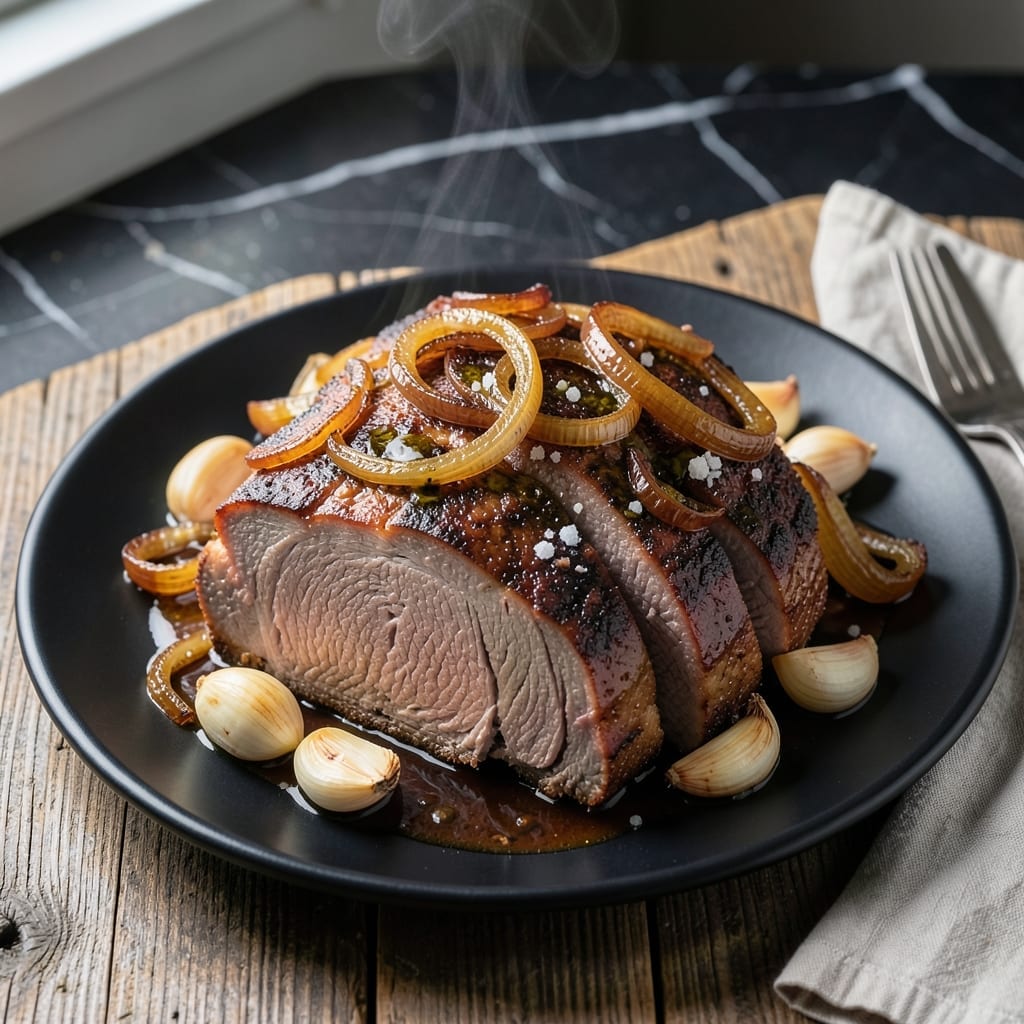
This slow cooker method transforms tough wild game into tender, fall-apart roast without hours of monitoring.
Moose meat benefits from the crock pot’s gentle heat, which breaks down fibers while preserving natural richness. The process requires minimal prep yet delivers restaurant-quality results.
A simple seasoning blend and slow cooking ensure the roast absorbs flavors deeply. The outcome is juicy, flavorful meat that rivals traditional oven methods.
Perfect for hearty meals, this technique works every time. Here’s how to achieve it.
Ingredients for Moose Roast Crock Pot
Transform tough wild game into tender perfection with these carefully selected ingredients.
| Ingredient | Amount | Notes |
|---|---|---|
| Moose Roast 🥩 | 3 lb | Boneless shoulder or rump, trimmed |
| Olive Oil 🫒 | 2 tbsp | Divided for searing and cooking |
| Kosher Salt 🧂 | 2 tsp | Diamond Crystal preferred |
| Black Pepper 🌶️ | 1 ½ tsp | Freshly ground for depth |
| Garlic Powder 🧄 | 2 tsp | Not garlic salt substitute |
| Onion Powder 🧅 | 1 tbsp | Dehydrated, fine grind |
| Dried Rosemary 🌿 | 1 tbsp | Crushed to release oils |
| Dried Thyme 🍃 | 1 tbsp | Rubbed between fingers |
| Beef Broth 💧 | 2 cups | Low-sodium for control |
| Worcestershire Sauce 🍶 | 2 tbsp | Lea & Perrins preferred |
| Yellow Onion 🧅 | 1 whole | Large, quartered |
| Carrots 🥕 | 3 whole | Peeled, cut into chunks |
| Celery Stalks 🥬 | 3 whole | Cut into large pieces |
| Bay Leaves 🌿 | 2 pieces | Dried, whole |
The moose meat quality is paramount. Source from a reputable wild game processor—look for deep red color and minimal connective tissue. Shoulder or rump cuts work best for slow cooking. Costco or specialty butchers in hunting regions often carry it seasonally. Trim visible fat and silver skin before cooking to prevent gaminess. A 3-pound roast serves four generously with leftovers.
No moose meat? Beef chuck roast is the closest substitute in texture and flavor. Swap rosemary for sage at equal amounts if preferred. Low-sodium broth is critical—regular can make the dish too salty after long cooking. Anchovy-free Worcestershire (like Annie’s) works for strict dietary needs. The vegetables can be swapped for parsnips or potatoes.
Cooked roast keeps 4-5 days refrigerated in its juices. Freeze portions for up to 3 months—slice before freezing for easier reheating. The broth makes exceptional gravy: strain, skim fat, and reduce on the stovetop. Always store leftovers in airtight containers.
Why You’ll Love This Recipe
- Set It and Forget It: I toss the moose roast in the crock pot with olive oil and spices before work, and dinner’s ready when I walk in.
- Rich Garlic Depth: The garlic powder melts into the meat as it slow-cooks, giving every bite that warm, savory kick.
- Feeds the Whole Crew: One roast makes enough for Sunday supper plus leftovers for sandwiches all week.
- Budget Stretcher: Moose roast is lean and filling, so a single cut goes further than pricier beef.
Step-by-Step Instructions for Moose Roast in a Crock Pot
Transform tough wild game into fall-apart tender meat with this proven slow-cooking method.
Step 1: Sear and Season the Moose Roast
Heat 1 tbsp Olive Oil in a large skillet over medium-high heat until shimmering. Pat the 3 lb Moose Roast completely dry with paper towels to ensure a proper sear. Season all sides aggressively with 2 tsp Kosher Salt, 1.5 tsp Black Pepper, 2 tsp Garlic Powder, and 1 tbsp Onion Powder.
Sear the roast for 3-4 minutes per side until a deep brown crust forms. This step builds fundamental flavor and locks in juices. The crust should be rich mahogany and smell intensely savory. Transfer the seared roast to your slow cooker insert.
Step 2: Layer Aromatics and Liquids
Add the remaining 1 tbsp Olive Oil to the skillet and briefly sauté the quartered Yellow Onion, chunked 3 whole Carrots, and large pieces of 3 whole Celery Stalks for 2-3 minutes to soften slightly. Transfer these to the slow cooker around the roast.
Pour in the 2 cups Beef Broth, 2 tbsp Worcestershire Sauce, 1 tbsp Dried Rosemary, and 1 tbsp Dried Thyme. Add the 2 pieces Bay Leaves last. The liquid should come about halfway up the roast—this prevents braising while allowing steam to circulate.
Step 3: Slow Cook to Tenderness
Cover the slow cooker and cook on low heat for 8-10 hours or on high heat for 5-6 hours. The key is patience—you’re aiming for probe-tender meat that shreds with minimal resistance. I recommend checking at the 8-hour mark on low; wild game can vary in toughness.
You’ll know it’s ready when the internal temperature reaches 195-200°F and a meat thermometer slides in like butter. The vegetables should be soft enough to pierce easily with a fork, and the broth will have reduced slightly, concentrating into a rich, aromatic liquid.
Step 4: Rest and Serve
Carefully transfer the moose roast to a cutting board and tent loosely with foil. Let it rest for 15-20 minutes before slicing or shredding. This resting period allows the muscle fibers to relax and reabsorb juices, ensuring maximum tenderness.
Strain the cooking liquid through a fine-mesh sieve into a saucepan if you want a refined sauce, or serve it as-is for a rustic presentation. Skim off any excess fat if desired. Slice the roast against the grain or shred with forks. Serve with the vegetables and pan juices spooned over the top.
Pro Tips For Making Moose Roast Crock Pot
- Sear the Moose First: I learned this the hard way—skipping the sear leaves the roast bland. Heat 2 tablespoons olive oil in a pan until shimmering, then brown the moose on all sides for a deep, savory crust.
- Season Generously: Moose meat can handle bold flavor. Coat the roast with kosher salt, black pepper, and garlic powder more heavily than you think—especially if it’s a lean cut.
- Don’t Overfill the Crock: After burning three batches, I finally figured out that cramming in too many veggies or liquid steams the meat instead of braising it. Leave room for air to circulate.
- Use a Meat Thermometer: Sounds weird, but it works: moose roast is done at 145°F for medium-rare. Pull it at 140°F and let it rest—it’ll keep cooking off the heat.
Best Sauces and Condiments for This Dish
Classic Gravy Base
Use the cooking liquid as your foundation—it’s already rich with meaty depth from the 8-10 hour slow cook. I strain it through a fine-mesh sieve, then reduce it on the stovetop for 10-15 minutes until it coats the back of a spoon. Stir in 1 tbsp cornstarch mixed with 1 tbsp cold water for a glossy finish. 💫
Juniper Berry Infusion
For a Nordic twist, simmer 1 tsp crushed juniper berries in the gravy for 5 minutes. This pairs beautifully with moose, enhancing its wild, earthy notes. Remove the berries before serving to avoid bitter bites. The aroma alone will impress your guests.
Red Wine Reduction
Deglaze the skillet from searing with ½ cup dry red wine like Cabernet Sauvignon. Let it reduce by half, then pour it into the finished gravy. The wine adds acidity that cuts through the richness of the roast. I use Apothic Red for its bold flavor.
Horseradish Cream
Whisk ¼ cup prepared horseradish with ½ cup sour cream and 1 tsp lemon juice for a sharp, creamy condiment. Serve it on the side for those who love a spicy kick. It’s a game-changer with the deep flavors of moose. 🔥
Cranberry Compote
Simmer 1 cup fresh cranberries with ¼ cup sugar and ¼ cup orange juice until thickened. The tart-sweet contrast brightens each bite of the rich roast. I add a pinch of orange zest for extra zing.
Herb Butter Finish
Mix ¼ cup softened butter with 1 tbsp chopped rosemary and 1 minced garlic clove. Dollop this over the sliced roast just before serving. It melts into the meat, adding a luxurious, aromatic layer.
Nutrition Facts
Frequently Asked Questions
Can I use a different cut of moose meat?
Shoulder or rump work best, but leg cuts are fine too. Avoid lean cuts like tenderloin—they can dry out during long cooking. Always trim visible fat for the best texture.
How do I know when it’s done?
The roast is ready at 195-200°F internal temperature. It should pull apart easily with forks. If unsure, check at 8 hours on low heat.
Can I cook this overnight?
Yes, but use the low setting and cook for no more than 10 hours. Wild game can become mushy if overcooked. Add vegetables in the morning if preferred.
What if my roast is tough?
It likely needs more time. Return it to the crock pot with extra liquid and cook another 1-2 hours on low. Slicing against the grain also helps tenderness.

- 4C Bread Crumbs Meatballs Recipe: Crispy Crust and Juicy Centers - September 25, 2026
- 6 Oz Chocolate Chip Cookie Recipe: Perfectly Balanced Crispy Edges and Chewy Hearts - September 25, 2026
- 6-Inch Coffee Cake Recipe: Vanilla Bean Swirls and Buttery Streusel Topping - September 25, 2026