
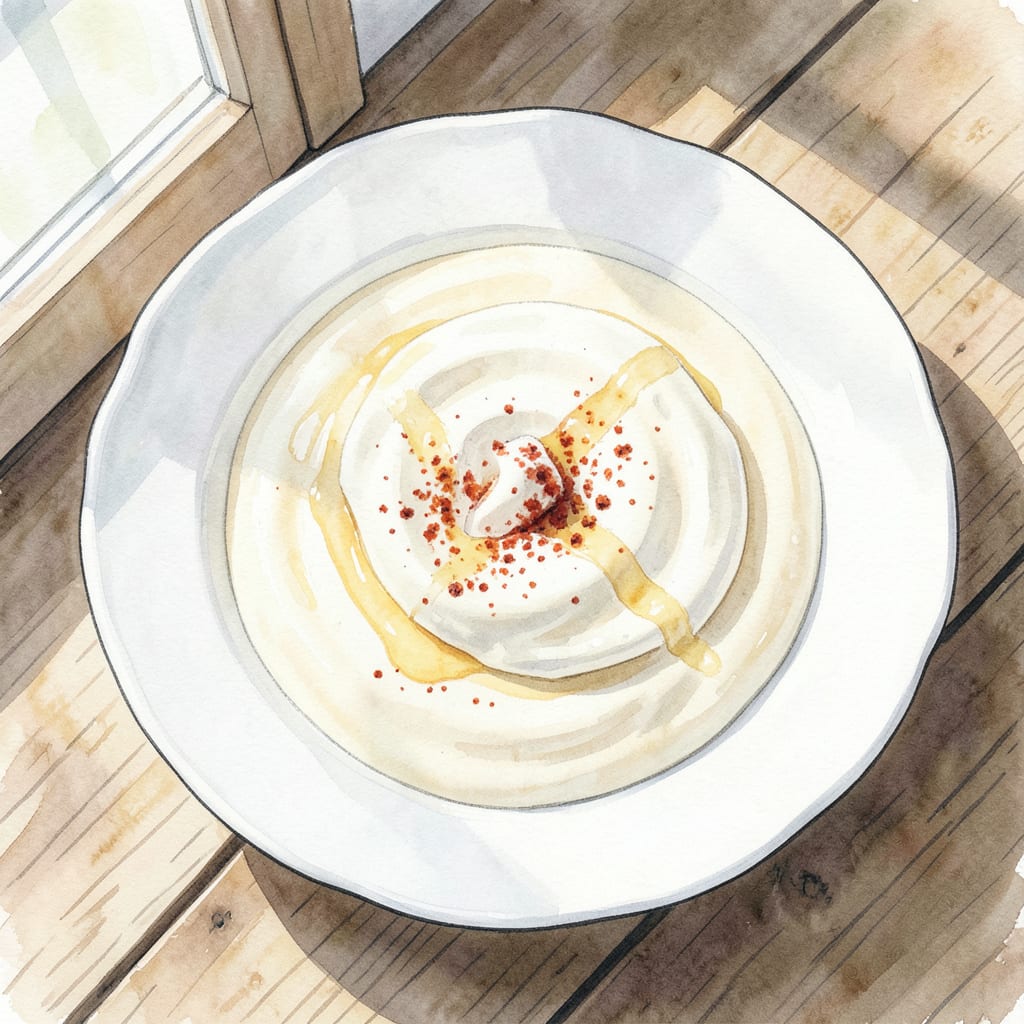
Mousseline sauce is a game-changer for elevating dishes with its light and airy texture. This Hollandaise variation incorporates whipped cream, making it silky smooth and perfect for accompanying delicate foods like asparagus or eggs Benedict.
With just a few ingredients and some careful tempering, you’ll create a sauce that’s both rich and airy. Let’s make this elegant condiment that’s sure to impress.
Ingredients for Mousseline Sauce
Essential ingredients for creating this silky, airy Hollandaise variation with whipped cream.
| Ingredient | Amount | Notes |
|---|---|---|
| Egg Yolks 🥚 | 4 whole | Room temperature for better emulsion |
| Unsalted Butter 🧈 | 1 cup | Melted and clarified |
| Lemon Juice 🍋 | 2 tbsp | Freshly squeezed |
| Heavy Cream 🥛 | 1 cup | Chilled for whipping |
| Salt 🧂 | ¼ tsp | Fine grain preferred |
| Cayenne Pepper 🌶️ | 0.125 tsp | Optional, for subtle heat |
For the best results, use high-quality, farm-fresh eggs. The butter must be clarified to prevent separation. I prefer Kerrygold for its rich flavor. Freshly squeezed lemon juice is non-negotiable—bottled won’t cut it here.
No heavy cream? You can substitute with full-fat coconut cream for a dairy-free version. For a lighter texture, whip the cream to stiff peaks before folding. If you find the sauce too thick, thin it with a teaspoon of warm water at a time.
This sauce is best made fresh, but you can prepare the Hollandaise base ahead and refrigerate for up to 24 hours. Re-whip with fresh cream before serving. Store any leftovers in an airtight container in the refrigerator and consume within 2 days.
Step-by-Step Instructions for Mousseline Sauce
Mastering this light and airy Hollandaise variation is easier than you think with precise technique.
Step 1: Create the Hollandaise Base
Begin by whisking together the 4 whole egg yolks and 2 tbsp lemon juice in a heatproof bowl until the mixture becomes pale and thick. I find that using room temperature egg yolks makes this process much smoother. Set the bowl over a pot of simmering water, ensuring that the bottom of the bowl doesn’t touch the water.
Slowly pour in the 1 cup melted unsalted butter while continuously whisking in a thin, steady stream. The mixture will thicken and emulsify as you incorporate the butter. Maintain a gentle whisking motion and watch for the sauce to double in volume. Remove from heat when it reaches your desired consistency.
Step 2: Season the Hollandaise
Add the 0.25 tsp salt and 0.125 tsp cayenne pepper (if using) to the warm Hollandaise base. Whisk until fully incorporated, then taste and adjust the seasoning as needed. I prefer to add the seasoning while the sauce is still warm, as it distributes more evenly.
Transfer the Hollandaise base to a clean bowl and let it cool to room temperature. This cooling step is crucial as it prevents the whipped cream from melting when folded in later. If you’re not ready to finish the mousseline immediately, you can cover this base and refrigerate it for up to 24 hours.
Step 3: Whip the Heavy Cream
In a separate chilled bowl, whip the 1 cup heavy cream until it forms stiff peaks. I like to use a stand mixer with the whisk attachment for this task, as it incorporates air more efficiently than whisking by hand. Be careful not to over-whip, as this can lead to butter formation.
The cream is ready when it holds its shape firmly and leaves distinct marks from the whisk. Stop whipping occasionally to check the consistency, as it can quickly go from perfect to over-whipped. If you’re not using the whipped cream immediately, refrigerate it for up to 30 minutes before folding.
Step 4: Fold Cream into Hollandaise
Gently fold the whipped cream into the cooled Hollandaise base using a silicone spatula. Start by adding about one-third of the whipped cream to the Hollandaise and gently cut through the mixture with your spatula. Rotate the bowl and continue this gentle folding motion until no white streaks remain.
Add the remaining whipped cream and continue folding until fully incorporated. The final sauce should be light, airy, and doubled in volume from the original Hollandaise. Be patient during this step, as proper folding ensures the signature mousseline texture.
Step 5: Serve Immediately
Transfer the mousseline sauce to a serving vessel or sauceboat. I recommend serving it immediately, as it holds its light texture best when fresh. The sauce pairs beautifully with steamed asparagus, poached eggs, or grilled fish. If you need to hold it briefly, keep it in a warm (not hot) water bath and gently whisk before serving.
For best results, serve the mousseline sauce within 30 minutes of making it. If it begins to separate, a quick whisk usually recovers its smooth texture. This sauce is perfect for elevating brunch dishes or adding a luxurious touch to your favorite vegetables.
Storing and Reheating Leftovers
Refrigerator Storage
Mousseline sauce is best consumed fresh, but you can store it in the refrigerator for up to 24 hours. Transfer the sauce to an airtight container and press plastic wrap directly onto its surface to prevent a skin from forming. Store at 40°F or below. ❄️
Reheating Techniques
Gently reheat the sauce in a double boiler over low heat, whisking constantly until smooth. Alternatively, microwave in 10-second bursts at 30% power, whisking between each interval. Be cautious not to overheat, as this can cause separation.
Freezing Considerations
I don’t recommend freezing mousseline sauce as the emulsion can break during thawing. If you must freeze, portion it into ice cube trays and store for up to 1 month. Thaw in the refrigerator overnight and re-whip before using.
Restoring Texture
If the sauce separates during storage, whisk in a teaspoon of warm water or additional whipped cream to restore its light texture. For stubborn separation, start with a fresh egg yolk and slowly whisk in the broken sauce.
Serving Tips
Before serving, give the sauce a gentle whisk to restore its airy texture. If it’s been refrigerated, let it sit at room temperature for 10-15 minutes to soften slightly. This ensures the best flavor and texture when serving with dishes like asparagus or eggs Benedict.
Nutrition Facts
120kcal

- 8 Bean Soup Recipe Crock Pot: Hearty Vegetable Medley in One Pot - September 25, 2026
- 4C Bread Crumbs Meatballs Recipe: Crispy Crust and Juicy Centers - September 25, 2026
- 6 Oz Chocolate Chip Cookie Recipe: Perfectly Balanced Crispy Edges and Chewy Hearts - September 25, 2026