
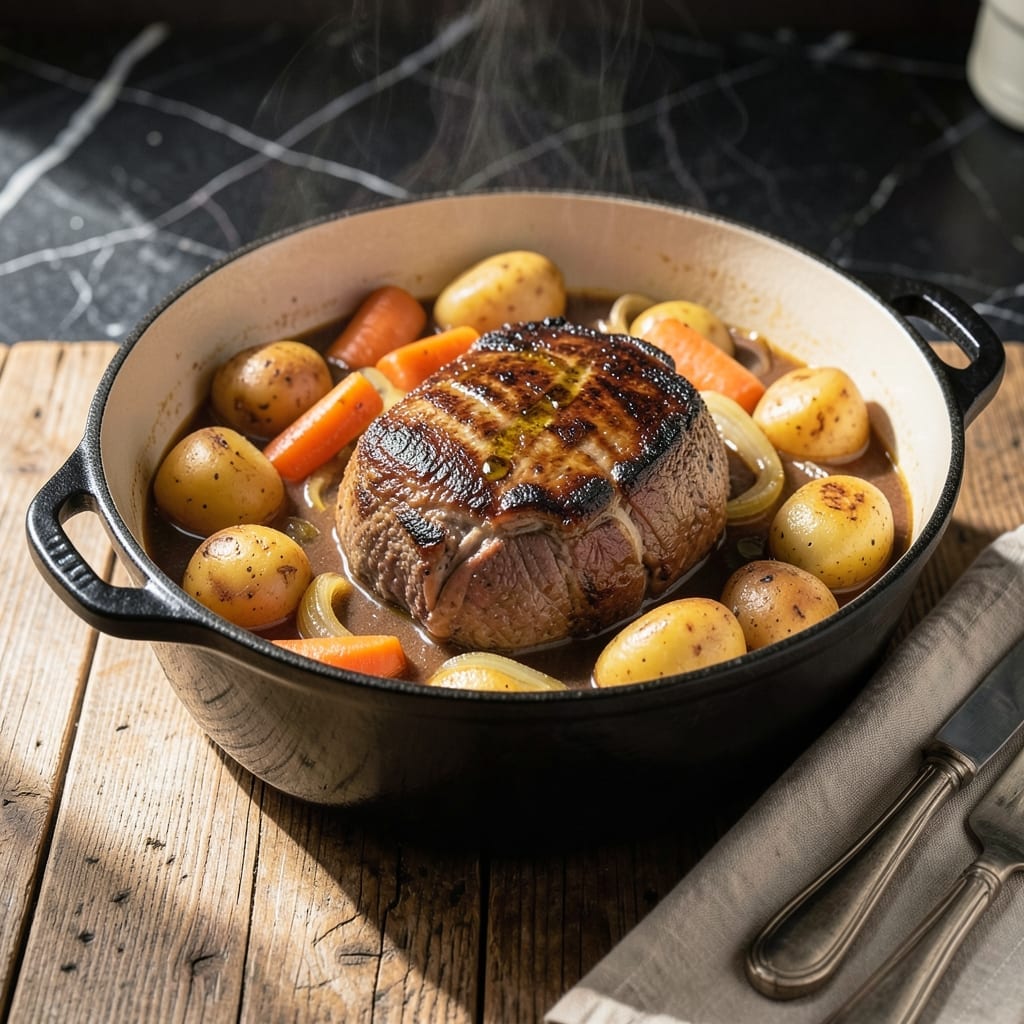
There’s a reason pot roast remains a beloved classic—it transforms simple ingredients into a deeply satisfying meal. This slow-cooked dish delivers the kind of comfort that fills your kitchen with irresistible aromas.
The secret lies in the low and slow cooking method, where tough cuts of beef become fork-tender in a rich, flavorful broth. Vegetables soak up the savory juices, creating a hearty one-pot wonder.
What emerges is a dish with layers of flavor—tender beef, soft carrots and potatoes, and a gravy that’s perfect for soaking up with crusty bread. It’s the kind of meal that feels like a warm embrace.
Ideal for Sunday suppers or cozy weeknight dinners, this recipe brings timeless comfort to your table with minimal effort.
Ingredients for Mr Food Pot Roast
Transform humble ingredients into a rich, slow-cooked classic with deep, comforting flavors.
| Ingredient | Amount | Notes |
|---|---|---|
| Beef Chuck Roast 🥩 | 3 lb | Boneless, well-marbled preferred |
| Carrots 🥕 | 4 whole | Medium-sized, peeled and chopped |
| Russet Potatoes 🥔 | 4 whole | Medium-sized, peeled and quartered |
| Yellow Onion 🧅 | 2 whole | Large, quartered |
| Garlic Cloves 🧄 | 5 cloves | Minced or smashed |
| Beef Broth 💧 | 2 cups | Low-sodium preferred |
| Red Wine 🍷 | 1 cup | Dry variety like Cabernet Sauvignon |
| Tomato Paste 🍅 | 2 tbsp | For depth of flavor |
| Worcestershire Sauce 🫒 | 1 tbsp | Adds umami complexity |
| Dried Thyme 🌿 | 1 tsp | Crushed between fingers |
| Dried Rosemary 🍃 | 1 tsp | Crushed for better infusion |
| Bay Leaves 🌿 | 2 whole | Removed before serving |
| Kosher Salt 🧂 | 1 ½ tsp | Divided, or to taste |
| Ground Black Pepper 🌶️ | 1 tsp | Freshly ground preferred |
| Olive Oil 🫒 | 2 tbsp | For searing beef |
The beef chuck roast is non-negotiable here. Costco or butcher shops offer the best marbling for that fall-apart texture. Look for well-marbled cuts—the fat melts into the meat during slow cooking, creating that signature richness. Avoid leaner cuts like sirloin, which dry out. For vegetables, Russet potatoes hold their shape better than waxy varieties, and large carrots have more flavor than baby ones.
No red wine? Additional beef broth with a splash of balsamic vinegar works as a substitute. Out of Worcestershire? Soy sauce with a pinch of sugar mimics the depth. Thyme and rosemary can be swapped for Italian seasoning at the same quantity. If you’re short on time, pre-cut stew meat (labeled as chuck) is a decent alternative—just reduce the cooking time slightly.
Leftovers taste even better the next day. Store in an airtight container in the fridge for up to 4 days or freeze for 3 months. The gravy will thicken as it cools—reheat gently with a splash of broth to restore the consistency. Always remove bay leaves before storing to avoid bitterness.
Why You’ll Love This Recipe
- Dump and Go: I literally toss the chuck roast, carrots, potatoes, onion, and garlic in the slow cooker and walk away.
- Fall-Apart Tender: The beef cooks so slow and low it shreds with a fork, and the garlic infuses every bite.
- Feeds the Whole Crew: One pot, one meal— everybody from picky kids to my meat-and-potatoes dad cleans their plate.
- Leftovers for Days: I stretch the rich broth and veggies into sandwiches and stews all week, so my grocery bill stays happy.
Step-by-Step Instructions for Old-Fashioned Pot Roast
Master the art of slow-cooked comfort with this time-tested method for tender, flavorful results.
Step 1: Sear the Beef Chuck Roast
Heat the 2 tbsp olive oil in a large Dutch oven over medium-high heat until shimmering. Pat the 3 lb beef chuck roast dry with paper towels and season generously with 1.5 tsp kosher salt and 1 tsp ground black pepper, ensuring all surfaces are evenly coated.
Sear the beef for 4-5 minutes per side until a deep, rich brown crust forms. This step builds the foundation of flavor for your creation, so don’t rush it. The roast should release easily from the pot when properly seared. Transfer the beef to a plate and set aside.
Step 2: Sauté the Vegetables and Deglaze
In the same pot, add the 2 whole yellow onion (quartered), 4 whole carrots (peeled and chopped), and 4 whole russet potatoes (peeled and quartered). Sauté for 5-6 minutes until the onions begin to soften and brown.
Stir in the 5 cloves garlic cloves (minced or smashed), 2 tbsp tomato paste, 1 tsp dried thyme, 1 tsp dried rosemary, and 2 whole bay leaves, cooking for 1 minute until fragrant. Pour in the 1 cup red wine and 1 tbsp Worcestershire sauce, scraping the browned bits from the bottom of the pot to incorporate all that flavor.
Step 3: Slow Cook to Tender Perfection
Return the beef to the pot and pour in the 2 cups beef broth. The liquid should come about halfway up the roast. Bring the mixture to a simmer, then reduce the heat to low, cover, and let it cook for 3 to 3.5 hours.
Check occasionally to ensure the liquid is gently simmering. The roast is done when it shreds easily with a fork and the vegetables are tender. If the liquid reduces too much during cooking, add a little water to maintain the level.
Step 4: Rest and Serve
Once the beef is fork-tender, remove the 2 whole bay leaves and discard them. Transfer the beef to a cutting board and let it rest for 10-15 minutes before slicing or shredding. This allows the juices to redistribute, ensuring every bite is moist and flavorful.
Serve the pot roast with the vegetables and a generous spoonful of the cooking liquid ladled over the top. The sauce should be rich, deeply flavored, and perfect for soaking up with crusty bread or mashed potatoes.
Pro Tips For Making Mr Food Pot Roast
- Sear the Beef First: I learned this the hard way—browning the chuck roast in batches with 1 tablespoon of oil per side for 3-4 minutes creates a deep fond that turns your braising liquid into rich gravy.
- Cut Potatoes Evenly: Russets cook at different rates if left whole or chopped haphazardly, so aim for 2-inch chunks to guarantee they soften at the same time as the carrots.
- Skip the Cold Water: Adding liquid straight from the tap drops the temperature and adds 15-20 minutes to your cook time—use hot water or broth from the start.
- Add Garlic Late: Sounds weird, but it works: toss whole garlic cloves in during the last hour so they mellow and sweeten instead of turning bitter from long cooking.
Essential Equipment for This Recipe
Dutch Oven Essentials
For this creation, a heavy enameled Dutch oven is non-negotiable. I swear by my Le Creuset 5.5-quart—it distributes heat evenly and retains it beautifully during the slow cook. The tight-fitting lid locks in moisture, which is key for that fall-apart tenderness. 🔥
Searing Surface
If you don’t have a Dutch oven, use a stainless steel sauté pan for searing the beef. All-Clad makes excellent ones. Just transfer everything to a slow cooker or oven-safe pot afterward. The sear is crucial for building that deep, rich flavor base.
Tongs for Turning
Invest in a pair of 12-inch locking tongs—I prefer OXO Good Grips for their comfort and control. They let you flip the roast easily without piercing it, which keeps all those precious juices inside. Avoid forks, as they can tear the meat and release moisture prematurely.
Meat Thermometer
A good instant-read thermometer takes the guesswork out of doneness. I use the ThermoWorks Thermapen for its speed and accuracy. Aim for an internal temp of 195-205°F for that perfect, fork-tender result.
Wooden Spoon
For stirring and deglazing, a wooden spoon is your best friend. It won’t scratch your Dutch oven’s surface and can scrape up all those flavorful browned bits. Look for one with a long handle to keep your hands away from the heat.
Cutting Board
Rest your roast on a large, stable cutting board before slicing. I use a John Boos maple board—it’s gentle on knives and has a groove to catch juices. Always let the meat rest for 10-15 minutes to redistribute those delicious juices. 💛
Nutrition Facts
Frequently Asked Questions
Can I use a different cut of beef?
Stick with chuck roast for best results, but brisket or round roast work too. Avoid lean cuts like sirloin—they won’t get as tender. Chuck’s marbling melts during slow cooking, creating that signature richness.
How do I know when it’s done?
The roast is ready when it shreds easily with a fork. Use a meat thermometer for precision—aim for an internal temp of 195-205°F. This ensures fork-tender perfection every time.
Can I make this in a slow cooker?
Yes! Sear the beef first, then transfer everything to your slow cooker. Cook on low for 8-10 hours or high for 5-6 hours. The flavors will still develop beautifully.
What if my gravy is too thin?
Remove the meat and veggies, then simmer the liquid uncovered for 5-10 minutes. For quicker results, mix 1 tbsp cornstarch with cold water and stir into the gravy.

- 4C Bread Crumbs Meatballs Recipe: Crispy Crust and Juicy Centers - September 25, 2026
- 6 Oz Chocolate Chip Cookie Recipe: Perfectly Balanced Crispy Edges and Chewy Hearts - September 25, 2026
- 6-Inch Coffee Cake Recipe: Vanilla Bean Swirls and Buttery Streusel Topping - September 25, 2026