
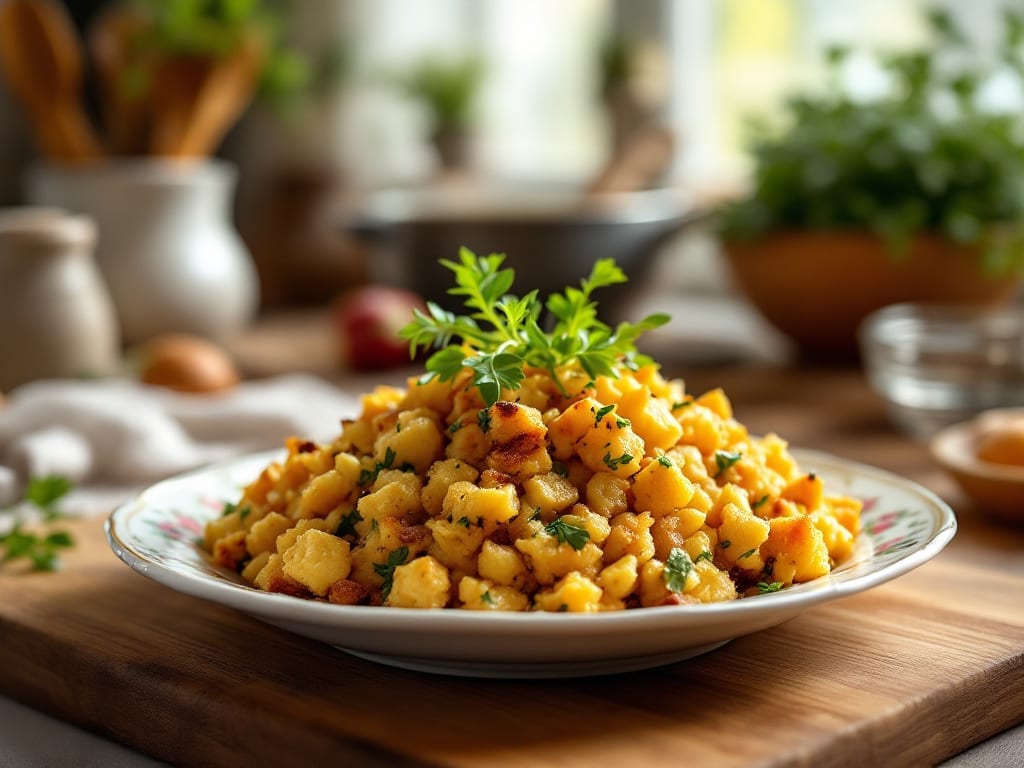
Mrs. Cubbison’s Crock-Pot Stuffing Recipe transforms traditional holiday sides into a hands-off, flavor-packed masterpiece that’s easier than you’d expect. The secret lies in herbed bread cubes simmering in savory broth until tender and infused with deep, aromatic notes—no oven required. I first tried this recipe during Thanksgiving when last-minute guests arrived, and it became an instant tradition. The slow cooker does all the work while you focus on the main dish, delivering restaurant-quality results with minimal effort.
This method preserves the classic texture of stuffing—moist, flavorful cubes that hold their shape—while adding convenience. Mrs. Cubbison’s technique involves toasting the bread cubes and sautéing onions separately before combining them in the crock-pot with herbs, celery, and broth. The result?
A dish that’s rich in flavor but light enough to pair with anything from turkey to roasted vegetables. It’s the kind of recipe that makes holiday cooking feel effortless, yet still feels special enough for a festive table.
What sets this apart is how the slow cooker enhances the flavors—herbs like thyme and sage steep into the broth, while the bread absorbs just the right amount of liquid to stay tender without turning soggy.
The optional add-ins, like sausage or mushrooms, give you flexibility to customize it to your taste. By the time you’re ready to serve, your kitchen will smell like a holiday feast, and your guests will never guess it took only 30 minutes of prep.
Perfect for Thanksgiving, Christmas, or any gathering where you want a crowd-pleasing side that’s foolproof and full of flavor. The best part? Leftovers reheat beautifully, making this a recipe you’ll reach for all year round. Let’s get started on creating Mrs. Cubbison’s signature stuffing.
Ingredients for mrs cubbison’s crock-pot stuffing
Six ingredients make the base—herbs, bread, and broth do the heavy lifting here.
| Ingredient | Amount | Notes |
|---|---|---|
| Stale Sourdough Bread 🍞 | 12 cups | Cubed into 1-inch pieces |
| Unsalted Butter 🧈 | ½ cup | Cold, cubed for toasting |
| Yellow Onion 🧅 | 1 whole | Diced small, sautéed |
| Celery Stalks 🌿 | 3 whole | Diced small, fresh preferred |
| Fresh Thyme Leaves 🌿 | 1 tbsp | Or 1 tsp dried thyme |
| Fresh Sage Leaves 🌿 | 1 tbsp | Chopped finely, stems removed |
| Fresh Rosemary 🌿 | 1 tsp | Chopped, or ½ tsp dried |
| Chicken Broth 🍲 | 3 cups | Low-sodium preferred, homemade best |
| Heavy Cream 🥛 | ½ cup | Full-fat for richness |
| Garlic Cloves 🧄 | 4 cloves | Minced finely, or 1 tsp powder |
| Salt 🧂 | 1 ½ tsp | Diamond Crystal kosher |
| Black Pepper 🌶️ | 1 tsp | Freshly ground preferred |
| Optional Smoked Sausage 🥓 | ½ lb | Diced small, optional |
| Optional Mushrooms 🍄 | ½ lb | Sliced, optional |
The bread is everything—stale sourdough gives that perfect texture, but French or Italian loaves work too. Grab a loaf from Whole Foods or your local bakery if you want extra flavor. Toast the cubes in butter until golden (don’t skip this—it’s what makes the stuffing crispy). For the herbs, fresh is best, but dried works in a pinch. I always double-check the thyme and sage—if it smells like dust, toss it. The chicken broth should be rich but not salty; homemade is ideal, but Pacific Foods low-sodium is a solid store-bought option.
No fresh herbs? Dried works at half the amount—just remember to toast them with the bread cubes for extra flavor. Short on time? Pre-chopped frozen onions and celery save steps, though fresh is always better. Want to add sausage or mushrooms? Dice them small so they blend right in. The heavy cream is what makes this stuffing extra luscious—don’t use light cream, trust me. If you’re avoiding dairy, sub coconut milk, but the texture won’t be the same. The garlic can be powdered if fresh isn’t handy, but minced fresh gives the best depth.
This stuffing reheats beautifully—cover with foil to keep it moist, then pop it in the oven at 350°F for 15-20 minutes. Keeps for 4-5 days in the fridge, or freeze portions for up to 3 months. I always make extra because it’s perfect for sandwiches later. The optional add-ins? Freeze them separately if you’re not using them right away—they’ll keep fresh longer.
Why You’ll Love This Recipe
- No Chopping Nightmare: I’ll be real—chopping celery and onions is not my favorite. This recipe lets me toss in pre-diced stalks straight from the jar, and the sourdough cubes? Just tear ‘em by hand. Thirty seconds of prep, and you’re golden.
- Thyme’s the Magic: That fresh thyme isn’t just garnish—it’s the secret. The crock-pot steeps it into the butter and bread until every bite tastes like a hug from your grandma’s kitchen. (Yes, even on a Tuesday night.)
- Stuffing for Any Occasion: Holiday table? Check. Weeknight dinner? Double check. It reheats like a dream, so I make a big batch and stash it for sandwiches or soup toppings. My college-aged kid calls it “the glue that holds my meals together.”
- Zero Waste, Maximum Flavor: Stale bread? Not a problem. This recipe turns it into something crave-worthy instead of tossing it. And because it’s mostly pantry staples, I’m not breaking the bank—just my own rules about “not cooking on Sundays.”
Step-by-step instructions for Mrs Cubbison’s crock-pot stuffing
Transforming stale bread into rich, herbed perfection takes patience and precision—here’s exactly how to do it.
Prepare and Toast the Sourdough Cubes
Begin by cutting the 12 cups stale sourdough bread into 1-inch cubes—uniform size ensures even cooking. Spread them in a single layer on two baking sheets and bake at 350°F for 15-20 minutes, stirring once halfway, until the cubes are light golden brown and crisp around the edges. This step removes excess moisture and creates the perfect texture for soaking up the broth later.
While the bread toasts, melt the 0.5 cup unsalted butter in a large skillet over medium heat. Add the 1 whole yellow onion and 3 whole celery stalks, both diced small, and sauté for 5-6 minutes until softened but not browned. This aromatic base forms the flavor foundation for your stuffing. Transfer the sautéed vegetables to a large mixing bowl once they’re ready.
Build the Herb and Broth Mixture
To the mixing bowl with sautéed vegetables, add the 1 tbsp fresh thyme leaves, 1 tbsp fresh sage leaves, 1 tsp fresh rosemary (all finely chopped), 4 cloves garlic cloves (minced), 1.5 tsp salt, and 1 tsp black pepper. If using, dice the 0.5 lb optional smoked sausage and 0.5 lb optional mushrooms (sliced) and add them now. Stir everything together until the herbs are evenly distributed and the sausage begins to brown slightly.
Pour in the 3 cups chicken broth and 0.5 cup heavy cream, mixing gently to combine. The mixture should look like a thick, savory broth with herbs suspended throughout. If you’re using optional ingredients, ensure they’re fully incorporated—this is where all the flavors meld together before the bread absorbs them.
Combine and Cook in the Crock-Pot
Transfer the toasted sourdough cubes to your 6-quart crock-pot and pour the herb-broth mixture over them. Use a wooden spoon to gently press the cubes down, ensuring they’re fully submerged in the liquid. This step is crucial—if the bread isn’t fully coated, it won’t absorb the broth evenly, leading to dry spots.
Cover the crock-pot and cook on LOW heat for 3-4 hours, stirring every 45 minutes to redistribute the broth. The stuffing is ready when the bread has absorbed all the liquid and the mixture reaches an internal temperature of 165°F. You’ll notice the cubes will have softened and expanded, creating a moist, flavorful texture. If the stuffing looks dry before reaching this temperature, add ¼ cup additional chicken broth to maintain moisture.
Rest and Serve for Maximum Flavor
Once cooked, let the stuffing rest for 10 minutes before serving. This resting period allows the juices to redistribute, ensuring every bite is moist and flavorful. If the stuffing appears too thick, stir in 1-2 tablespoons of additional chicken broth to loosen it to your desired consistency.
Serve immediately, garnished with extra fresh herbs if desired. The result should be a rich, herbed stuffing with perfectly balanced textures—crisp edges from the initial toasting and tender, flavorful cubes soaked in savory broth. This method guarantees a stuffing that’s always moist, never dry, and packed with the deep, aromatic flavors Mrs Cubbison is known for.
Pro Tips For Making Mrs Cubbison’S Crock-Pot Stuffing
- Cube the Sourdough: Use a sharp knife and cut the stale sourdough into ½-inch cubes—smaller than you’d think. I learned this the hard way after ending up with giant, chewy hunks that soaked up all the broth but never got tender. Uniform size means even cooking, and trust me, your stuffing will thank you.
- Sauté the Veggies First: Cook the onions and celery in butter over medium heat until the onions turn translucent and the celery softens—about 5-7 minutes. This step builds flavor that the crock-pot won’t recreate on its own. Skip it, and you’ll just be reheating raw veggies in broth.
- Don’t Overfill the Crock-Pot: Fill the crock-pot no more than halfway with bread and veggies. I used to pack it tight, thinking more space meant more room for expansion, but it just led to a soggy mess. Leave room for the bread to puff and the broth to circulate—this is the thing that matters most for texture.
- Toast the Thyme Leaves: Lightly toast the fresh thyme leaves in a dry pan for 30 seconds before adding them to the crock-pot. It deepens their aroma without overpowering the dish. I was skeptical until I tried it—the difference is subtle but undeniable.
Regional styles of these flavors
Southern Classic
In the South, this crock-pot stuffing becomes a centerpiece during Thanksgiving and Christmas dinners. The key difference here is the addition of 1 cup cooked and crumbled andouille sausage to the herb-broth mixture, which adds smoky depth.
I also recommend using cornbread instead of sourdough—its slightly sweet flavor complements the sausage beautifully. Serve it alongside fried chicken or turkey for a true Southern feast. 🍗
New England Herb Focus
Up north, the focus shifts to fresh, bright herbs like 2 tbsp chopped fresh parsley and 1 tbsp chopped fresh tarragon, which replace some of the rosemary.
The New England version also calls for ½ cup dried cranberries mixed in during the final 30 minutes of cooking, adding a subtle tartness that cuts through the richness. This works especially well with roasted turkey or seafood mains. 🍁
Midwest Heartland Twist
The Midwest takes this stuffing and makes it heartier by incorporating ½ cup diced bacon (cooked and crispy) and 1 cup frozen corn kernels into the crock-pot mixture. The bacon adds smokiness while the corn brings a touch of sweetness.
This version pairs perfectly with ham or pork roast, making it a staple at holiday gatherings across states like Ohio and Indiana. 🥓
Pacific Northwest Adaptation
Out west, where fresh ingredients are abundant, this stuffing gets a wild mushroom upgrade—swap the optional mushrooms for ½ lb wild mushrooms (like chanterelles or porcini) sautéed with the onions and celery.
Add 1 tbsp soy sauce to the broth for an umami boost. This version shines alongside grilled salmon or roasted duck, balancing rich proteins with earthy flavors. 🍄
Italian-Inspired Version
For an Italian twist, replace the chicken broth with 3 cups vegetable broth and add ½ cup finely chopped sun-dried tomatoes and 1 tsp dried oregano to the herb mixture.
Use ciabatta bread instead of sourdough for a lighter texture. This version pairs beautifully with Italian sausages or roasted vegetables, bringing Mediterranean flavors to your table. 🍅
Vegetarian-Friendly Option
To make this stuffing vegetarian, skip the sausage and mushrooms, then add ½ cup cooked quinoa and 1 cup diced butternut squash (roasted until tender) to the crock-pot. Use vegetable broth instead of chicken broth, and stir in 1 tbsp nutritional yeast for a cheesy flavor.
This version works perfectly with roasted vegetables or a hearty lentil stew. 🌱
Nutrition facts
Frequently asked questions
Can I use fresh bread instead of stale bread for this recipe?
Fresh bread works, but it won’t absorb the broth as well, potentially making your stuffing soggy. If you must use fresh bread, cut it into cubes, spread them on a baking sheet, and bake at 300°F for 10-15 minutes to dry them out slightly before toasting in butter. This mimics the texture of stale bread.
What’s the best way to reheat leftovers without drying them out?
Cover the stuffing with a damp paper towel and reheat in the microwave for 1-2 minutes on medium power, stirring halfway. For oven reheating, cover with foil and bake at 350°F for 15-20 minutes. Adding a splash of broth or water helps restore moisture. Never microwave uncovered—it’ll dry out instantly.
Can I make this stuffing ahead of time and freeze it?
Yes! Prepare the stuffing up to 2 days ahead and refrigerate. For freezing, store in an airtight container for up to 3 months. Thaw overnight in the fridge, then reheat as directed. The flavors deepen when made ahead, but avoid refreezing after thawing.
Why did my stuffing turn out dry even though I followed the recipe?
Most likely, the bread wasn’t fully submerged in broth during cooking, or the crock-pot wasn’t sealed tightly. Stir every 45 minutes to redistribute liquid, and use the LOW setting—HIGH heat can evaporate moisture too quickly. If it’s still dry, stir in 2-3 tablespoons of broth before serving.
What’s the best bread choice if I don’t have sourdough?
Italian or French bread work beautifully—their sturdy texture holds up well. For extra flavor, try cornbread (Southern style) or brioche (richer taste). Avoid soft breads like white sandwich bread, which can get mushy. If using a baguette, slice it into ½-inch thick pieces for even cooking.

- Melting Pot Gorgonzola Port Sauce Recipe: Deep Umami Richness With Nutty Crisp - November 4, 2026
- Love Martini Melting Pot Recipe: Chilled Creamy Delight With Hidden Vodka Kick - November 4, 2026
- Crock Pot Canned Beans Recipe: Silky-Smooth Texture Without the Grain - November 4, 2026