
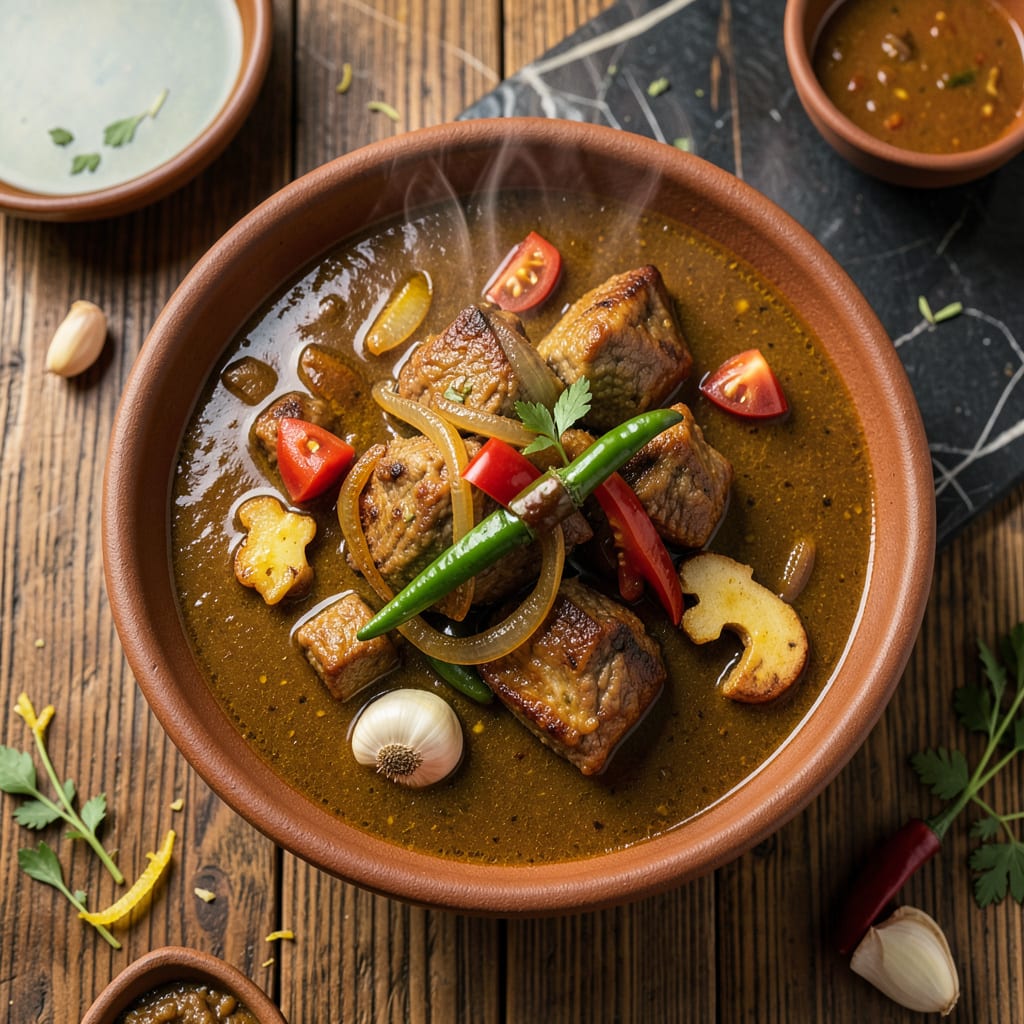
This slow-cooked delight transforms tough mutton into fall-off-the-bone tenderness with layers of aromatic spices. The fat renders down during cooking, creating a rich, velvety sauce that coats every piece.
What makes this dish special is the balance of warm spices and the patience of slow cooking. The result is a deeply flavorful curry with tender meat and a sauce so good, you’ll want to soak it up with bread.
Ingredients for Mutton Fat Curry
Pantry raid plus a trip to the butcher. Rich, aromatic, and worth the wait.
| Ingredient | Amount | Notes |
|---|---|---|
| Mutton 🐑 | 2 lb | Bone-in, shoulder or leg cuts preferred |
| Onion 🧅 | 2 whole | Large, thinly sliced |
| Garlic Cloves 🧄 | 6 cloves | Minced for depth of flavor |
| Fresh Ginger 🌿 | 1 tbsp | Grated or minced |
| Green Chilies 🌶️ | 3 pieces | Slit lengthwise for heat |
| Tomatoes 🍅 | 3 whole | Large, chopped |
| Plain Yogurt 🥛 | ½ cup | Whole milk for richness |
| Ground Cumin 🌿 | 1 tbsp | Toasted for nuttier flavor |
| Ground Coriander 🌿 | 1 tbsp | Freshly ground preferred |
| Turmeric Powder 🌶️ | 1 tsp | For color and earthiness |
| Red Chili Powder 🌶️ | 1 tbsp | Adjust for spice preference |
| Garam Masala 🌿 | 1 tbsp | Freshly ground for best aroma |
| Mustard Oil 🫒 | ½ cup | Traditional for authentic flavor |
| Fresh Cilantro 🌿 | ¼ cup | Chopped, for garnish |
| Salt 🧂 | 1 ½ tsp | Adjust to taste |
The mutton is non-negotiable here. Bone-in shoulder or leg cuts give you that melt-in-your-mouth texture—lean cuts just won’t cut it (pun intended). Hit up a halal butcher shop or specialty meat market if your regular grocery store doesn’t carry mutton. Ask for pieces with good fat marbling—they render down beautifully during cooking. Don’t trim the fat off; it’s what makes the sauce so luscious.
No mutton? Lamb works in a pinch, but the flavor’s a bit milder. Short on time? Use a pressure cooker to speed things up, but the slow-cooked version is worth the wait. If you can’t find mustard oil, ghee or neutral oil like vegetable will do—just miss that signature kick. Fresh ginger’s a must, but ground ginger at half the amount gets you close if you’re desperate.
This tastes even better the next day once the flavors meld. Keeps for 4-5 days in the fridge, freezes for 3 months. Portion leftovers into containers—they’re perfect for a quick lunch or dinner later in the week.
Why You’ll Love This Recipe
- Minimal Chopping Required: I just roughly chop onions, crush garlic, ginger, and slit green chilies—no fancy knife skills needed.
- Rich, Deep Flavor: The mutton fat renders into the curry, and the garlic-ginger-chili combo packs a serious punch.
- Feeds a Hungry Crowd: Honestly, this is my go-to when I need to satisfy a big group without breaking the bank.
- Tastes Better Next Day: Between us, the flavors meld overnight, so leftovers are even more crave-worthy.
Step-by-Step Instructions for Mutton Fat Curry
Here’s how I make this rich, slow-cooked dish with layers of bold flavor.
Step 1: Marinate the Mutton with Yogurt and Spices
In a large bowl, combine the 2 lb mutton with 0.5 cup plain yogurt, 1 tbsp ground cumin, 1 tbsp ground coriander, 1 tsp turmeric powder, 1 tbsp red chili powder, and 1.5 tsp salt. Massage the mixture into the meat thoroughly, ensuring every piece is well coated.
This marinade tenderizes the mutton while infusing it with deep, aromatic flavors. Cover the bowl and let it sit at room temperature for 30 minutes, or refrigerate for 2-4 hours if you have the time. The longer it marinates, the more flavorful the result.
Step 2: Sauté Aromatics in Mustard Oil
Heat 0.5 cup mustard oil in a heavy-bottomed pot over medium heat. Once hot, add the 2 whole onion, thinly sliced, and cook for 8-10 minutes until they turn golden brown and slightly caramelized. Stir occasionally to prevent burning.
Add the 6 cloves garlic cloves, 1 tbsp fresh ginger, and 3 pieces green chilies. Cook for 2-3 minutes until the raw smell of garlic disappears and the aromatics release their fragrance. This base builds the foundation of your curry’s flavor.
Step 3: Brown the Mutton and Develop the Base
Add the marinated mutton to the pot, increasing the heat to medium-high. Sear the meat for 5-7 minutes, stirring frequently, until it browns evenly on all sides. This step locks in the juices and enhances the dish’s richness.
Once the mutton is browned, add the 3 whole tomatoes, chopped, and cook for another 5 minutes until they soften and begin to break down. You’ll notice the oil separating slightly at the edges—that’s your cue to move to the next step.
Step 4: Slow-Cook to Tender Perfection
Reduce the heat to low, cover the pot, and let the curry simmer for 1.5 to 2 hours. Check occasionally, stirring gently to prevent sticking. Add a splash of water if it looks too dry, but keep it minimal—you want a thick, luxurious sauce.
Stir in 1 tbsp garam masala during the last 10 minutes of cooking. This final spice infusion elevates the dish. The mutton is done when it’s fall-off-the-bone tender and the sauce has thickened to a rich, glossy consistency.
Step 5: Garnish and Serve
Turn off the heat and let the curry rest for 5-10 minutes. Sprinkle the 0.25 cup fresh cilantro on top just before serving to add a burst of freshness. The cilantro’s brightness balances the deep, spiced flavors of the dish.
Serve hot with steamed rice or fresh naan, allowing everyone to soak up the rich, aromatic sauce. The meat should be incredibly tender, and the sauce thick enough to cling to every bite.
Pro Tips For Making Mutton Fat Curry
- Brown the Mutton Well: I learned this the hard way—don’t rush the browning step. Let the mutton sear on medium-high heat until deeply caramelized, about 8-10 minutes, to build the rich base flavor this curry needs.
- Pound the Ginger-Garlic: Skip the lazy chop and pound the ginger and garlic into a paste with a little salt. It releases way more aroma and blends seamlessly into the curry, unlike those stubborn chunks that never soften.
- Skip the Water Early: After adding onions, let them cook down in the mutton’s own fat without adding water. Sounds weird, but it works: the onions will caramelize faster and thicken the gravy naturally.
- Slit the Chilies: Make a few deep slits in the green chilies before adding them. This lets the heat infuse the oil without overpowering the dish—my grandmother swore by this, and she was right.
Health Benefits of mutton fat curry
Rich in Healthy Fats
Mutton fat is a natural source of conjugated linoleic acid (CLA), which research suggests may support heart health and metabolism. The slow cooking process renders the fat, creating a rich sauce packed with these beneficial compounds. I always leave the fat on for maximum flavor and nutrition. 💪
Protein Powerhouse
A 4-ounce serving of cooked mutton provides about 25 grams of protein, essential for muscle repair and growth. This curry is particularly rich in protein because the slow cooking method preserves the meat’s natural nutrients while breaking down tough fibers.
Iron and Zinc Boost
Mutton is one of the best sources of heme iron, which your body absorbs more easily than plant-based iron. A single serving delivers about 20% of your daily iron needs, along with zinc for immune support. This makes the dish especially valuable for those with active lifestyles.
Spice Health Benefits
The spices in this dish aren’t just for flavor—they’re packed with health benefits. Turmeric contains curcumin, a compound with powerful anti-inflammatory properties. Cumin and coriander aid digestion, making this rich dish easier on your stomach.
Energy and Vitality
The combination of protein, healthy fats, and complex spices provides sustained energy. I notice I feel more energized after eating this than after lighter meals. The garam masala blend also contains warming spices that may help improve circulation. 🌟
Bone Health Support
Mutton contains phosphorus and calcium, both crucial for maintaining strong bones. The slow cooking process helps release these minerals from the bone-in cuts, making them more bioavailable. This makes the dish particularly beneficial for growing children and aging adults.
Nutrition Facts
Frequently Asked Questions
Can I use lamb instead of mutton?
Yes, lamb works as a substitute, though the flavor will be milder. Use bone-in shoulder or leg cuts for best results, and reduce cooking time by 30-45 minutes since lamb cooks faster.
Why is mustard oil recommended?
Mustard oil adds a signature pungent kick and helps tenderize the meat. If unavailable, use ghee or vegetable oil, but add 1 tsp mustard seeds to mimic the flavor.
How do I prevent the curry from being too greasy?
Skim excess fat during cooking with a spoon. Chilling the curry and removing solidified fat also works. The remaining fat enhances flavor without being overwhelming.
Can I make this in a pressure cooker?
Cook on high pressure for 30-40 minutes after browning. Release pressure naturally for 10 minutes before opening to ensure tenderness.

- 8 Bean Soup Recipe Crock Pot: Hearty Vegetable Medley in One Pot - September 25, 2026
- 4C Bread Crumbs Meatballs Recipe: Crispy Crust and Juicy Centers - September 25, 2026
- 6 Oz Chocolate Chip Cookie Recipe: Perfectly Balanced Crispy Edges and Chewy Hearts - September 25, 2026