
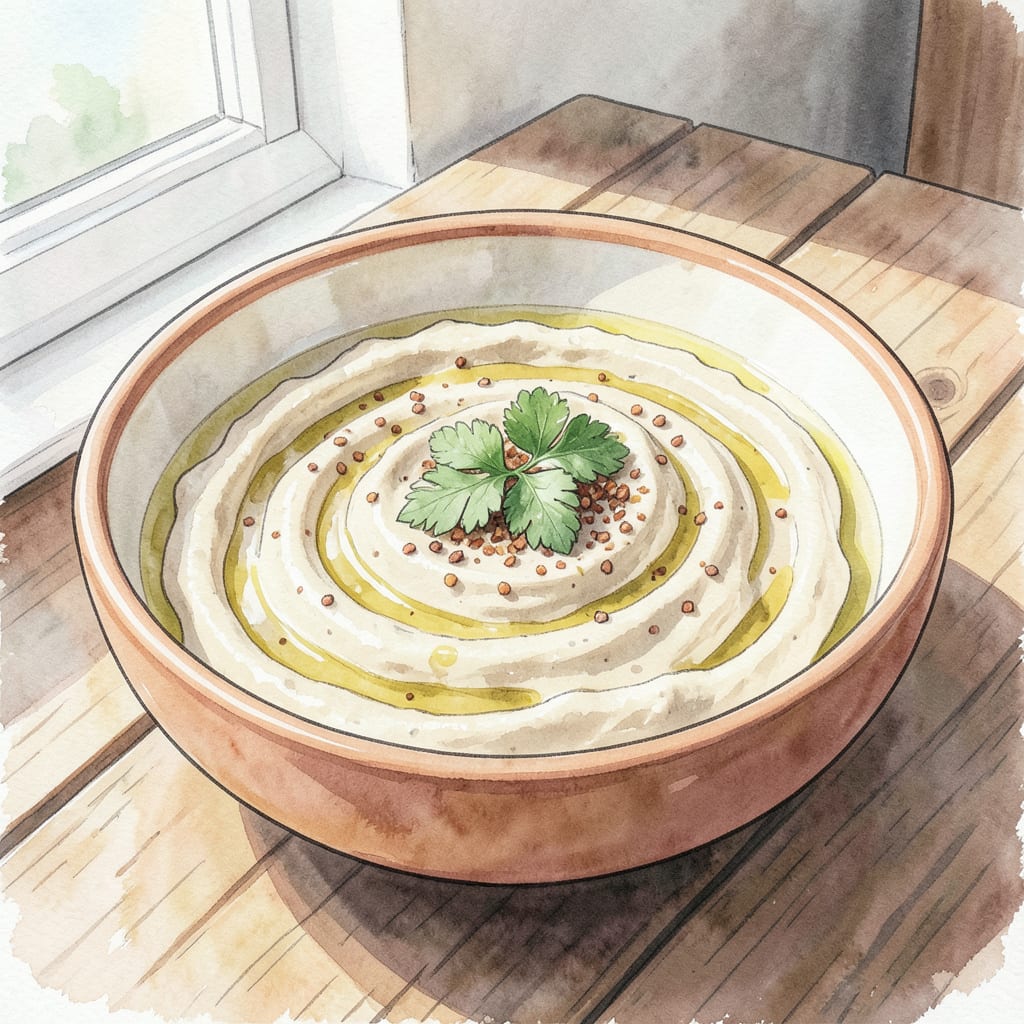
This no garlic hummus recipe delivers a creamy dip without the pungency, perfect for those who love traditional hummus flavors without the punch. Made with chickpeas, lemon juice, and olive oil, it’s a versatile sauce for vegetables, pita, or as a sandwich spread.
The secret to its smooth texture lies in carefully blending the chickpeas with tahini and lemon juice, creating a rich and velvety consistency that’s hard to resist. Serve it as a healthy snack or party appetizer.
Ingredients for No Garlic Hummus
Simple, vegan ingredients create this creamy hummus without garlic. Perfect for dipping.
| Ingredient | Amount | Notes |
|---|---|---|
| Chickpeas 🌽 | 1 ½ cups | Drained, rinsed, canned preferred |
| Tahini 🥜 | ¼ cup | Well-stirred, creamy variety |
| Lemon Juice 🍋 | ¼ cup | Freshly squeezed, not bottled |
| Olive Oil 🫒 | ¼ cup | Extra-virgin for richness |
| Water 💧 | ¼ cup | Ice-cold for best texture |
| Salt 🧂 | ½ tsp | Kosher or sea salt preferred |
| Paprika 🌶️ | ¼ tsp | Smoked or sweet variety |
| Cumin 🌿 | ¼ tsp | Ground, freshly opened |
Chickpeas are the base. Look for low-sodium canned varieties at Whole Foods or your local health food store. Tahini can separate—stir well before measuring. I like Soom or Trader Joe’s tahini for consistency. The lemon juice should be fresh, not bottled—the flavor difference is noticeable.
No tahini? Substitute with creamy almond butter or cashew butter. For a smokier flavor, add a pinch of smoked paprika. The cumin adds depth—use freshly ground if possible. If you prefer a thinner consistency, add water in small increments until you reach your desired texture.
Store in an airtight container in the fridge for up to 5 days. The flavors will meld together over time. Give it a good stir before serving, and add a drizzle of extra-virgin olive oil if desired. Freeze for up to 3 months.
Step-by-Step Instructions for No Garlic Hummus
Follow these straightforward steps to create a creamy, flavorful hummus without garlic.
Step 1: Prepare the Chickpeas
Drain and rinse the 1.5 cups Chickpeas thoroughly under cold running water. I use canned chickpeas for convenience and consistent texture. Transfer them to a blender or food processor.
Check that the chickpeas are well-rinsed and free of any chickpea liquid, as this can affect the final texture of the hummus. The chickpeas should be smooth and free of any debris.
Step 2: Blend the Base Ingredients
Add the 0.25 cup Tahini, 0.25 cup Lemon Juice, and 0.5 tsp Salt to the blender with the chickpeas. I find that using freshly squeezed lemon juice makes a noticeable difference in flavor.
Blend the mixture on high speed for about 2 minutes, or until it becomes smooth and creamy. You may need to stop the blender and scrape down the sides with a spatula to ensure everything gets fully incorporated.
Step 3: Add Liquid and Blend to Desired Consistency
With the blender running, slowly pour in the 0.25 cup Olive Oil and 0.25 cup Water. Continue blending for another 2-3 minutes until the hummus reaches your desired consistency. I prefer mine smooth and creamy, so I blend it for the full 3 minutes.
If the hummus is too thick, you can add a little more water, 1 tablespoon at a time, until you achieve the right texture. Conversely, if it’s too thin, you can add a few more chickpeas or a bit more tahini.
Step 4: Season and Finish
Add the 0.25 tsp Paprika and 0.25 tsp Cumin to the hummus and blend for another 10-15 seconds, just until they’re fully incorporated. Taste the hummus and adjust the seasoning if necessary.
Transfer the hummus to a serving bowl and drizzle with a little extra Olive Oil if desired. You can garnish with paprika, parsley, or a sprinkle of sumac for added flavor and visual appeal.
Step 5: Serve and Enjoy
Serve the hummus with pita bread, vegetables, or crackers. I like to keep it chilled in the refrigerator for at least 30 minutes before serving to allow the flavors to meld together.
The hummus should be creamy and smooth, with a rich, slightly tangy flavor from the lemon juice and a subtle depth from the spices. Enjoy your delicious garlic-free hummus!
Common Mistakes When Making This Dish
Over-Blending Disaster
One of the most common mistakes when making hummus is over-blending, which can result in a gluey, unappetizing texture. To avoid this, blend your chickpeas and other ingredients in short pulses, checking the consistency frequently. Stop blending as soon as you reach your desired smoothness.
Incorrect Chickpea Preparation
Not properly draining and rinsing canned chickpeas can lead to a watery or inconsistent hummus.
Tahini Quality Matters
Using low-quality or separated tahini can significantly impact your hummus’s flavor and texture. Always choose a well-stirred, creamy tahini like Soom or Trader Joe’s. If your tahini has separated, give it a good stir before measuring to ensure the best results.
Lemon Juice Freshness
Bottled lemon juice can lack the brightness and flavor of freshly squeezed juice. Always use freshly squeezed lemon juice for the best flavor. You’ll need 0.25 cup for this recipe. Fresh lemon juice makes a noticeable difference in the overall taste of your hummus.
Seasoning Balance
Underseasoning is another common mistake when making hummus. Don’t be afraid to taste and adjust the seasoning as you go. Start with 0.5 tsp of salt and add more to taste. You can also adjust the amount of paprika and cumin to suit your preferences.
Texture Troubleshooting
If your hummus turns out too thick, you can thin it out with a little more water, adding 1 tablespoon at a time. Conversely, if it’s too thin, add a few more chickpeas or a bit more tahini. This simple adjustment will help you achieve the perfect consistency. 🔥
Nutrition Facts
190kcal

- 8 Bean Soup Recipe Crock Pot: Hearty Vegetable Medley in One Pot - September 25, 2026
- 4C Bread Crumbs Meatballs Recipe: Crispy Crust and Juicy Centers - September 25, 2026
- 6 Oz Chocolate Chip Cookie Recipe: Perfectly Balanced Crispy Edges and Chewy Hearts - September 25, 2026