
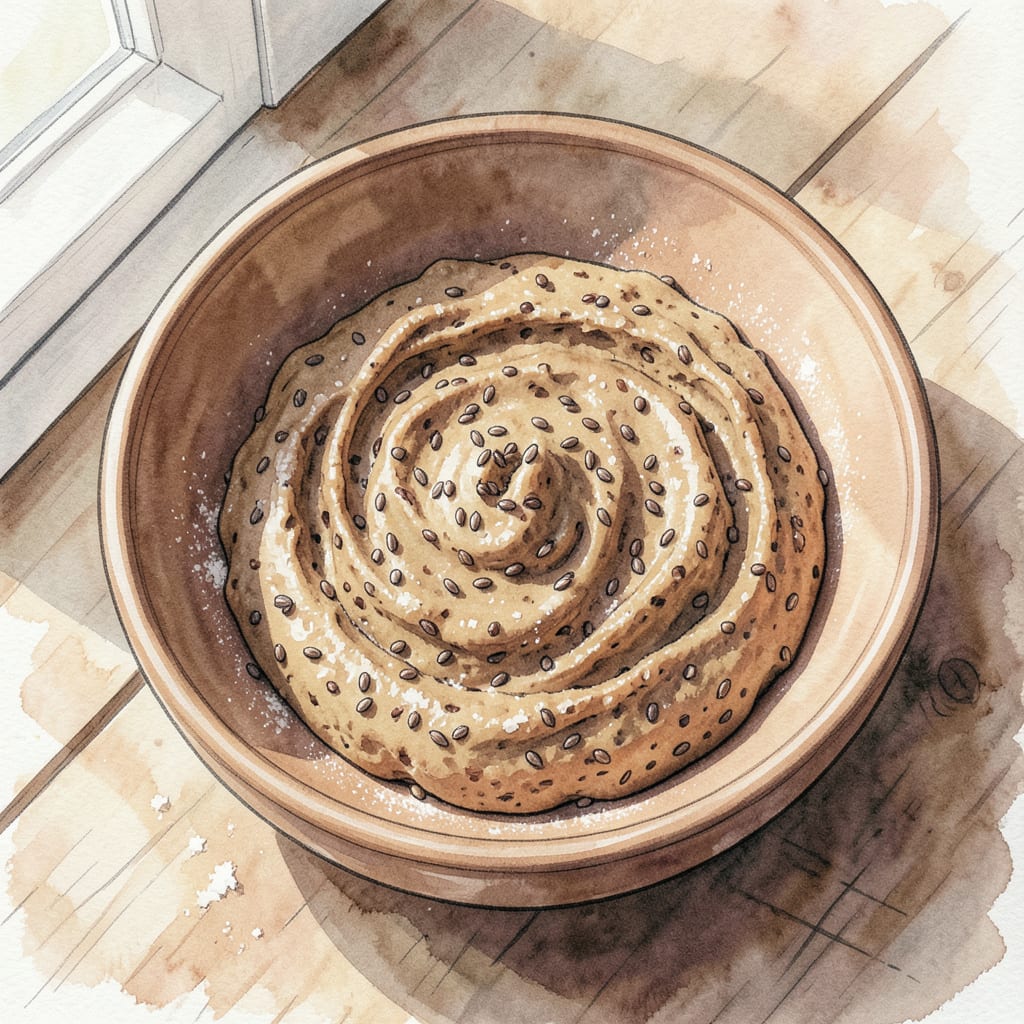
I’ve perfected my no-knead pumpernickel bread recipe to deliver dark rye perfection every time. This bread boasts a deep, rich flavor and a satisfying crust, all achieved with minimal effort.
With a simple mix-and-rest approach, you’ll achieve a perfectly dense loaf with characteristic pumpernickel flavor. The slow fermentation process develops complex notes while keeping preparation straightforward – just mix, rest, and bake at 425°F.
Ingredients for No Knead Pumpernickel Bread
Simple ingredients come together to create this perfectly dense pumpernickel bread recipe.
| Ingredient | Amount | Notes |
|---|---|---|
| All-Purpose Flour 🌾 | 2 ½ cups | Unbleached, unbromated preferred |
| Rye Flour 🌾 | 1 cup | Dark rye for authentic flavor |
| Caraway Seeds 🌼 | 2 tbsp | Whole seeds for best flavor |
| Salt 🧂 | 1 ½ tsp | Kosher salt preferred |
| Instant Yeast 🍞 | 1 tsp | Active dry works too |
| Water 💧 | 1 ½ cups | Filtered water, room temp |
| Molasses 🍯 | 2 tbsp | Blackstrap for deep color |
| Cocoa Powder 🍫 | 2 tbsp | Dutch-process for richness |
| Coffee ☕️ | 1 cup | Strong brewed coffee |
| Olive Oil 🫒 | 1 tbsp | For dough moisture |
| Brown Sugar 🍮 | 1 tbsp | Dark brown for depth |
| Coriander 🌿 | ½ tsp | Ground coriander optional |
For the best pumpernickel flavor, use dark rye flour and blackstrap molasses. Most grocery stores carry rye flour in their baking aisle. If you’re having trouble finding it, try a specialty store or online. The quality of your rye flour will directly impact the final product, so choose a reputable brand like Bob’s Red Mill.
No caraway seeds? Omit them or substitute with fennel seeds. Want a stronger coffee flavor? Use espresso instead of brewed coffee. If you don’t have Dutch-process cocoa, natural cocoa works too—just be aware it might slightly change the flavor profile. For a more intense rye flavor, try using rye beer instead of some of the water.
This bread keeps beautifully at room temperature for up to 3 days. Wrap it tightly in plastic or store in an airtight container. For longer storage, slice and freeze for up to 3 months. Just thaw at room temperature when you’re ready to enjoy it.
Step-by-Step Instructions for No Knead Pumpernickel Bread
Let’s dive into the process. Creating this bread is straightforward and requires minimal hands-on time.
Step 1: Combine Dry Ingredients
In a large mixing bowl, whisk together the 2.5 cups All-Purpose Flour, 1 cup Rye Flour, 2 tbsp Caraway Seeds, 1.5 tsp Salt, and 1 tsp Instant Yeast. I like to use a balloon whisk for this step as it helps to incorporate air and ensures even distribution of the ingredients.
Make sure to whisk thoroughly until all the dry ingredients are well combined. You’ll notice the mixture will have a rustic, uneven texture due to the presence of whole caraway seeds.
Step 2: Mix Wet Ingredients and Combine with Dry Ingredients
In a separate bowl, whisk together the 1.5 cups Water, 2 tbsp Molasses, 2 tbsp Cocoa Powder, and 1 cup Coffee until the cocoa powder is fully dissolved. The mixture will have a dark, rich color and a slightly thick consistency.
Add the wet ingredients to the dry ingredients along with 1 tbsp Olive Oil, 1 tbsp Brown Sugar, and 0.5 tsp Coriander. Mix using a wooden spoon or a stand mixer with a dough hook attachment until just combined. The dough will be shaggy and sticky, but don’t worry—this is normal.
Step 3: Ferment the Dough
Cover the bowl with plastic wrap or a damp towel and let the dough rest at room temperature for 24 hours. During this time, the mixture will start to bubble and emit a sour aroma, indicating that the fermentation process is underway.
After 24 hours, the dough should have expanded and developed a complex, slightly sour smell. This long fermentation time is crucial for developing the characteristic flavor of pumpernickel bread.
Step 4: Shape the Dough
Pre-shape the dough into a round or oblong loaf. Place it onto a parchment-lined baking sheet or into a proofing basket lined with parchment. Cover it loosely with plastic wrap or a clean towel.
Let the dough proof at room temperature for 2-4 hours, or until it has visibly expanded and feels light and airy when gently pressed.
Step 5: Bake the Bread
Preheat your oven to 450°F with a Dutch oven or a heavy-bottomed pot with a lid inside. Once the oven is hot, carefully place the dough inside the preheated pot. Cover it with the lid.
Bake for 30 minutes with the lid on, then remove the lid and continue baking for an additional 15-20 minutes, or until the bread is dark brown and sounds hollow when tapped on the bottom. Let it cool completely on a wire rack before slicing.
Best Sauces and Condiments for This Dish
Classic Pairings
Pumpernickel bread’s dense texture and complex flavor make it an excellent base for various toppings. I love pairing it with smoked salmon and cream cheese for a delicious appetizer. The bread’s earthy notes complement the fish perfectly.
Cheese Board Companion
This bread is a natural fit on any cheese board. It pairs beautifully with strong cheeses like aged cheddar or gouda. The bread’s dark flavor stands up to bold cheeses without getting lost. Try it with a fruit chutney for a sweet contrast.
Butter and Spreads
For a simple yet satisfying snack, try spreading unsalted butter on a slice. You can also use it with various flavored butters like garlic herb or honey butter. The bread’s robust flavor can handle rich toppings.
Condiment Suggestions
Elevate your sandwiches with whole-grain mustard or horseradish sauce. These condiments complement the bread’s deep flavor without overpowering it. For a tangy twist, try pickled vegetables on top.
International Inspirations
Inspired by traditional pairings? Try serving your pumpernickel with German-style cold cuts like bratwurst or knockwurst. The bread’s dense texture holds up well to hearty meats and toppings. For a modern twist, top it with avocado and poached eggs for a breakfast treat. 🥗
Dipping Options
Use your pumpernickel bread as a dipping bread for hearty soups or stews. Its dense texture makes it perfect for sopping up rich broths. You can also serve it with olive oil and balsamic vinegar for a simple yet elegant appetizer.
Nutrition Facts

- 8 Bean Soup Recipe Crock Pot: Hearty Vegetable Medley in One Pot - September 25, 2026
- 4C Bread Crumbs Meatballs Recipe: Crispy Crust and Juicy Centers - September 25, 2026
- 6 Oz Chocolate Chip Cookie Recipe: Perfectly Balanced Crispy Edges and Chewy Hearts - September 25, 2026