
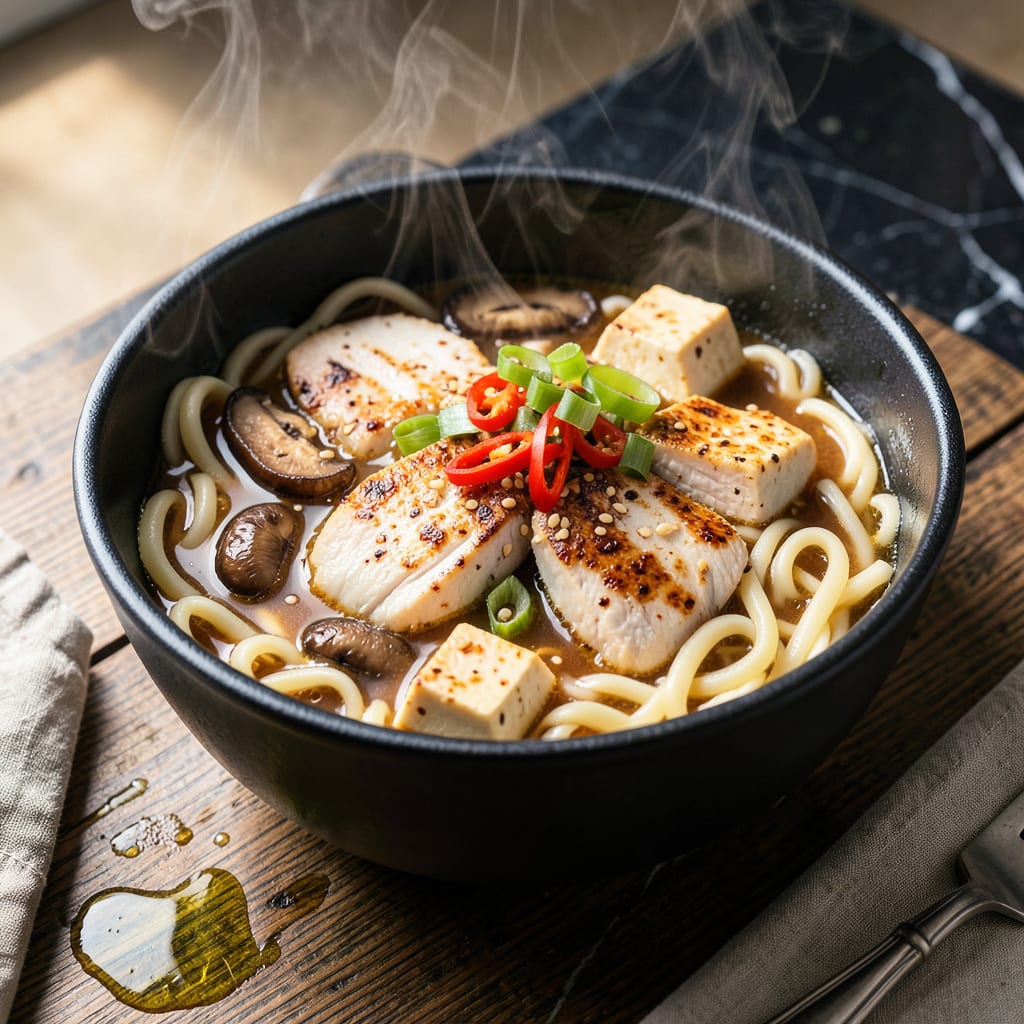
This no-fuss hot pot brings restaurant-quality results to your table with a rich, spicy broth and endless topping possibilities.
I’ve streamlined the process to focus on building deep flavor in the broth while keeping the toppings flexible. Customize it with your favorite proteins, vegetables, and noodles for a meal that’s as fun to prepare as it is to eat.
Ingredients for Noodle Hot Pot
A rich, spicy broth plus customizable toppings for a fun, interactive meal.
| Ingredient | Amount | Notes |
|---|---|---|
| Chicken Breast 🍗 | 1 lb | Boneless, skinless, thinly sliced |
| Firm Tofu 🧈 | 14 oz | Pressed and cubed |
| Udon Noodles 🍜 | 8 oz | Fresh or frozen preferred |
| Chicken Broth 💧 | 6 cups | Low-sodium for better control |
| Soy Sauce 🫒 | ¼ cup | Low-sodium variety works |
| Gochujang 🌶️ | 2 tbsp | Korean chili paste for heat |
| Sesame Oil 🫒 | 1 tbsp | Toasted for depth of flavor |
| Garlic Cloves 🧄 | 6 cloves | Minced for maximum flavor |
| Fresh Ginger 🌿 | 1 tbsp | Grated or finely minced |
| Green Onions 🧅 | 4 whole | Thinly sliced, white and green parts |
| Shiitake Mushrooms 🍄 | 8 oz | Fresh or dried, rehydrated |
| Napa Cabbage 🥬 | 2 cups | Thinly sliced for quick cooking |
| Carrots 🥕 | 2 whole | Julienned or thinly sliced |
| Rice Wine Vinegar 🍚 | 1 tbsp | For balancing the flavors |
| Brown Sugar 🍚 | 1 tsp | Optional, for a touch of sweetness |
The broth is everything here. Gochujang (find it at H Mart or the Asian aisle of most supermarkets) gives that signature heat and depth. I always grab Kikkoman low-sodium soy sauce—it’s consistent and widely available. For the chicken, thighs stay juicier than breasts if you’re okay with slightly more fat. Fresh ginger and garlic are non-negotiable; they build the foundation of flavor.
No gochujang? Sriracha plus a little miso paste gets you close. Swap chicken for extra tofu or shrimp if you eat seafood. The udon noodles can be rice noodles or ramen—whatever you’ve got. If you’re missing fresh ginger, ground ginger at one-fourth the amount works in a pinch (but fresh is worth it).
Broth keeps 3-4 days in the fridge and freezes beautifully for 3 months. Prep all your toppings ahead—they’ll stay fresh in airtight containers for 2 days. Leftovers reheat well, but add fresh noodles to keep the texture right.
Why You’ll Love This Recipe
- One Pot Magic: I just dump chicken, tofu, and udon in broth—no fancy prep, no extra dishes.
- Umami Bomb: The soy sauce and chicken broth create this deep, savory richness that coats every noodle.
- Feeds My Crowd: It’s my go-to when friends drop by—add extra broth and everyone’s happy.
- Budget Stretcher: Chicken breast and tofu keep it filling without breaking the bank. Honestly, leftovers taste even better the next day.
Step-by-Step Instructions for Noodle Hot Pot
This method ensures a deeply flavorful broth and perfectly cooked toppings every time.
Step 1: Build the Spicy Broth Base
In a large pot over medium-high heat, combine the 6 cups Chicken Broth, 0.25 cup Soy Sauce, 2 tbsp Gochujang, 1 tbsp Sesame Oil, 6 cloves Garlic Cloves, and 1 tbsp Fresh Ginger. Whisk thoroughly to dissolve the gochujang paste into the liquid.
Bring the mixture to a gentle boil, then reduce heat to medium-low. Let it simmer for 10-12 minutes until the aromatics become fragrant and the broth takes on a rich, reddish hue. This slow infusion builds the complex foundation for your hot pot.
Step 2: Prepare and Add the Vegetables
While the broth simmers, thinly slice the 8 oz Shiitake Mushrooms, 2 cups Napa Cabbage, and 2 whole Carrots. Add these to the pot along with the 4 whole Green Onions. The mushrooms should soften within 5-7 minutes while the cabbage and carrots retain a slight crunch.
Stir in the 1 tbsp Rice Wine Vinegar and 1 tsp Brown Sugar at this stage. The vinegar brightens the flavors while the sugar balances the heat from the gochujang. Taste and adjust seasoning if needed—you want a bold, slightly spicy base.
Step 3: Cook the Proteins and Noodles
Add the 1 lb Chicken Breast (thinly sliced) and 14 oz Firm Tofu (cubed) to the simmering broth. The chicken should cook through in 5-6 minutes—look for the pieces to turn opaque and float to the surface. Gently stir to ensure even cooking.
Next, add the 8 oz Udon Noodles directly to the pot. Submerge them in the broth and cook for 3-4 minutes until they’re tender but still chewy. Avoid overcooking, as the noodles will continue to soften slightly in the hot broth.
Step 4: Serve and Customize
Ladle the hot pot into deep bowls, ensuring each serving gets a mix of broth, noodles, chicken, tofu, and vegetables. The udon noodles should be fully immersed in the flavorful liquid, soaking up all the spices and aromatics.
Encourage everyone to customize their bowl with additional toppings or garnishes if desired. The broth should be steaming hot with visible flecks of gochujang swirling throughout, and the chicken should be tender enough to fall apart with a gentle nudge.
Pro Tips For Making Noodle Hot Pot
- Pre-cook the Chicken: Sear the chicken breast in a hot pan for 3-4 minutes first—this locks in flavor and prevents it from turning rubbery in the broth. I learned this the hard way after pulling out dry, overcooked chunks too many times.
- Press the Tofu: Drain and press the firm tofu for at least 15 minutes under a heavy pan to remove excess water. Sounds tedious, but it soaks up the broth like a sponge and actually holds its shape.
- Simmer, Don’t Boil: Keep the chicken broth at a gentle simmer, not a rolling boil—boiling makes the udon noodles mushy and the chicken tough. My grandmother swore by this, and she was right.
- Add Noodles Last: Drop the udon noodles in during the final 5 minutes of cooking so they absorb the flavors without falling apart. I was skeptical until I tried it, but now it’s non-negotiable.
Pro Cooking Tips for noodle hot pot
Broth Depth Secrets
Start with a cold broth and bring it to a simmer slowly—this extracts maximum flavor from your aromatics. I always bloom my gochujang in the sesame oil for 30 seconds before adding liquids to deepen its complexity. 🌶️
Timing Perfection
Add delicate ingredients like napa cabbage and udon noodles last to prevent mushiness. The udon should cook in the broth for exactly 3-4 minutes—set a timer. Chicken takes 5-6 minutes at a gentle simmer.
Flavor Layering
Balance is key with spicy broths. I add the rice wine vinegar and brown sugar midway through cooking, not at the start. This prevents the vinegar from evaporating off and lets the sugar caramelize slightly in the simmering liquid.
Protein Prep
Thinly slice your chicken breast against the grain for tenderness. For extra flavor, marinate the slices in 1 tbsp soy sauce and 1 tsp sesame oil while prepping other ingredients. Press your firm tofu for 15 minutes to absorb more broth flavor.
Serving Temperature
Hot pot should be served piping hot—I keep my broth at a low simmer until the very last second. Use pre-warmed bowls to maintain temperature. The gochujang will mellow slightly as it cools, so serve immediately for maximum spice impact. 🔥
Garnish Like a Pro
Fresh green onions are essential, but I also add a drizzle of toasted sesame oil and a sprinkle of toasted sesame seeds just before serving. This adds texture and amplifies the nutty notes in your broth.
Nutrition Facts
Frequently Asked Questions
Can I use a different type of noodle?
While udon is traditional, you can swap in ramen, rice noodles, or even egg noodles. Just adjust the cooking time—most noodles need 3-5 minutes in the broth.
How do I make it less spicy?
Reduce the gochujang to 1 tablespoon or replace it with 1 tablespoon miso paste for a milder flavor. You can also add more broth to dilute the heat.
Can I prep this ahead of time?
Yes! Slice all toppings and store them in the fridge for up to 2 days. Make the broth a day ahead and reheat before adding noodles and proteins.
What if my broth is too salty?
Dilute with more chicken broth or water. A splash of rice wine vinegar can also help balance the flavors without adding more salt.

- 4C Bread Crumbs Meatballs Recipe: Crispy Crust and Juicy Centers - September 25, 2026
- 6 Oz Chocolate Chip Cookie Recipe: Perfectly Balanced Crispy Edges and Chewy Hearts - September 25, 2026
- 6-Inch Coffee Cake Recipe: Vanilla Bean Swirls and Buttery Streusel Topping - September 25, 2026