
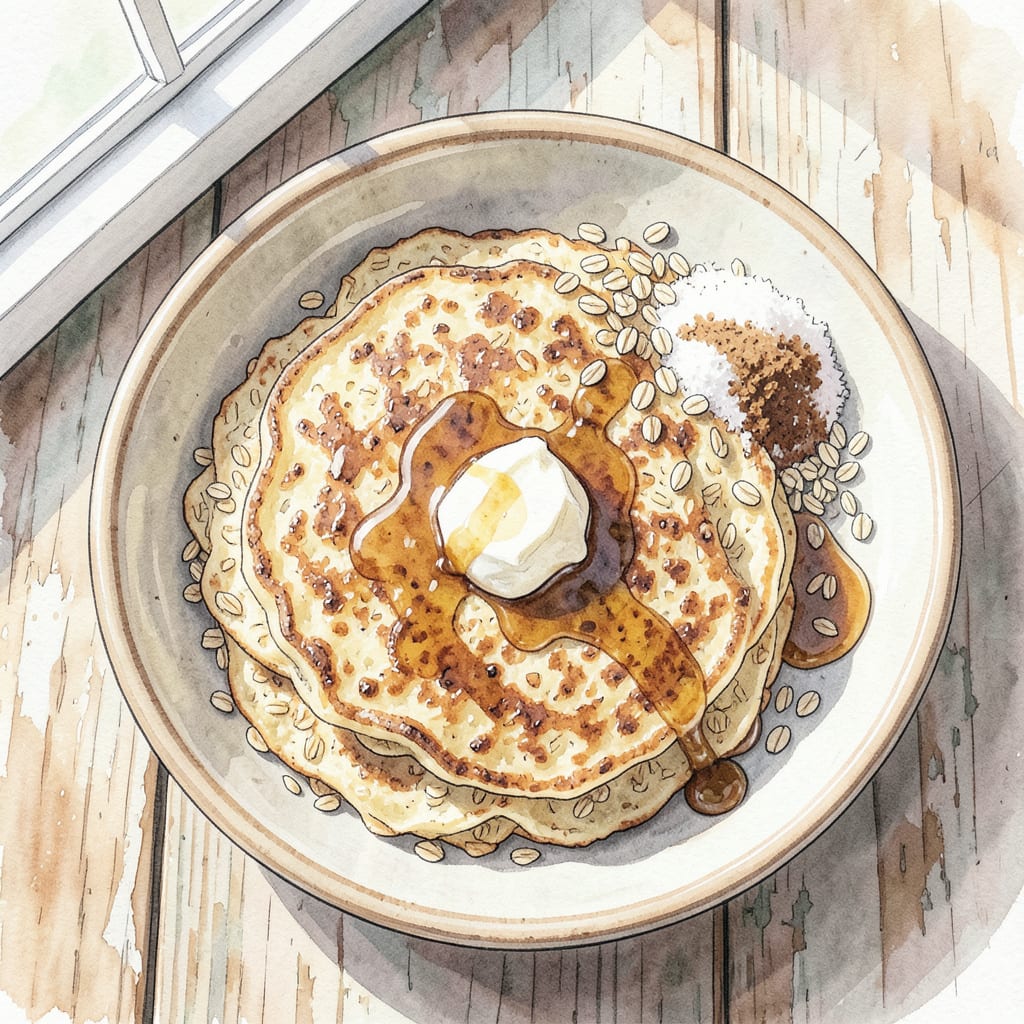
I’ve perfected a delicious oat pancake recipe that’s banana-free and packed with flavor. Using rolled oats and simple pantry ingredients, these fluffy pancakes are ready in just 20 minutes – perfect for busy mornings.
The secret to their tender texture lies in the combination of oats, buttermilk, and a touch of vanilla. Cook them on a medium heat griddle for the best results, and enjoy with your favorite toppings.
Ingredients for Oat Pancake Recipe No Banana
Simple pantry staples come together to make these delicious fluffy oat pancakes.
| Ingredient | Amount | Notes |
|---|---|---|
| Rolled Oats 🌾 | 2 cups | Old-fashioned or regular oats |
| All-Purpose Flour 🥖 | 1 cup | Unbleached preferred |
| Granulated Sugar 🍮 | 2 tbsp | Or to taste |
| Baking Powder 🧂 | 2 tsp | Fresh for best rise |
| Salt 🧂 | ¼ tsp | Kosher or sea salt |
| Large Eggs 🥚 | 2 whole | Room temperature |
| Buttermilk 🥛 | 1 ½ cups | Or make a substitute |
| Vanilla Extract 💧 | 1 tsp | Pure vanilla preferred |
| Unsalted Butter 🧈 | 4 tbsp | Melted before using |
| Baking Soda 🧂 | ½ tsp | Fresh for best results |
| Cinnamon 🌿 | ¼ tsp | Optional for extra flavor |
For the best texture, use old-fashioned rolled oats—they hold their shape better than instant oats. Most grocery stores carry them in bulk. If you’re out of buttermilk, make a substitute by mixing 1 cup milk with 1 tbsp white vinegar or lemon juice—let it sit for 5 minutes. The vanilla extract matters here—pure vanilla makes a noticeable difference in flavor.
No buttermilk? Milk with lemon juice or vinegar works as a substitute. Want a different flavor? Try adding blueberries or chocolate chips to the batter. The cinnamon is optional, but it adds a nice warmth—use Ceylon cinnamon if you’ve got it. For an extra fluffy texture, don’t overmix the batter.
Leftover pancakes freeze beautifully. Cool them completely, then stack with parchment paper between each pancake. Store in a freezer-safe bag for up to 3 months. To reheat, just pop them in the toaster or microwave. The batter keeps in the fridge for 24 hours—give it a quick stir before using.
Step-by-Step Instructions for Oat Pancakes
Let’s create these delicious oat pancakes together – a perfect breakfast treat.
Step 1: Prepare the Dry Ingredients
In a large mixing bowl, combine the 2 cups Rolled Oats, 1 cup All-Purpose Flour, 2 tbsp Granulated Sugar, 2 tsp Baking Powder, 0.25 tsp Salt, 0.5 tsp Baking Soda, and 0.25 tsp Cinnamon. Whisk these dry ingredients together until they’re evenly distributed. I like to use a balloon whisk for this – it gets into all the nooks and crannies.
The mixture should look uniform with no visible streaks of any single ingredient. This step is crucial as it ensures your pancakes will be evenly flavored and textured. Take your time and make sure everything is well incorporated.
Step 2: Mix the Wet Ingredients
In a separate large bowl, whisk together the 2 whole Large Eggs, 1.5 cups Buttermilk, 1 tsp Vanilla Extract, and 4 tbsp melted Unsalted Butter. The eggs should be fully incorporated into the buttermilk mixture, creating a smooth, creamy liquid. I always use room temperature eggs for better emulsification.
Make sure the melted butter isn’t too hot when you add it to the other wet ingredients. If it’s steaming, let it cool for a minute or two. You want it warm, not scalding hot.
Step 3: Combine Wet and Dry Ingredients
Pour the wet ingredients into the dry ingredients and gently fold the mixture until just combined. Don’t overmix – the batter should still be slightly lumpy. Overmixing can lead to tough, dense pancakes, so stop mixing as soon as there are no more dry flour pockets visible.
The batter will be thick but still pourable. If it’s too thick, you can add a splash more buttermilk. If it’s too thin, a little extra flour will do the trick. Let the batter rest for 5 minutes to allow the oats to absorb some of the liquid and the baking powder to activate.
Step 4: Cook the Pancakes
Heat a non-stick skillet or griddle over medium heat. When it’s hot, add a small pat of butter and let it melt. Once the butter starts to foam, it’s ready for your pancakes. Pour ¼ cup portions of batter onto the skillet.
Cook the pancakes for 2-3 minutes until bubbles appear on the surface and the edges start to look set. Flip them and cook for another 1-2 minutes until golden brown. Serve immediately while they’re still warm and fluffy.
Common Mistakes When Making This Dish
Overmixing the Batter
The most common mistake is overmixing, which develops the gluten in the flour and makes pancakes tough. Stop mixing as soon as wet and dry ingredients are combined – it’s okay if it’s slightly lumpy. I learned this the hard way after making dense pancakes multiple times. 🔥
Incorrect Cooking Temperature
Cooking at too high or low heat affects both texture and flavor. Use medium heat for even cooking. If it’s too hot, pancakes burn outside before cooking inside; too cold, and they dry out. I preheat my griddle until it reaches 375°F for perfect results.
Using Old Baking Powder
Stale baking powder fails to leaven properly, resulting in flat pancakes. Check the expiration date and store it in an airtight container. I replace mine every 6 months to ensure maximum effectiveness.
Skipping Rest Time
Not letting the batter rest causes uneven texture. The 5-minute rest allows oats to absorb liquid and baking powder to activate. I often set a timer to ensure I don’t skip this step.
Overcrowding the Griddle
Cooking too many pancakes at once lowers the griddle temperature, causing uneven cooking. Leave space between each pancake – about 2 inches apart. This allows for proper heat circulation and easier flipping.
Flipping Too Early
Flipping before bubbles appear on the surface and edges set results in pancakes that fall apart. Wait for these signs before flipping. I usually see bubbles after 2-3 minutes, indicating they’re ready to flip.
Nutrition Facts

- 8 Bean Soup Recipe Crock Pot: Hearty Vegetable Medley in One Pot - September 25, 2026
- 4C Bread Crumbs Meatballs Recipe: Crispy Crust and Juicy Centers - September 25, 2026
- 6 Oz Chocolate Chip Cookie Recipe: Perfectly Balanced Crispy Edges and Chewy Hearts - September 25, 2026