
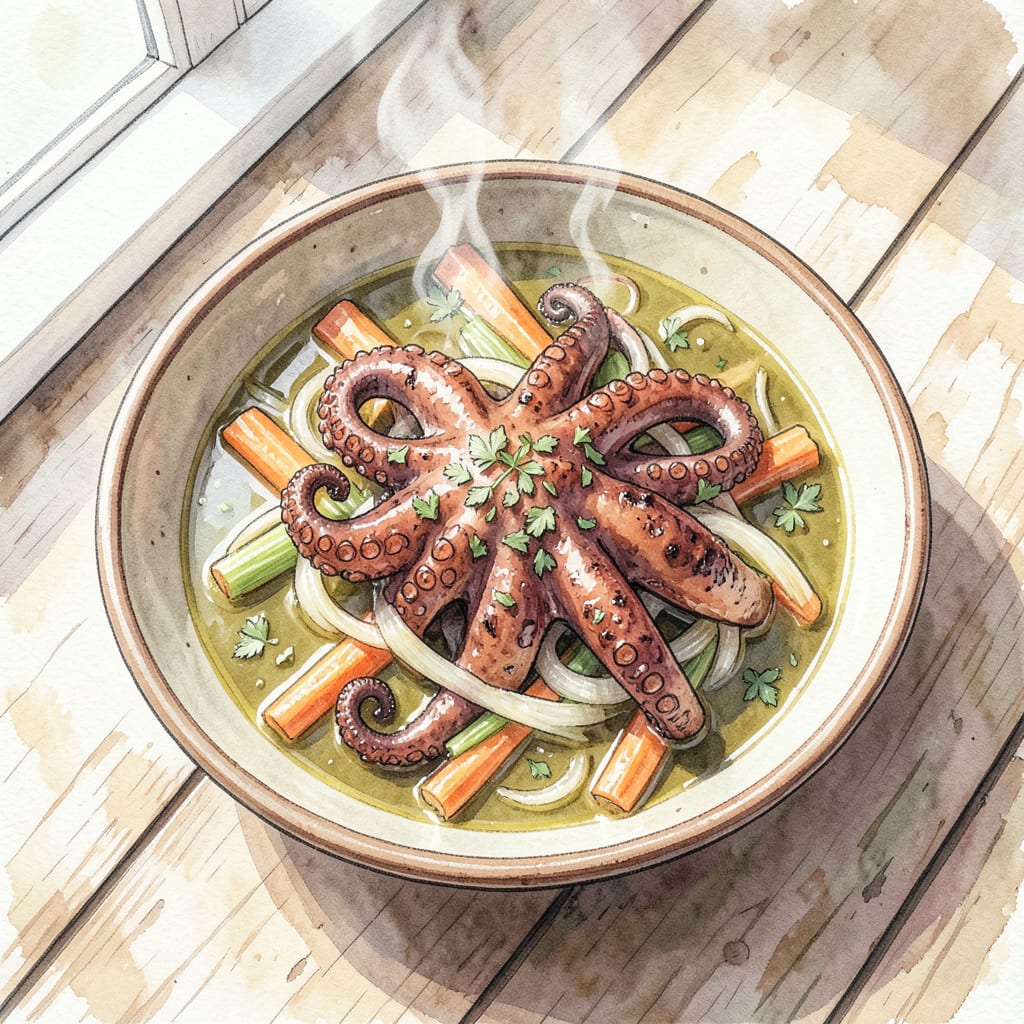
I’ve perfected a recipe for tender octopus stew that’s sure to delight seafood lovers. This dish features tender octopus cooked in a rich, flavorful broth with aromatic vegetables.
The key to this recipe is cooking the octopus low and slow to achieve that perfect tender texture. Served with crusty bread, this stew makes for a satisfying meal that’s sure to impress.
Ingredients for Octopus Stew
Tender octopus meets rich broth and aromatic vegetables in this seafood delight stew recipe.
| Ingredient | Amount | Notes |
|---|---|---|
| Octopus 🦐 | 1 ½ lb | Cleaned, tentacles separated |
| Olive Oil 🫒 | ¼ cup | Extra-virgin for richness |
| Onion 🧅 | 1 whole | Chopped, yellow or red |
| Garlic Cloves 🧄 | 4 cloves | Mince before using |
| Carrots 🥕 | 2 whole | Peeled, sliced |
| Celery Stalks 🥕 | 2 stalks | Chopped, with leaves |
| Tomato Paste 🍅 | 2 tbsp | Concentrated, in tube or can |
| White Wine 🍷 | 1 cup | Dry, substitute with broth |
| Fish Stock 🐟 | 2 cups | Homemade or store-bought |
| Bay Leaves 🌿 | 2 whole | Fresh or dried |
| Thyme 🌿 | 1 tsp | Fresh or dried sprigs |
| Salt 🧂 | 1 tsp | Kosher or sea salt |
| Black Pepper 🌶️ | ½ tsp | Freshly ground preferred |
| Red Pepper Flakes 🔥 | ¼ tsp | Optional, for heat |
| Parsley 🌿 | ¼ cup | Chopped, fresh |
For the best octopus, look for pre-cleaned at fish markets or quality grocery stores. Freshness matters—check for firm, not slimy texture. If you can’t find pre-cleaned, ask your fishmonger to do it. The broth is where most of the flavor lives, so don’t skimp on the fish stock—homemade is ideal but store-bought works too.
No white wine? Use extra fish stock or a splash of dry vermouth. For a spicy kick, increase the red pepper flakes. If using dried thyme, use one-third the amount called for fresh. The vegetables can be adjusted—add potatoes for heartiness or keep it simple with just onions and garlic. For an authentic touch, serve with crusty bread for dipping.
This stew improves with time—make it a day ahead if possible. Store in airtight containers in the fridge for up to 3 days, reheat gently. Freezes well for 3 months—portion into containers for easy meals. The flavors meld beautifully when reheated, making leftovers just as good as the first serving.
Step-by-Step Instructions for Octopus Stew
Follow my tested method to achieve tender octopus in a rich, flavorful broth.
Step 1: Sear the Octopus
Heat the 0.25 cup olive oil in a large Dutch oven over medium-high heat. Once the oil shimmers, add the 1.5 lb octopus and sear for 2-3 minutes on each side until it develops a nice brown color. This step is crucial for adding depth to the stew.
Remove the octopus from the pot and set it aside on a plate. The octopus will be tender after slow cooking, but the initial sear creates a better texture and flavor.
Step 2: Sauté the Aromatics
Reduce the heat to medium and add the 1 whole chopped onion, 2 sliced carrots, and 2 chopped celery stalks to the same pot. Cook for 8-10 minutes, stirring occasionally, until the vegetables are softened and lightly browned. You’ll notice the aroma filling your kitchen as the vegetables release their natural sweetness.
Add the 4 minced garlic cloves and cook for another 1 minute, stirring constantly to prevent burning. The garlic will become fragrant and add a rich flavor to the stew.
Step 3: Build the Stew Base
Stir in the 2 tbsp tomato paste and cook for 2 minutes, allowing it to darken in color and intensify in flavor. This step is essential for developing the stew’s rich flavor profile.
Pour in the 1 cup white wine, scraping up any browned bits from the bottom of the pot. Bring the mixture to a simmer and cook until the liquid is almost completely reduced, about 5 minutes. This process concentrates the flavors and adds complexity to the stew.
Step 4: Simmer the Stew
Add the 2 cups fish stock, 2 whole bay leaves, 1 tsp thyme, 1 tsp salt, 0.5 tsp black pepper, and 0.25 tsp red pepper flakes to the pot. Return the seared octopus to the pot, ensuring it’s mostly submerged. If necessary, add a bit more fish stock or water to cover the octopus.
Bring the stew to a gentle simmer, then cover the pot and transfer it to a preheated oven at 300°F. Cook for 1 ½ to 2 hours or until the octopus is tender and easily pierced with a fork. The slow cooking process breaks down the connective tissues in the octopus, making it tender and palatable.
Step 5: Finish and Serve
Remove the pot from the oven and let it cool slightly. Discard the bay leaves and adjust the seasoning if needed. Stir in the 0.25 cup chopped parsley to add freshness to the stew.
Serve the octopus stew hot, garnished with additional parsley if desired. The tender octopus and rich broth make for a comforting and flavorful dish that’s sure to impress. Enjoy your delicious homemade octopus stew!
Health Benefits of This octopus stew
Nutritional Power of Octopus
Octopus is an excellent source of high-quality protein while being low in fat, making it ideal for heart-healthy diets. A 3-ounce serving provides about 15 grams of protein with minimal saturated fat. It’s also rich in essential minerals like iron and zinc, supporting immune function and overall health. 💪
Omega-3 Benefits
While not as high in omega-3s as fatty fish, octopus still contains these beneficial fatty acids that support heart health and reduce inflammation. The slow cooking method used in this stew helps preserve these delicate nutrients. Including octopus in your diet 2-3 times per week can contribute to better cardiovascular health.
Micronutrient Richness
This seafood delicacy is packed with various vitamins and minerals. It’s particularly rich in vitamin B12, essential for nerve function and red blood cell formation. The stew’s vegetables add additional nutrients, creating a nutrient-dense meal that supports overall health and wellness.
Low in Calories
Despite its rich flavor, octopus stew is relatively low in calories, making it suitable for weight management diets. A serving typically contains about 200-250 calories, primarily from protein and healthy fats. The fiber from vegetables adds satiety without excessive calories.
Antioxidant Properties
The combination of octopus and vegetables in this stew provides various antioxidants. Selenium from seafood and various phytochemicals from vegetables work together to protect cells from damage and support overall health. The parsley adds fresh flavor while contributing additional antioxidants.
Digestive Health
The broth of this stew, rich in collagen from slow-cooked octopus, can support gut health and joint function. The gentle cooking method makes the protein more digestible, while the vegetables add beneficial fiber that supports a healthy digestive system. Regular consumption can help maintain a balanced gut microbiome.
Nutrition Facts

- 8 Bean Soup Recipe Crock Pot: Hearty Vegetable Medley in One Pot - September 25, 2026
- 4C Bread Crumbs Meatballs Recipe: Crispy Crust and Juicy Centers - September 25, 2026
- 6 Oz Chocolate Chip Cookie Recipe: Perfectly Balanced Crispy Edges and Chewy Hearts - September 25, 2026