
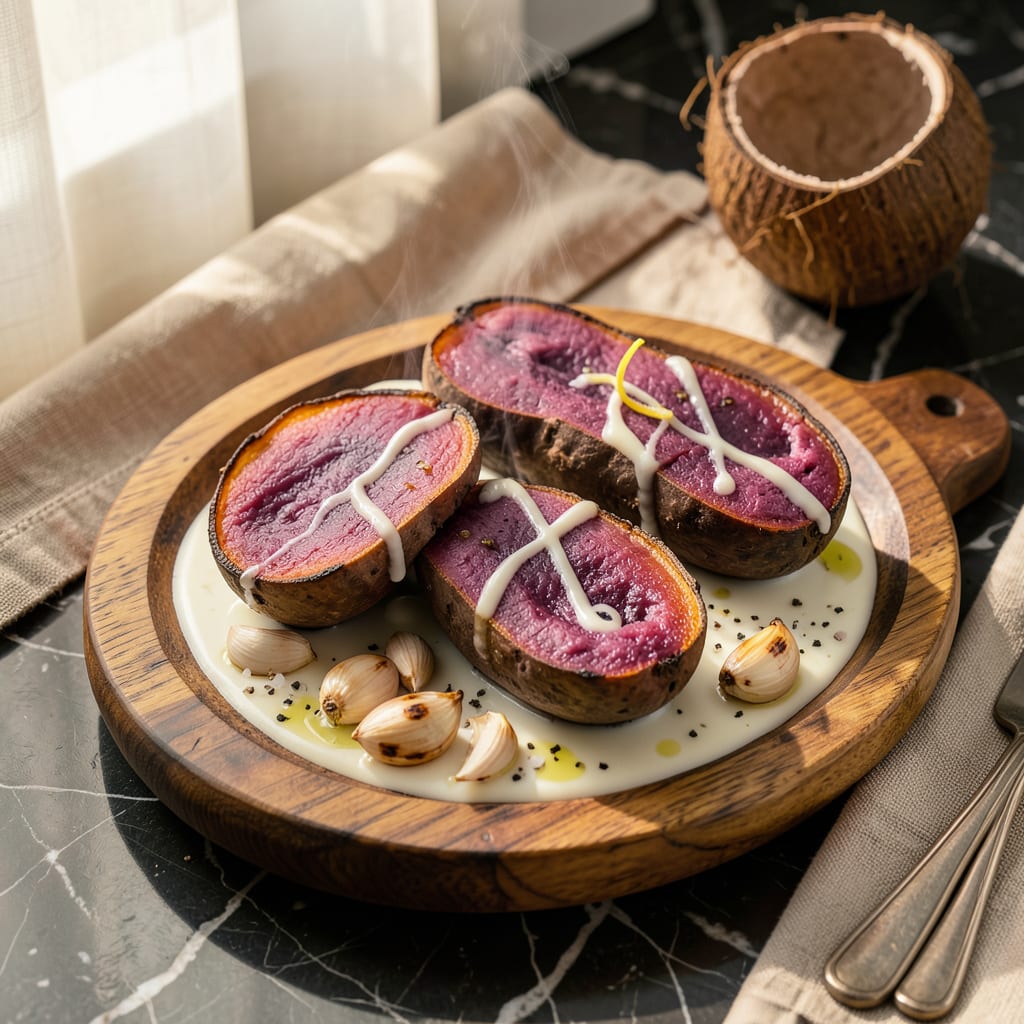
Okinawan sweet potatoes transform ordinary sides into something extraordinary with their striking purple hue and naturally sweet, earthy flavor. This vibrant mash showcases their unique qualities while maintaining simplicity—just roast until tender, then blend with a touch of coconut milk for creaminess. The result is a dish that’s as visually stunning as it is nutritious.
The secret lies in the preparation: roasting at 400°F intensifies the sweetness while preserving the vivid color. Rich in antioxidants and fiber, this mash pairs beautifully with grilled proteins or stands alone as a showstopping vegetarian centerpiece. The earthy sweetness requires no added sugar, making it both delicious and wholesome.
Ingredients for Okinawan Sweet Potato
This vibrant purple mash requires just twelve purposeful ingredients to achieve its extraordinary balance of earthy sweetness and visual impact.
| Ingredient | Amount | Notes |
|---|---|---|
| Okinawan Sweet Potatoes 🍠 | 2 ½ lb | Purple-fleshed, scrubbed clean |
| Full-Fat Coconut Milk 🥥 | ½ cup | Canned, well-shaken for creaminess |
| Extra-Virgin Coconut Oil 🫒 | 1 tbsp | Unrefined, for roasting |
| Sea Salt 🧂 | ¾ tsp | Fine grain, preferably grey |
| Freshly Ground Black Pepper 🌶️ | ¼ tsp | Medium-coarse grind preferred |
| Garlic Cloves 🧄 | 3 cloves | Minced to uniform consistency |
| Fresh Thyme Sprigs 🌿 | 4 sprigs | Leaves stripped, stems discarded |
| Lime Zest 🍋 | 1 tsp | Finely grated, no pith |
| Nutritional Yeast 🧀 | 1 tbsp | Fortified, for umami depth |
| Toasted Coconut Flakes 🥥 | 2 tbsp | Unsweetened, for garnish |
| Fresh Cilantro Leaves 🌿 | ¼ cup | Loosely packed, chopped |
| Lime Juice 🍋 | 1 tbsp | Freshly squeezed preferred |
The Okinawan sweet potatoes are non-negotiable—seek out Asian markets or specialty grocers for the authentic purple-fleshed variety. Their starch content differs from standard sweet potatoes, yielding a creamier texture when roasted. For the coconut milk, Thai Kitchen or Chaokoh brands provide optimal fat content (minimum 60% coconut extract). The coconut oil should be unrefined and cold-pressed to preserve its delicate aroma during high-heat roasting. Fresh thyme offers superior flavor retention compared to dried; select sprigs with vibrant green leaves and flexible stems.
Substitutions require careful consideration to maintain the dish’s integrity. Orange-fleshed sweet potatoes lack the antioxidant-rich purple pigment but can be used in equal weight. For coconut allergies, cashew cream (1:1 ratio) provides comparable richness. The nutritional yeast may be omitted, though its savory notes enhance complexity. If thyme is unavailable, one-third the amount of dried thyme works, but add it during blending rather than roasting. The lime components are essential for balancing sweetness—lemon may substitute at equal volume if necessary.
Prepared mash maintains optimal texture and color for 48 hours refrigerated in an airtight container. The vivid purple hue may fade slightly upon storage; adding a splash of lime juice before reheating revives the color. For longer storage, portion into freezer-safe containers (leaving ½-inch headspace) and freeze for up to 3 months. Reheat gently in a saucepan with 1-2 tablespoons of water or coconut milk to restore creaminess. Toasted coconut flakes are best added fresh before serving to preserve crunch.
Why You’ll Love This Recipe
- One-Pan Magic: I toss the cubed Okinawan sweet potatoes with coconut oil, spread them out, and let the oven do the work. One sheet pan, one spatula, and zero stress—exactly how I like my weeknights.
- That First Bite: Honestly, the contrast gets me every time: the caramelized edges from roasting, the velvety coconut milk drizzled over, and that hint of sea salt tying it all together. It’s the kind of dish where you pause mid-forkful and go, “Yep, nailed it.”
- Meal Prep MVP: I make a double batch on Sundays—roast the potatoes, store them plain, then reheat with coconut milk when needed. They’re just as good cold in grain bowls or warmed up as a side (yes, even on a Tuesday night).
- Budget-Friendly Stretch: A 3-pound bag of Okinawan sweet potatoes costs me less than $5, and with coconut milk’s richness, a little goes a long way. I’ve fed four people generously with leftovers to spare—no fancy ingredients, just solid, satisfying food.
Step-by-Step Instructions for Okinawan Sweet Potato Mash
This method transforms vibrant purple sweet potatoes into a velvety mash with balanced sweetness and earthy depth.
Step 1: Roast the Okinawan Sweet Potatoes
Preheat your oven to 400°F and line a baking sheet with parchment paper. Scrub the 2.5 lb Okinawan Sweet Potatoes thoroughly under running water to remove any dirt, then pat them completely dry. Pierce each potato several times with a fork to allow steam to escape during roasting.
Rub the potatoes with the 1 tbsp Extra-Virgin Coconut Oil, ensuring even coverage. This creates a protective layer that helps crisp the skin while keeping the interior moist. Place them on the prepared baking sheet and roast for 50-60 minutes until a knife slides in effortlessly and the internal temperature reaches 205°F. The skin should be slightly wrinkled and the flesh should yield to gentle pressure.
Step 2: Prepare the Aromatic Infusion
While the potatoes roast, mince the 3 cloves Garlic Cloves to a fine, uniform consistency. Strip the leaves from the 4 sprigs Fresh Thyme Sprigs and discard the stems. In a small saucepan, combine the minced garlic, thyme leaves, and 0.5 cup Full-Fat Coconut Milk.
Warm the mixture over low heat for 5-7 minutes, stirring occasionally. The goal is to infuse the coconut milk with the aromatic compounds without bringing it to a boil. You’ll know it’s ready when the garlic softens slightly and the mixture becomes fragrant. Remove from heat and stir in the 1 tsp Lime Zest, which will brighten the earthy flavors.
Step 3: Mash and Incorporate Flavors
Once the potatoes are fully cooked, remove them from the oven and let them rest for 5 minutes. This brief resting period allows the starches to stabilize, making them easier to work with. Carefully slice each potato in half lengthwise and scoop the vibrant purple flesh into a large mixing bowl, discarding the skins.
Add the warm coconut milk infusion, 0.75 tsp Sea Salt, and 0.25 tsp Freshly Ground Black Pepper to the bowl. Using a potato masher, work the mixture until smooth, incorporating air for a lighter texture. The mash should be velvety with no visible lumps. Fold in the 1 tbsp Nutritional Yeast to add a subtle umami depth that complements the natural sweetness.
Step 4: Finish and Garnish
Taste the mash and adjust seasoning if needed. The flavors should be balanced—earthy from the potatoes, creamy from the coconut milk, with bright citrus notes. Transfer the mash to a serving bowl and create gentle swirls with the back of a spoon for visual appeal.
Garnish with the 2 tbsp Toasted Coconut Flakes, 0.25 cup Fresh Cilantro Leaves, and a drizzle of 1 tbsp Lime Juice. The coconut flakes add textural contrast, while the cilantro and lime juice provide fresh, vibrant finishing notes that elevate the dish. Serve immediately while warm for optimal flavor and texture.
Dietary Considerations for This okinawan sweet potato
Naturally Vegan
This vibrant mash is inherently plant-based, relying on the natural creaminess of Okinawan sweet potatoes and full-fat coconut milk for richness. The dish contains no animal products, making it perfect for vegan diets while delivering satisfying texture and depth. I love how the earthy sweetness stands on its own without dairy. 🌱
Gluten-Free Friendly
Every ingredient in this recipe is naturally gluten-free, from the purple-fleshed sweet potatoes to the coconut milk and nutritional yeast. There’s no risk of cross-contamination with wheat products. For those with celiac disease or gluten sensitivity, this mash offers worry-free enjoyment alongside any protein or salad.
Low Glycemic Impact
Despite their natural sweetness, Okinawan sweet potatoes have a lower glycemic index than regular potatoes. The fiber content (about 4g per serving) helps slow sugar absorption. Pairing with the coconut fat further stabilizes blood sugar response, making this suitable for those monitoring glucose levels.
Nut-Free Option
While the recipe contains no nuts, the toasted coconut flakes garnish could be problematic for those with coconut allergies. Simply omit the flakes and increase the fresh cilantro to ½ cup for similar visual appeal. The dish remains flavorful and visually striking without this topping.
Allergen Considerations
The primary allergen concern is coconut, present in both the milk and oil. For coconut allergies, substitute cashew cream (1:1 ratio) and avocado oil for roasting. Always verify that your nutritional yeast brand is processed in allergen-free facilities if cross-contamination is a concern.
FODMAP Adaptations
To make this low-FODMAP, reduce the garlic cloves to 1 clove and use only the green part of spring onions instead of regular garlic. The coconut milk is naturally low-FODMAP in this serving size, but check labels for additives. The lime and thyme remain safe choices for flavor enhancement.
Nutrition Facts
Frequently Asked Questions
Why is my mash turning gray instead of staying purple?
The vibrant purple color comes from natural anthocyanins that are sensitive to pH changes. Adding acidic ingredients like lime juice too early can cause discoloration. Mix in lime zest/juice only after mashing, and serve immediately for the brightest hue.
Can I prepare this ahead for meal prep?
Yes, but the texture changes slightly. Store in an airtight container for up to 2 days. Reheat gently with 1-2 tbsp coconut milk to restore creaminess. Note the purple color may fade overnight—stirring in extra lime juice helps revive it.
What’s the best way to find authentic Okinawan sweet potatoes?
Check Asian grocery stores (look for “Okinawan” or “Hawaiian” labels) or specialty producers like Frieda’s or Melissas. They’re smaller than regular sweet potatoes with deep purple skin. Online retailers like Amazon Fresh often carry them seasonally (fall/winter).
My mash turned out gummy—what went wrong?
Overworking the potatoes releases too much starch. Use a potato masher (not a food processor) and stop when smooth but still slightly textured. Also ensure potatoes are fully cooked (205°F internal temp) before mashing—undercooked ones become gluey.
Can I make this in an Instant Pot instead of the oven?
Use the steam function for 20 minutes with 1 cup water in the pot. The texture will be slightly wetter, so reduce coconut milk to ⅓ cup. Quick-release carefully to avoid waterlogging the potatoes.

- 8 Bean Soup Recipe Crock Pot: Hearty Vegetable Medley in One Pot - September 25, 2026
- 4C Bread Crumbs Meatballs Recipe: Crispy Crust and Juicy Centers - September 25, 2026
- 6 Oz Chocolate Chip Cookie Recipe: Perfectly Balanced Crispy Edges and Chewy Hearts - September 25, 2026