
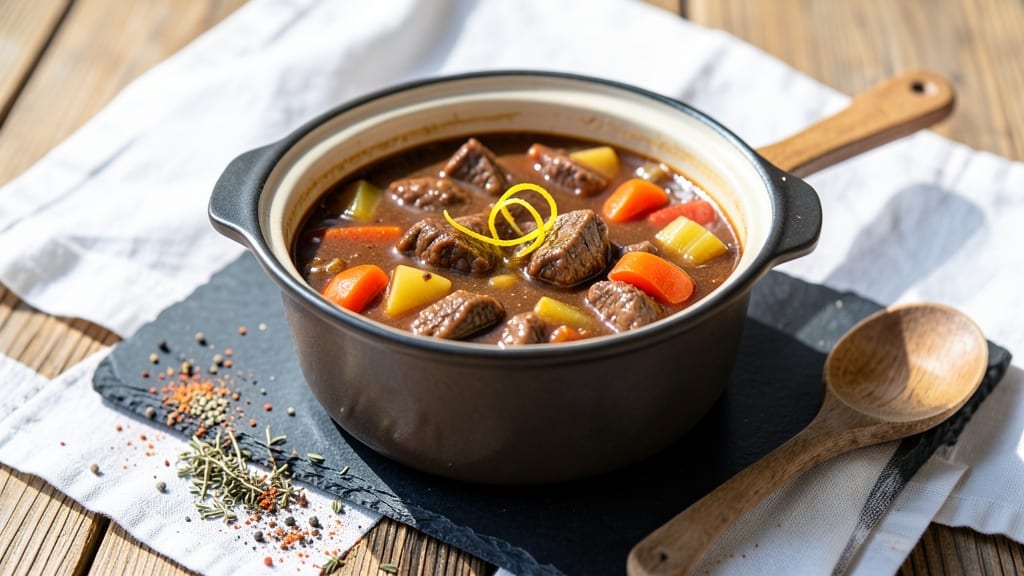
This old-fashioned beef stew recipe transforms tough cuts into melt-in-your-mouth perfection using just your crock pot and a few hours of hands-off time. The secret lies in slow-cooking beef with root vegetables until the flavors meld into a rich, hearty broth that tastes like a Sunday dinner.
I developed this version after years of testing—it delivers restaurant-quality depth without requiring hours at the stove.
The beauty of this method is its simplicity: toss in beef, potatoes, carrots, onions, and herbs, then let the crock pot work its magic. The low-and-slow cooking tenderizes even the toughest cuts while building layers of savory flavor in the broth.
No need for fancy techniques—just patience and a few basic ingredients that come together effortlessly.
By the time you’re ready to serve, you’ll have a steaming pot of beef stew with fork-tender meat, perfectly softened vegetables, and a broth so flavorful it deserves a spoon.
The aroma alone will have everyone gathering at the table, and the first bite delivers that comforting, homey taste of classic beef stew—just like your grandmother used to make.
This recipe scales beautifully for crowds or leftovers that reheat perfectly. Pair it with crusty bread to soak up every last drop of that savory broth. Let’s get started on creating your perfect crock pot beef stew.
Ingredients for old fashioned beef stew recipe crock pot
Six simple ingredients transform into hearty, comforting beef stew that tastes like home.
| Ingredient | Amount | Notes |
|---|---|---|
| Chuck Roast 🥩 | 3 lb | Tough cut, trimmed of excess fat |
| Yellow Onions 🧅 | 2 whole | Medium size, peeled and halved |
| Carrots 🥕 | 4 whole | Medium size, peeled and halved lengthwise |
| Russet Potatoes 🥔 | 3 lb | Waxy variety, cut into 2-inch chunks |
| Celery Stalks 🥬 | 4 whole | Fresh, trimmed and cut into 2-inch pieces |
| Garlic Cloves 🧄 | 6 cloves | Peeled, smashed lightly with knife |
| Tomato Paste 🍅 | ½ cup | High-quality, no sugar added |
| Beef Broth 💧 | 4 cups | Low-sodium preferred, homemade or store-bought |
| Red Wine 🍷 | 1 cup | Dry variety like Cabernet Sauvignon |
| Bay Leaves 🌿 | 2 whole | Fresh if possible, dried works too |
| Fresh Thyme 🌿 | 2 tbsp | Leaves only, stems removed |
| Fresh Parsley 🌿 | ¼ cup | Chopped, for garnish and flavor |
| Diamond Crystal Kosher Salt 🧂 | 1 ½ tsp | Adjust to taste, don't over-salt |
| Freshly Ground Black Pepper 🌶️ | 1 tsp | Coarsely ground for best flavor |
| Extra-Virgin Olive Oil 🫒 | 1 tbsp | For searing meat, high-quality preferred |
The chuck roast is the star here—its tough fibers break down beautifully during slow cooking. Look for well-marbled cuts at your local butcher or the meat department, where they’ll often cut it to your preferred size. If you’re short on time, Costco or Walmart carry pre-cut chuck roasts that work perfectly. Avoid lean cuts like sirloin—they’ll turn out dry. For the vegetables, fresh is best, but frozen carrots and celery will work in a pinch if you’re in a hurry. The potatoes should be waxy varieties like Yukon Gold or red potatoes to avoid a gummy texture. I always buy extra carrots and celery—they keep well and add to future soups or stir-fries.
No red wine? Substitute with extra beef broth and a splash of balsamic vinegar—it adds depth without the alcohol. Fresh thyme is ideal, but dried thyme at half the amount works if that’s what you have. For tomato paste, Trader Joe’s or Whole Foods carry high-quality versions that make a difference. If your beef broth is high-sodium, dilute it with water or low-sodium broth. The bay leaves add subtle earthiness—don’t skip them, but remove them before serving. For the potatoes, cutting them into even 2-inch chunks ensures they cook uniformly without turning to mush.
This stew tastes even better the next day as the flavors meld together. Store leftovers in the fridge for up to 5 days or freeze for 3 months—it reheats beautifully. I always make double batches because it’s perfect for meal prep. To reheat, add a splash of broth or water and warm on low heat. The broth freezes well separately if you want to use it in other dishes. For serving, a sprinkle of fresh parsley adds brightness and makes it look restaurant-worthy. Pair with crusty bread to soak up every last drop of that rich, savory broth.
Why You’ll Love This Recipe
- Dump-and-Go Magic: I swear by this recipe’s simplicity—just chuck the roast, toss in the onions, carrots, celery, and potatoes, then let the crock pot do the work. No fancy searing, no constant stirring, and honestly? That’s my kind of cooking.
- Crowd-Pleasing Depth: The chuck roast gets so tender it practically melts, while the carrots and potatoes soak up the rich broth until they’re almost buttery. Between us, the first bite makes even my picky husband pause mid-spoonful.
- Leftovers That Beg for More: This stew tastes better the next day—like a cozy hug in a bowl. I make a double batch on Sundays, freeze half, and still go back for seconds. (Yes, even on a Tuesday night.)
- Budget-Friendly Feast: A single chuck roast stretches to feed six, and the veggies? They’re the kind you can grab on sale. For under $15, you get a meal that feels like a restaurant dish—without the price tag.
Step-by-step instructions for old-fashioned beef stew
Here’s how to transform tough chuck roast into melt-in-your-mouth beef stew with rich, layered flavors.
Sear the Chuck Roast for Deep Flavor
Heat a large Dutch oven over medium-high heat until hot. Add the 1 tablespoon extra-virgin olive oil and swirl to coat the bottom. Place the 3 lb chuck roast in the pot, turning to coat all sides with oil. Let it sear undisturbed for 3-4 minutes per side until developing a deep golden-brown crust.
This searing step is crucial—it creates the Maillard reaction that builds complex flavors. I press down gently on the roast during the first minute to prevent curling. Once browned, remove the roast from the pot and set it aside on a plate. You’ll notice the bottom of the pot has beautiful browned bits—don’t scrape them out yet, as they’ll form the base of your stew.
Build the Vegetable Foundation
In the same Dutch oven, add the 2 whole yellow onions (halved), 4 whole carrots (halved lengthwise), and 4 whole celery stalks (cut into 2-inch pieces). Cook for 5-6 minutes, stirring occasionally, until the vegetables begin to soften and the onions turn translucent. This process releases their natural sweetness into the pot.
Add the 6 cloves garlic cloves (smashed) and the 0.5 cup tomato paste, stirring to combine. Cook for another 2 minutes until the tomato paste darkens slightly and the garlic becomes fragrant. Here’s where the flavor really starts to develop—don’t rush this step. The tomato paste will deepen the stew’s richness while the garlic adds aromatic depth.
Deglaze and Combine All Ingredients
Pour in the 1 cup red wine, scraping up all the browned bits from the bottom of the pot with a wooden spoon. Let it simmer for 2-3 minutes until reduced by half. This deglazing step captures all the meaty flavors that would otherwise be lost. Add the 4 cups beef broth, 2 whole bay leaves, and 2 tablespoons fresh thyme, stirring to combine.
Return the chuck roast to the pot, along with the 3 lb russet potatoes (cut into 2-inch chunks). The potatoes will absorb the stew’s flavors as they cook. Bring everything to a gentle simmer, then reduce heat to maintain a barely bubbling state. Cover the pot and let it cook for 2 hours on the stovetop or transfer to a crock pot and cook on Low for 8 hours or High for 4-5 hours.
Finish and Adjust Seasoning
After the initial cooking time, check the stew’s consistency. If it’s too thick, add ½ cup water or beef broth to reach your preferred texture. The stew should coat a spoon but still be spoonable. Taste and adjust seasoning with 1.5 teaspoons diamond crystal kosher salt and 1 teaspoon freshly ground black pepper—this is where you can fine-tune the flavor profile.
Return the pot to heat and simmer uncovered for 15-20 minutes to allow the flavors to meld and the stew to thicken slightly. The potatoes should be tender when pierced with a fork, and the beef should pull apart easily with two forks. If using the crock pot, transfer to a stovetop pot during the final 20 minutes to reduce and thicken the sauce.
Serve with Fresh Herbs
Ladle the stew into bowls, garnishing each serving with ¼ cup fresh parsley. The bright parsley adds a fresh contrast to the rich, savory stew. Serve immediately with crusty bread to soak up every last drop of that flavorful broth. This stew tastes even better the next day as the flavors continue to develop, so consider making a double batch for leftovers.
Here’s the thing about this recipe—it’s forgiving. If you forget to add the thyme, the stew will still be delicious. If the potatoes take a bit longer to cook, no problem. The beauty lies in its ability to transform tough, inexpensive cuts into something truly special with minimal effort. That’s the magic of a good beef stew.
Pro Tips For Making Old Fashioned Beef Stew Recipe Crock Pot
- SEAR THE ROAST FIRST: I learned this the hard way—skipping the sear means flavorless broth. Pat the chuck roast very dry, then hit it with high heat in a skillet until deep brown on all sides. The crust locks in juices and adds depth that crock-pot cooking alone can’t replicate. (Yes, even if you’re impatient like me.)
- CHOP VEGETABLES UNIFORM: Big chunks of celery or carrots stay crunchy while onions turn to mush. Cut everything into ½-inch pieces—onions, carrots, celery—so they cook at the same rate. Russet potatoes? Halve them lengthwise first, then slice into ½-inch rounds. No one wants a stew where you’re picking through soft and hard bits.
- SALT THE POTATOES BEFORE ADDING: This isn’t the prettiest method, but it’s the tastiest. Toss the sliced potatoes in ½ teaspoon of salt before dumping them in the crock pot. It keeps them from absorbing too much liquid early, so they stay fluffy instead of turning to glue. (Your future self will thank you.)
- USE A DARK BROWN GRAVY: Skip the pre-made roux or instant gravy packets—this is old-fashioned stew. After cooking, strain the broth into a saucepan and simmer with 1 tablespoon of flour and 1 tablespoon of butter until it thickens to a rich, glossy coat. The color difference alone makes it taste like a restaurant dish. (I was skeptical until I tried it.)
Make-ahead tips for this old fashioned beef stew recipe crock pot
Prep Ahead Timeline
I recommend prepping all your vegetables and measuring ingredients the night before. Store them in airtight containers in the fridge—this saves 20 minutes of prep time the next day. The chuck roast can sit in the fridge uncovered for 24 hours before cooking; just pat it dry before searing.
This advance prep ensures everything is ready when you’re ready to cook. 📅
Freezer-Friendly Components
Make this stew even more convenient by prepping individual components ahead of time. Freeze the vegetable mix (onions, carrots, celery, garlic) in a quart freezer bag for up to 3 months. The tomato paste, broth, and wine can also be frozen together in a separate bag.
When ready to cook, just thaw overnight in the fridge and proceed with the recipe. This is perfect for busy weeknights! ❄️
Double Batch Strategy
Since this stew tastes even better the next day, I always make a double batch—6 quarts total. Divide the finished stew into 2-quart portions in airtight containers.
The first portion can be served immediately, while the second portion keeps perfectly in the fridge for 4-5 days or freezes for 3 months**. This means you’ll have a ready-made meal for your next busy evening without any extra effort. 💪
Broth Prep Shortcut
Save time by making a big batch of beef broth in advance. Use your leftover beef bones from the stew (after removing all meat) to create a flavorful homemade broth.
Simmer the bones with 2 onion quarters, 2 carrot halves, and 2 celery stalks in 8 cups water for 6-8 hours. Strain and freeze in 1-cup portions for future use. This shortcut ensures you always have rich broth on hand. 💧
Slow Cooker Prep Day
On the day you plan to cook, simply dump all your prepped ingredients into the crock pot in this order: beef first, then vegetables, broth, wine, and seasonings. The crock pot’s gentle heat will do all the work while you’re at work or running errands.
This hands-off approach is perfect for anyone with a busy schedule. Just press Low for 8 hours or High for 4-5 hours and let it work its magic. ✨
Leftovers Reinvention
Transform leftover stew into new meals with minimal effort. Use the broth to make beef stew soup by adding 1 cup diced potatoes and 1 cup chopped cabbage, then simmering for 15 minutes.
Or turn it into stew-stuffed potatoes by mixing with mashed potatoes and baking until golden. These creative uses prevent stew fatigue and make meal prep even more versatile. 🌟
Nutrition facts
Frequently asked questions
Can I use a different cut of beef instead of chuck roast?
Yes, but with adjustments. For tender beef, try stew meat or chuck eye roast—they’ll cook faster (4-5 hours on High). Avoid lean cuts like sirloin or flank steak, as they’ll turn out dry. If using a tougher cut like brisket, increase cooking time to 10-12 hours on Low to ensure tenderness.
How do I know when the beef is tender enough?
The beef should pull apart easily with two forks and be fork-tender. If it’s still slightly chewy after 8 hours on Low, cook 2 more hours. For a quick check, pierce a small piece—if the juices run clear (not pink or bloody), it’s done. The potatoes should also be soft when pierced with a fork.
What if I don’t have red wine? Can I substitute it?
Replace the 1 cup red wine with 1 cup beef broth + 1 tablespoon balsamic vinegar for depth, or use ½ cup broth + ½ cup apple cider for a slightly sweeter note. The key is adding acidity—lemon juice or white wine work too, but red wine’s tannins help tenderize the meat.
Can I make this stew in an Instant Pot instead?
Yes, but with timing adjustments. Sear the beef as directed, then add all ingredients and cook on High Pressure for 30 minutes, followed by a 10-minute natural release. For extra tenderness, add 5 minutes on High Pressure more. The Instant Pot version cooks faster but may need a splash of broth to adjust thickness.
Why does my stew taste bland after slow cooking?
Bland flavor usually means insufficient seasoning or lack of depth. Boost umami by adding 1 teaspoon Worcestershire sauce or ½ teaspoon soy sauce during cooking. For richness, stir in 1 tablespoon tomato paste at the end. Always taste and adjust salt/pepper before serving—slow cooking reduces saltiness over time.

- Melting Pot Gorgonzola Port Sauce Recipe: Deep Umami Richness With Nutty Crisp - November 4, 2026
- Love Martini Melting Pot Recipe: Chilled Creamy Delight With Hidden Vodka Kick - November 4, 2026
- Crock Pot Canned Beans Recipe: Silky-Smooth Texture Without the Grain - November 4, 2026