
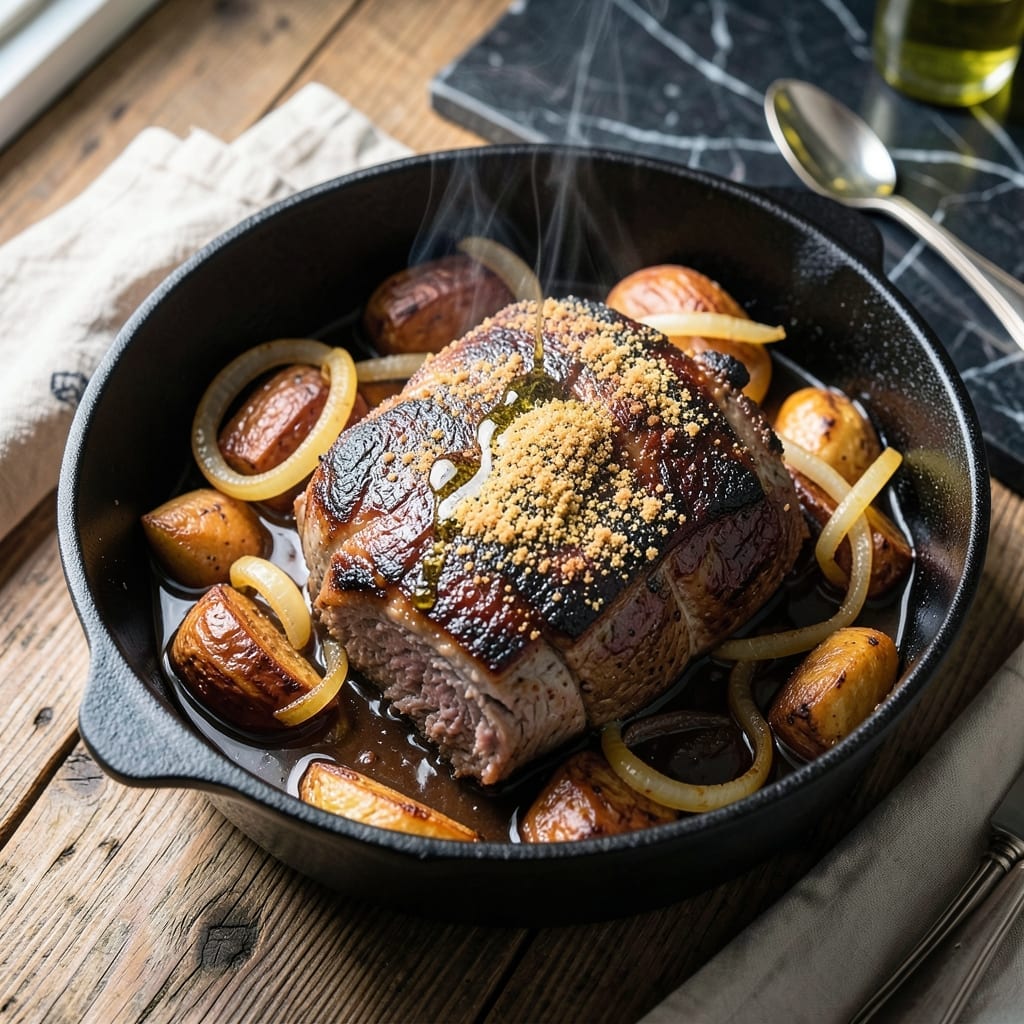
This one-pot chuck roast transforms tough beef into fall-apart tender perfection through a simple Dutch oven braise. The red wine adds depth and richness without overpowering the meat.
The beauty of this method lies in its hands-off approach. A few hours in the oven allows the flavors to meld while the chuck roast becomes irresistibly tender. The one-pot technique means easy cleanup and concentrated flavors.
What emerges is meat so tender it nearly dissolves at the touch of a fork, bathed in a rich, velvety sauce that begs to be soaked up with crusty bread. The aroma alone signals this will be a meal to remember.
Serve with mashed potatoes or roasted vegetables for a complete, satisfying dinner. This is comfort food at its most refined.
Ingredients for One Pot Chuck Roast
Transform tough beef into fork-tender perfection with these carefully selected ingredients.
| Ingredient | Amount | Notes |
|---|---|---|
| Chuck Roast 🥩 | 3 lb | Well-marbled, trimmed of excess fat |
| Kosher Salt 🧂 | 1 ½ tsp | Diamond Crystal preferred |
| Freshly Ground Black Pepper 🌶️ | 1 tsp | Coarse grind recommended |
| All-Purpose Flour 🌾 | ¼ cup | For dredging roast |
| Olive Oil 🫒 | 2 tbsp | High smoke point variety |
| Yellow Onion 🧅 | 1 whole | Large, diced into 1-inch pieces |
| Carrots 🥕 | 3 whole | Peeled, cut into 2-inch chunks |
| Celery Stalks 🌿 | 2 whole | Cut into 1-inch pieces |
| Garlic Cloves 🧄 | 4 cloves | Smashed, peeled |
| Dry Red Wine 🍷 | 2 cups | Bold variety like Cabernet Sauvignon |
| Beef Stock 🥣 | 1 ½ cups | Low-sodium preferred |
| Tomato Paste 🍅 | 2 tbsp | Double-concentrated |
| Fresh Thyme Sprigs 🌿 | 3 whole | Plus 1 tsp chopped for finishing |
| Bay Leaves 🍃 | 2 whole | Dried, whole leaves |
| Unsalted Butter 🧈 | 1 tbsp | For finishing sauce |
The chuck roast is non-negotiable—look for well-marbled pieces at the butcher counter or Whole Foods. Fat equals flavor and tenderness in this cut. Costco often has excellent quality at a good price point. If buying pre-packaged, check the sell-by date; fresher meat yields better results. The wine should be something you’d drink—a bold Cabernet Sauvignon or Merlot works beautifully.
No red wine? Substitute additional beef stock with 1 tbsp balsamic vinegar. Fresh thyme can be replaced with 1 tsp dried thyme, but use a light hand—dried is more concentrated. If tomato paste isn’t on hand, 1/4 cup tomato sauce reduced by half works in a pinch. The flour dredge is essential for thickening the sauce, but cornstarch (at half the amount) can substitute for gluten-free needs.
The braising liquid deepens in flavor over 2-3 days in the fridge, making leftovers even better. Store in an airtight container for up to 4 days, or freeze for 3 months. Reheat gently on the stovetop to maintain the sauce’s velvety texture.
Why You’ll Love This Recipe
- One Pot Wonder: I toss the chuck roast with flour, salt, and pepper, sear it, then let it simmer—all in the same pot. No mountain of dishes afterward.
- Rich Beefy Depth: The seared crust from the olive oil and flour locks in juices, making every bite tender and packed with savory flavor.
- Sunday or Wednesday: Honestly, it’s as at home at a dinner party as it is on a busy weeknight when I need comfort food fast.
- Leftovers for Days: One roast feeds my family for two nights, and the flavors only get better—perfect for sandwiches or tacos the next day.
Step-by-Step Instructions for Dutch Oven Braised Chuck Roast
This method ensures tender, fall-apart meat with rich, wine-infused sauce in one pot.
Step 1: Sear and Brown the Chuck Roast
Pat the 3 lb chuck roast dry with paper towels, then season all sides evenly with the 1.5 tsp kosher salt and 1 tsp freshly ground black pepper. Dredge the roast thoroughly in the 0.25 cup all-purpose flour, shaking off any excess—this creates a flavorful crust and thickens the sauce later.
Heat the 2 tbsp olive oil in a Dutch oven over medium-high heat until shimmering. Carefully place the floured roast in the pot and sear undisturbed for 4-5 minutes per side until deeply browned. You’re building the foundation of flavor here, so resist the urge to move it too soon. Transfer the roast to a plate once browned on all sides.
Step 2: Sauté Aromatic Vegetables
In the same Dutch oven, add the diced 1 whole yellow onion, chunked 3 whole carrots, and sliced 2 whole celery stalks. Cook over medium heat for 5-6 minutes, stirring occasionally, until the onions begin to soften and develop light golden edges.
Add the 4 cloves garlic cloves and cook for 1 minute until fragrant. Stir in the 2 tbsp tomato paste and cook for another 1-2 minutes, which deepens its flavor and prevents a raw taste in the finished dish. The mixture should be thick and slightly caramelized at the bottom of the pot.
Step 3: Deglaze and Build the Braising Liquid
Pour in the 2 cups dry red wine and scrape up all the browned bits from the bottom of the pot with a wooden spoon. These fond bits are packed with flavor and will dissolve into the sauce. Bring the mixture to a simmer and let it cook for 3-4 minutes until reduced by about half.
Add the 1.5 cups beef stock, 3 whole fresh thyme sprigs, and 2 whole bay leaves. Return the seared chuck roast to the pot, along with any accumulated juices. The liquid should come about halfway up the sides of the roast—if it doesn’t, add a splash more beef stock.
Step 4: Braise Until Fork-Tender
Cover the Dutch oven with its lid and transfer it to a preheated 325°F oven. Braise for 2.5 to 3 hours, turning the roast over halfway through the cooking time. The roast is done when it shreds easily with a fork and an instant-read thermometer inserted into the thickest part registers 195-200°F.
Remove the pot from the oven. Carefully transfer the roast to a cutting board and tent it loosely with foil. Skim any excess fat from the surface of the braising liquid, then place the Dutch oven over medium heat on the stovetop. Simmer the sauce for 5-7 minutes until slightly thickened.
Step 5: Finish and Serve
Stir the 1 tbsp unsalted butter into the sauce until fully melted and incorporated. This adds a silky richness to the final dish. Taste and adjust the seasoning with additional kosher salt or freshly ground black pepper if needed.
Slice or shred the chuck roast against the grain and arrange it on a serving platter. Spoon the reduced braising liquid and vegetables over the top. Serve hot with crusty bread or mashed potatoes to soak up the deeply flavored sauce.
Pro Tips For Making One Pot Chuck Roast
- Sear It Hard: Crank the heat to medium-high and sear the floured chuck roast until it’s deeply browned—about 4-5 minutes per side. I learned this the hard way: a light sear means weak flavor.
- Season Generously: Use more kosher salt and pepper than you think, especially on the floured roast before searing. Sounds like overkill, but it’s the only way to get that rich crust.
- Don’t Crowd the Pot: If your pot is too small, sear the roast in batches or use a larger one. Steaming from overcrowding ruins the crust—ask me how I know.
- Rest Before Serving: Let the roast rest 10-15 minutes under foil after cooking. I used to skip this, and the juices would run all over the cutting board instead of staying in the meat.
Storing and Reheating This one pot chuck roast
Refrigerator Storage
Let your braised chuck roast cool for no more than 2 hours before transferring to an airtight container. I use glass Pyrex with snap-on lids. Store in the fridge at 40°F or below for up to 4 days. The flavors deepen beautifully overnight. ❄️
Freezer Storage
For longer storage, freeze in portion-sized containers for up to 3 months. I prefer quart-sized freezer bags—they stack efficiently and thaw faster. Leave 1 inch of headspace for expansion and squeeze out excess air to prevent freezer burn.
Stovetop Reheating
This is my preferred method. Transfer the chuck roast and sauce to a heavy pot, add ¼ cup beef stock or water, and heat over medium-low heat for 10-15 minutes. Stir occasionally to prevent sticking. The sauce will thicken slightly as it reheats. 🔥
Microwave Reheating
For quick meals, microwave individual portions covered with a damp paper towel. Heat on 70% power for 2-3 minutes, stir, then continue in 1-minute intervals until reaching 165°F. Add a splash of water if it looks dry.
Oven Reheating
Preheat your oven to 300°F, cover the dish with foil, and reheat for 20-25 minutes. This method works well for larger portions and maintains the meat’s tenderness. Check the internal temperature with a thermometer.
Nutrition Facts
Frequently Asked Questions
Do I need to marinate the meat first?
No marinade is required. The braising process in red wine and beef stock infuses deep flavor directly into the meat. The 2.5 to 3 hours cook time ensures tenderness and rich taste.
Can I cook this on the stovetop instead of the oven?
Yes! After deglazing, cover and simmer on low heat for 3 to 3.5 hours. Check periodically to ensure liquid doesn’t evaporate. The result is just as tender.
What if my sauce is too thin?
Simmer uncovered for 5-10 minutes to reduce. For faster thickening, mix 1 tbsp cornstarch with 1 tbsp water and stir into the sauce. Cook for 2-3 minutes until glossy.
Can I use a slow cooker?
Sear the roast first, then transfer everything to a slow cooker. Cook on low for 8 hours or high for 5-6 hours until fork-tender.

- 4C Bread Crumbs Meatballs Recipe: Crispy Crust and Juicy Centers - September 25, 2026
- 6 Oz Chocolate Chip Cookie Recipe: Perfectly Balanced Crispy Edges and Chewy Hearts - September 25, 2026
- 6-Inch Coffee Cake Recipe: Vanilla Bean Swirls and Buttery Streusel Topping - September 25, 2026