
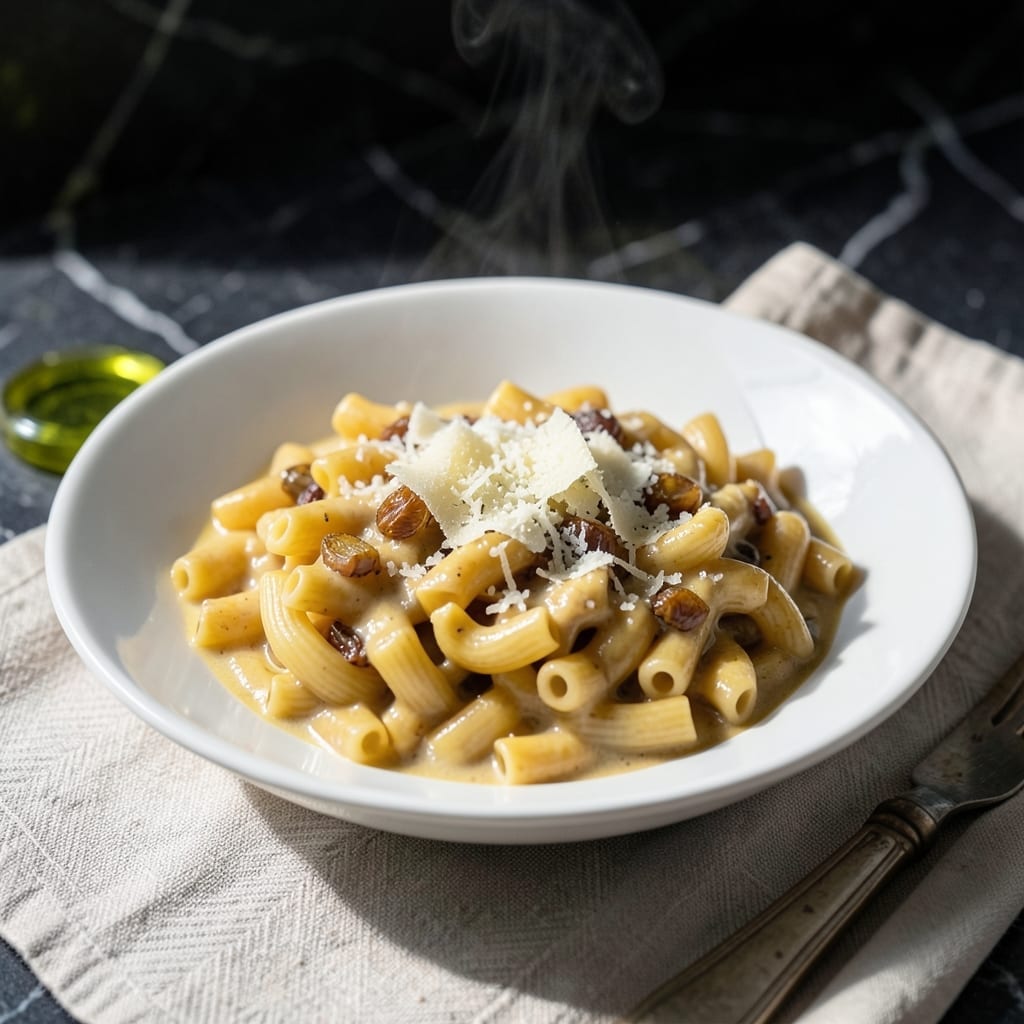
This one-pot method delivers perfectly cooked ditalini enveloped in a rich, cheesy broth that soaks into every bite. The technique simplifies pasta night without sacrificing depth of flavor.
By cooking pasta directly in broth instead of water, each tiny ditalini absorbs layers of savory taste. The addition of cheese at the end creates a velvety sauce that clings to the pasta beautifully.
What emerges is a dish where the pasta and sauce become one coherent, perfect creation. The broth reduces just enough to coat each piece while maintaining its comforting liquid quality.
The entire process happens in a single pot, minimizing cleanup while maximizing flavor. This is comfort food at its most efficient and delicious.
Ingredients for One Pot Ditalini Pasta
Simple ingredients create this rich, cheesy one-pot pasta with minimal effort and maximum flavor.
| Ingredient | Amount | Notes |
|---|---|---|
| Ditalini Pasta 🍝 | 8 oz | Dry, uncooked pasta |
| Chicken Broth 🍲 | 4 cups | Low-sodium preferred |
| Heavy Cream 🥛 | ½ cup | Full-fat for creaminess |
| Parmesan Cheese 🧀 | ¾ cup | Freshly grated for best texture |
| Pecorino Romano Cheese 🧀 | ½ cup | Freshly grated for depth |
| Unsalted Butter 🧈 | 2 tbsp | For richness and body |
| Garlic Cloves 🧄 | 4 cloves | Minced for even flavor |
| Shallot 🧅 | 1 whole | Finely diced for sweetness |
| Dry White Wine 🍷 | ½ cup | Optional, deglazes pan |
| Olive Oil 🫒 | 1 tbsp | Extra-virgin for aroma |
| Kosher Salt 🧂 | 1 tsp | Adjust to taste |
| Freshly Ground Black Pepper 🌶️ | ½ tsp | For finishing touch |
| Fresh Parsley 🌿 | 2 tbsp | Chopped, for garnish |
| Red Pepper Flakes 🌶️ | ¼ tsp | Optional, for heat |
The broth choice matters most here. Chicken broth with good depth—Better Than Bouillon or Swanson are solid options—builds the base flavor. For the cheeses, freshly grated is non-negotiable; pre-shredded has anti-caking agents that clump. The ditalini should be a quality brand like De Cecco or Barilla—it holds up better to the extended cooking time.
No white wine? Substitute extra broth with a squeeze of lemon. Heavy cream can be swapped for half-and-half at a 1:1 ratio (just slightly less rich). Out of shallots? Yellow onion works fine, though it’s a bit sharper. For a vegetarian version, vegetable broth and skip the Parmesan (or use a vegan alternative).
Leftovers keep well, though the pasta soaks up more broth over time. Store in an airtight container for up to 3 days. Reheat gently with a splash of broth or water to loosen. Doesn’t freeze as well due to the cream, but it’s so quick you won’t need to.
Why You’ll Love This Recipe
- I’ll be real: it reheats beautifully. The pasta soaks up the creamy broth overnight, making it even more flavorful the next day.
- One Pot Magic: I toss everything in, stir occasionally, and 20 minutes later it’s done—no colander, no extra pots.
- Rich Cheese Blend: The parmesan and pecorino melt into the broth and cream for a deep, salty-smooth sauce that clings to every ditalini.
- Feeds Hungry Crowds: Honestly, this doubles easily for potlucks or Sunday suppers with zero extra effort.
Step-by-Step Instructions for One Pot Ditalini Pasta
This streamlined method ensures perfect texture and flavor in a single pot.
Step 1: Sauté Aromatics in Olive Oil and Butter
Heat the 1 tbsp Olive Oil and 2 tbsp Unsalted Butter in a large pot over medium heat until the butter melts. Add the finely diced 1 whole Shallot and cook for 2-3 minutes until translucent and fragrant.
Stir in the minced 4 cloves Garlic Cloves and 0.25 tsp Red Pepper Flakes, cooking for 30 seconds until the garlic releases its aroma. Watch closely to prevent browning—this builds a flavorful foundation without bitterness.
Step 2: Deglaze with Wine and Add Broth
Pour in the 0.5 cup Dry White Wine and scrape up any browned bits from the bottom of the pot. Let it simmer for 2-3 minutes until the liquid reduces by half, allowing the alcohol to cook off.
Add the 4 cups Chicken Broth and 1 tsp Kosher Salt, then bring to a gentle boil. This combination creates a rich, savory base that the pasta will absorb as it cooks.
Step 3: Cook the Pasta Al Dente
Stir in the 8 oz Ditalini Pasta and cook for 8-10 minutes, stirring occasionally, until the pasta is nearly tender but still has a slight bite. The broth should be mostly absorbed, with just enough liquid to create a light sauce.
This step is critical—undercooking slightly ensures the pasta finishes perfectly in the next stage. Taste a piece to confirm it’s al dente before proceeding.
Step 4: Finish with Cream and Cheeses
Reduce heat to low and stir in the 0.5 cup Heavy Cream. Let it warm through for 1-2 minutes, then gradually add the 0.75 cup Parmesan Cheese and 0.5 cup Pecorino Romano Cheese, stirring constantly until melted and smooth.
The sauce should coat the pasta evenly with a creamy, velvety texture. If it thickens too much, add a splash of warm broth to loosen it to your desired consistency.
Step 5: Season and Garnish Before Serving
Remove from heat and stir in the 0.5 tsp Freshly Ground Black Pepper. Taste and adjust seasoning with additional Kosher Salt if needed—the cheeses may require a bit more.
Garnish with the 2 tbsp Fresh Parsley and serve immediately. The pasta should be perfectly tender, bathed in a rich, cheesy sauce with a subtle kick from the red pepper flakes.
Pro Tips For Making One Pot Ditalini Pasta
- Toast the Pasta: Dry toast the ditalini in the pot for 1-2 minutes before adding liquid—it adds a nutty depth that balances the richness of the cream and cheese.
- Use Full-Fat Broth: I learned this the hard way: low-fat chicken broth makes the sauce thin and watery. Stick with full-fat for a velvety, restaurant-quality texture.
- Grate Cheese Fresh: Pre-shredded parmesan or pecorino has anti-caking agents that make the sauce grainy. Grate it fresh—it melts smoother and tastes sharper.
- Reserve Some Broth: After cooking, keep ½ cup of warm broth on the side. The pasta soaks up liquid as it rests, and you’ll need it to loosen the sauce before serving.
Troubleshooting one pot ditalini pasta
Pasta Overcooked
If your ditalini turns mushy, you likely cooked it too long in the broth. Start taste-testing at 8 minutes—it should still have a slight bite. Once it reaches al dente, remove from heat immediately. The residual heat will finish the cooking as you add the cream and cheese. 💡
Sauce Too Thin
If the sauce looks watery, don’t worry—this is fixable. Continue cooking uncovered over medium-low heat for 2-3 minutes. The liquid will reduce and thicken as the pasta absorbs more broth. Stir frequently to prevent sticking.
Cheese Clumping
Pre-shredded cheese often clumps due to anti-caking agents. Always use freshly grated Parmesan and Pecorino. If clumping occurs, remove the pot from heat and stir vigorously. A splash of warm broth can help smooth out the sauce.
Burnt Garlic
If your garlic browns too quickly, lower the heat next time. Cook the shallots first until soft, then add garlic for just 30 seconds. Burnt garlic adds bitterness that overrides all other flavors. I learned this the hard way early in my cooking journey.
Broth Too Salty
Using low-sodium broth prevents this issue. If your dish turns out salty, balance it by adding a splash of heavy cream or a pinch of sugar. Taste as you go and adjust seasoning gradually. 🌟
Pasta Sticking
Stir the pasta frequently while cooking, especially during the first 5 minutes. If it sticks, you may need a heavier pot or lower heat. A good Dutch oven distributes heat evenly and prevents hot spots.
Nutrition Facts
Frequently Asked Questions
Can I use a different pasta shape?
Small shapes like orzo or small shells work well. Avoid long pastas as they won’t cook evenly in the broth. Adjust cooking time by 1-2 minutes based on package instructions.
Why cook pasta in broth instead of water?
Broth infuses the pasta with rich, savory flavor as it cooks. The starch from the pasta thickens the broth naturally, creating a velvety sauce without extra steps.
Can I make this without wine?
Yes! Skip the wine and add extra 0.5 cup broth with a squeeze of lemon. The acidity helps balance the richness of the cream and cheese.
How do I store leftovers?
Keep in an airtight container for up to 3 days. Reheat gently with a splash of broth to restore the creamy texture. Avoid freezing as the cream may separate.

- 4C Bread Crumbs Meatballs Recipe: Crispy Crust and Juicy Centers - September 25, 2026
- 6 Oz Chocolate Chip Cookie Recipe: Perfectly Balanced Crispy Edges and Chewy Hearts - September 25, 2026
- 6-Inch Coffee Cake Recipe: Vanilla Bean Swirls and Buttery Streusel Topping - September 25, 2026