
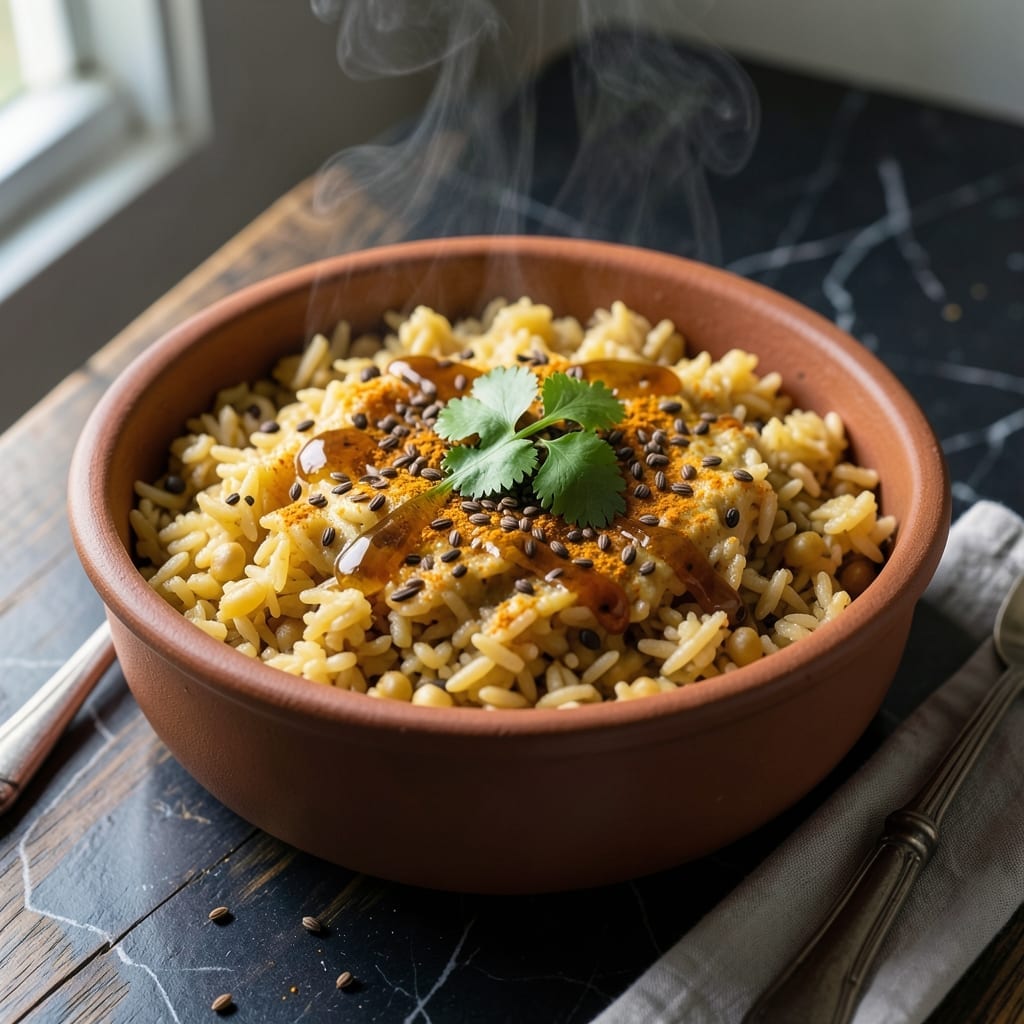
There’s something deeply satisfying about a warm bowl of this traditional dish, where rice and lentils cook together into a comforting, porridge-like consistency. This method simplifies an ancient recipe without losing its authentic heartiness.
The one-pot technique ensures every grain and lentil absorbs the spices evenly, creating a perfectly balanced meal with minimal effort. It’s the kind of dish that warms you from the inside out, ideal for chilly evenings or when you need simple, wholesome nourishment.
What emerges is a savory, mildly spiced mixture that’s as nourishing as it is delicious. The rice becomes tender while the lentils retain just enough texture, all infused with gentle spices that build depth without overpowering.
Serve it hot with a dollop of yogurt or your favorite chutney. Here’s how to make this timeless comfort food.
Ingredients for One Pot Khichdi
Rice, lentils, and gentle spices come together for a warm, comforting bowl.
| Ingredient | Amount | Notes |
|---|---|---|
| Basmati Rice 🍚 | 1 cup | Rinsed until water runs clear |
| Yellow Moong Dal 🌾 | ½ cup | Split and rinsed thoroughly |
| Ghee 🧈 | 2 tbsp | Clarified butter, or use oil |
| Cumin Seeds 🌿 | 1 tsp | Whole for tempering |
| Mustard Seeds 🌿 | ½ tsp | Yellow or black variety |
| Turmeric Powder 🌶️ | ½ tsp | Ground for color and earthiness |
| Fresh Ginger 🌿 | 1 tbsp | Peeled and finely grated |
| Green Chilies 🌶️ | 2 whole | Slit lengthwise for heat |
| Fresh Cilantro 🌿 | ¼ cup | Chopped for garnish |
| Asafoetida 🌿 | ¼ tsp | Optional, a pinch enhances flavor |
| Salt 🧂 | 1 tsp | Adjust to taste |
| Water 💧 | 4 cups | Or vegetable broth for extra flavor |
| Plain Yogurt 🥛 | ½ cup | For serving, optional |
| Lemon 🍋 | 1 whole | Juiced for brightness |
The rice and lentils are the heart of this dish. Basmati rice gives the best texture, and yellow moong dal cooks down to a creamy consistency. I grab mine from Indian grocery stores or Whole Foods—look for unbroken grains and lentils that aren’t dusty. The ghee adds that authentic richness, but coconut oil works if you’re skipping dairy. Don’t skip rinsing the rice and lentils—it removes excess starch for a lighter result.
No moong dal? Red lentils dissolve too much, but masoor dal works in a pinch. Missing asafoetida? Garlic powder adds a similar depth. Green chilies can be swapped for serrano peppers, or skip them entirely for a milder dish. The yogurt topping is optional but highly recommended—Greek yogurt if you want it thicker. Fresh cilantro? Parsley works too (though it’s not the same).
This keeps beautifully for 3-4 days in the fridge—reheat with a splash of water to loosen. Freezes for up to 3 months if you want to batch prep. The flavors deepen overnight, so it tastes even better the next day.
Why You’ll Love This Recipe
- One Pot Magic: I just dump rice, moong dal, and spices in one pot and walk away—no babysitting required.
- Ghee & Spice Love: The ghee-toasted cumin and mustard seeds bloom into this warm, nutty aroma that makes the whole house smell like home.
- Feeds Everyone: It’s my lazy Sunday lunch and my quick weeknight dinner, and honestly, even my picky nephew cleans his plate.
- Leftovers Win: Tastes even better the next day, and it stretches perfectly for two meals—budget-friendly comfort in one simmer.
Step-by-Step Instructions for One Pot Khichdi
This comforting dish comes together beautifully with just one pot and simple technique.
Step 1: Prepare and Rinse the Base Ingredients
Start by thoroughly rinsing the 1 cup Basmati Rice until the water runs completely clear. This removes excess starch and prevents the grains from becoming gummy during cooking. I rinse mine in a fine-mesh strainer under cold running water, swirling with my fingers until the water stays transparent.
Next, rinse the 0.5 cup Yellow Moong Dal in the same way. Unlike other lentils, moong dal cooks quickly and doesn’t require soaking, but rinsing removes any dust and ensures a clean, fresh flavor. Drain both the rice and dal well in a colander, shaking gently to remove all excess water.
Step 2: Temper the Spices to Release Their Aromas
Heat the 2 tbsp Ghee in a heavy-bottomed pot over medium heat. Add the 0.25 tsp Asafoetida first—it only needs 10 seconds to bloom and release its pungent aroma. Then add the 1 tsp Cumin Seeds and 0.5 tsp Mustard Seeds. Stir constantly for 30-45 seconds until the mustard seeds begin to pop and the cumin turns a shade darker.
Immediately add the grated 1 tbsp Fresh Ginger and the slit 2 whole Green Chilies. Sauté for another 20 seconds until the ginger releases its fragrance. The spices should be fragrant but not browned—this tempering process builds the deep, warm flavor base that defines khichdi.
Step 3: Combine and Simmer to Creamy Perfection
Add the drained rice and dal to the pot, stirring to coat everything in the spiced ghee. Sprinkle in the 0.5 tsp Turmeric Powder and 1 tsp Salt, then pour in the 4 cups Water. Stir well and bring to a boil over high heat.
Once boiling, reduce the heat to low, cover the pot, and let it simmer for 20-25 minutes. Check at the 20-minute mark—the khichdi is done when the rice and dal are tender and the mixture has thickened to a porridge-like consistency. If it’s too thick, add a splash more water; if too thin, cook uncovered for a few more minutes.
Step 4: Rest and Finish with Fresh Garnishes
Remove the pot from heat and let it sit covered for 5 minutes. This resting time allows the grains to absorb any remaining liquid and the flavors to meld together. The texture should be creamy and cohesive, not watery.
Before serving, stir in half of the 0.25 cup Fresh Cilantro. Portion into bowls and top with the remaining cilantro, a dollop of 0.5 cup Plain Yogurt, and a squeeze of 1 whole Lemon for brightness. The acidity from the lemon cuts through the richness, making every spoonful perfectly balanced.
Pro Tips For Making One Pot Khichdi
- Toast the Spices: Heat ghee first, then add cumin and mustard seeds—wait until they sizzle and pop before adding anything else. I learned this the hard way after a few bland batches where I rushed this step.
- Rinse the Dal: Soak the yellow moong dal for 10 minutes, then rinse it well to remove any bitterness. My grandmother swore by this, and she was right.
- Watch the Water Ratio: Use 3 cups water for every 1 cup combined rice and dal. Sounds weird, but it works—any more and your khichdi turns to porridge.
- Simmer Covered: Once everything’s in the pot, lower the heat, cover it tight, and resist the urge to stir. After burning three batches, I finally figured out that undisturbed steam is what makes it fluffy.
Dietary Considerations for This Recipe
Gluten-Free Naturally
This dish is inherently gluten-free since it relies on rice and lentils as the base. I always use certified gluten-free Basmati rice to avoid cross-contamination risks, especially when serving to friends with celiac disease. The spices and ghee also pose no gluten concerns.
Vegan Adaptation
To make this vegan, simply swap the 2 tbsp ghee for coconut oil or vegetable oil. Skip the yogurt topping or use unsweetened coconut yogurt instead. The dish maintains its creamy texture and rich flavor without any dairy. 🌱
Protein-Packed Option
For extra protein, increase the yellow moong dal to 1 full cup while keeping the rice at 1 cup. This adjustment boosts protein content significantly while maintaining the dish’s comforting texture. It’s a small change with big nutritional benefits.
Low-FODMAP Version
To make this gentler on digestion, omit the garlic and onion (if added) and reduce the green chilies to 1. Use the asafoetida sparingly—just a pinch—as it can be high-FODMAP in larger amounts. The dish remains flavorful and soothing.
Allergy Considerations
This dish is free from common allergens like nuts, soy, and dairy (if using oil instead of ghee). Always check your cumin seeds and mustard seeds for potential cross-contamination if you have severe seed allergies. 💡
Diabetic-Friendly
The combination of rice and lentils provides a balanced glycemic response. To further reduce the glycemic index, replace half the rice with quinoa or barley. This maintains the dish’s hearty texture while offering more fiber and slower-digesting carbs.
Nutrition Facts
Frequently Asked Questions
Can I use other lentils instead of moong dal?
Yes, but texture will vary. Masoor dal works well, though it softens more. Avoid chana dal as it stays too firm and takes longer to cook.
Why does my khichdi turn mushy?
Overcooking or too much water causes this. Use 4 cups water for 1.5 cups rice+dal and simmer covered for only 20-25 minutes. Check at 20 minutes to prevent over-softening.
Can I make this in a rice cooker?
Sauté spices in the pot first, then add rice, dal, and water. Cook on the standard setting. Let it rest 5 minutes after cooking before serving.
How do I adjust the spice level?
For milder flavor, remove seeds from green chilies or reduce to 1 chili. For more heat, add 1/2 tsp red chili powder with the turmeric.

- 6 Oz Chocolate Chip Cookie Recipe: Perfectly Balanced Crispy Edges and Chewy Hearts - September 25, 2026
- 6-Inch Coffee Cake Recipe: Vanilla Bean Swirls and Buttery Streusel Topping - September 25, 2026
- 1 Hour Soup Recipe: Velvety Richness Without the Wait - September 25, 2026