
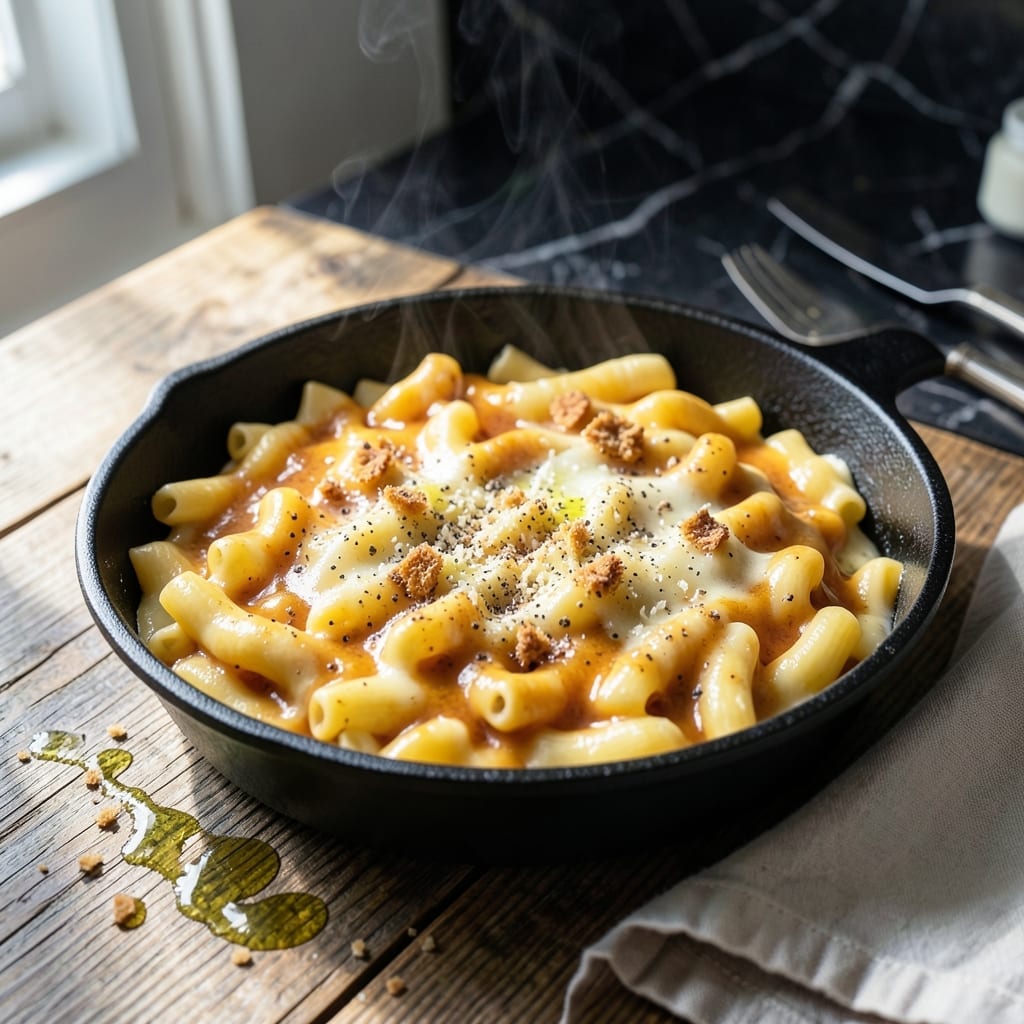
There’s a special satisfaction in creating a creamy mac and cheese that requires just one pot and minimal cleanup. This method delivers restaurant-quality results with significantly less effort.
The secret lies in cooking the pasta directly in the cheese sauce, allowing the starches to naturally thicken the mixture. This technique creates a velvety texture that clings perfectly to each noodle.
You’ll achieve a dish with rich, smooth cheese flavor in every bite, without the fuss of multiple pots and pans. The result is consistently satisfying comfort food.
This approach proves that exceptional mac and cheese doesn’t require complicated methods—just smart cooking and quality ingredients.
Ingredients for One Pot Mac and Cheese
Quality ingredients transform into luscious comfort food with minimal effort in this dish.
| Ingredient | Amount | Notes |
|---|---|---|
| Elbow Macaroni 🍝 | 12 oz | Or any short pasta shape |
| Whole Milk 🥛 | 2 ½ cups | Full-fat for creaminess |
| Sharp Cheddar Cheese 🧀 | 8 oz | Block, freshly grated |
| Gruyère Cheese 🧀 | 4 oz | Block, freshly grated |
| Unsalted Butter 🧈 | 3 tbsp | Divided for sauce and topping |
| All-Purpose Flour 🌾 | 2 tbsp | For roux thickening |
| Dijon Mustard 🟡 | 1 tsp | Adds depth to cheese flavor |
| Garlic Powder 🧄 | ½ tsp | Enhances savory notes |
| Onion Powder 🧅 | ½ tsp | Complements cheddar flavor |
| Kosher Salt 🧂 | 1 tsp | Diamond Crystal preferred |
| Freshly Ground Black Pepper 🌶️ | ½ tsp | Adjust to taste preference |
| Dry Mustard 🟡 | ½ tsp | Intensifies cheese sharpness |
| Panko Breadcrumbs 🍞 | ½ cup | For optional crispy topping |
The cheese selection is paramount. Sharp cheddar from Cabot or Wisconsin dairy cooperatives provides optimal melt and flavor. Gruyère from Whole Foods adds nutty depth that elevates the sauce. Use block cheese exclusively—pre-shredded contains anti-caking agents that prevent smooth melting. The milk should be whole for maximum creaminess and proper emulsion.
Substitutions require careful consideration. Monterey Jack at a one-to-one ratio replaces cheddar acceptably. No Gruyère? Fontina or Emmental work well. For milk, half-and-half plus water (50/50) increases richness without curdling. The dry mustard is non-negotiable for authentic flavor—Colman’s is the professional standard. Skip the Dijon only if absolutely necessary.
Store cheese blocks wrapped in parchment, then foil, for up to 3 weeks. The dish itself reheats well with a splash of milk, maintaining quality for 4-5 days refrigerated. Freezing is not recommended as it alters the sauce texture irreparably. Always bring milk to room temperature before incorporating into the roux.
Why You’ll Love This Recipe
- One Pot Wonder: I toss everything in a single pot—pasta, milk, cheese—no straining, no extra dishes.
- Cheesy Perfection: Sharp cheddar and Gruyère melt into this creamy sauce that clings to every elbow.
- Weeknight Hero: It’s my go-to for busy Tuesdays, but fancy enough for Sunday supper.
- Leftovers? Yes Please: Honestly, it reheats so well I make extra just to have it tomorrow.
Step-by-Step Instructions for One Pot Mac and Cheese
This streamlined method delivers ultra-creamy results with minimal cleanup and maximum flavor.
Step 1: Cook the Pasta in Milk
In a large pot, combine the 12 oz Elbow Macaroni and 2.5 cups Whole Milk. Place over medium-high heat and bring to a gentle boil, stirring frequently to prevent sticking. This method cooks the pasta directly in the milk, which infuses it with rich, creamy flavor from the start.
Reduce heat to medium and continue cooking for 8-10 minutes, stirring often, until the pasta is al dente and most of the milk has been absorbed. The pasta should be slightly undercooked at this stage, as it will finish in the sauce. Watch closely to avoid scorching.
Step 2: Create the Roux Base
Once the pasta is nearly tender, add 2 tbsp All-Purpose Flour, 1 tsp Kosher Salt, 0.5 tsp Garlic Powder, 0.5 tsp Onion Powder, 0.5 tsp Freshly Ground Black Pepper, and 0.5 tsp Dry Mustard. Stir vigorously for 1 minute to eliminate any flour lumps and allow the mixture to thicken slightly.
This step builds the foundation of your cheese sauce. The spices add depth and balance to the richness of the cheeses, while the flour ensures a smooth, velvety texture without the need for a separate roux.
Step 3: Incorporate Cheeses and Mustard
Reduce heat to low and add 3 tbsp Unsalted Butter, 1 tsp Dijon Mustard, 8 oz Sharp Cheddar Cheese, and 4 oz Gruyère Cheese. Stir constantly until the butter melts and the cheeses are fully incorporated, creating a luxurious, glossy sauce. The Dijon Mustard enhances the sharpness of the cheddar and adds complexity to the dish.
Continue stirring for 2-3 minutes until the sauce thickens and coats the pasta evenly. If the mixture seems too thick, add a splash of milk. The sauce should cling to the pasta with a smooth, creamy consistency.
Step 4: Optional Crispy Topping
For a golden, crispy finish, transfer the mac and cheese to a broiler-safe dish. Sprinkle the 0.5 cup Panko Breadcrumbs evenly over the top. Place under a preheated broiler for 2-3 minutes, or until the breadcrumbs are golden brown and toasted.
Watch carefully to avoid burning. This final touch adds a delightful textural contrast to the creamy pasta, making each bite irresistible. Serve immediately while hot and bubbly.
Pro Tips For Making One Pot Mac And Cheese
- Undercook the Pasta: Pull the macaroni off the heat when it’s still a touch firm—it’ll finish cooking in the creamy sauce and soak up all that cheesy flavor without turning mushy.
- Grate Cold Cheese: I learned this the hard way—shredding sharp cheddar and Gruyère straight from the fridge prevents clumping and gives you that smooth, velvety melt you’re after.
- Temper the Milk: After burning a batch or two, I finally started warming the whole milk slightly before adding it to the hot pasta—no more curdled sauce or sad, separated cheese.
- Add Cheese Off Heat: Sounds weird, but it works: stir in the cheeses after removing the pot from the burner to keep the sauce silky instead of grainy or greasy.
Pro Cooking Tips for This Recipe
Perfect Pasta Texture
Cook the pasta in milk until it’s just al dente—this means stopping when there’s a slight firmness. I check by biting a piece: it should have a tiny white center. The pasta will finish cooking in the sauce, so don’t overcook it now.
Roux Timing
Add the flour and spices when the pasta is 80% cooked. Stir vigorously for exactly 1 minute to cook out the raw flour taste. This creates a smooth base without lumps, ensuring your sauce will be velvety.
Cheese Temperature
Always use room temperature cheese blocks, freshly grated. Cold cheese can cause the sauce to seize up. I shred Cabot sharp cheddar and Gruyère right before adding them to maintain that perfect melt. 🧀
Low and Slow
When adding the cheeses, keep heat on low and stir constantly. This prevents the dairy from separating. I use a silicone spatula to scrape the bottom, ensuring nothing sticks. Patience here guarantees a silky sauce.
Sauce Consistency
If your sauce thickens too much, add warm milk 1 tbsp at a time until it reaches the perfect creamy consistency. The sauce should coat the back of a spoon but still flow easily. 💡
Broiler Watch
For the breadcrumb topping, broil for 2-3 minutes max. I set a timer and watch through the oven window. The moment you see golden brown spots, pull it out—it continues cooking from residual heat.
Nutrition Facts
Frequently Asked Questions
Can I use pre-shredded cheese?
No, pre-shredded cheese contains anti-caking agents that prevent smooth melting. Always use block cheese and grate it yourself for the creamiest texture.
Why cook pasta in milk?
Cooking pasta directly in milk infuses it with rich flavor and helps thicken the sauce naturally. The starches released create a velvety consistency without extra steps.
How do I prevent a grainy sauce?
Keep heat on low when adding cheese and stir constantly. Use room temperature cheese and avoid pre-shredded varieties. This ensures a silky, lump-free sauce.
Can I make this ahead of time?
Yes, but reheat gently with a splash of milk to restore creaminess. The dish keeps well refrigerated for 4-5 days, though fresh is always best.

- 4C Bread Crumbs Meatballs Recipe: Crispy Crust and Juicy Centers - September 25, 2026
- 6 Oz Chocolate Chip Cookie Recipe: Perfectly Balanced Crispy Edges and Chewy Hearts - September 25, 2026
- 6-Inch Coffee Cake Recipe: Vanilla Bean Swirls and Buttery Streusel Topping - September 25, 2026