
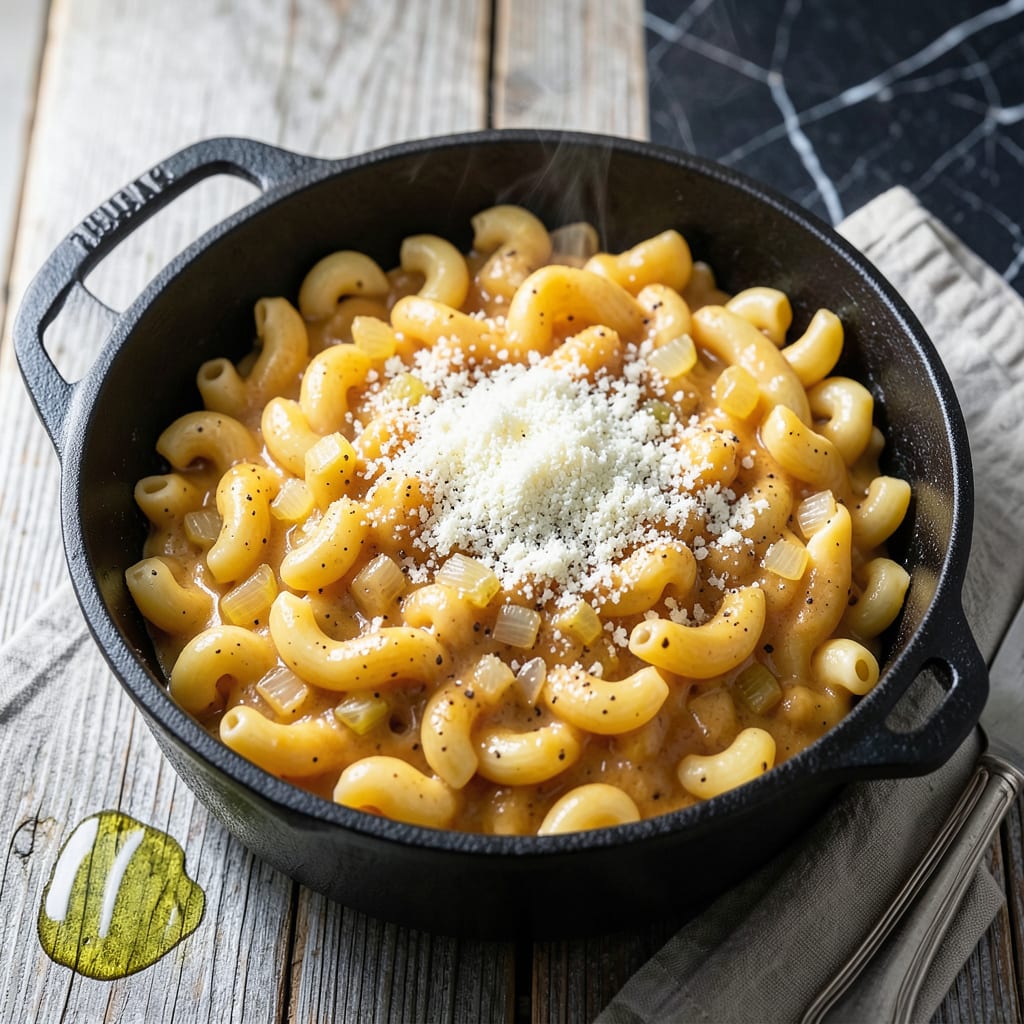
This streamlined approach delivers restaurant-quality macaroni in a single pot, eliminating extra dishes and cleanup. The method combines pasta, cheese, and sauce in one vessel for maximum efficiency.
Perfect for busy evenings, it transforms simple ingredients into a creamy, satisfying meal with minimal effort. The one-pot technique ensures every bite is infused with rich, cheesy flavor.
Ingredients for One Pot Macaroni
A single pot transforms these quality ingredients into a rich, comforting dish with minimal cleanup.
| Ingredient | Amount | Notes |
|---|---|---|
| Elbow Macaroni 🍝 | 12 oz | Dry, uncooked pasta |
| Whole Milk 🥛 | 2 cups | Full-fat for creaminess |
| Sharp Cheddar Cheese 🧀 | 2 cups | Freshly shredded from block |
| Parmesan Cheese 🧀 | ½ cup | Freshly grated preferred |
| Unsalted Butter 🧈 | 3 tbsp | For richness and creaminess |
| All-Purpose Flour 🌾 | 2 tbsp | For thickening sauce |
| Yellow Onion 🧅 | ½ whole | Finely diced for base |
| Garlic Cloves 🧄 | 2 cloves | Minced for depth of flavor |
| Dijon Mustard 🟡 | 1 tbsp | For tangy complexity |
| Kosher Salt 🧂 | 1 tsp | Adjust to taste preference |
| Ground Black Pepper 🌶️ | ½ tsp | Freshly ground preferred |
| Dried Mustard Powder 🌿 | ½ tsp | For cheesy depth enhancement |
| Worcestershire Sauce 🫒 | 1 tsp | Vegetarian version required |
The cheese quality is non-negotiable for restaurant-level results. Cabot or Tillamook sharp cheddar provides optimal melt and flavor. Whole Foods or Trader Joe’s carry excellent Parmesan wedges for grating. Avoid pre-shredded cheeses—they contain anti-caking agents that prevent smooth melting. The pasta should be standard elbow macaroni; Barilla or De Cecco brands maintain ideal texture.
Substitute half-and-half for whole milk if seeking extra richness, or 2% milk in a pinch (though the sauce will be thinner). Gruyère or Monterey Jack can replace cheddar at a 1:1 ratio. Ensure your Worcestershire sauce is vegetarian—Annie’s makes a reliable version. For gluten-free needs, use rice flour and gluten-free pasta, though texture may vary slightly.
Store leftovers in an airtight container for up to 4 days in the refrigerator. Reheat gently with a splash of milk to restore creaminess. This dish does not freeze well—the sauce may separate upon thawing. Best enjoyed fresh, straight from the pot.
Why You’ll Love This Recipe
- One Pot Wonder: I toss in the macaroni, milk, and cheeses, then walk away—no straining, no extra pans, just creamy perfection in one pot.
- Cheesy Dream: Sharp cheddar and parmesan melt into this rich, velvety sauce that clings to every noodle. Honestly, it’s the reason my kids clean their plates.
- Weeknight Hero: It’s my go-to for busy evenings, but I’ll be real—it’s also my lazy Sunday lunch.
- Budget Stretch: A pound of pasta and a block of cheese feeds my whole family, with leftovers that reheat beautifully.
Step-by-Step Instructions for One Pot Macaroni
This streamlined method delivers creamy, cheesy pasta with minimal cleanup and maximum flavor.
Step 1: Sauté Aromatics to Build Flavor Foundation
Melt the 3 tbsp Unsalted Butter in a large pot or Dutch oven over medium heat. Add the finely diced 0.5 whole Yellow Onion and cook for 4-5 minutes until soft and translucent, stirring occasionally to prevent browning.
Add the minced 2 cloves Garlic Cloves and cook for an additional 30 seconds until fragrant. The onion should be tender but not caramelized—this creates a sweet, aromatic base without overpowering the dish.
Step 2: Create the Cheese Sauce Base
Stir in the 2 tbsp All-Purpose Flour to form a roux with the butter and onions. Cook for 1-2 minutes, stirring constantly, until the mixture turns a pale golden color. This step removes the raw flour taste and creates a smooth foundation for your sauce.
Gradually whisk in the 2 cups Whole Milk, ensuring no lumps form. Add the 1 tbsp Dijon Mustard, 1 tsp Kosher Salt, 0.5 tsp Ground Black Pepper, 0.5 tsp Dried Mustard Powder, and 1 tsp Worcestershire Sauce. Bring to a gentle simmer, stirring frequently until the mixture thickens enough to coat the back of a spoon.
Step 3: Cook the Pasta Directly in the Sauce
Add the 12 oz Elbow Macaroni to the pot and stir to coat the pasta in the sauce. Pour in enough water to just cover the pasta (about 2 cups). Bring to a boil, then reduce heat to medium-low.
Cook for 8-10 minutes, stirring frequently, until the pasta is al dente and most of the liquid has been absorbed. The pasta should be tender with a slight bite, and the sauce should be thick and creamy.
Step 4: Finish with Cheese and Rest
Remove the pot from heat and stir in the 2 cups Sharp Cheddar Cheese and 0.5 cup Parmesan Cheese until fully melted and smooth. The residual heat will melt the cheese perfectly without making the sauce grainy.
Let the dish rest for 2-3 minutes before serving. This allows the sauce to thicken slightly and the flavors to meld together. The final result should be a creamy, cohesive sauce that clings to every piece of pasta.
Pro Tips For Making One Pot Macaroni
- Stir Often: Keep stirring the pasta every 2-3 minutes as it cooks in the milk to prevent sticking—especially once the cheese melts and the mixture thickens. I learned this the hard way after scraping burnt macaroni off the bottom of my pot.
- Grate Your Cheese: Skip the pre-shredded stuff and grate the sharp cheddar yourself. The anti-caking agents in bagged cheese make the sauce grainy instead of silky smooth.
- Watch the Milk: Use whole milk and resist the urge to substitute lower-fat versions—the fat is what creates that creamy, rich sauce that clings to the pasta.
- Add Pasta Last: Wait until the milk is simmering before adding the elbow macaroni. Tossing it in cold means uneven cooking and a higher chance of gummy, undercooked bits.
Essential Equipment for Perfect Results
The Right Pot
I always reach for my 5-6 quart Dutch oven—Le Creuset or Lodge are my go-tos. The heavy base prevents scorching, and the high sides contain splatters. A wide stainless steel sauté pan works too if that’s what you have.
Wooden Spoon
A wooden spoon is essential for stirring the roux and scraping the bottom without scratching. I keep one dedicated to cheese sauces since the porous wood holds flavors. Avoid metal utensils with nonstick surfaces.
Whisk for Sauce
For the milk incorporation step, a balloon whisk prevents lumps better than any spoon. I use my OXO 11-inch—it reaches all corners of the pot. The flat bottom helps get into edges where flour might stick.
Cheese Grater
Freshly shredded cheese melts smoother than pre-shredded. I swear by my Microplane box grater for cheddar and a zester-style grater for Parmesan. The fine shreds incorporate seamlessly into the sauce. 🧀
Measuring Tools
Accurate measurements matter for the roux. I use stainless steel measuring spoons and a 2-cup liquid measure for the milk. A kitchen scale ensures perfect pasta portions if you want to be precise.
Heat Control
Medium heat works for most steps, but adjust as needed. If your sauce thickens too quickly, lower the heat. If pasta isn’t cooking fast enough, raise it slightly. I find gas stoves offer the most responsive control for this dish. 🔥
Nutrition Facts
Frequently Asked Questions
Can I use a different pasta shape?
Yes! Any short pasta like shells, penne, or rotini works well. Adjust water to cover by 1 inch and check doneness at 8 minutes. Longer shapes may not cook evenly in one pot.
Why is my sauce too thin?
Undercooked roux or insufficient simmering time are common causes. Cook the flour-butter mixture until golden (1-2 minutes) and simmer sauce until it coats a spoon before adding pasta.
Can I make this ahead?
It’s best served fresh, but leftovers keep 3-4 days refrigerated. Reheat gently with a splash of milk to restore creaminess. Avoid freezing as the sauce may separate.

- 4C Bread Crumbs Meatballs Recipe: Crispy Crust and Juicy Centers - September 25, 2026
- 6 Oz Chocolate Chip Cookie Recipe: Perfectly Balanced Crispy Edges and Chewy Hearts - September 25, 2026
- 6-Inch Coffee Cake Recipe: Vanilla Bean Swirls and Buttery Streusel Topping - September 25, 2026