
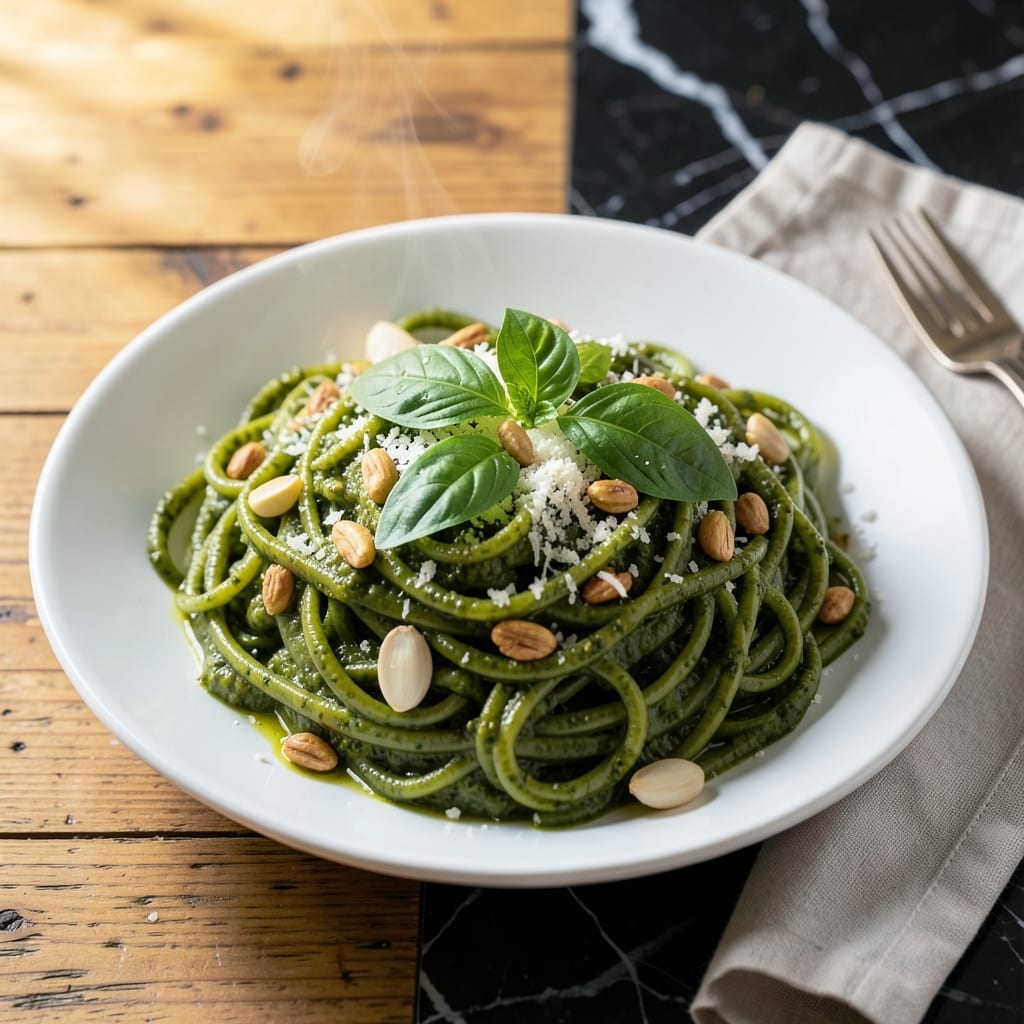
I’ve perfected a method for making one-pot pesto pasta that delivers fresh basil flavor without the cleanup. The entire dish comes together in a single pot, with pasta cooking directly in the sauce for maximum flavor absorption.
This approach eliminates multiple dishes while maintaining the bright, herbaceous taste of traditional pesto. The starchy pasta water helps create a silky sauce that clings perfectly to each noodle.
You’ll achieve restaurant-quality results in 20 minutes with minimal effort. The key is timing the pasta just right so it finishes cooking as the sauce reaches its ideal consistency.
Perfect for busy weeknights when you want fresh flavors without complicated processes.
Ingredients for One Pot Pesto Pasta
Short list of fresh ingredients. Big flavor in one pot. Ready in twenty.
| Ingredient | Amount | Notes |
|---|---|---|
| Linguine Pasta 🍝 | 12 oz | Or spaghetti, broken in half |
| Fresh Basil Leaves 🌿 | 2 cups | Packed, stems removed |
| Pine Nuts 🥜 | ⅓ cup | Toasted for depth of flavor |
| Garlic Cloves 🧄 | 4 cloves | Peeled, minced |
| Parmesan Cheese 🧀 | ¾ cup | Freshly grated from wedge |
| Extra-Virgin Olive Oil 🫒 | ½ cup | Divided for cooking and finishing |
| Vegetable Broth 🥫 | 3 cups | Low-sodium preferred |
| Heavy Cream 🥛 | ½ cup | Full-fat for richness |
| Lemon Juice 🍋 | 1 tbsp | Freshly squeezed |
| Salt 🧂 | 1 tsp | Kosher or sea salt |
| Black Pepper 🌶️ | ½ tsp | Freshly ground |
| Red Pepper Flakes 🔥 | ¼ tsp | Optional for heat |
| Pecorino Romano Cheese 🧀 | ¼ cup | Freshly grated, optional |
The basil is non-negotiable here. Farmers market or grocery store works, but look for bright green leaves with no wilting. I grab my pine nuts from Trader Joe’s—best price I’ve found. The Parmesan? Parmigiano-Reggiano wedge only, freshly grated. Pre-shredded has anti-caking agents that make the sauce grainy. For the pasta, linguine or spaghetti holds the sauce best (those ridges on penne trap too much).
No pine nuts? Walnuts or raw cashews work beautifully (toast them first). Sub asparagus or sunflower oil for olive oil if needed. Want it lighter? Half-and-half instead of heavy cream. The vegetable broth can be swapped for water in a pinch, but you’ll miss depth. Fresh lemon juice is key—bottled tastes flat. If you’re out of garlic, 1 tsp garlic powder works, but fresh is so much better.
Leftovers keep 3-4 days in the fridge—splash of water when reheating brings it back to life. Freeze without cream for up to 3 months (add cream fresh when reheating). The basil oxidizes, so eat it fresh if you can. That said, it’s still delicious the next day (the flavors meld beautifully).
Why You’ll Love This Recipe
- One Pot Wonder: I toss everything in—linguine, basil, pine nuts—and let the pot do the work. No strainer, no extra bowls.
- Fresh Basil Burst: The fragrant basil and garlic blend with parmesan for a pesto so vibrant, it tastes like summer in a bite.
- Weeknight Hero: Honestly, it’s my go-to for busy evenings—ready before the kids finish their homework.
- Budget Stretcher: Pine nuts and parmesan go a long way, and leftovers taste even better the next day.
Step-by-Step Instructions for One Pot Pesto Pasta
This method delivers creamy, herb-packed pasta with minimal cleanup and maximum flavor.
Step 1: Toast the Pine Nuts and Prepare Aromatics
Heat a large pot or deep skillet over medium heat. Add the 0.33 cup Pine Nuts and toast for 2-3 minutes, stirring frequently, until they turn golden brown and release a nutty aroma. Immediately transfer them to a plate to cool—they’ll continue to cook from residual heat.
In the same pot, add 2 tablespoons of the Extra-Virgin Olive Oil and heat over medium-low. Add the 4 cloves Garlic Cloves and sauté for 30-45 seconds until fragrant but not browned. Browning garlic can make it bitter, so keep the heat gentle and watch closely.
Step 2: Cook the Linguine Pasta in Broth
Pour in the 3 cups Vegetable Broth and bring to a boil over high heat. Add the 12 oz Linguine Pasta, breaking it in half if needed to fit in the pot. Stir to submerge the pasta, then reduce heat to medium and cook for 8-10 minutes, stirring occasionally, until the pasta is nearly al dente and most of the broth has been absorbed.
The pasta will finish cooking in the next step, so don’t overcook it now. You want it slightly underdone to prevent mushiness once the sauce is added. If the pot looks dry before the pasta is ready, add a splash of water to keep it moving.
Step 3: Create the Creamy Pesto Base
Reduce the heat to low and stir in the 0.5 cup Heavy Cream, 2 cups Fresh Basil Leaves, 0.75 cup Parmesan Cheese, 0.25 cup Pecorino Romano Cheese, 1 tbsp Lemon Juice, 1 tsp Salt, 0.5 tsp Black Pepper, and 0.25 tsp Red Pepper Flakes. Stir constantly for 2-3 minutes until the basil wilts and the cheese melts into a creamy sauce.
Drizzle in the remaining Extra-Virgin Olive Oil (about 6 tablespoons) and add the toasted Pine Nuts. The residual heat will help the oil emulsify into the sauce, creating a silky texture. Taste and adjust seasoning if needed—the Pecorino Romano adds saltiness, so go easy on additional salt.
Step 4: Finish and Serve Immediately
Continue stirring for another 1-2 minutes until the sauce thickens and clings to the pasta. The sauce should coat the back of a spoon but still be fluid enough to toss easily. If it’s too thick, add a splash of water or reserved broth to loosen it.
Remove from heat and let it sit for 1 minute to allow the flavors to meld. Serve immediately, garnished with extra basil leaves and a sprinkle of Pecorino Romano Cheese if desired. The pasta will thicken as it cools, so eat it fresh for the best texture.
Pro Tips For Making One Pot Pesto Pasta
- Reserve Pasta Water: Before draining, scoop out 1/2 cup of the starchy pasta water—it helps emulsify the pesto and cling to the linguine. I learned this the hard way after my first pesto turned into a thick, clumpy mess.
- Toast the Pine Nuts: Dry-toast the pine nuts in the pot for 2-3 minutes before adding anything else. It brings out their buttery flavor, and the oil they release adds depth to the pesto.
- Skip Boiling Basil: Add fresh basil leaves at the very end, off the heat. Boiling them turns the pesto bitter and dulls that bright green color you want.
- Grate Cheese Fresh: Use a microplane to grate the Parmesan right before mixing—pre-grated cheese has anti-caking agents that make the pesto grainy. It takes 30 seconds and actually changes the outcome.
Storing and Reheating This one pot pesto pasta
Refrigerator Storage
Let your pasta cool for no more than 2 hours before transferring to airtight containers. I use glass containers with snap-on lids. Store at 40°F or below for up to 3-4 days. The flavors meld beautifully overnight. ❄️
Freezer Storage
For longer storage, freeze without the heavy cream for up to 3 months. Use flat freezer bags to save space. Leave 1 inch headspace for expansion and squeeze out excess air to prevent freezer burn.
Stovetop Reheating
This is my preferred method for best texture. Heat in a pot over medium-low heat with a splash of water or broth for 5-7 minutes, stirring occasionally. Add the cream fresh when reheating frozen portions. 🔥
Microwave Reheating
For quick lunches, microwave individual portions covered with a damp paper towel. Heat on 70% power for 1-2 minutes, stir, then continue in 30-second intervals until reaching 165°F.
Nutrition Facts
Frequently Asked Questions
Can I use dried basil instead of fresh?
Not recommended. Dried basil lacks the bright, vibrant flavor that makes this dish special. If you must, use 1/3 the amount and add 1 tablespoon lemon zest to boost freshness. Fresh is always best here
Why does the pasta cook in broth instead of water?
The broth infuses the noodles with extra flavor while creating the sauce base. The starch from cooking pasta in liquid helps thicken it naturally. You’ll taste the difference immediately
My sauce turned out too thick. How do I fix it?
Stir in 1/4 cup warm water or broth at a time until it reaches your desired consistency. Remember, the sauce thickens as it cools, so aim for slightly thinner than your final preference
Can I make this ahead for a party?
Prepare everything except the final cooking step. Keep components separate and combine 30 minutes before serving. Reheat gently with a splash of water. The basil flavor is freshest when served immediately

- 4C Bread Crumbs Meatballs Recipe: Crispy Crust and Juicy Centers - September 25, 2026
- 6 Oz Chocolate Chip Cookie Recipe: Perfectly Balanced Crispy Edges and Chewy Hearts - September 25, 2026
- 6-Inch Coffee Cake Recipe: Vanilla Bean Swirls and Buttery Streusel Topping - September 25, 2026