
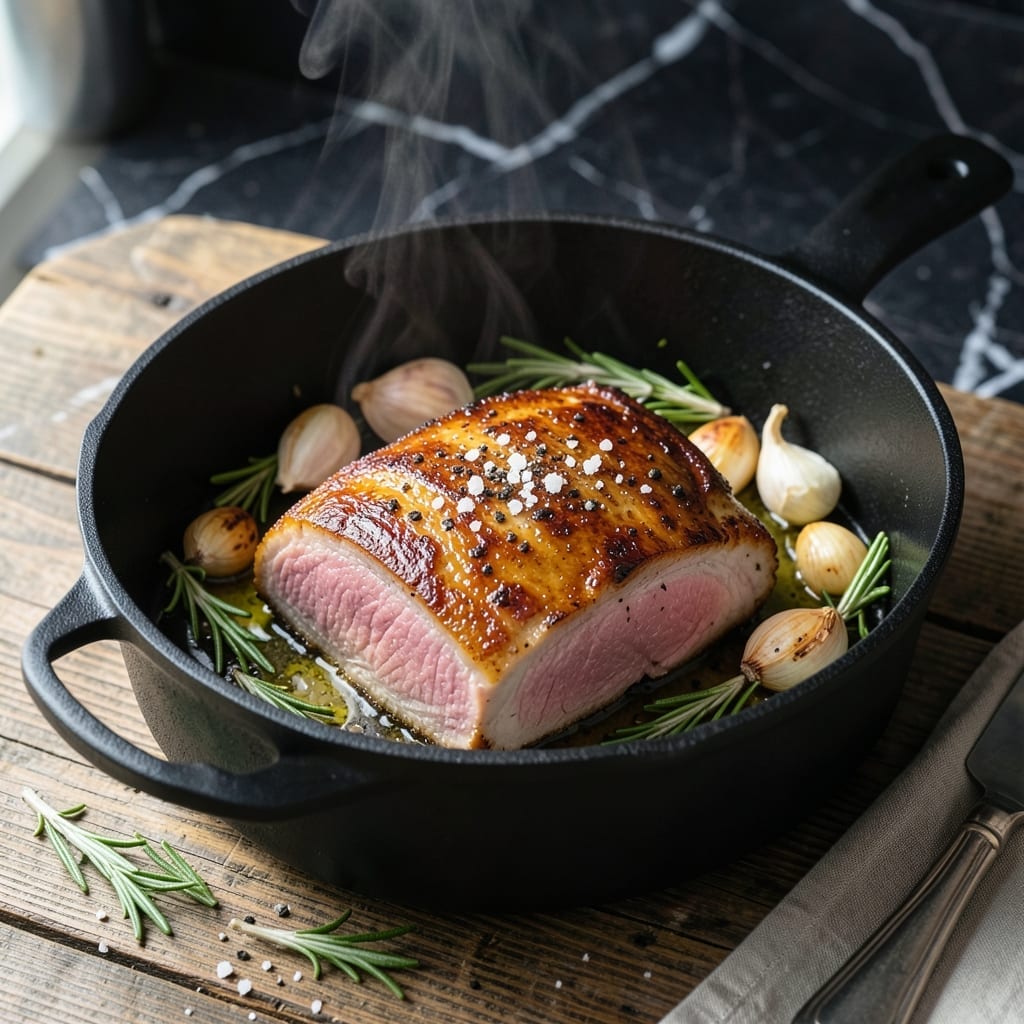
This one-pot method delivers a tender pork loin with minimal effort and maximum flavor. The technique combines searing and roasting in the same vessel, creating a savory crust while keeping the meat juicy.
Herb-infused aromatics and a simple pan sauce develop as the pork cooks, requiring no extra dishes. The result is a centerpiece-worthy meal with restaurant-quality taste and easy cleanup.
What emerges is perfectly cooked pork with a golden exterior and moist interior. The natural juices and herbs form a light sauce that enhances every bite without overpowering.
Ideal for Sunday dinners or special occasions when you want impressive results with minimal active time. The entire process happens in one pot from start to finish.
Ingredients for One Pot Pork Loin Roast
A few quality ingredients deliver restaurant-worthy pork with herb-infused depth and savory richness.
| Ingredient | Amount | Notes |
|---|---|---|
| Pork Loin 🥩 | 2 lb | Boneless, trimmed of excess fat |
| Kosher Salt 🧂 | 2 tsp | Diamond Crystal preferred for even seasoning |
| Black Pepper 🌶️ | 1 tsp | Freshly ground for optimal flavor |
| Olive Oil 🫒 | 2 tbsp | Extra-virgin for high-heat searing |
| Garlic Cloves 🧄 | 6 cloves | Peeled and smashed for aromatics |
| Fresh Rosemary 🌿 | 2 tbsp | Chopped, stems removed for even distribution |
| Fresh Thyme 🍃 | 2 tbsp | Leaves stripped from stems |
| Yellow Onion 🧅 | 1 whole | Medium-sized, quartered for flavor base |
| Carrots 🥕 | 2 whole | Peeled and cut into chunks |
| Celery Stalks 🌿 | 2 whole | Cut into large pieces for aromatics |
| Chicken Stock 🥣 | 1 cup | Low-sodium preferred for controlled seasoning |
| Dry White Wine 🍷 | ½ cup | Sauvignon Blanc or Pinot Grigio recommended |
| Dijon Mustard 🟡 | 1 tbsp | Smooth variety for pan sauce |
| Unsalted Butter 🧈 | 2 tbsp | For finishing the pan sauce |
The pork loin is the centerpiece—opt for a well-marbled piece from a trusted butcher or Whole Foods for superior texture. Look for even thickness to ensure consistent cooking. The fresh herbs are non-negotiable; organic rosemary and thyme from the farmers market pack the most aroma. Avoid pre-cut herbs, as they lose potency quickly. The bone-in variety works but requires adjusted cooking time.
No white wine? Apple cider vinegar diluted with water (1:1 ratio) adds needed acidity. Vegetable stock can replace chicken stock for a lighter profile. Fresh out of Dijon? Whole-grain mustard works but strain the sauce for smoothness. The butter can be omitted, though it adds a silky finish to the pan sauce. Ghee is a suitable substitute if avoiding dairy.
Store pork loin in the coldest part of the fridge for up to 3 days before cooking. Fresh herbs wrapped in damp paper towels stay vibrant for 5-7 days. The finished dish reheats well—seal tightly and consume within 4 days for peak flavor and moisture.
Why You’ll Love This Recipe
- One Pan Wonder: I toss everything in a single pot—pork, garlic, olive oil—and let the oven do the work. Honestly, cleanup is a breeze.
- Garlic Infused: The garlic cloves melt into the pork, creating this ridiculously good, savory crust with every bite.
- Weeknight Hero: I’ve served this for Sunday dinner and packed leftovers for lunch the next day. It’s unfussy but feels special.
- Budget Stretcher: One pork loin feeds my family for days, and it’s cheaper than takeout. I’ll be real: that’s a win in my book.
Step-by-Step Instructions for One Pot Pork Loin Roast
Master this technique for a perfectly seared, herb-infused roast with minimal cleanup.
Step 1: Sear the Pork Loin to Lock in Flavor
Pat the 2 lb pork loin dry with paper towels, then season all over with the 2 tsp kosher salt and 1 tsp black pepper. Heat the 2 tbsp olive oil in a large Dutch oven over medium-high heat until it shimmers but doesn’t smoke.
Add the pork loin and sear for 3-4 minutes per side until deeply browned. The surface should develop a rich, golden crust that releases easily from the pan—this indicates proper Maillard reaction. Don’t rush this step; a good sear creates the foundation for your sauce’s depth of flavor.
Step 2: Build the Aromatic Base
Once the pork is seared, remove it to a plate and reduce heat to medium. Add the 1 whole yellow onion, 2 whole carrots, and 2 whole celery stalks to the Dutch oven. Cook for 5 minutes, stirring occasionally, until the vegetables begin to soften and develop caramelized edges.
Add the 6 cloves garlic cloves, 2 tbsp fresh rosemary, and 2 tbsp fresh thyme to the pot. Stir for 1 minute until the herbs become fragrant and the garlic just begins to color. This aromatic trio will infuse the pork with complex herbal notes as it roasts.
Step 3: Deglaze and Braise the Pork
Pour in the 0.5 cup dry white wine and scrape up all the browned bits from the bottom of the pot with a wooden spoon. These fond particles dissolve into the liquid, creating an incredibly flavorful base for your sauce. Let the wine reduce by half, about 3-4 minutes.
Return the pork loin to the pot, nestling it among the vegetables. Pour in the 1 cup chicken stock, ensuring it comes about halfway up the pork. This liquid creates a moist cooking environment that prevents the pork from drying out while allowing it to develop rich, concentrated flavors.
Step 4: Roast to Perfect Doneness
Cover the Dutch oven and transfer it to a preheated 375°F oven. Roast for 45 minutes, then remove the lid and continue roasting for another 15-20 minutes until the pork reaches an internal temperature of 145°F on an instant-read thermometer.
The pork is done when the juices run clear and the meat feels firm yet slightly springy to the touch. The exposed top should be beautifully browned, while the braising liquid reduces to a rich, aromatic sauce that coats the vegetables.
Step 5: Create the Finishing Pan Sauce
Transfer the pork to a cutting board and tent loosely with foil to rest for 10 minutes. Skim any excess fat from the surface of the braising liquid, then place the Dutch oven over medium heat. Stir in the 1 tbsp Dijon mustard and 2 tbsp unsalted butter until melted and fully incorporated.
Simmer for 2-3 minutes until the sauce thickens slightly and develops a glossy sheen. Taste and adjust seasoning if needed. The mustard adds a subtle tang that cuts through the richness, while the butter creates a velvety texture that beautifully coats the sliced pork and vegetables.
Pro Tips For Making One Pot Pork Loin Roast
- Sear It Hard: Get your pan screaming hot before adding the pork loin—I learned this the hard way after too many pale, soggy roasts. A deep golden crust forms fast with high heat and a little patience.
- Salt Overnight: Rub the pork loin with kosher salt at least 12 hours ahead. Sounds weird, but it works: the meat stays juicier and seasons all the way through.
- Don’t Overcrowd: Resist the urge to add all the garlic cloves at once. Tossing them in too early burns them, leaving bitter flavors—add half at the sear, the rest later.
- Rest Before Slicing: Give it a solid 10 minutes under foil after cooking. I used to rush this part and wondered why my pork was dry—now I know better.
Essential Equipment for one pot pork loin roast
Dutch Oven Essential
A heavy 5-6 quart Dutch oven is non-negotiable for this recipe. I recommend Le Creuset or Lodge enameled cast iron for even heat distribution and retention. The tight-fitting lid traps moisture, creating the perfect braising environment for your pork. 🔥
Thermometer Precision
An instant-read digital thermometer is my secret weapon. I use the ThermoWorks ThermoPop for accurate 145°F readings. This ensures perfect doneness without overcooking. Look for models with 2-3 second response time for efficiency.
Wooden Spoon Magic
A sturdy wooden spoon is crucial for deglazing the pan. The flat edge helps scrape up all those flavorful browned bits. I keep a 12-inch bamboo spoon dedicated to my Dutch oven. Avoid metal utensils that can scratch enameled surfaces.
Quality Cutting Board
Use a large, stable cutting board (at least 12×18 inches) for resting and slicing. I prefer Teakhaus edge grain boards for their durability and knife-friendliness. The juice groove helps contain pork drippings during resting.
Tongs for Turning
12-inch locking tongs give you the control needed to turn the pork safely. I recommend OXO Good Grips for their comfortable handles and secure grip. The locking mechanism makes them easy to store in my utensil crock.
Oven Thermometer
Don’t trust your oven’s built-in thermometer. A separate oven thermometer (like Taylor Precision) ensures accurate 375°F temperature. This prevents under or over-cooking and gives consistent results every time. 💡
Nutrition Facts
Frequently Asked Questions
What’s the best way to ensure tender meat?
Don’t skip the searing step—it locks in juices. Also, let the pork rest for 10 minutes after cooking to redistribute moisture.
Can I use a different cut of pork?
Pork tenderloin works but cooks faster (25-30 minutes). Avoid fatty cuts like shoulder—they need longer braising.
How do I prevent the sauce from breaking?
Simmer the sauce gently after adding butter. High heat can cause separation. Stir constantly for a smooth finish.
Is it safe to cook at a lower temperature?
Yes, but adjust time. At 325°F, add 15-20 minutes to reach 145°F internally.

- 6 Oz Chocolate Chip Cookie Recipe: Perfectly Balanced Crispy Edges and Chewy Hearts - September 25, 2026
- 6-Inch Coffee Cake Recipe: Vanilla Bean Swirls and Buttery Streusel Topping - September 25, 2026
- 1 Hour Soup Recipe: Velvety Richness Without the Wait - September 25, 2026