
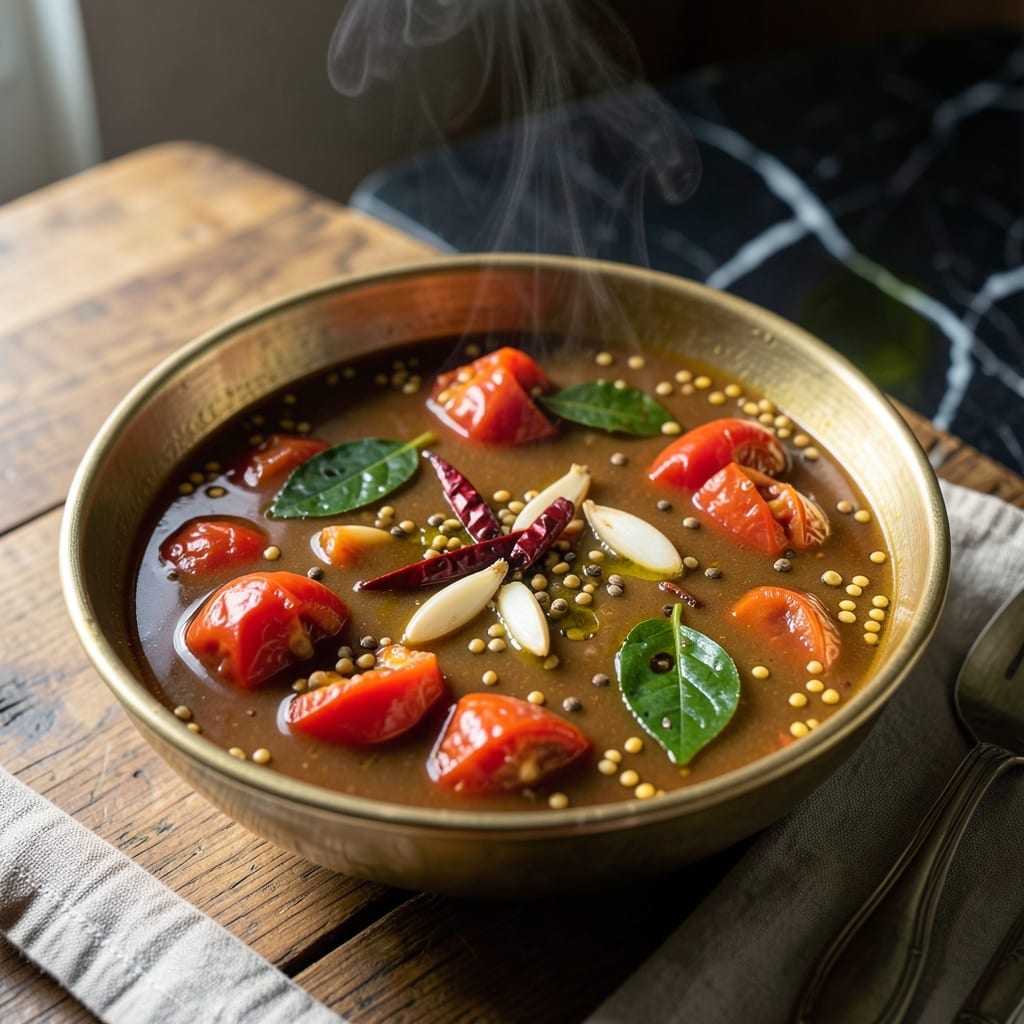
This traditional South Indian broth delivers bold, tangy flavor with minimal effort. The one-pot method simplifies preparation while preserving authentic taste.
I developed this recipe to maintain the classic balance of spices, tamarind, and tomatoes without complicated steps. It’s naturally vegan and gluten-free, making it versatile for many diets.
The aroma of cumin, mustard seeds, and curry leaves fills the kitchen as the broth simmers. The result is a light yet deeply satisfying dish.
Serve hot with steamed rice or enjoy as a comforting soup. The simplicity of this method ensures perfect results every time.
Ingredients for One Pot Rasam
Traditional South Indian flavors come alive with tamarind, tomatoes, and aromatic spices in this broth.
| Ingredient | Amount | Notes |
|---|---|---|
| Tamarind Paste 🍋 | 2 tbsp | Or pulp from seedless tamarind |
| Ripe Tomatoes 🍅 | 2 whole | Medium-sized, finely chopped |
| Cumin Seeds 🌿 | 1 tsp | Lightly crushed for aroma |
| Mustard Seeds 🌿 | 1 tsp | Black or brown variety |
| Dried Red Chilies 🌶️ | 2 whole | Adjust for heat preference |
| Curry Leaves 🍃 | 10 pieces | Fresh preferred, dried acceptable |
| Asafoetida 🧂 | ¼ tsp | Hing, essential for flavor |
| Turmeric Powder 🌶️ | ½ tsp | For color and earthiness |
| Fresh Coriander Leaves 🍃 | ¼ cup | Chopped, for garnish |
| Green Chilies 🌶️ | 2 whole | Slit lengthwise for heat |
| Water 💧 | 6 cups | For broth consistency |
| Salt 🧂 | 1 tsp | Adjust to taste |
| Fresh Ginger 🌿 | 1 tsp | Grated, for warmth |
| Fresh Garlic Cloves 🧄 | 3 cloves | Crushed for pungency |
| Vegetable Oil 🫒 | 1 tbsp | Neutral flavor preferred |
The tamarind is non-negotiable here. Indian grocery stores carry the best quality—look for seedless pulp or paste in jars. Curry leaves are another must; fresh ones (sold in small bunches) have a citrusy aroma that dried can’t match. Asafoetida (hing) is the secret umami booster—just a pinch transforms the flavor. I always grab mine from Patel Brothers or any well-stocked international aisle.
No tamarind? Lemon juice with a pinch of sugar gets you close (though the depth won’t be the same). Skip the asafoetida if you must, but add extra garlic and hing substitute (a mix of onion and garlic powder) for complexity. Dried curry leaves work at half the amount, but fresh is ideal. For heat, swap red chilies with cayenne powder—start with ¼ tsp and adjust.
Rasam tastes best fresh but keeps for 2-3 days in the fridge. The flavors intensify overnight, so make extra. Freeze without garnishes for up to 1 month. Reheat gently to preserve the bright, tangy notes (don’t boil vigorously).
Why You’ll Love This Recipe
- One Pot Wonder: I toss in tamarind, tomatoes, and spices, then let it simmer—no piles of dishes waiting for me afterward.
- Tangy Comfort: The tamarind and ripe tomatoes create that perfect sour-spicy kick I crave with every sip.
- Weeknight Savior: Between us, it’s my go-to when I need something warm and ready before the rice even finishes cooking.
- Budget Friendly: A handful of pantry staples and a couple of tomatoes stretch into a pot full of flavor that lasts us two meals.
Step-by-Step Instructions for One Pot Rasam
Master this traditional South Indian broth with precise timing and balanced flavors in a single pot.
Step 1: Temper the Spices in Hot Oil
Heat the 1 tbsp vegetable oil in a large pot over medium-high heat. Add the 1 tsp mustard seeds and wait for them to pop—this takes about 30-45 seconds and signals the oil is sufficiently hot.
Immediately add the 1 tsp cumin seeds, 2 whole dried red chilies, and 10 pieces curry leaves. Stir constantly for 20-30 seconds until the cumin turns light golden brown and releases its aroma. This tempering process unlocks the full potential of the spices.
Add the 0.25 tsp asafoetida and stir for 5 seconds—it should sizzle and turn translucent. Be careful not to burn it, as asafoetida becomes bitter when overcooked.
Step 2: Build the Aromatic Base
Reduce heat to medium and add the 2 whole ripe tomatoes, 1 tsp fresh ginger, and 3 cloves fresh garlic cloves. Sauté for 3-4 minutes until the tomatoes soften and break down into a pulpy consistency.
The mixture should be glossy and thickened with the tomatoes releasing their juices. Add the 0.5 tsp turmeric powder and stir well to coat all ingredients evenly. This creates the vibrant golden base characteristic of authentic rasam.
Step 3: Incorporate Tamarind and Water
Pour in the 6 cups water and stir to combine with the tomato-spice mixture. Add the 2 tbsp tamarind paste and 1 tsp salt, then bring to a gentle boil over medium-high heat.
Once boiling, reduce heat to medium-low and add the 2 whole green chilies. Simmer for 8-10 minutes until the broth develops a tangy aroma and the flavors meld together. The tamarind will dissolve completely, creating a smooth, slightly sour liquid.
Step 4: Finish and Garnish
Taste and adjust seasoning if needed—the balance should be tangy from the tamarind, spicy from the chilies, and aromatic from the tempered spices. Remove the green chilies if you prefer a milder heat level.
Turn off the heat and stir in the 0.25 cup fresh coriander leaves. Let the rasam rest for 2 minutes to allow the coriander to infuse its fresh, citrusy notes. Serve hot in bowls, ensuring each portion includes some of the tempered spices floating on top.
Pro Tips For Making One Pot Rasam
- Toast the Spices: Heat the mustard and cumin seeds in hot oil until they sizzle and pop—about 30 seconds—before adding anything else. I learned this the hard way: raw spices taste bitter and dull.
- Balance the Tamarind: Use 1 tablespoon of tamarind paste per cup of water, then adjust. Sounds weird, but it works: too much makes the rasam sour and one-note, not bright and complex.
- Simmer the Tomatoes: Let the tomatoes cook down completely in the pot for at least 8–10 minutes until they turn mushy and blend into the broth. After burning three batches, I finally figured out that rushing this step leaves the rasam watery and thin.
- Finish with Fresh Cilantro: Stir in a handful of chopped cilantro right at the end, just before serving. My grandmother swore by this, and she was right: it adds a fresh lift that dried herbs can’t.
Perfect Pairings for This Dish
Classic South Indian Pairings
Steamed white rice is the traditional companion, soaking up the tangy broth beautifully. I serve ½ cup rice per bowl of rasam for the perfect ratio. The simplicity lets the broth’s flavors shine through. 🥗
Bread Options
For a heartier meal, try idli or dosa—these fermented rice cakes and crispy crepes complement the soup’s acidity. Appalam (papadum) adds a satisfying crunch when floated on top or served alongside.
Vegetable Sides
A simple cucumber raita with ½ cup yogurt and ¼ tsp cumin cools the palate. Or serve with steamed snake gourd for a light, balanced meal. Both are common in Tamil households.
Protein Additions
For non-veg versions, add boiled eggs (1 per serving) or shredded chicken. These absorb the broth’s flavors while adding protein. I prefer free-range eggs for richer taste.
Beverage Pairings
Serve with hot filter coffee or masala chai—the bitterness balances the tang. In South India, we often end the meal with coconut water for digestion. 🍵
Nutrition Facts
Frequently Asked Questions
Can I use lemon juice instead of tamarind?
Yes, but it won’t have the same depth. Use 3 tbsp lemon juice with 1 tsp sugar to mimic tamarind’s tangy-sweet balance. Add it at the end to preserve freshness.
Why does my rasam taste bitter?
Overcooked asafoetida or burnt cumin can cause bitterness. Always temper spices on medium heat for 20-30 seconds max. Remove from heat immediately if you smell burning.
How do I adjust the spice level?
Reduce or remove dried red chilies for mild heat. For extra spice, add 1 slit green chili or ¼ tsp cayenne. Taste and adjust before the final simmer.
Can I make this ahead of time?
Rasam tastes even better the next day. Store in an airtight container for up to 3 days in the fridge. Reheat gently to avoid boiling.

- 6 Oz Chocolate Chip Cookie Recipe: Perfectly Balanced Crispy Edges and Chewy Hearts - September 25, 2026
- 6-Inch Coffee Cake Recipe: Vanilla Bean Swirls and Buttery Streusel Topping - September 25, 2026
- 1 Hour Soup Recipe: Velvety Richness Without the Wait - September 25, 2026