
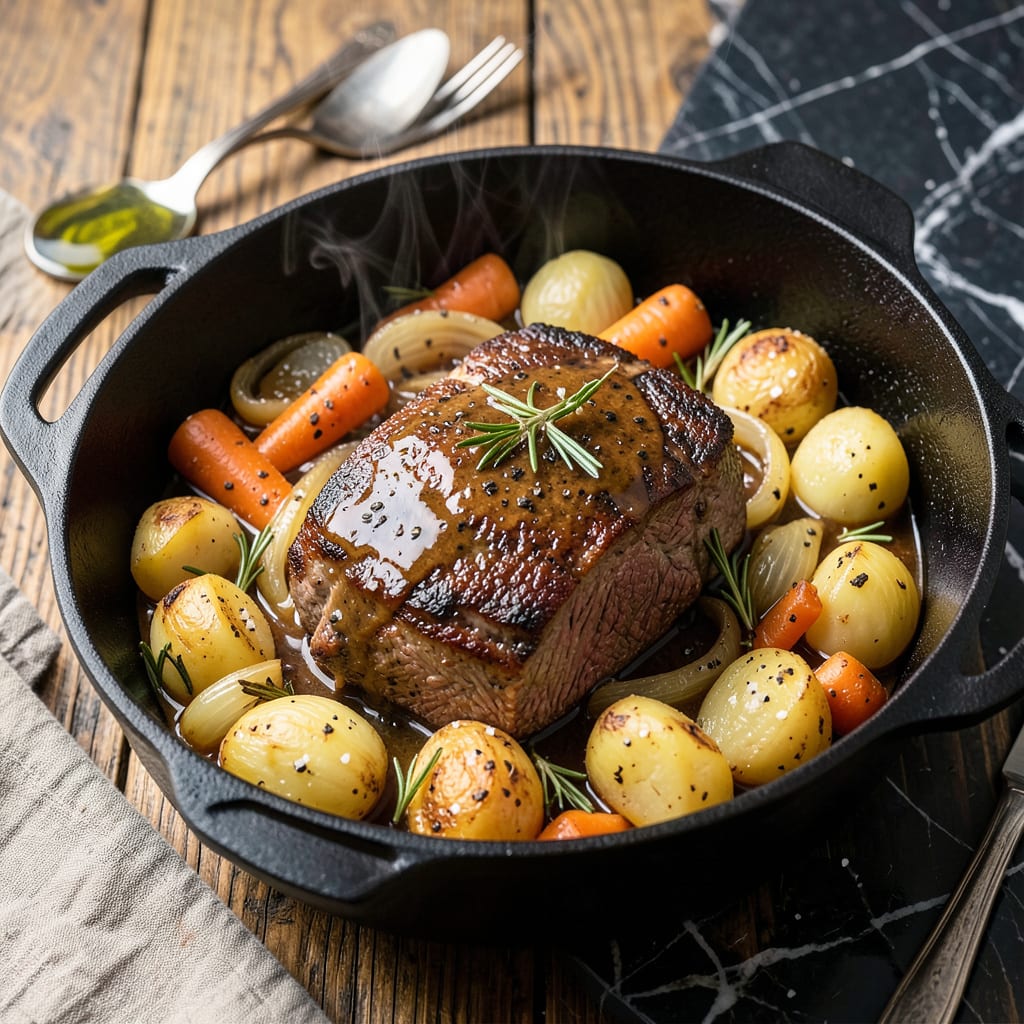
This organic pot roast delivers fork-tender beef with rich, deep flavor developed through slow cooking. The process begins with searing to lock in juices, then simmering with root vegetables until everything melts together.
Using organic beef and fresh vegetables ensures every bite is packed with natural taste. The long, gentle cooking time transforms tough cuts into succulent, fall-apart meat that pairs perfectly with the hearty vegetables.
Ingredients for Organic Pot Roast
Organic beef and root vegetables slow-cooked to fork-tender perfection with aromatic herbs.
| Ingredient | Amount | Notes |
|---|---|---|
| Organic Beef Chuck Roast 🥩 | 3 lb | Well-marbled, boneless preferred |
| Kosher Salt 🧂 | 2 tsp | Diamond Crystal preferred for even seasoning |
| Freshly Ground Black Pepper 🌶️ | 1 tsp | Coarse grind for robust flavor |
| Olive Oil 🫒 | 2 tbsp | Extra-virgin for searing depth |
| Yellow Onions 🧅 | 2 whole | Large, peeled and quartered |
| Carrots 🥕 | 4 whole | Peeled, cut into 3-inch chunks |
| Celery Stalks 🌿 | 3 whole | Trimmed, cut into large pieces |
| Garlic Cloves 🧄 | 6 cloves | Smashed, skin left on |
| Russet Potatoes 🥔 | 1 ½ lb | Peeled, cut into large chunks |
| Beef Stock 💧 | 3 cups | Low-sodium, organic preferred |
| Dry Red Wine 🍷 | 1 cup | Bold variety like Cabernet Sauvignon |
| Tomato Paste 🍅 | 2 tbsp | San Marzano brand for sweetness |
| Fresh Thyme Sprigs 🌿 | 4 whole | Tied with kitchen twine |
| Fresh Rosemary Sprigs 🍃 | 2 whole | Tied with kitchen twine |
| Bay Leaves 🌿 | 2 whole | Dried, for aromatic depth |
The beef selection is critical for optimal results. Organic chuck roast with visible marbling ensures the most tender outcome after extended cooking. Source from Whole Foods or Local organic markets for verified quality. The marbling should be abundant but not excessive—this fat renders down during cooking, basting the meat from within. Avoid lean cuts like round, which dry out during the long braise.
For substitutions, red wine vinegar plus beef broth replaces the wine at one-fourth the amount if avoiding alcohol. Dried thyme and rosemary work at one-third the quantity of fresh. No fresh herbs? Poultry seasoning offers a suitable alternative. The tomato paste can be omitted in a pinch, but it adds crucial depth of flavor to the braising liquid.
This dish tastes even better the next day as flavors meld. Store leftovers in airtight containers for up to 4 days in the refrigerator or 3 months in the freezer. Reheat gently on the stovetop with a splash of water to restore moisture. The vegetables may soften further but retain their rich flavor.
Why You’ll Love This Recipe
- Set It and Forget: I just sear the chuck roast, toss in onions, and let the oven do the work for hours.
- Melt-in-Your-Mouth Tender: The organic beef falls apart with just a fork after slow-cooking with olive oil and simple seasonings.
- Feeds the Whole Crew: One pot serves my family of five plus leftovers for sandwiches the next day.
- Budget Stretcher: A single organic chuck roast makes multiple meals without breaking the bank.
Step-by-Step Instructions for Organic Pot Roast
Master the technique for fall-apart beef and vegetables that soak up every bit of rich flavor.
Step 1: Season and Sear the Beef
Pat the 3 lb organic beef chuck roast dry with paper towels—this ensures a proper sear. Season all sides aggressively with the 2 tsp kosher salt and 1 tsp freshly ground black pepper, pressing the seasoning into the meat so it adheres well during cooking.
Heat the 2 tbsp olive oil in a heavy Dutch oven over medium-high heat until shimmering. Add the beef and sear undisturbed for 4-5 minutes per side until a deep, dark brown crust forms. The crust should release easily when ready to flip—if it sticks, let it cook longer. Transfer the beef to a plate and set aside.
Step 2: Build the Aromatic Base
In the same pot, add the 2 whole yellow onions, 4 whole carrots, and 3 whole celery stalks. Cook over medium heat for 5-6 minutes, stirring occasionally, until the vegetables begin to soften and develop light caramelization at the edges.
Add the 6 cloves garlic cloves and the 2 tbsp tomato paste, stirring constantly for 1-2 minutes until the tomato paste darkens slightly. This step deepens the flavor base and prevents a raw tomato taste. Pour in the 1 cup dry red wine and scrape up all browned bits from the bottom of the pot with a wooden spoon.
Step 3: Braise with Herbs and Liquids
Return the beef to the pot along with any accumulated juices. Add the 3 cups beef stock, 1.5 lb russet potatoes, 4 whole fresh thyme sprigs, 2 whole fresh rosemary sprigs, and 2 whole bay leaves. The liquid should come about halfway up the beef—add a splash of water if needed.
Bring the mixture to a simmer over medium-high heat, then reduce to low heat, cover, and let it braise for 3 to 3½ hours. Check occasionally to ensure the liquid maintains a gentle simmer. The beef is done when it shreds easily with a fork and the vegetables are tender and saturated with flavor.
Step 4: Rest and Serve
Once the beef is fork-tender, carefully transfer it to a cutting board. Remove the herb sprigs and bay leaves from the pot. If the sauce is too thin, simmer uncovered for 5-10 minutes to reduce slightly. Taste and adjust seasoning with additional salt or pepper if needed.
Slice the beef against the grain or pull it into large chunks. Arrange the beef on a platter surrounded by the vegetables and spoon the rich braising liquid over everything. Let it rest for 10 minutes before serving to allow the juices to redistribute, ensuring each bite is moist and full of the deep, savory flavors developed during the long, slow cook.
Pro Tips For Making Organic Pot Roast
- Sear It Hard: Crank the heat to medium-high when searing the chuck roast—about 2 tablespoons of olive oil should be shimmering. I learned this the hard way: a pale sear means weak flavor.
- Season Aggressively: Don’t be shy with the kosher salt and black pepper, especially on organic beef. I use about 1 tablespoon of salt for a 3-pound roast, rubbing it in so it sticks.
- Skip the Crowded Pan: If your pot isn’t big enough for all the onions, sear them in batches. Steaming from overcrowding ruins the crust and the flavor.
- Use a Meat Thermometer: Pull the roast at 195°F internal temp—it’ll be fall-apart tender. Guessing by time alone got me dry pot roast more times than I’d like to admit.
Best Sauces and Condiments for This Recipe
Classic Horseradish Cream
Mix ½ cup sour cream with 2 tbsp prepared horseradish and 1 tsp Dijon mustard. This tangy sauce cuts through the richness of the beef. I like to add 1 tsp fresh lemon juice for extra brightness. 💛
Red Wine Reduction
Simmer 2 cups of the braising liquid with ½ cup dry red wine until reduced by half. Strain and drizzle over individual servings. The concentrated flavors add a restaurant-quality finish to this dish.
Garlic-Herb Butter
Blend ½ cup softened butter with 3 minced garlic cloves and 1 tbsp chopped fresh parsley. Dollop a spoonful on top of each serving for an instant flavor boost that melts into the hot meat.
Spicy Chimichurri
Pulse 1 cup fresh parsley, 3 garlic cloves, ¼ cup red wine vinegar, and ½ tsp red pepper flakes in a food processor. Drizzle over the pot roast for a bright, herby contrast. 🌟
Creamy Mushroom Sauce
Sauté 8 oz sliced mushrooms in 2 tbsp butter until golden. Stir in 1 cup heavy cream and 1 tsp Worcestershire sauce, then simmer until thickened. This velvety sauce pairs beautifully with the tender beef.
Pickled Vegetables
Serve with quick-pickled red onions or cornichons on the side. The acidity balances the hearty flavors and adds a nice crunch. I make mine with rice vinegar and a touch of sugar.
Nutrition Facts
Frequently Asked Questions
How long should the beef rest after cooking?
Let the roast rest for 10 minutes before slicing to allow juices to redistribute. This ensures each bite stays moist and flavorful.
Can I use a slow cooker instead of a Dutch oven?
Yes! Sear the beef first, then transfer everything to a slow cooker. Cook on low for 7-8 hours or high for 4-5 hours for the same tender results.
What if my sauce is too thin?
Simmer uncovered for 5-10 minutes to reduce and thicken the liquid. For extra richness, mix in 1 tbsp cornstarch with water before adding.
Can I make this ahead of time?
The flavors deepen overnight. Store in an airtight container for up to 4 days in the fridge, then reheat gently on the stove.

- 4C Bread Crumbs Meatballs Recipe: Crispy Crust and Juicy Centers - September 25, 2026
- 6 Oz Chocolate Chip Cookie Recipe: Perfectly Balanced Crispy Edges and Chewy Hearts - September 25, 2026
- 6-Inch Coffee Cake Recipe: Vanilla Bean Swirls and Buttery Streusel Topping - September 25, 2026