
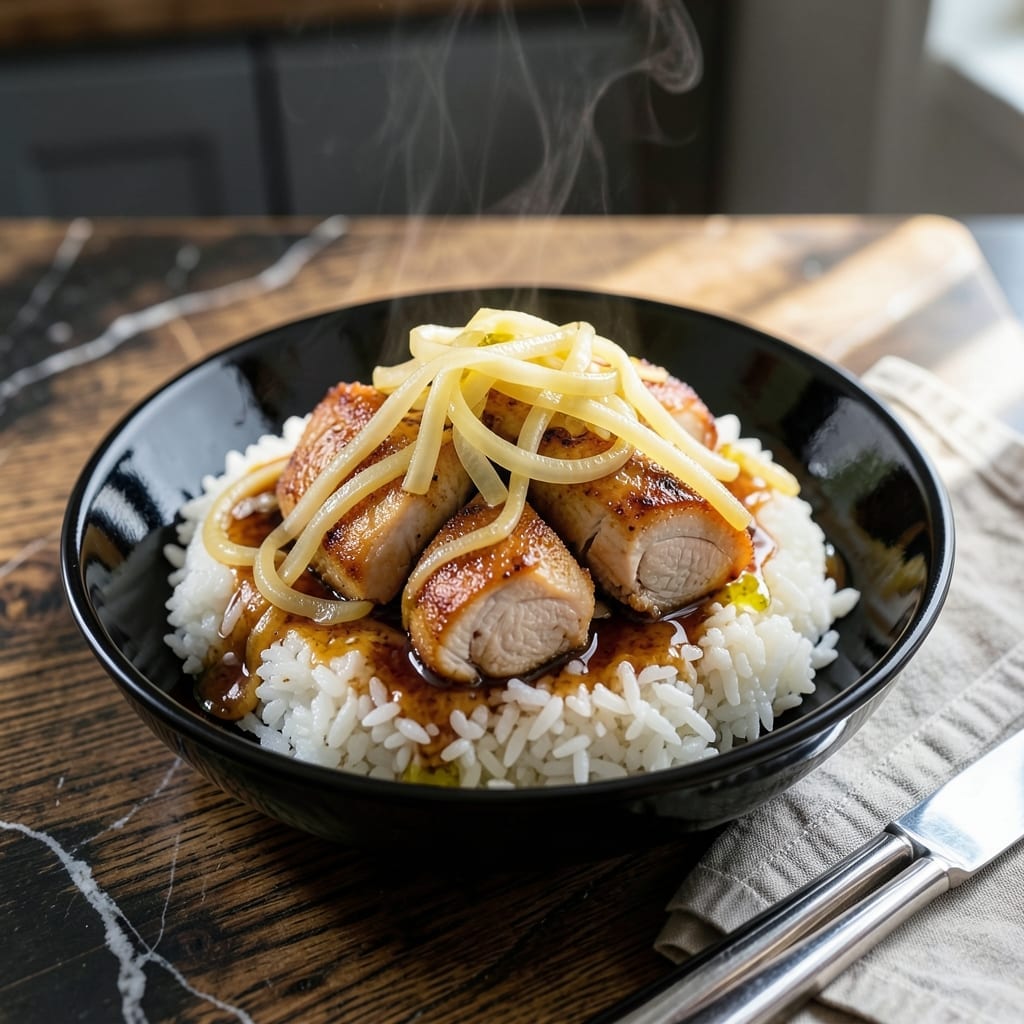
Japanese comfort food gets a modern upgrade with this Instant Pot version of classic oyakodon. The pressure cooker transforms simple ingredients into tender chicken and eggs bathed in a savory-sweet dashi broth.
I developed this method to capture the traditional one-pot meal’s soul while cutting the cooking time dramatically. The Instant Pot infuses flavors deeply, creating a dish that tastes like it simmered for hours.
You’ll end up with bowls of steamed rice topped with silky chicken, fluffy eggs, and onions all coated in a rich, umami-packed sauce. The texture combination is what makes this dish so satisfying.
This approach maintains the dish’s comforting essence while making it achievable any night of the week. The results speak for themselves.
Ingredients for Oyakodon Instant Pot
A handful of Japanese pantry staples come together for this comforting one-bowl meal.
| Ingredient | Amount | Notes |
|---|---|---|
| Boneless Chicken Thighs 🍗 | 1 ½ lb | Skinless, cut into bite-sized pieces |
| Large Eggs 🥚 | 6 whole | Room temperature preferred |
| Yellow Onion 🧅 | 1 whole | Thinly sliced into half-moons |
| Dashi Stock 🍲 | 1 ½ cups | Traditional or instant dashi powder |
| Soy Sauce 🫒 | 3 tbsp | Low-sodium preferred for balance |
| Mirin 🍶 | 2 tbsp | Sweet rice wine for authenticity |
| Granulated Sugar 🍚 | 1 tbsp | Balances savory and umami flavors |
| Sake 🍶 | 2 tbsp | Dry variety for cooking |
| Jasmine Rice 🍚 | 1 ½ cups | Uncooked, rinsed until clear |
| Fresh Ginger 🌿 | 1 piece | 1-inch knob, grated or sliced |
| Green Onions 🧅 | 3 whole | Thinly sliced for garnish |
| Sesame Seeds 🌰 | 1 tsp | Toasted for garnish |
The chicken thighs are non-negotiable here—boneless, skinless ensures even cooking in the Instant Pot. Costco carries high-quality thighs in bulk, or grab them from the butcher counter at Whole Foods. Look for pieces with good marbling; they’ll stay juicy under pressure. For the dashi, Kikkoman’s instant dashi powder is a reliable shortcut if you don’t have homemade stock on hand.
No mirin? Substitute 1 tbsp sugar + 1 tbsp water per tablespoon of mirin. Sake can be swapped with dry white wine in a pinch, though the flavor won’t be as clean. For a gluten-free version, use tamari instead of soy sauce. The rice must be jasmine or short-grain—long-grain varieties won’t absorb the sauce as well.
Leftovers keep 3-4 days in the fridge, though the eggs are best fresh. Reheat gently to avoid overcooking the chicken. Store dashi stock in the freezer for up to 3 months—perfect for next time.
Why You’ll Love This Recipe
- Set and Forget: The Instant Pot does all the work while I prep the onions and eggs—no stirring, no stress.
- Umami Bomb: That mix of dashi and soy sauce with tender chicken and silky eggs is ridiculous. Honestly, I could eat it weekly.
- Weeknight Hero: Between us, this is my Tuesday lifesaver. Ready faster than takeout, and way tastier.
- Budget Stretcher: Boneless thighs are cheap, and one batch feeds us for two nights. Leftovers? Even better the next day.
Step-by-Step Instructions for Instant Pot Oyakodon
This method delivers authentic Japanese comfort food with minimal effort and maximum flavor.
Step 1: Prepare the Base Ingredients
Begin by rinsing the 1.5 cups jasmine rice under cold water until the water runs clear. This removes excess starch and prevents the rice from becoming gummy during pressure cooking. Drain thoroughly.
Cut the 1.5 lb boneless chicken thighs into bite-sized pieces, ensuring uniform size for even cooking. Thinly slice the 1 whole yellow onion into half-moons, and grate or finely slice the 1 piece fresh ginger. This prep ensures all ingredients cook harmoniously under pressure.
Step 2: Sauté Aromatics and Chicken
Set the Instant Pot to the Sauté function on Normal heat. Add a splash of oil if needed, then sauté the sliced yellow onion and fresh ginger for 2-3 minutes until fragrant and slightly softened. This builds the flavor foundation for the dish.
Add the chicken pieces and cook for 3-4 minutes, stirring occasionally, until the exterior turns opaque. The chicken doesn’t need to be fully cooked at this stage—it will finish under pressure. Deglaze the pot with the 2 tbsp sake to lift any browned bits from the bottom.
Step 3: Pressure Cook the Rice and Chicken
Add the drained 1.5 cups jasmine rice to the pot, stirring to combine with the chicken and aromatics. Pour in the 1.5 cups dashi stock, 3 tbsp soy sauce, 2 tbsp mirin, and 1 tbsp granulated sugar. Stir well to distribute the liquids evenly.
Secure the lid, set the valve to Sealing, and cook on High Pressure for 5 minutes. Allow for a 10-minute natural release, then carefully switch the valve to Venting to release any remaining pressure. The rice should be tender and the chicken fully cooked through.
Step 4: Finish with Eggs and Garnish
Once the pressure is fully released, open the lid and give the mixture a gentle stir. Create small wells in the rice and crack the 6 whole large eggs into them, ensuring they are evenly spaced. Secure the lid again and let the eggs poach in the residual heat for 3-4 minutes until the whites are set but yolks remain runny.
Once the eggs are ready, carefully transfer the contents to serving bowls. Garnish with the thinly sliced 3 whole green onions and a sprinkle of 1 tsp sesame seeds. Serve immediately while the eggs are still warm and the rice is steamy.
Pro Tips For Making Oyakodon Instant Pot
- Pre-cook the chicken: Sear the boneless chicken thighs in the Instant Pot first—it deepens the flavor and keeps them from turning rubbery during pressure cooking.
- Slice onions thin: Thinly sliced yellow onions melt into the dish better and distribute their sweetness evenly, instead of leaving big chewy chunks.
- Temper the eggs: Whisk the eggs with a splash of the hot dashi before pouring into the pot to prevent them from scrambling into tough bits.
- Use natural release: Let the pressure release naturally for 5 minutes before quick-releasing—this keeps the chicken tender and the eggs silky.
Troubleshooting This Dish
Eggs Overcooked
If your eggs come out fully set, next time reduce the poaching time to 2-3 minutes after adding them. The residual heat continues cooking them, so pull them sooner for that perfect runny yolk. I always set a timer to avoid overcooking. 💡
Rice Too Dry
This usually means the liquid ratio was off. For 1.5 cups jasmine rice, stick to exactly 1.5 cups dashi stock. Also check your Instant Pot’s seal—if steam escaped during cooking, it can evaporate too much liquid.
Burn Notice
If you see the dreaded “Burn” error, it’s often from ingredients sticking during sautéing. Deglaze thoroughly with the 2 tbsp sake after browning the chicken. I also add ¼ cup extra dashi if I notice the pot looks dry before pressure cooking.
Chicken Not Tender
This happens when pieces are too large. Cut your 1.5 lb boneless chicken thighs into consistent 1-inch pieces for even cooking. Also ensure you’re using the full 10-minute natural release—this helps the meat stay juicy.
Sauce Too Salty
If your sauce is overwhelmingly salty, you may have used regular soy sauce instead of low-sodium. Balance it by adding 1 tsp sugar or a splash of mirin. Next time, stick with low-sodium soy sauce for better control. 🔥
Eggs Sink In
If your eggs disappear into the rice, make deeper wells before adding them. Use the back of a spoon to create ½-inch indentations in the rice mixture. This gives the eggs a stable place to poach without getting buried.
Nutrition Facts
Frequently Asked Questions
Can I use chicken breast instead of thighs?
Thighs are preferred for their juiciness, but boneless breasts work if cut into 1-inch pieces. Reduce pressure cooking time to 4 minutes to prevent dryness. Thighs handle the 5-minute cook better.
What if I don’t have an Instant Pot?
Use a stovetop pressure cooker with the same 5-minute high pressure time. For a regular pot, simmer covered for 20 minutes on low heat after bringing to a boil. Results will differ slightly.
How do I store leftovers?
Keep in an airtight container in the fridge for up to 3 days. Reheat gently in the microwave or on the stove with a splash of water. Avoid freezing as it affects egg texture.
Can I make this gluten-free?
Swap soy sauce for tamari and ensure your dashi is gluten-free. All other ingredients are naturally gluten-free. Double-check sake labels too.

- 6 Oz Chocolate Chip Cookie Recipe: Perfectly Balanced Crispy Edges and Chewy Hearts - September 25, 2026
- 6-Inch Coffee Cake Recipe: Vanilla Bean Swirls and Buttery Streusel Topping - September 25, 2026
- 1 Hour Soup Recipe: Velvety Richness Without the Wait - September 25, 2026