
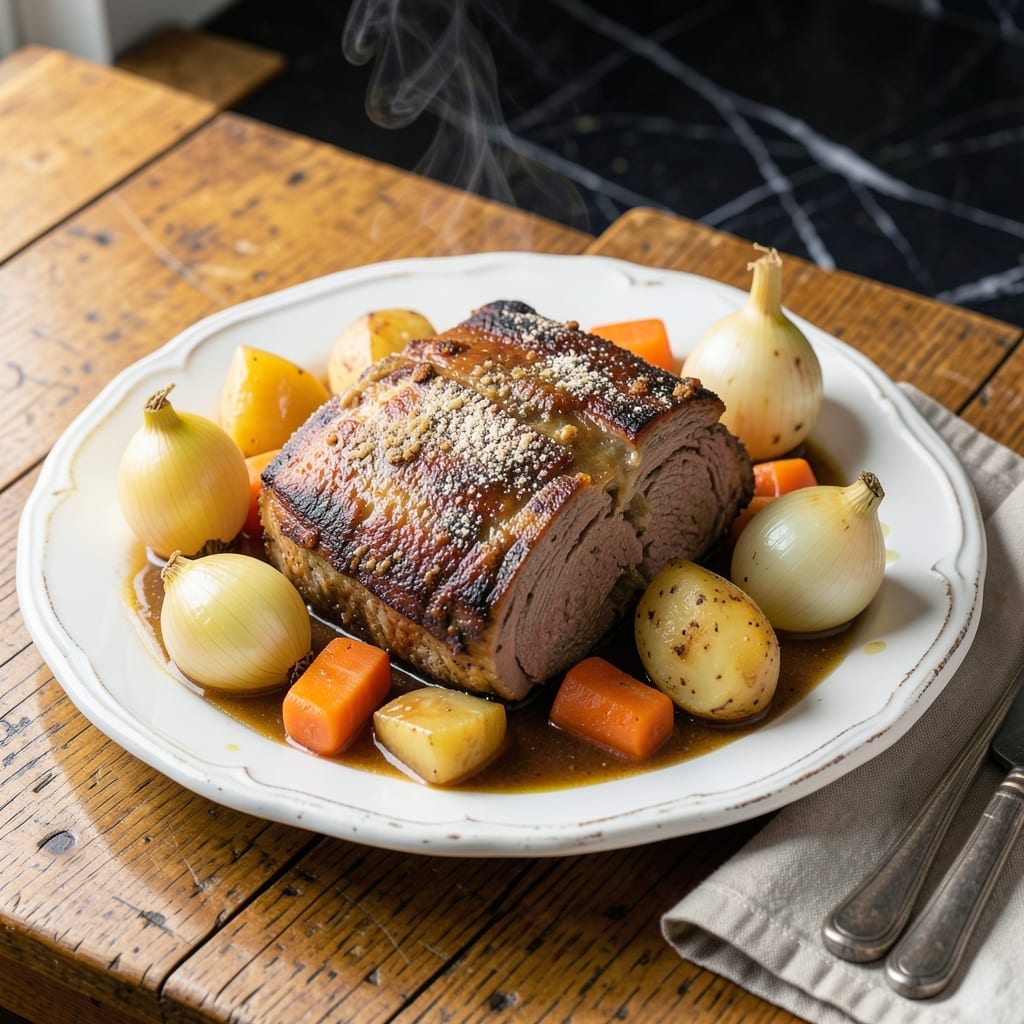
There’s nothing like the rich, hearty aroma of pot roast simmering on the stove to fill a home with warmth and comfort. This recipe is a tribute to the timeless tradition of slow-cooked meals that bring families together.
Tender beef, root vegetables, and a savory broth come together in a single pot, creating a dish that’s as nourishing as it is delicious. The secret lies in the low-and-slow cooking method, which transforms tough cuts into fall-apart tender perfection.
The result is a meal that tastes like it’s been simmering for generations—juicy meat, soft carrots and potatoes, and a gravy so flavorful you’ll want to soak it up with every bite. It’s the kind of dish that turns an ordinary dinner into something special.
Perfect for Sunday suppers or cozy weeknight dinners, this pot roast delivers the kind of satisfying comfort that only a homemade meal can provide.
Ingredients for Paula Dean Pot Roast
Rich, slow-cooked comfort requires quality beef and hearty vegetables for that classic flavor.
| Ingredient | Amount | Notes |
|---|---|---|
| Beef Chuck Roast 🥩 | 3 lb | Well-marbled, boneless preferred |
| Kosher Salt 🧂 | 2 tsp | Diamond Crystal brand recommended |
| Freshly Ground Black Pepper 🌶️ | 1 tsp | Coarse grind preferred |
| All-Purpose Flour 🌾 | ¼ cup | For dusting beef |
| Vegetable Oil 🫒 | 2 tbsp | High smoke point, neutral flavor |
| Yellow Onions 🧅 | 2 whole | Large, quartered |
| Garlic Cloves 🧄 | 6 cloves | Smashed, peeled |
| Carrots 🥕 | 4 whole | Peeled, cut into 3-inch chunks |
| Russet Potatoes 🥔 | 4 whole | Peeled, quartered |
| Celery Stalks 🌿 | 3 whole | Cut into 3-inch pieces |
| Low-Sodium Beef Broth 🥣 | 2 cups | Homemade or high-quality canned |
| Red Wine 🍷 | 1 cup | Dry variety like Cabernet Sauvignon |
| Tomato Paste 🍅 | 2 tbsp | Double-concentrated preferred |
| Dried Thyme 🍃 | 1 tsp | Crushed between fingers |
| Bay Leaves 🌿 | 2 whole | Dried, whole |
The beef is non-negotiable here. Chuck roast with visible marbling yields the most tender results after slow cooking. Whole Foods or a trusted butcher will have the best selection. Avoid lean cuts like sirloin—they’ll dry out. Most supermarkets label their chuck as ‘pot roast’ for convenience. For the best texture, choose a roast that’s at least 2 inches thick so it holds up during the long cook.
No red wine? Substitute with an extra cup of beef broth plus 1 tbsp balsamic vinegar for depth. Fresh thyme can replace dried at a 3:1 ratio (3 tbsp fresh for 1 tsp dried). The tomato paste can be swapped with 1 tbsp ketchup in a pinch, but the flavor won’t be as rich. If celery isn’t on hand, extra carrots or parsnips work well. Always use low-sodium broth to control seasoning.
This reheats beautifully—flavors deepen overnight. Store leftovers in an airtight container for up to 4 days in the fridge or 3 months frozen. To freeze, portion with the gravy in a sealed container. The potatoes may soften further when reheated, but the beef stays wonderfully tender.
Why You’ll Love This Recipe
- One roast, two meals: Sunday dinner plus Monday sandwiches. Honestly, it stretches farther than I expected.
- Set It and Forget It: I sear the chuck roast, toss in the flour for thickening, and let the oven do the rest—hardly any hands-on time.
- Melt-in-Your-Mouth Tender: That beef chuck, coated in flour and browned in oil, turns fall-apart tender with just salt and pepper to let the flavor shine.
- Feeds My Crew Twice: One roast, two meals: Sunday dinner plus Monday sandwiches. Honestly, it stretches farther than I expected.
Step-by-Step Instructions for Pot Roast
This method transforms tough cuts into fork-tender perfection with rich, savory depth.
Step 1: Sear and Season the Beef Chuck Roast
Pat the 3 lb Beef Chuck Roast dry with paper towels, then season generously with the 2 tsp Kosher Salt and 1 tsp Freshly Ground Black Pepper. I press the seasoning into the meat to ensure it adheres well and penetrates the surface.
Dredge the roast in the 0.25 cup All-Purpose Flour, shaking off any excess. The flour creates a light crust that thickens the sauce later. Heat the 2 tbsp Vegetable Oil in a large Dutch oven over medium-high heat until shimmering. Sear the roast on all sides for 8-10 minutes total until deeply browned. This step builds the foundation of flavor for the entire dish.
Step 2: Build the Aromatic Base
After removing the beef, add the 2 whole Yellow Onions, 4 whole Carrots, 4 whole Russet Potatoes, and 3 whole Celery Stalks to the pot. Cook for 5 minutes until the vegetables begin to soften and develop color. The fond left from searing the beef will caramelize the vegetables beautifully.
Add the 6 cloves Garlic Cloves, 2 tbsp Tomato Paste, 1 tsp Dried Thyme, and 2 whole Bay Leaves. Stir for 1-2 minutes until the tomato paste darkens slightly—this intensifies its sweetness and umami. The aroma at this stage should be incredibly rich and inviting.
Step 3: Deglaze and Braise
Pour in the 1 cup Red Wine and scrape up all the browned bits from the bottom of the pot with a wooden spoon. This deglazing step captures all the concentrated flavors and prevents them from going to waste. Let the wine reduce by half, which takes about 3-4 minutes.
Return the seared beef to the pot along with any accumulated juices. Add the 2 cups Low-Sodium Beef Broth, ensuring the liquid comes about halfway up the roast. The braising liquid should be just enough to submerge the vegetables but not fully cover the meat. This balance ensures proper cooking without diluting the flavors.
Step 4: Slow Cook to Tenderness
Bring the liquid to a gentle simmer, then reduce the heat to low. Cover the pot and let it cook for 3 to 3.5 hours, turning the roast every 45 minutes to ensure even cooking. You want the meat to become so tender that it nearly falls apart when pierced with a fork.
The vegetables should be soft and have absorbed much of the braising liquid, creating a thick, flavorful sauce. If the liquid reduces too much during cooking, add a splash of water or additional beef broth to maintain the proper level. The internal temperature of the roast should reach 195-200°F for optimal tenderness.
Pro Tips For Making Paula Dean Pot Roast
- Sear It Hard: Crank the heat to medium-high and let the oil get shimmering hot before adding the roast—this builds a deep, flavorful crust on the beef that’ll carry through the whole dish.
- Salt the Roast First: Pat the chuck roast dry, then season generously with kosher salt and pepper at least 30 minutes before cooking. I learned this the hard way—it draws out moisture first, then reabsorbs it for a juicier result.
- Don’t Crowd the Pan: If your pot isn’t big enough for the roast and veggies in a single layer, sear the meat first, then remove it before adding the rest. Steaming from overcrowding ruins the browning.
- Use Fresh Flour: Dredge the roast in flour just before searing—don’t let it sit or the coating turns gummy. Sounds obvious, but I wasted a few batches before figuring this out.
Perfect Pairings for This paula dean pot roast
Bread Pairings
Nothing soaks up that rich gravy like a slice of crusty Italian bread or a buttery biscuit. I love serving this with sourdough toasted and rubbed with garlic for extra flavor. Warm rolls from the oven are another perfect choice. 🍞
Vegetable Sides
A simple green salad with a tangy vinaigrette cuts through the richness beautifully. For something heartier, try roasted Brussels sprouts with bacon. The smoky, crispy texture complements the tender beef wonderfully.
Wine Pairings
The red wine used in cooking pairs perfectly with the finished dish. I recommend a bold Cabernet Sauvignon or Merlot to stand up to the deep flavors. Serve at room temperature for the best experience. 🍷
Potato Variations
Swap the russet potatoes for Yukon Golds if you prefer a creamier texture. Or add sweet potatoes for a touch of natural sweetness that balances the savory broth.
Dessert Follow-Up
End the meal on a sweet note with apple crisp or pecan pie. The warm spices in these desserts complement the hearty flavors of the pot roast, making for a cozy, satisfying finish.
Nutrition Facts
Frequently Asked Questions
What’s the best cut of meat for pot roast?
Chuck roast is ideal due to its marbling and connective tissue. These break down during slow cooking, creating tender, flavorful meat. Avoid lean cuts like sirloin, as they can dry out.
Can I make this in a slow cooker instead?
Yes! Sear the beef first, then transfer everything to your slow cooker. Cook on low for 8-10 hours or high for 5-6 hours until fork-tender. The flavors will still develop beautifully.
Why is my pot roast tough?
It likely didn’t cook long enough. Pot roast needs 3-4 hours at low heat to break down the collagen. If it’s still tough, return it to the pot with more liquid and cook until 195-200°F internally.
Can I substitute the red wine?
Use 1 cup beef broth plus 1 tbsp balsamic vinegar for similar depth. The acidity mimics wine’s role in tenderizing and flavor development. Avoid white wine—it won’t provide the same richness.

- 4C Bread Crumbs Meatballs Recipe: Crispy Crust and Juicy Centers - September 25, 2026
- 6 Oz Chocolate Chip Cookie Recipe: Perfectly Balanced Crispy Edges and Chewy Hearts - September 25, 2026
- 6-Inch Coffee Cake Recipe: Vanilla Bean Swirls and Buttery Streusel Topping - September 25, 2026