
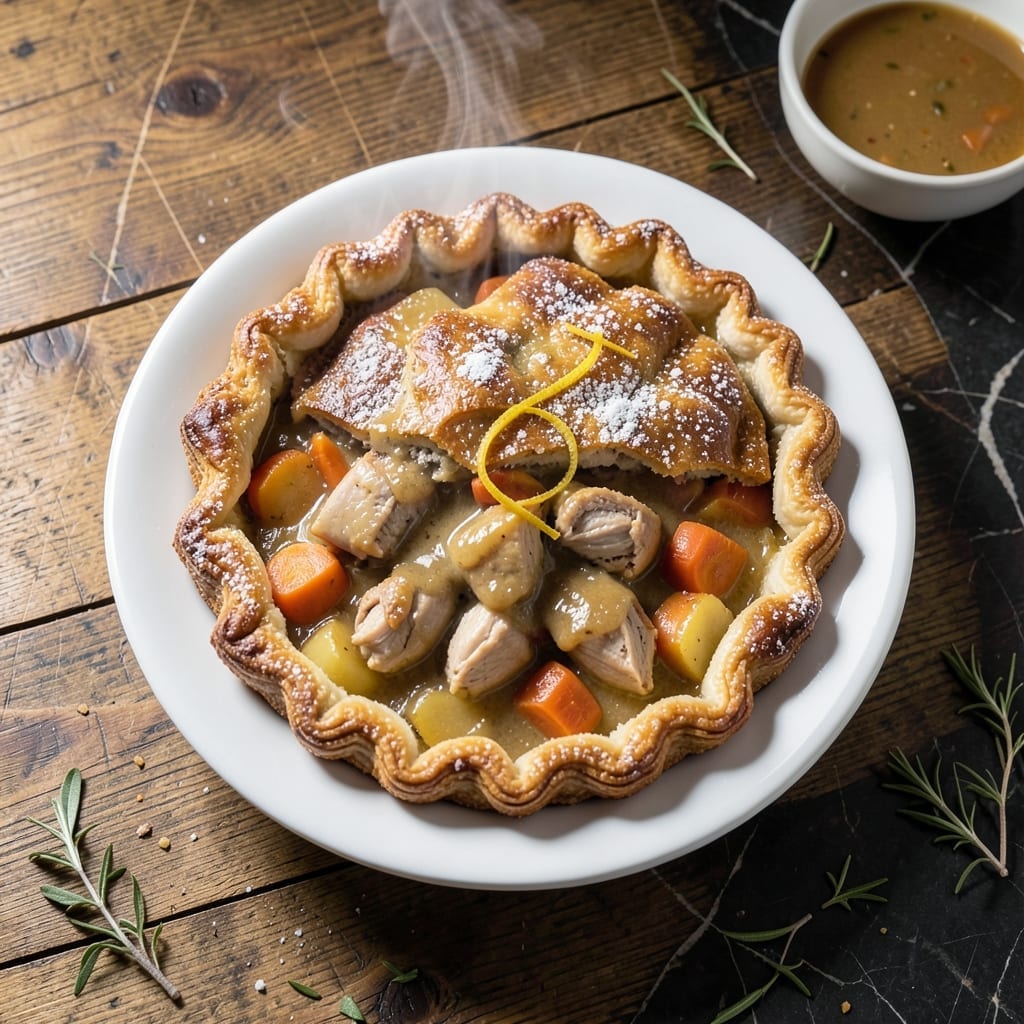
This Pennsylvania chicken pot pie delivers the authentic Amish experience with a thick, hearty filling and square-cut noodles that define the dish.
The recipe relies on simple ingredients and traditional methods to create a rich, velvety sauce that clings to every bite. It’s designed to feed a crowd, just as it’s been served in Amish kitchens for generations.
What sets this version apart is the homemade noodles, which absorb the savory broth while maintaining their structure. The filling is packed with tender chicken and vegetables for a satisfying, complete meal.
Serve it hot from the oven, and watch as the comforting aroma fills your kitchen. This is home cooking at its most genuine.
Ingredients for Pennsylvania Chicken Pot Pie
Authentic Amish ingredients create this thick, hearty Pennsylvania classic with square-cut noodles.
| Ingredient | Amount | Notes |
|---|---|---|
| Chicken Thighs 🍗 | 2 lb | Boneless, skinless, diced |
| All-Purpose Flour 🌾 | 3 cups | Divided for noodles and sauce |
| Large Eggs 🥚 | 2 whole | For noodle dough |
| Water 💧 | ½ cup | Cold, for noodle dough |
| Salt 🧂 | 1 ½ tsp | Divided, kosher preferred |
| Black Pepper 🌶️ | 1 tsp | Freshly ground preferred |
| Onion 🧅 | 1 whole | Medium, finely diced |
| Carrots 🥕 | 2 whole | Medium, diced |
| Celery Stalks 🌿 | 2 whole | Diced, leaves included |
| Potatoes 🥔 | 2 whole | Medium, diced |
| Chicken Broth 🥣 | 6 cups | Low-sodium preferred |
| Whole Milk 🥛 | 1 ½ cups | Full-fat for creaminess |
| Unsalted Butter 🧈 | ½ cup | 1 stick, for sauce |
| Fresh Parsley 🌿 | ¼ cup | Chopped, for garnish |
| Garlic Cloves 🧄 | 3 cloves | Minced, for filling |
The chicken thighs are key here—boneless, skinless ensures tender bites without chewiness. For the noodles, King Arthur Flour delivers consistent texture, and using cold water prevents overworking the dough. The broth forms the base of that velvety sauce, so opt for low-sodium to control seasoning. Most supermarkets carry everything needed, but Amish markets often stock the highest-quality ingredients for this dish.
Need to swap chicken thighs? Breasts work but may dry out—reduce cooking time by 5-10 minutes. No fresh parsley? Dried at one-third the amount adds color but less brightness. For a richer sauce, half-and-half can replace milk. The noodles must be square-cut to absorb the broth properly—don’t substitute egg noodles as they’ll turn mushy.
This freezes beautifully for up to 3 months. Store leftovers in the fridge for 4-5 days—the noodles soak up more broth over time. Reheat gently on the stove with a splash of milk to restore creaminess. Best served fresh from the oven for that authentic Amish experience.
Why You’ll Love This Recipe
- One Bowl Wonder: I love that I can mix the flour, eggs, and water right in the same bowl I use for the filling—minimal cleanup.
- Rich Chicken Flavor: The thighs make it so much juicier than breast meat, and the simple salt lets the taste shine.
- Feeds a Hungry Crowd: Between us, this is my go-to for potlucks, and it disappears faster than anything else.
- Budget Stretcher: Honestly, it costs me less than $10 to make a pie that feeds six, with leftovers for lunch.
Step-by-Step Instructions for Pennsylvania Chicken Pot Pie
Here’s the method. Straightforward, tested, works every time.
Step 1: Prepare the Noodle Dough
In a large mixing bowl, combine 3 cups All-Purpose Flour with ½ tsp Salt. Create a well in the center and add 2 whole Large Eggs, ½ cup Water, and 1 tbsp of the Unsalted Butter, melted. Mix until a shaggy dough forms.
Turn the dough onto a lightly floured surface and knead for 5-7 minutes until smooth and elastic. The dough should spring back when pressed lightly with your finger. Wrap it in plastic and let it rest at room temperature for 20 minutes while you prepare the filling.
Step 2: Cook the Chicken and Vegetables
In a large Dutch oven, heat the remaining Unsalted Butter over medium heat. Add the diced Onion, 2 whole Carrots, 2 whole Celery Stalks, and 2 whole Potatoes. Sauté for 5 minutes until the vegetables begin to soften.
Add the 2 lb Chicken Thighs, diced, and cook for 6-8 minutes until no longer pink. Stir in the minced 3 cloves Garlic Cloves and cook for 30 seconds until fragrant. Season with the remaining 1 tsp Salt and 1 tsp Black Pepper.
Step 3: Create the Creamy Sauce
Pour in the 6 cups Chicken Broth and bring to a boil. Reduce heat to medium-low and let it simmer for 10 minutes to meld the flavors. The liquid should reduce slightly, and the vegetables should be tender when pierced with a fork.
Gradually stir in the 1.5 cups Whole Milk, allowing the mixture to thicken. The sauce should coat the back of a spoon and have a velvety texture. Taste and adjust seasoning if needed, though the salt from earlier should be sufficient.
Step 4: Roll, Cut, and Cook the Noodles
On a floured surface, roll out the rested dough to ⅛-inch thickness. Cut into long, 1-inch wide strips for the traditional Pennsylvania-style pot pie noodles. Shake off any excess flour before adding them to the simmering chicken mixture.
Drop the noodles into the pot and stir gently to separate. Cook for 10-12 minutes until the noodles are tender and the sauce has thickened to a stew-like consistency. The noodles should be soft but still hold their shape.
Step 5: Finish and Serve
Remove from heat and let the pot pie sit for 5 minutes to allow the sauce to thicken further. The final consistency should be hearty and rich, with the noodles and vegetables suspended in a creamy, savory broth.
Ladle into bowls and garnish with the ¼ cup Fresh Parsley, chopped. Serve immediately while hot. Each serving should have a generous amount of noodles, chicken, and vegetables in every bite.
Pro Tips For Making Pennsylvania Chicken Pot Pie
- Shred the Chicken Hot: I learned this the hard way—pull the chicken thighs apart while still warm, about 10 minutes out of the broth, and they’ll absorb more of that savory liquid. Cold chicken just doesn’t soak up flavor the same way.
- Roll the Dough Thin: For that classic Pennsylvania pot pie texture, stretch the flour-egg-water dough paper-thin, almost translucent. My grandmother swore by this, and she was right: it cooks through without getting gummy.
- Salt the Broth Well: Sounds obvious, but most home cooks undersalt the chicken broth. Use more than you think—about 1½ teaspoons of salt per quart—since the dough itself is plain.
- Seal the Edges Tight: After years of soggy bottoms, I finally started crimping the top and bottom dough layers together like a dumpling. Press hard—this keeps the filling from leaking and ruining the crust.
Common Mistakes When Making This Recipe
Overworking the Noodles
Kneading the dough too much develops excess gluten, making the noodles tough. I stop kneading as soon as the dough becomes smooth, usually after 5-7 minutes. Resting the dough for 20 minutes also relaxes the gluten for tender results. 💡
Skipping the Rest
Letting the dough rest is crucial for texture. If I rush this step, the noodles become dense and chewy. I cover mine with plastic wrap and set a timer to ensure the full 20-minute rest at room temperature.
Thin Sauce Fix
If your sauce isn’t thickening, simmer it longer before adding noodles. I let it reduce for the full 10 minutes at medium-low heat. Adding milk too early can prevent proper thickening, so I wait until the broth has reduced slightly.
Noodle Size Matters
Cutting noodles too thin makes them mushy. I roll the dough to ⅛-inch thickness and cut 1-inch wide strips for the traditional Pennsylvania texture. This size absorbs the sauce without falling apart.
Overcooking Chicken
Dicing the chicken into even ½-inch pieces ensures it cooks through in 6-8 minutes without drying out. I check the largest pieces first and remove the pot from heat as soon as they’re no longer pink inside.
Seasoning Last
Waiting to season until the end can leave flavors flat. I season the chicken and vegetables with 1 tsp Salt and 1 tsp Black Pepper as they cook, then adjust at the end if needed.
Nutrition Facts
Frequently Asked Questions
Why use chicken thighs instead of breasts?
Thighs stay juicy during the 6-8 minutes of cooking, while breasts can dry out. Their higher fat content also adds richness to the sauce.
Can I make the noodles ahead?
Yes! Prepare and cut the dough, then refrigerate for up to 24 hours. Keep it wrapped tightly in plastic to prevent drying.
How do I fix sauce that’s too thin?
Simmer uncovered at medium-low heat for another 5-10 minutes. Stir frequently to prevent sticking.
What’s the best way to store leftovers?
Cool completely, then refrigerate in an airtight container for up to 5 days. Reheat gently with a splash of milk.

- 6 Oz Chocolate Chip Cookie Recipe: Perfectly Balanced Crispy Edges and Chewy Hearts - September 25, 2026
- 6-Inch Coffee Cake Recipe: Vanilla Bean Swirls and Buttery Streusel Topping - September 25, 2026
- 1 Hour Soup Recipe: Velvety Richness Without the Wait - September 25, 2026