
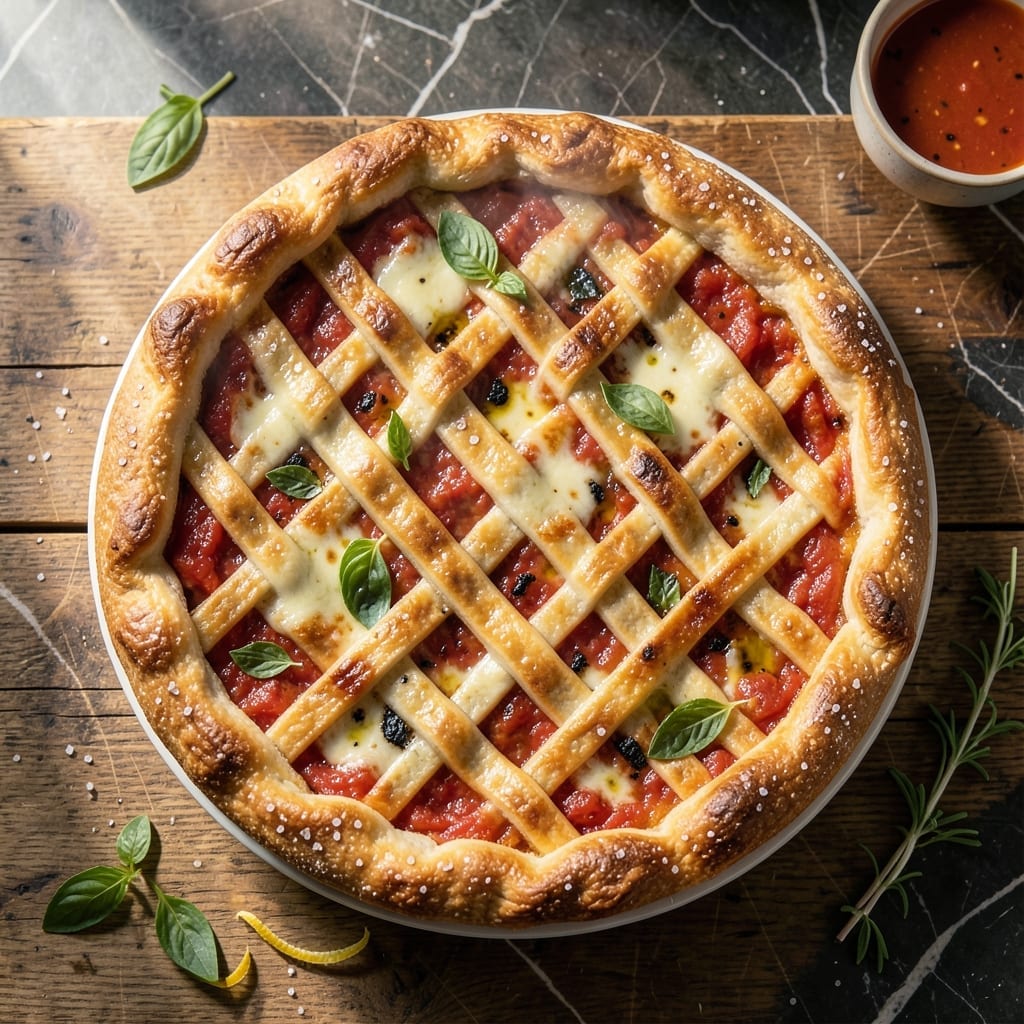
This pizza pot pie dough delivers a flaky, golden crust that transforms savory fillings into a showstopping meal. The secret lies in cold ingredients and minimal handling to create layers that puff and separate during baking.
I developed this recipe after years of testing pie and pizza dough variations, focusing on texture and structure. The result is a crust that holds up to hearty fillings while remaining tender and flaky with every bite.
With just a few simple ingredients and proper technique, you’ll achieve professional-quality results. The dough comes together quickly and can be made ahead for convenience.
Perfect for individual pot pies or a family-style dish, this crust elevates any filling to comfort food perfection.
Ingredients for Pizza Pot Pie Dough
Cold butter and minimal handling yield that signature flaky, golden crust for any savory filling.
| Ingredient | Amount | Notes |
|---|---|---|
| All-Purpose Flour 🌾 | 3 ½ cups | Spoon and level, plus extra for dusting |
| Unsalted Butter 🧈 | 1 cup | Cold, cut into 1/2-inch cubes |
| Ice Water 💧 | ¾ cup | Plus extra as needed |
| Fine Sea Salt 🧂 | 1 ½ tsp | Diamond Crystal preferred |
| Granulated Sugar 🍚 | 1 tsp | Balances saltiness |
| Active Dry Yeast 🍞 | 2 ¼ tsp | 1 packet, proofed in warm water |
| Olive Oil 🫒 | 2 tbsp | Extra-virgin for richness |
| Whole Milk 🥛 | ¼ cup | Cold, for tenderness |
| Baking Powder 🧂 | 1 tsp | Ensures lift and flakiness |
| Egg Yolk 🥚 | 1 whole | For golden color and richness |
The butter must stay cold—cut it into cubes and chill until ready to use. I recommend Plugrá or European-style butter for higher fat content, which creates superior flakiness. All-purpose flour is standard, but King Arthur or Gold Medal brands deliver consistent results. The milk and egg yolk add tenderness and color, so avoid skipping them. For best texture, measure flour by spooning into cups rather than scooping directly from the bag.
No unsalted butter? Salted works at a pinch—just reduce the added salt by half. Out of whole milk? 2% or even heavy cream in equal amounts will do. For a vegan option, substitute coconut oil for butter and use cold water plus a flax egg. The yeast can be swapped for instant yeast without proofing, but reduce by 25%. No ice water? Chilled vodka works too and won’t affect flavor.
The dough keeps in the fridge for up to 3 days or can be frozen for 1 month. Wrap tightly in plastic to prevent drying. For best flakiness, let the dough rest for 30 minutes before rolling. Always work on a floured surface to prevent sticking during shaping.
Why You’ll Love This Recipe
- One-Bowl Wonder: I mix the flour, cold butter, and ice water right in the same bowl—no extra dishes, no fuss.
- Buttery Perfection: The unsalted butter creates layers so flaky they shatter, with just a hint of sugar to balance the salt.
- Freezer Friendly: I’ll roll out a double batch, bake one now, and stash the rest for emergency pizza nights.
- Pantry Staples: Honestly, it’s just flour, butter, water, salt, and sugar—things I always have, so I’m never without a crust.
Step-by-Step Instructions for Pizza Pot Pie Dough
Master this technique for a golden, flaky crust that perfectly encases your savory fillings.
Step 1: Activate the Yeast and Prepare Wet Mixture
In a small bowl, combine the 2.25 tsp Active Dry Yeast with 0.25 cup Whole Milk warmed to 110°F and the 1 tsp Granulated Sugar. Let stand for 5-7 minutes until the mixture becomes foamy and active. This proofing step ensures your yeast is alive and ready to create lift in the dough.
In a separate measuring cup, combine the 0.75 cup Ice Water and 2 tbsp Olive Oil. The cold temperature of these ingredients helps maintain the integrity of the 1 cup Unsalted Butter as you work it into the dough, which is crucial for achieving those flaky layers.
Step 2: Cut in the Butter and Form the Base
In a large mixing bowl, whisk together the 3.5 cups All-Purpose Flour, 1.5 tsp Fine Sea Salt, and 1 tsp Baking Powder. Add the cold 1 cup Unsalted Butter (cut into ½-inch cubes) and work it into the dry ingredients using your fingertips or a pastry cutter until the mixture resembles coarse crumbs with pea-sized butter pieces visible.
These visible butter pieces are essential—they create steam during baking, which separates the dough into distinct, flaky layers. Work quickly to prevent the butter from melting, as this would compromise the texture. The dough should look shaggy and uneven at this stage.
Step 3: Incorporate Liquids and Knead Briefly
Pour the proofed yeast mixture and the cold water-olive oil combination into the butter-flour mixture. Add the 1 whole Egg Yolk for richness and color. Using a wooden spoon, mix just until the dough begins to come together. It will appear rough and slightly sticky.
Turn the dough out onto a lightly floured surface and knead gently for 30-45 seconds only. Overworking the dough develops gluten, which would make the crust tough rather than tender and flaky. The dough should hold together but still have visible butter streaks.
Step 4: Chill and Rest for Optimal Texture
Shape the dough into a disk, wrap it tightly in plastic wrap, and refrigerate for at least 1 hour or up to 24 hours. This resting period allows the gluten to relax and the butter to firm up, making the dough easier to roll out without shrinking.
During this time, the yeast will also begin its work, creating subtle air pockets that contribute to the lift and flakiness of the final crust. The cold temperature inhibits the yeast’s activity just enough to prevent overproofing while enhancing the dough’s workability.
For best results, let the dough rest in the refrigerator overnight. This extended rest develops deeper flavor and improves the texture significantly.
Pro Tips For Making Pizza Pot Pie Dough
- Chill the Butter: Cut your unsalted butter into small cubes and freeze for 15 minutes before mixing—I learned this the hard way after ending up with flat, tough dough from warm butter.
- Use Ice-Cold Water: Fill a glass with water and ice cubes, then measure from that so it stays frigid; this keeps the dough from developing gluten too early.
- Skip Overworking: Mix just until the dough comes together, even if it looks shaggy—overworking makes it tough, and I’ve ruined more than one batch by fussing with it.
- Rest Before Rolling: Let the dough rest in the fridge for at least 30 minutes; it relaxes the gluten and makes rolling out for your pot pie crust a breeze.
Wine and Beer Pairings for This Dish
Crisp White Wines
A dry Pinot Grigio from Northern Italy cuts through the buttery richness of this crust beautifully. Its bright acidity and citrus notes refresh your palate between bites. I prefer Santa Margherita for its consistent quality and crisp finish. 🍷
Light-Bodied Reds
For red wine lovers, a chilled Beaujolais offers red fruit flavors with minimal tannins that won’t overpower the crust. The Louis Jadot Beaujolais-Villages is an excellent choice that pairs wonderfully with savory fillings.
Craft Beer Options
A crisp pilsner like Stella Artois provides effervescence that cleanses the palate between bites of flaky crust. The light malt character complements without competing with the dish’s rich flavors.
Hoppy Brews
An American wheat beer such as Blue Moon adds a citrusy contrast that works particularly well with herb-forward fillings. The slight sweetness balances the savory notes of your pizza pot pie. 🍺
Non-Alcoholic Choices
A chilled sparkling apple cider offers the same palate-cleansing bubbles as beer without alcohol. The natural sweetness complements the golden crust beautifully. I recommend Martinelli’s for its authentic apple flavor.
Rich Dessert Pairing
End your meal with a Moscato d’Asti from Italy. Its light fizz and honeyed stone fruit flavors provide a perfect conclusion to this savory dish. The Saracco Moscato d’Asti is my go-to for its balanced sweetness.
Nutrition Facts
Frequently Asked Questions
Can I make the dough without yeast?
Yes, omit the yeast and increase baking powder to 1.5 tsp. The texture will be slightly denser but still flaky. This works well for quick versions.
Why does the butter need to stay cold?
Cold butter creates steam during baking, which separates the dough into flaky layers. If it melts prematurely, the crust won’t rise properly and may turn tough.
How thin should I roll the dough?
Aim for 1/8-inch thickness for the top crust. Too thick and it won’t cook through; too thin and it may tear when filling. Use a ruler for precision.
Can I freeze the dough for later?
Wrap tightly and freeze for up to 1 month. Thaw overnight in the fridge before using. No need to re-knead.

- 4C Bread Crumbs Meatballs Recipe: Crispy Crust and Juicy Centers - September 25, 2026
- 6 Oz Chocolate Chip Cookie Recipe: Perfectly Balanced Crispy Edges and Chewy Hearts - September 25, 2026
- 6-Inch Coffee Cake Recipe: Vanilla Bean Swirls and Buttery Streusel Topping - September 25, 2026