
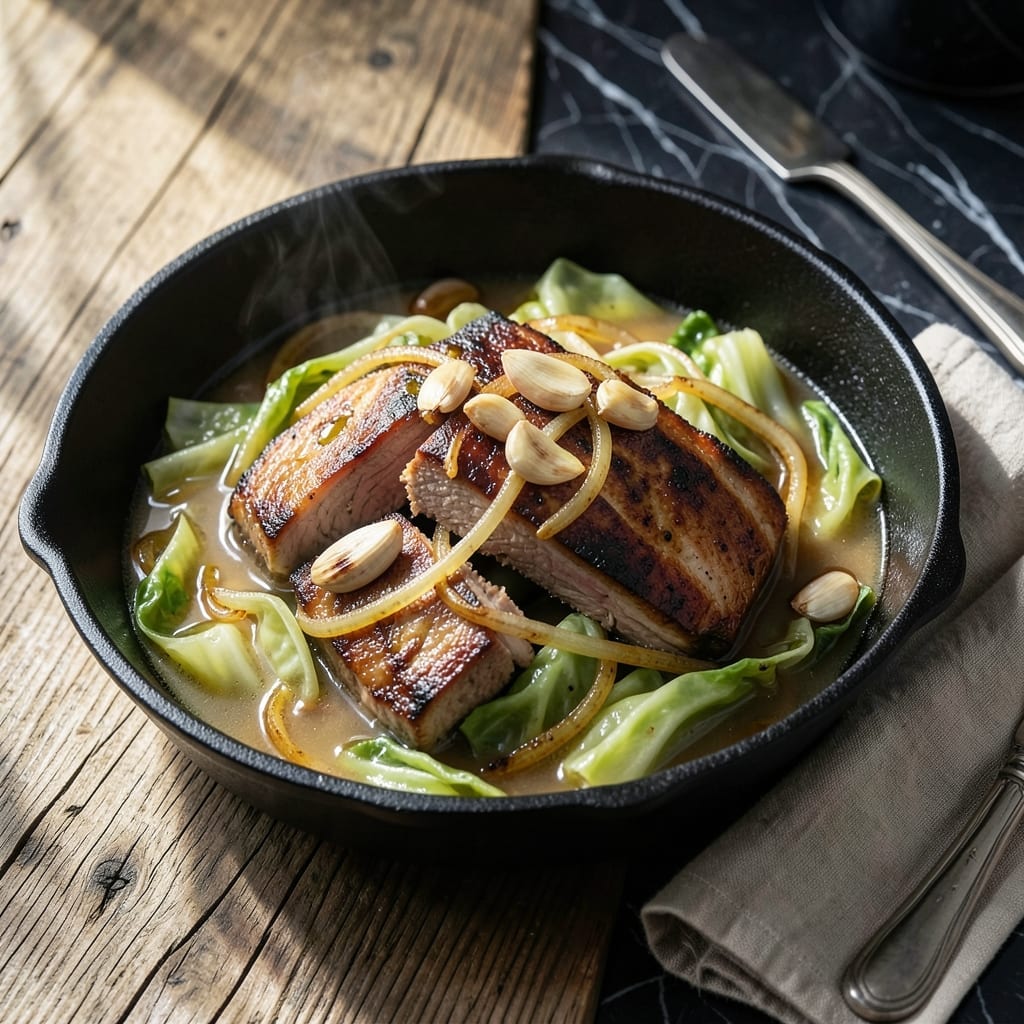
This slow cooker meal combines tender pork and sweet cabbage into the ultimate set-it-and-forget-it dinner solution.
With just a few simple ingredients and minimal prep, you’ll have a hearty, flavorful dish ready when you walk through the door. The pork cooks low and slow until fall-apart tender, while the cabbage absorbs all the savory juices.
The beauty of this method is its hands-off approach—no babysitting the stove, no last-minute rushing. Simply layer the ingredients in the morning and let the crock pot work its magic.
By dinnertime, you’ll have a comforting, well-balanced meal that tastes like it simmered all day. No shortcuts, just honest, home-cooked goodness.
Ingredients for Pork and Cabbage Crock Pot
Pantry staples and fresh produce combine for this hands-off slow cooker masterpiece.
| Ingredient | Amount | Notes |
|---|---|---|
| Pork Shoulder 🥩 | 2 lb | Boneless, cut into chunks |
| Green Cabbage 🥬 | 1 whole | Medium head, cored and sliced |
| Yellow Onion 🧅 | 1 whole | Large, thinly sliced |
| Garlic Cloves 🧄 | 4 cloves | Minced for depth of flavor |
| Low-Sodium Chicken Broth 🍲 | 1 cup | Or substitute vegetable broth |
| Apple Cider Vinegar 🍏 | 2 tbsp | Adds bright acidity |
| Dijon Mustard 🟡 | 1 tbsp | Smooth, not grainy |
| Brown Sugar 🟤 | 2 tbsp | Light or dark, packed |
| Kosher Salt 🧂 | 1 tsp | Diamond Crystal preferred |
| Ground Black Pepper 🌶️ | ½ tsp | Freshly cracked for best flavor |
| Dried Thyme 🌿 | 1 tsp | Rubbed between fingers to release oils |
| Bay Leaves 🍃 | 2 pieces | Whole, removed before serving |
| Carrots 🥕 | 2 whole | Medium, sliced into rounds |
| Olive Oil 🫒 | 1 tbsp | For searing pork if desired |
The pork is key here. Pork shoulder (sometimes labeled as Boston butt) has the right fat content for low-and-slow cooking—avoid lean cuts like tenderloin which dry out. Most supermarkets carry it pre-cut, but ask the butcher for a 2-pound chunk if you want to trim it yourself. The cabbage should be firm and heavy for its size, with crisp outer leaves. Green cabbage works best, but Savoy adds a nice texture if you can find it.
No apple cider vinegar? White wine vinegar or lemon juice at the same amount works. Yellow mustard can replace Dijon in a pinch, though the flavor will be milder. Brown sugar is essential for balancing the acidity, but maple syrup or honey (1.5 tbsp) can substitute. If you don’t have dried thyme, fresh thyme leaves at triple the amount (1 tbsp) will do beautifully.
This tastes even better the next day. Store leftovers in an airtight container for up to 4 days in the fridge or freeze for 3 months. Reheat gently on the stove with a splash of broth to revive the flavors. The pork shreds easily, making it perfect for sandwiches or tacos too.
Why You’ll Love This Recipe
- Set and Forget: I toss everything in the crock pot before work and come home to dinner ready to serve.
- Feeds a Crowd: I make this for Sunday supper and there’s always enough for leftovers the kids actually eat.
- Budget Hero: Pork shoulder and cabbage stretch far, and one batch costs less than takeout for the family.
Step-by-Step Instructions for Pork and Cabbage Crock Pot
Here’s the method. Straightforward, tested, works every time.
Step 1: Sear and Season the Pork Shoulder
Heat the 1 tbsp Olive Oil in a large skillet over medium-high heat. Add the 2 lb Pork Shoulder chunks and sear until browned on all sides, about 3-4 minutes per side. This step builds deep flavor that carries through the slow cooking process.
Transfer the pork to the crock pot. Season with the 1 tsp Kosher Salt, 0.5 tsp Ground Black Pepper, and 1 tsp Dried Thyme. I always rub the dried thyme between my fingers first to release its aromatic oils before sprinkling it over the meat.
Step 2: Layer Vegetables and Prepare the Sauce
Arrange the 1 whole Green Cabbage (cored and sliced), 1 whole Yellow Onion (thinly sliced), and 2 whole Carrots (sliced into rounds) around and over the pork in the crock pot. Distribute evenly so each serving gets a good mix of meat and vegetables.
In a small bowl, whisk together the 1 cup Low-Sodium Chicken Broth, 2 tbsp Apple Cider Vinegar, 1 tbsp Dijon Mustard, and 2 tbsp Brown Sugar until the brown sugar is fully dissolved. Pour this mixture over the pork and vegetables. Add the 4 cloves Garlic Cloves (minced) and 2 pieces Bay Leaves to the pot.
Step 3: Cook on Low Until Tender
Cover the crock pot and cook on low heat for 7-8 hours or until the pork is fall-apart tender and the cabbage has softened into the sauce. Avoid the temptation to lift the lid during cooking—each time you do, you add 20-30 minutes to the total cook time.
You’ll know it’s done when the pork shreds easily with a fork and the cabbage has transformed from crisp to silky. The Bay Leaves will have infused their subtle earthiness into the dish, so remember to remove them before serving.
Step 4: Adjust Seasoning and Serve
Once the cooking time is complete, discard the Bay Leaves. Taste the sauce and adjust seasoning if needed—the acidity from the apple cider vinegar should balance with the sweetness of the brown sugar and the savory depth from the mustard.
Serve the pork and cabbage hot directly from the crock pot, making sure each portion includes a generous amount of the cooking liquid. The pork should be incredibly tender, the cabbage sweet and silky, and the carrots soft but still holding their shape. This dish reheats beautifully, with flavors deepening overnight.
Pro Tips For Making Pork And Cabbage Crock Pot
- Brown the Pork: Sear the pork shoulder in a hot pan before adding it to the crock pot—about 3-4 minutes per side until deeply browned. I learned this the hard way: skipping this step leaves the meat bland and the broth pale.
- Core the Cabbage: Remove the tough core and slice the cabbage into 1-inch wedges so it softens evenly. Sounds weird, but it works: leaving the core intact means chewy, undercooked centers.
- Skip the Overcrowding: Don’t cram the crock pot—fill it no more than two-thirds full. After burning three batches to the edges, I finally figured out the cabbage needs room to steam, not suffocate.
- Boost with Acid: Add a splash of apple cider vinegar or a squeeze of lemon to the broth. My grandmother swore by this, and she was right: it cuts through the richness and brightens the whole dish.
Creative Variations of This Recipe
German-Inspired Sauerkraut
Swap the green cabbage for 1 lb sauerkraut (rinsed and drained) and add 1 tsp caraway seeds along with 1 diced apple. This creates a tangy, Central European twist that pairs beautifully with rye bread. I love this version in colder months. 🌟
Asian Fusion Version
Replace the broth with 1 cup coconut milk and add 1 tbsp ginger (grated), 2 tbsp soy sauce, and 1 tbsp sriracha. Use savoy cabbage for extra texture. Garnish with cilantro and lime wedges before serving.
Sweet and Spicy
Increase the brown sugar to 3 tbsp and add ½ tsp red pepper flakes to the sauce mixture. Stir in 2 tbsp ketchup at the end for a sweet-spicy glaze. This variation reminds me of my grandmother’s barbecue-style cooking.
Creamy Coleslaw Style
After cooking, stir in ½ cup mayonnaise and 1 tbsp cider vinegar into the cabbage mixture. This creates a creamy, slaw-like topping for pulled pork sandwiches. Perfect for summer picnics or casual gatherings.
Mediterranean Herbs
Add 1 tsp dried rosemary and 1 tsp dried oregano to the seasoning mix. Use red cabbage instead of green for vibrant color and swap yellow onion for 1 large shallot. Finish with crumbled feta cheese. 💛
Smoky Chipotle
Add 1-2 chipotle peppers in adobo (minced) to the sauce mixture. This infuses the dish with deep, smoky heat. Top with avocado slices and fresh cilantro before serving. The smokiness complements the pork beautifully.
Nutrition Facts
Frequently Asked Questions
What cut of pork works best?
Use pork shoulder for the juiciest results. Its fat content keeps the meat tender during the 7-8 hour cook time. Avoid lean cuts like tenderloin, which dry out.
Can I use pre-shredded cabbage?
Yes, but whole cabbage holds up better. Pre-shredded can turn mushy. If using bagged, add it during the last 2 hours of cooking.
How do I thicken the sauce?
Remove the pork and vegetables, then simmer the liquid uncovered for 10-15 minutes. Or mix 1 tbsp cornstarch with water and stir in.
Is searing the pork necessary?
Not required, but recommended. Searing adds a deep, caramelized flavor. If short on time, skip it—the dish will still be delicious.

- 4C Bread Crumbs Meatballs Recipe: Crispy Crust and Juicy Centers - September 25, 2026
- 6 Oz Chocolate Chip Cookie Recipe: Perfectly Balanced Crispy Edges and Chewy Hearts - September 25, 2026
- 6-Inch Coffee Cake Recipe: Vanilla Bean Swirls and Buttery Streusel Topping - September 25, 2026