
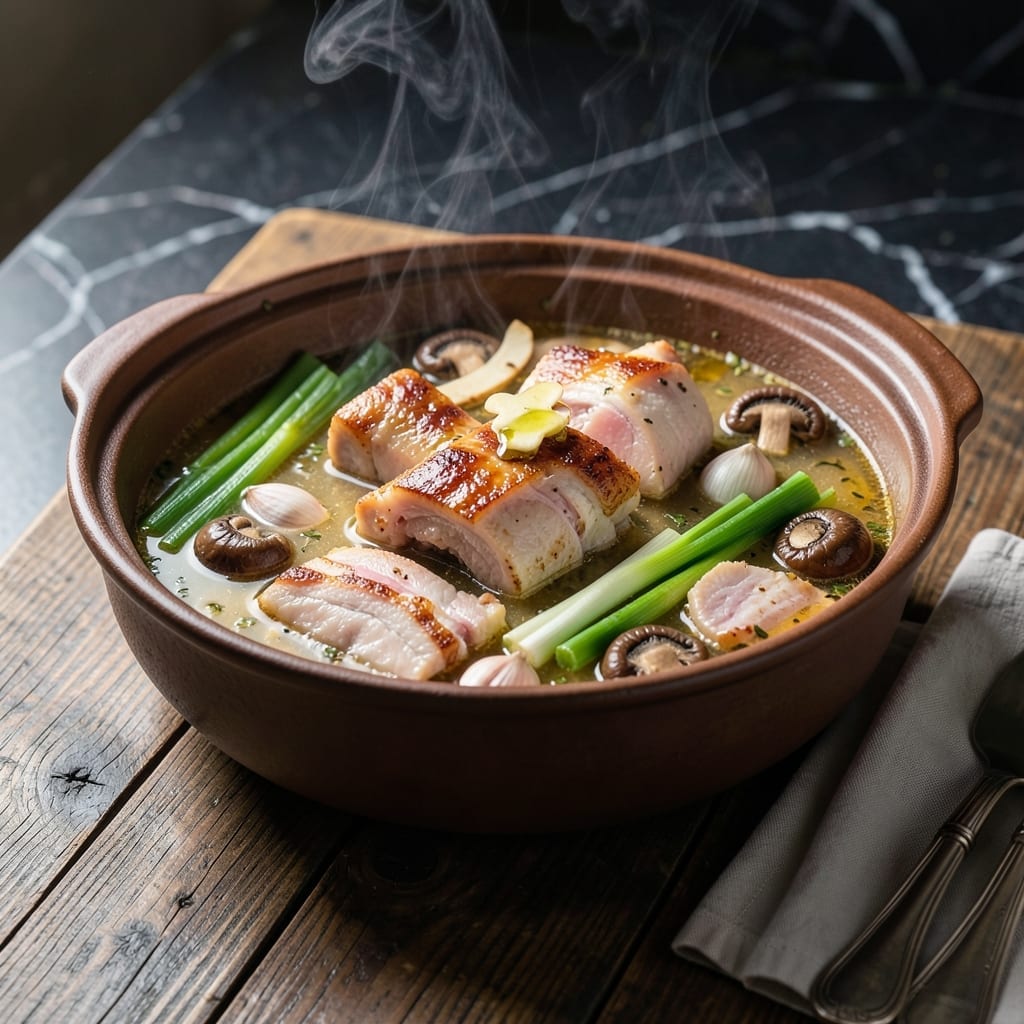
This pork bone hot pot delivers a rich, deeply flavorful broth that transforms simple ingredients into an extraordinary meal. The slow-simmered base extracts maximum gelatin and umami from the bones, creating a velvety foundation for your tabletop cooking.
The secret lies in the preparation—blanching the bones first removes impurities, ensuring a clean, tender result. Aromatics like ginger, garlic, and green onions build complexity while the broth develops its signature depth during the extended cooking process.
At the table, thinly sliced meats and fresh vegetables cook instantly in the bubbling broth, absorbing its intense savory character. The experience is as much about the communal gathering as it is about the tender results.
Perfect for cold weather or special occasions, this dish rewards patience with layers of satisfaction. The broth continues to intensify as you cook, making every subsequent bite more flavorful than the last.
Ingredients for Pork Bone Hot Pot
Rich, velvety broth starts with these carefully selected ingredients for authentic hot pot.
| Ingredient | Amount | Notes |
|---|---|---|
| Pork Neck Bones 🍖 | 2 lb | Blanched then simmered for broth |
| Pork Belly 🥓 | ½ lb | Thinly sliced for cooking |
| Fresh Ginger 🌿 | 1 whole | Sliced, unpeeled preferred |
| Garlic Cloves 🧄 | 8 cloves | Smashed for broth depth |
| Green Onions 🧅 | 4 whole | White and green parts separated |
| Dried Shitake Mushrooms 🍄 | 4 pieces | Rehydrated for umami boost |
| Gochugaru 🌶️ | 1 tbsp | Korean red pepper flakes |
| Soy Sauce 🫒 | ¼ cup | Low-sodium preferred for control |
| Shaoxing Wine 🍶 | ½ cup | Chinese cooking wine essential |
| Napa Cabbage 🥬 | 1 whole | Cut into wide strips |
| Baby Spinach 🌿 | 4 cups | Fresh, washed thoroughly |
| Enoki Mushrooms 🍄 | 8 oz | Trimmed at base, separated |
| Thin Rice Noodles 🍜 | 8 oz | Soaked before cooking |
| Rock Sugar 🍬 | 1 tbsp | Balances saltiness in broth |
| Sesame Oil 🫒 | 1 tbsp | Toasted for finishing aroma |
The pork bones are non-negotiable for that collagen-rich, gelatinous broth. Asian markets typically carry neck bones specifically for hot pot, but most butchers can source them with a day’s notice. Blanching is mandatory—skipping this step results in a cloudy, bitter broth. For the pork belly, ask for skin-on if you want that extra layer of texture. The ginger should be fresh and firm, not shriveled.
No pork belly? Thinly sliced pork shoulder works in a pinch (just trim excess fat). For a vegetarian version, swap in king oyster mushrooms—they mimic the meaty texture surprisingly well. Shaoxing wine can be replaced with dry sherry, but avoid cooking wines with added salt. Gochugaru adds mild heat; omit or reduce for a milder broth. The rock sugar is traditional, but regular granulated dissolves just as well.
Broth can be made 2 days ahead—it actually improves with time. Store bones and aromatics in the liquid; strain before reheating. Thinly sliced meats and veggies should be prepped 1 hour before serving to prevent drying. Leftovers keep 4 days refrigerated, but the noodles are best fresh.
Why You’ll Love This Recipe
- One Pot Wonder: I just dump everything in—pork bones, belly, ginger, garlic—and let it simmer. Minimal cleanup, maximum flavor.
- Deep Umami Bomb: The pork bones and belly create this rich, meaty broth that ginger and garlic punch up. It’s the kind of taste that lingers.
- Weekend Crowd Pleaser: I make this when friends come over. Everyone gathers around, dipping and chatting for hours.
- Budget Stretcher: Pork neck bones are cheap, and a little belly goes a long way. Feeds my family for two days straight.
Step-by-Step Instructions for Pork Bone Hot Pot
Master the technique for a deeply flavorful broth and perfectly tender pork in this classic dish.
Step 1: Blanch and Simmer the Broth Base
Begin by blanching the 2 lb Pork Neck Bones in boiling water for 5 minutes to remove impurities. Drain and rinse thoroughly under cold water. This step ensures a clean, clear broth without any bitter or gamey flavors.
In a large pot, combine the blanched pork neck bones, 1 whole Fresh Ginger (sliced, unpeeled), 8 cloves Garlic Cloves (smashed), 4 whole Green Onions (white parts only), 4 pieces Dried Shitake Mushrooms (rehydrated), 1 tbsp Rock Sugar, 0.25 cup Soy Sauce, and 0.5 cup Shaoxing Wine. Cover with 8 cups of cold water and bring to a boil.
Once boiling, reduce heat to maintain a gentle simmer. Skim off any foam or impurities that rise to the surface. Simmer uncovered for 3-4 hours until the broth develops a rich, milky color and the aroma fills your kitchen. The pork neck bones should be falling apart, indicating all their collagen has dissolved into the broth.
Step 2: Prepare the Accompaniments
While the broth simmers, prepare the remaining ingredients. Thinly slice the 0.5 lb Pork Belly against the grain into ⅛-inch thick pieces—this ensures each slice cooks quickly and remains tender. Store the sliced pork belly in the refrigerator until ready to use.
Cut the 1 whole Napa Cabbage into wide strips, approximately 2 inches wide. Trim the base of the 8 oz Enoki Mushrooms and separate into individual clusters. Wash the 4 cups Baby Spinach thoroughly, draining well to remove excess moisture. Soak the 8 oz Thin Rice Noodles in warm water for 10-15 minutes until pliable but still firm.
Slice the green parts of the 4 whole Green Onions into 2-inch pieces for garnish.
Step 3: Strain and Season the Broth
After simmering, strain the broth through a fine-mesh sieve into a clean pot, pressing gently on the solids to extract all the liquid. Discard the spent bones and aromatics. You should have approximately 6 cups of rich, milky broth.
Return the broth to a simmer and stir in the 1 tbsp Gochugaru for a subtle heat. Taste and adjust seasoning if needed, though the soy sauce and rock sugar should provide a balanced foundation. The broth should be deeply savory with a hint of sweetness and umami from the shiitake mushrooms.
Step 4: Assemble and Cook at the Table
Transfer the hot broth to a portable electric hot pot or a heatproof serving pot. Arrange the sliced pork belly, napa cabbage, enoki mushrooms, baby spinach, and soaked rice noodles on separate plates. Place the green onion pieces in a small bowl.
To cook, add a few pieces of pork belly to the simmering broth—they should cook in 30-45 seconds until the edges turn opaque but the center remains tender. Follow with the napa cabbage and enoki mushrooms, which will soften in 1-2 minutes. Add the rice noodles and baby spinach last, as they require only 30 seconds to heat through.
Finish each serving with a drizzle of 1 tbsp Sesame Oil and a sprinkle of green onions for a fresh, aromatic touch.
Pro Tips For Making Pork Bone Hot Pot
- Blanch the Bones: Parboil the pork neck bones for 5-7 minutes first to remove impurities—I learned this the hard way after skimming scum from my broth for an hour.
- Sear the Belly: Crisp the pork belly slices in a dry pan for 2 minutes per side before adding to the pot. Sounds weird, but it locks in flavor and keeps them from turning mushy.
- Skip the Cold Start: Always start your broth at a rolling boil before adding bones and aromatics. A slow heat-up makes the ginger and garlic taste dull instead of vibrant.
- Smash the Garlic: Lightly crush the garlic cloves with the side of your knife instead of mincing—they’ll infuse the broth without falling apart or burning. My grandmother swore by this, and she was right.
Common Mistakes When Making Perfect Results
Skipping the Blanch
Never skip blanching the 2 lb Pork Neck Bones for 5 minutes in boiling water. This removes blood and impurities that would make your broth cloudy and bitter. I learned this the hard way with my first murky, off-flavored pot. 💡
Overcrowding the Pot
Resist adding all ingredients at once. The 0.5 lb Pork Belly needs space to cook properly—add just 4-5 slices at a time. Too many ingredients drop the broth temperature, leading to uneven cooking and tough meat.
Incorrect Slicing
Slice pork belly ⅛-inch thick against the grain. Thicker slices won’t cook through in 30-45 seconds, while paper-thin pieces fall apart. Use a sharp knife and freeze the belly for 20 minutes first for cleaner cuts.
Rushing the Broth
Simmer the broth for the full 3-4 hours. Less time won’t extract enough collagen from the Pork Neck Bones, leaving your broth thin and lacking that signature velvety mouthfeel. Patience is the secret ingredient here.
Ignoring the Skim
Always skim the foam and impurities from the broth surface during the first 30 minutes of simmering. This keeps the broth clean and allows the true flavors of Shaoxing Wine and Dried Shiitake Mushrooms to shine.
Overcooking Veggies
The Napa Cabbage and Enoki Mushrooms need just 1-2 minutes in the broth. Add them too early and they’ll turn mushy. Save delicate items like Baby Spinach for the very end. 🔥
Nutrition Facts
Frequently Asked Questions
What’s the best cut for the broth?
Pork neck bones are ideal for their high collagen content, creating that rich, velvety texture. Pork femur bones work too but may need 4-5 hours of simmering instead of 3-4 hours.
Can I make this in a slow cooker?
Yes, but use the high setting for 6-8 hours. The low setting won’t extract enough gelatin. Always blanch bones first, even in a slow cooker.
How do I keep the broth clear?
Blanch bones thoroughly, skim foam during first 30 minutes, and never boil vigorously. A gentle simmer prevents cloudiness while deepening flavor.
What if I don’t have Shaoxing wine?
Dry sherry is the best substitute. Avoid cooking wines with added salt. Use 0.5 cup just like the original for balanced depth.

- 6 Oz Chocolate Chip Cookie Recipe: Perfectly Balanced Crispy Edges and Chewy Hearts - September 25, 2026
- 6-Inch Coffee Cake Recipe: Vanilla Bean Swirls and Buttery Streusel Topping - September 25, 2026
- 1 Hour Soup Recipe: Velvety Richness Without the Wait - September 25, 2026