
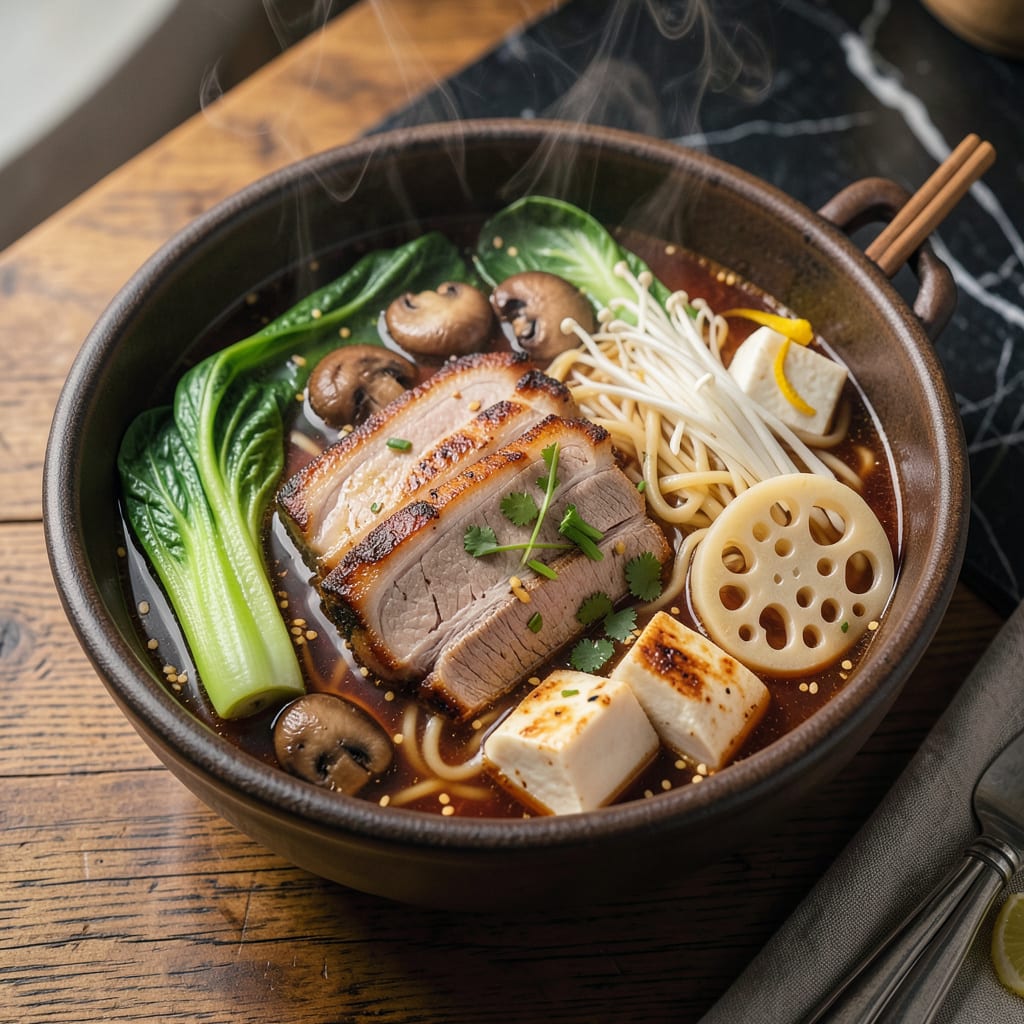
There’s something deeply satisfying about gathering around a bubbling hot pot, where tender slices of pork transform in moments and aromatic broth infuses every ingredient. This recipe delivers the perfect balance of rich, spiced broth and fall-apart tender meat that melts with each bite—no special equipment required.
The beauty lies in its simplicity: thinly sliced pork cooks in seconds, while fresh vegetables absorb the complex flavors of the simmering broth. Whether you prefer a mild, herb-infused base or a fiery chili version, this method ensures restaurant-quality results at home. The communal experience makes it ideal for sharing with friends and family.
Ingredients for Pork Hot Pot
This professional-grade hot pot relies on premium pork, aromatic spices, and a carefully balanced broth for restaurant-quality results at home.
| Ingredient | Amount | Notes |
|---|---|---|
| Pork Shoulder 🥩 | 1 ½ lb | Thinly sliced against the grain |
| Chicken Broth 🍲 | 8 cups | Low-sodium preferred for control |
| Soy Sauce 🫙 | ⅓ cup | Use low-sodium for balance |
| Shaoxing Wine 🍶 | ¼ cup | Dry sherry as substitute |
| Gochujang 🌶️ | 2 tbsp | Korean chili paste for depth |
| Sesame Oil 🫒 | 1 tbsp | Toasted variety for aroma |
| Garlic Cloves 🧄 | 6 cloves | Thinly sliced for even infusion |
| Fresh Ginger 🌿 | 2 tbsp | Julienned for maximum surface area |
| Napa Cabbage 🥬 | 1 whole | Cut into 2-inch pieces |
| Shiitake Mushrooms 🍄 | 8 oz | Fresh, stems removed |
| Baby Bok Choy 🥬 | 4 whole | Halved lengthwise |
| Rice Noodles 🍜 | 8 oz | Dried, soaked before serving |
| Scallions 🧅 | 4 whole | Thinly sliced for garnish |
| Cilantro 🌿 | ½ cup | Fresh leaves, loosely packed |
| Sichuan Peppercorns 🌶️ | 1 tsp | Lightly toasted and ground |
[recipeingredientscaler]
The pork shoulder must be freshly sourced—opt for marbled cuts from reputable butchers or Asian specialty markets for optimal tenderness. Slicing against the grain is non-negotiable; 1/8-inch thickness ensures rapid cooking without toughness. For the broth base, Shaoxing wine and gochujang are foundational—H-Mart or 99 Ranch Market carry authentic versions. The Sichuan peppercorns should be toasted fresh and ground immediately before use to preserve their numbing, citrusy quality.
Substitutions require careful consideration to maintain flavor integrity. Replace Shaoxing wine with dry sherry (equal ratio), but avoid cooking wine—its harshness disrupts balance. Miso paste (1 tbsp) can substitute for gochujang in mild versions, though the depth will differ. For Napa cabbage, savoy cabbage works, but its denser texture requires 30 seconds longer in the broth. Cremini mushrooms may replace shiitake, though their earthiness is less pronounced. Always use low-sodium broth to control seasoning precision.
Broth components (excluding pork) can be prepped 24 hours ahead and refrigerated in sealed containers. The pork slices should be arranged on a tray, covered with plastic wrap, and chilled until ready to cook—no longer than 4 hours to prevent drying. Leftover broth (strained) freezes exceptionally well for up to 3 months; reheat gently to avoid emulsification. Fresh herbs and vegetables are non-freezable—use within 3 days of purchase for peak quality.
Why You’ll Love This Recipe
- Dump-and-Simmer Easy: Honestly, this might be my laziest recipe yet—and I mean that as a compliment. Just toss pork shoulder into broth with soy sauce, Shaoxing wine, and a spoonful of gochujang, then let it do its thing while you ignore it. No babysitting required.
- Umami Bomb Alert: That first bite where the caramelized pork meets the spicy-sweet broth? Ridiculous. The gochujang gives it this deep, fermented heat while the Shaoxing wine adds a brightness that cuts through the richness—like a flavor party in your mouth.
- My Freezer’s Best Friend: I double the batch every time because this reheats like a dream. The pork actually tastes better the next day when it’s had time to soak up all that garlicky broth. (Yes, even the picky teenager in my house will eat leftovers.)
- Cheaper Than Takeout: A pound of pork shoulder plus pantry staples feeds four for what one bowl of restaurant hot pot would cost. And between us? It tastes way more homemade-comforting than anything I’ve ordered in. No mystery ingredients, just real food.
Step-by-Step Instructions for Pork Hot Pot
This method ensures tender pork and perfectly balanced broth with layered Asian flavors.
Step 1: Prepare the Broth Base and Aromatics
In a large pot, combine the 8 cups Chicken Broth, 0.33 cup Soy Sauce, 0.25 cup Shaoxing Wine, 2 tbsp Gochujang, and 1 tbsp Sesame Oil. Bring to a gentle simmer over medium heat, stirring occasionally to fully dissolve the gochujang paste. The broth should develop a rich, reddish hue from the chili paste while maintaining a clear consistency.
While the broth heats, lightly toast the 1 tsp Sichuan Peppercorns in a dry skillet over medium-low heat for 30-45 seconds until fragrant. Immediately transfer to a mortar and grind coarsely. Add the ground peppercorns to the simmering broth along with the 6 cloves Garlic Cloves and 2 tbsp Fresh Ginger. Reduce heat to low and let infuse for 15 minutes to develop the aromatic foundation.
Step 2: Cook the Pork Shoulder to Tender Perfection
Add the 1.5 lb Pork Shoulder slices to the simmering broth in a single layer. The thin slices should be fully submerged for even cooking. Maintain a gentle simmer at low heat for 20-25 minutes, skimming any foam that rises to the surface during the first 5 minutes of cooking.
The pork is ready when it transforms from pink to opaque white and becomes fork-tender. Test by piercing a slice with a fork – it should slide in with minimal resistance. At this stage, the broth will have taken on a deeper color and richer body from the pork’s collagen. Remove the pot from heat and let the pork rest in the broth while preparing the vegetables.
Step 3: Blanch the Vegetables for Optimal Texture
Return the broth to a gentle simmer. Add the 8 oz Shiitake Mushrooms and 1 whole Napa Cabbage pieces first, as they require slightly longer cooking. Simmer for 3 minutes until the cabbage edges soften but retain some crispness. The mushrooms should be tender yet still hold their shape.
Add the 4 whole Baby Bok Choy halves, cut side down, and cook for an additional 2 minutes. The bok choy is done when the stems become tender but the leaves remain vibrant green. Avoid overcooking – the vegetables should maintain some bite to contrast with the tender pork. Transfer all vegetables to a serving platter using a slotted spoon.
Step 4: Assemble and Serve with Rice Noodles
Prepare the 8 oz Rice Noodles according to package directions, typically soaking in hot water for 5-7 minutes until pliable but still slightly firm. Drain and divide among four deep bowls. Arrange the cooked pork slices and blanched vegetables over the noodles in each bowl.
Ladle the hot, aromatic broth over the ingredients in each bowl, ensuring an equal distribution of pork and vegetables. The broth should completely submerge the noodles. Garnish each serving with 4 whole Scallions and 0.5 cup Cilantro. The scallions add a fresh allium note while the cilantro provides a bright, herbal finish to balance the rich broth.
Make-Ahead Tips for This Recipe
Broth Prep Ahead
You can prepare the entire broth base 24 hours in advance for deeper flavor development. Combine the chicken broth, soy sauce, Shaoxing wine, gochujang, and sesame oil in a pot, then simmer with the garlic, ginger, and Sichuan peppercorns for 15 minutes. Strain and refrigerate in an airtight container—the flavors will intensify overnight. 🌡️
Pork Prep Strategy
Slice the pork shoulder against the grain into 1/8-inch pieces and arrange on a tray. Cover tightly with plastic wrap and refrigerate for up to 4 hours before cooking. For longer storage, freeze the slices in a single layer on a tray, then transfer to a freezer bag for up to 2 weeks. Thaw in the fridge before using.
Vegetable Prep
Wash and cut the Napa cabbage, shiitake mushrooms, and baby bok choy up to 8 hours ahead. Store each in separate ziplock bags with paper towels to absorb moisture. Keep the scallions and cilantro whole and unwashed until serving—they’ll stay fresher longer.
Noodle Prep Hack
Soak the rice noodles in cold water for 30 minutes before draining and refrigerating in a sealed container. They’ll soften slightly but won’t overcook when added to the hot broth later. This trick saves time and prevents mushy noodles—trust me, it’s a game-changer.
Day-Of Assembly
On cooking day, reheat the broth gently over medium-low heat while you arrange the prepped pork, vegetables, and noodles on serving platters. The broth will reach the perfect simmering temperature just as your guests arrive. This approach keeps everything fresh and minimizes last-minute stress. 💡
Leftover Broth
Strain and refrigerate any leftover broth in a glass jar for up to 3 days, or freeze for 3 months. It’s perfect for quick noodle soups or stir-fry sauces. I always make extra—it’s too flavorful to waste!
Nutrition Facts
Frequently Asked Questions
What’s the best cut of pork for hot pot?
Pork shoulder is ideal for its perfect fat-to-meat ratio, creating tender slices that cook quickly. For leaner options, try pork loin, but slice it extra thin (1/8-inch) to prevent toughness. Always cut against the grain for maximum tenderness.
Can I make this without Shaoxing wine?
Yes! Substitute with equal parts dry sherry or pale dry vermouth. Avoid cooking wine—its harsh flavor disrupts the broth’s balance. For a non-alcoholic version, use 1 tbsp rice vinegar plus 1 tsp sugar to mimic the acidity and depth.
How do I keep the broth hot during serving?
Use a portable butane stove or electric hot plate at the table. For stovetop-free setups, preheat ceramic or cast-iron pots in a 200°F oven, then transfer to an insulated trivet. The broth stays piping hot for 30-45 minutes this way.
What vegetables work best for hot pot?
Leafy greens like Napa cabbage and bok choy cook quickly and absorb flavors well. Heartier options include lotus root (for crunch) or taro (for creaminess). Avoid watery veggies like cucumbers—they dilute the broth’s richness.
Can I prepare this for just two people?
Easily! Halve all ingredients except the broth—use 4 cups instead of 8 for proper immersion. Freeze leftover broth in ice cube trays for quick future meals. The pork and veggies scale perfectly, just reduce cooking times slightly.

- 8 Bean Soup Recipe Crock Pot: Hearty Vegetable Medley in One Pot - September 25, 2026
- 4C Bread Crumbs Meatballs Recipe: Crispy Crust and Juicy Centers - September 25, 2026
- 6 Oz Chocolate Chip Cookie Recipe: Perfectly Balanced Crispy Edges and Chewy Hearts - September 25, 2026