
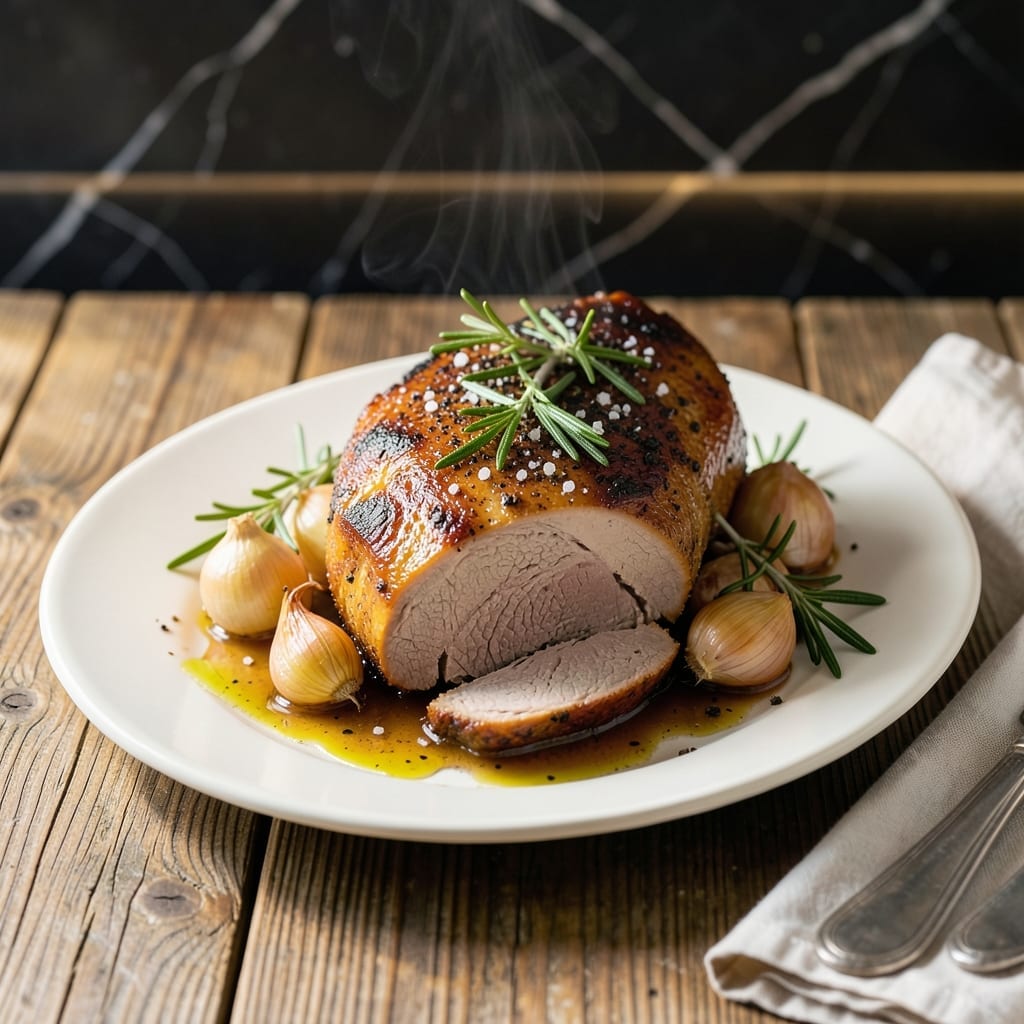
This pork loin pot roast transforms a humble cut into a centerpiece dish with minimal effort and maximum flavor.
The slow cooking process allows the meat to become fall-apart tender while the herbs infuse every bite with aromatic depth. I’ve refined this method to ensure the pork stays juicy and the vegetables absorb all the savory goodness.
With just a few hours in the oven, you’ll have a restaurant-quality meal that fills your kitchen with an irresistible aroma. The natural juices create a rich, velvety sauce that’s perfect for soaking up with crusty bread.
Ideal for Sunday suppers or special occasions, this dish delivers consistent results every time. Here’s how to make it.
Ingredients for Pork Loin Pot Roast
Simple ingredients for a show-stopping slow-cooked pork loin pot roast with herbs and vegetables.
| Ingredient | Amount | Notes |
|---|---|---|
| Pork Loin 🥩 | 2 lb | Boneless, trimmed of fat |
| Olive Oil 🫒 | 2 tbsp | Divided for searing and sauce |
| Kosher Salt 🧂 | 1 ½ tsp | Diamond Crystal preferred |
| Black Pepper 🌶️ | 1 tsp | Freshly ground |
| Garlic Cloves 🧄 | 6 cloves | Minced for deep flavor |
| Fresh Rosemary 🌿 | 2 tbsp | Chopped, stems removed |
| Fresh Thyme 🍃 | 2 tbsp | Leaves stripped from stems |
| Yellow Onion 🧅 | 1 whole | Large, roughly chopped |
| Carrots 🥕 | 3 whole | Peeled, cut into chunks |
| Yukon Gold Potatoes 🥔 | 1 ½ lb | Cut into large pieces |
| Low-Sodium Chicken Broth 🍲 | 2 cups | Or substitute vegetable broth |
| Dry White Wine 🍷 | ½ cup | Optional for deglazing |
| Tomato Paste 🍅 | 2 tbsp | For richness and depth |
| Worcestershire Sauce 💧 | 1 tbsp | Adds umami complexity |
| Bay Leaf 🍃 | 1 whole | Dried or fresh |
The pork loin is the star here. Look for a center-cut piece with even thickness (about 2-3 inches) so it cooks uniformly. Most grocery stores carry it pre-trimmed, but if you grab a whole loin, ask the butcher to remove the fat cap. I usually pick mine up at Whole Foods or Costco—both have high-quality cuts. Avoid anything labeled ‘pork shoulder’—that’s a different texture entirely.
White wine not in your pantry? Substitute apple cider or extra broth—you’ll miss the acidity but still get great flavor. No fresh herbs? Dried rosemary and thyme work at one-third the amount. For the potatoes, russets are fine too (they hold shape better but lack the buttery texture). Skip the tomato paste if you must, but the dish won’t have the same depth.
This tastes even better the next day. Store leftovers in an airtight container for up to 4 days in the fridge, or freeze for 3 months. The sauce thickens as it cools—just reheat gently with a splash of broth or water to loosen it up. Perfect for meal prep.
Why You’ll Love This Recipe
- One Pan Wonder: I just season the pork loin, sear it, and let the oven do the rest—minimal dishes, maximum flavor.
- Garlic Infused: Those whole garlic cloves roast into sweet, mellow bites that melt into every forkful.
- Feeds a Crowd: Honestly, I make this for Sunday dinner and everyone—even the picky eaters—goes back for seconds.
- Leftovers Magic: The next day’s sandwiches with the sliced pork and pan juices? Even better than the first meal.
Step-by-Step Instructions for Pork Loin Pot Roast
This method turns simple ingredients into a fall-apart tender roast with rich, herb-infused flavor.
Step 1: Sear the Pork Loin for Deep Flavor
Pat the 2 lb Pork Loin dry with paper towels, then season generously with the 1.5 tsp Kosher Salt and 1 tsp Black Pepper on all sides. I always take the extra minute to really press the seasoning into the meat so it adheres well during cooking.
Heat 1 tbsp Olive Oil in a large Dutch oven over medium-high heat until shimmering. Add the pork loin and sear for 4-5 minutes per side until deep golden brown on all sides. This creates a flavorful crust that will translate into rich, complex notes in your final dish.
Remove the pork and set aside. Don’t wipe out the pot—those browned bits are pure flavor for the sauce.
Step 2: Sauté Aromatics and Build the Base
In the same pot, add the remaining 1 tbsp Olive Oil if needed. Toss in the 1 whole Yellow Onion, 3 whole Carrots, 6 cloves Garlic Cloves, 2 tbsp Fresh Rosemary, and 2 tbsp Fresh Thyme. Cook over medium heat for 5 minutes, stirring occasionally, until the onions start to soften and the herbs become fragrant.
Stir in the 2 tbsp Tomato Paste, 1 tbsp Worcestershire Sauce, and 1 whole Bay Leaf. Cook for 1-2 minutes until the tomato paste darkens slightly—this deepens its flavor and prevents a raw taste in your finished sauce.
Step 3: Deglaze and Add Liquids
Pour in the 0.5 cup Dry White Wine and scrape up all the browned bits from the bottom of the pot with a wooden spoon. Let it simmer for 2-3 minutes until the liquid reduces by about half. This deglazing step is crucial for capturing all that caramelized flavor.
Add the 2 cups Low-Sodium Chicken Broth and 1.5 lb Yukon Gold Potatoes. Stir to combine, then return the seared pork loin to the pot, nestling it among the potatoes and other vegetables. The liquid should come about halfway up the pork.
Step 4: Slow Cook to Perfection
Bring the mixture to a gentle simmer, then cover the pot and transfer it to a preheated 325°F oven. Cook for 2 to 2.5 hours, turning the pork loin once halfway through, until the meat is fork-tender and the internal temperature reaches 195-200°F.
I check the pork at the 2-hour mark—if it’s not quite tender yet, give it more time. The low and slow cooking method is what transforms this cut into a melt-in-your-mouth experience. The potatoes should be tender and soaking up all the herb-infused liquid by now.
Step 5: Rest and Serve
Carefully remove the pork loin from the pot and transfer it to a cutting board. Let it rest for 10-15 minutes before slicing—this ensures all the juices redistribute for maximum tenderness.
Meanwhile, skim any excess fat from the surface of the cooking liquid if desired. The vegetables and potatoes are ready to serve as-is, bathed in that rich, herbaceous sauce. Slice the pork against the grain and arrange it over the vegetables. Spoon some of the cooking liquid over the top for an extra burst of flavor.
Pro Tips For Making Pork Loin Pot Roast
- Sear it hard: Get your pan screaming hot before adding the pork loin—I learned this the hard way after too many pale, sad roasts. That deep brown crust is what builds real flavor in the pot.
- Score the fat cap: Cut 1/4-inch slits into the fat every inch or so so the salt, pepper, and garlic actually penetrate. Sounds fussy, but it makes a real difference in seasoning the meat.
- Skip the overcrowding: If your pot is too small, the pork will steam instead of sear. Use a heavy pot that gives the loin at least an inch of space on all sides.
- Rest before slicing: Tent the roast with foil and give it a solid 10 minutes—yes, even if you’re starving. I used to rush this and wondered why my pork was dry and the juices ran all over the cutting board.
Regional Styles of This pork loin pot roast
New England Style
In New England, I love adding apple cider instead of white wine for deglazing, which gives the dish a subtle sweetness that complements the pork beautifully. I also include 1 chopped apple and 1 tsp ground cinnamon for warmth. It’s a nod to the region’s orchard abundance. 🍏
Southern Comfort
Down South, this dish often includes 1 tbsp smoked paprika and a splash of apple cider vinegar for tang. I’ve seen recipes with 1 diced bell pepper added to the aromatics, giving it a slightly sweeter, more robust flavor profile that’s distinctly Southern.
French Influence
A French twist involves adding 4 oz mushrooms and 2 sliced leeks to the pot. I also swap the fresh herbs for herbes de Provence—a blend that includes lavender and savory. The result is elegant, with a fragrant depth that feels luxurious.
German Tradition
For a German approach, I use dark beer (like a Dunkel) instead of wine and add 2 tbsp Dijon mustard to the sauce. It’s common to include 1 lb sauerkraut for tangy contrast, making the dish heartier and perfect for colder months. ❄️
Asian Fusion
An Asian-inspired version replaces the tomato paste with 2 tbsp hoisin sauce and adds 1 tbsp grated ginger and 2 star anise pods for complexity. I also use shaoxing wine for deglazing, giving it a rich, umami-packed flavor.
Mediterranean Touch
To bring Mediterranean flair, I add ½ cup kalamata olives and 1 tbsp capers for briny depth. Swap the potatoes for 1 lb fingerling potatoes and include 1 preserved lemon for a bright, citrusy finish that’s unforgettable. 💫
Nutrition Facts
Frequently Asked Questions
What’s the ideal internal temperature for cooked pork loin?
For pot roast, aim for 195-200°F internally. This higher temp ensures fall-apart tenderness. Use a meat thermometer for accuracy.
Can I use a slow cooker instead of an oven?
Yes! Sear the pork first, then transfer everything to a slow cooker. Cook on low for 6-8 hours or high for 4-5 hours until tender.
Why is my pork loin dry?
Overcooking or insufficient liquid causes dryness. Keep the liquid halfway up the meat and check at 2 hours. Always rest before slicing.
Can I substitute pork shoulder for loin?
Not recommended. Shoulder has more fat and connective tissue, requiring longer cooking. Loin stays leaner and more delicate in pot roasts.

- 6 Oz Chocolate Chip Cookie Recipe: Perfectly Balanced Crispy Edges and Chewy Hearts - September 25, 2026
- 6-Inch Coffee Cake Recipe: Vanilla Bean Swirls and Buttery Streusel Topping - September 25, 2026
- 1 Hour Soup Recipe: Velvety Richness Without the Wait - September 25, 2026