
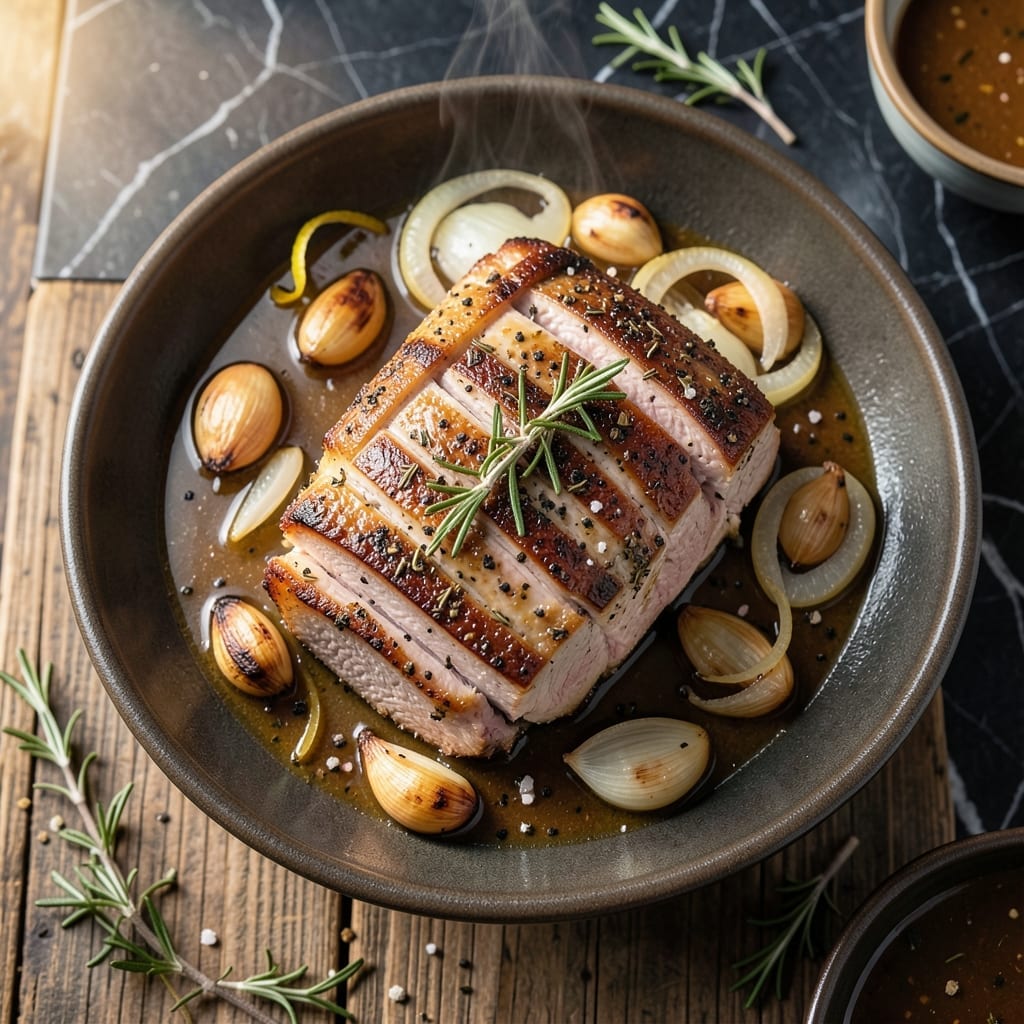
This herb-crusted pork loin delivers restaurant-quality results with almost no effort. The slow cooker does all the work, transforming a simple cut into a tender, flavorful centerpiece for any meal.
I’ve perfected the seasoning blend to create a crust that stays intact while the meat cooks low and slow. The herbs infuse every bite, and the natural juices keep the pork incredibly moist.
What you’ll get is a succulent roast that falls apart at the touch of a fork, with a fragrant herb crust that’s as impressive as it is delicious. It’s ideal for family dinners or special occasions.
Serve with roasted vegetables or mashed potatoes to soak up every last drop of flavor. Here’s how to make it.
Ingredients for Pork Loin Roast Crock Pot
Simple ingredients transform into a tender, herb-crusted pork loin with minimal effort.
| Ingredient | Amount | Notes |
|---|---|---|
| Pork Loin 🥩 | 2 ½ lb | Boneless center-cut preferred |
| Olive Oil 🫒 | 2 tbsp | Divided for searing and herbs |
| Dried Rosemary 🌿 | 2 tsp | Crushed to release flavor |
| Dried Thyme 🍃 | 2 tsp | Rubbed between fingers |
| Garlic Powder 🧄 | 1 ½ tsp | Not garlic salt |
| Onion Powder 🧅 | 1 ½ tsp | Fresh ground preferred |
| Kosher Salt 🧂 | 2 tsp | Diamond Crystal preferred |
| Black Pepper 🌶️ | 1 tsp | Freshly ground |
| Chicken Broth 💧 | ½ cup | Low-sodium preferred |
| Dijon Mustard 🟡 | 2 tbsp | Smooth, not whole grain |
| Fresh Sage Leaves 🌿 | 8 pieces | Chopped, for crust |
| Honey 🍯 | 1 tbsp | For glaze finish |
| Apple Cider Vinegar 🍏 | 1 tbsp | Balances richness |
The pork loin quality matters most here. Costco has great center-cut boneless roasts at good prices, or ask your butcher for a well-marbled piece. The herbs—rosemary, thyme, sage—should be fresh if possible (I grab mine from Trader Joe’s), but dried works in a pinch. Look for vibrant color and strong aroma in dried herbs; if they smell like nothing, they’ll taste like nothing.
No fresh sage? Dried sage at half the amount works fine. Out of Dijon? Whole grain mustard adds texture but works—just strain if you want it smooth. For the broth, vegetable broth swaps in easily, or even water with a bouillon cube. The honey glaze can be skipped, but it adds that restaurant-quality finish (maple syrup works too for a different flavor).
Leftovers keep beautifully. Store in the fridge for up to 4 days or freeze for 3 months. Reheat gently in the oven with a splash of broth to keep it moist. The herb crust holds up surprisingly well to freezing.
Why You’ll Love This Recipe
- Set and Forget: I toss everything in the crock pot before work and come home to a ready-to-serve meal.
- Herb-Crusted Perfection: The rosemary and thyme give the pork loin this incredible aromatic kick that fills the whole house.
- Feeds the Crew: One roast makes enough for Sunday dinner plus leftovers for sandwiches all week.
- Budget Stretcher: Pork loin is affordable, and with just five ingredients, I’m serving a crowd without breaking the bank.
Step-by-Step Instructions for Herb-Crusted Pork Loin Roast
Here’s the method I use for tender, flavorful results every single time.
Step 1: Create the Herb Crust
In a small bowl, combine the 2 tsp Dried Rosemary, 2 tsp Dried Thyme, 1.5 tsp Garlic Powder, 1.5 tsp Onion Powder, 2 tsp Kosher Salt, and 1 tsp Black Pepper. I crush the rosemary and thyme between my fingers to release their aromatic oils.
Rub 1 tbsp Olive Oil all over the 2.5 lb Pork Loin, then press the herb mixture evenly onto every surface. This creates a flavorful crust that will infuse the meat as it cooks. Don’t skip this step—it’s what makes this dish special.
Step 2: Sear the Pork Loin
Heat the remaining 1 tbsp Olive Oil in a large skillet over medium-high heat. When the oil shimmers, add the pork loin and sear on all sides for 2-3 minutes per side until golden brown. You’ll hear a satisfying sizzle when it hits the pan.
This searing step locks in juices and creates a beautiful crust. I like to add the 8 pieces Fresh Sage Leaves to the pan during the last minute of searing to infuse their flavor into the oil and meat. Remove from heat when all sides are evenly browned.
Step 3: Prepare the Slow Cooker
Place the seared pork loin in your slow cooker. In a small bowl, whisk together the 0.5 cup Chicken Broth, 2 tbsp Dijon Mustard, 1 tbsp Honey, and 1 tbsp Apple Cider Vinegar until smooth. The honey and vinegar balance each other perfectly.
Pour this mixture over the pork loin in the slow cooker. I make sure to spoon some of the mixture over the top to coat the herb crust. This liquid will create steam that keeps the meat moist during the long cooking process.
Step 4: Slow Cook to Perfection
Cover the slow cooker and cook on low heat for 6-7 hours or on high heat for 3-4 hours. The pork is done when an instant-read thermometer inserted into the thickest part reads 145°F.
Resist the temptation to lift the lid during cooking—every time you do, you add 20-30 minutes to the cooking time. The meat should be tender enough to pull apart easily with a fork when done. The herb crust will have transformed into a flavorful bark.
Let the pork loin rest in the slow cooker with the lid on for 15 minutes before slicing. This allows the juices to redistribute throughout the meat, ensuring every bite is moist and flavorful.
Pro Tips For Making Pork Loin Roast Crock Pot
- Sear First: Brown the pork loin in olive oil for 2-3 minutes per side before adding it to the crock pot. I learned this the hard way—skipping this step leaves the roast pale and lacking depth.
- Trim the Fat: Remove any large fat caps from the pork loin before seasoning. Sounds tedious, but it prevents a greasy finish and lets the rosemary and thyme actually stick.
- Don’t Drown It: Use just enough liquid (about ½ cup) to deglaze the searing pan—adding too much to the crock pot steams the meat instead of roasting it.
- Rest Before Slicing: Give the pork loin 10 minutes under foil after cooking. After burning three batches, I finally figured out this is the only way to keep the juices from running all over the cutting board.
Dietary Considerations for These Flavors
Gluten-Free Friendly
This recipe is naturally gluten-free as written, making it perfect for anyone avoiding gluten. Just double-check your Dijon mustard and chicken broth labels—some brands add wheat-based thickeners. I always use Annie’s Dijon and Pacific Foods broth for peace of mind. 💡
Low-Carb Option
With only 8g net carbs per serving (mostly from honey), this fits well into low-carb diets. To reduce further, skip the honey glaze or replace it with 1 tbsp sugar-free maple syrup. The herbs and mustard provide plenty of flavor without added carbs.
Dairy-Free By Default
There are no dairy ingredients in this recipe, so it’s safe for lactose-intolerant diners. The olive oil and natural pork juices create a moist result without butter or cream. Even the herb crust stays crisp without any dairy binders.
Nut Allergy Safe
This dish contains no nuts or nut-derived ingredients. However, if you’re highly sensitive, check your Dijon mustard for potential cross-contamination warnings. Most major brands like Grey Poupon are nut-free, but it’s always wise to verify.
Lower Sodium Version
To reduce sodium, use low-sodium chicken broth and cut the kosher salt to 1 tsp. The Dijon mustard and herbs still provide plenty of flavor. I find the dish still tastes rich and satisfying with these adjustments. 💪
Paleo Adaptation
For paleo compliance, ensure your Dijon mustard has no added sugar. The rest of the ingredients—pork, herbs, olive oil, broth—are all paleo-approved. The slow cooking method aligns perfectly with paleo’s emphasis on simple, whole-food preparations.
Nutrition Facts
Frequently Asked Questions
Can I use a pork shoulder instead?
Pork shoulder works but has more fat and connective tissue. It needs 8-9 hours on low to become tender. The texture will be different—more shreddable than sliceable. Stick with loin for the best results.
Do I need to sear the pork first?
Searing is highly recommended for flavor development. It creates a beautiful crust and locks in juices. If short on time, skip it, but expect less depth in the final dish.
Why is my pork loin dry?
Overcooking is the main culprit. Always use a meat thermometer and remove at 145°F. Also, ensure there’s enough liquid in the slow cooker and don’t lift the lid during cooking.
Can I add vegetables to cook with it?
Yes! Hearty veggies like potatoes, carrots, or onions work well. Add them to the slow cooker with the pork. They’ll absorb the delicious flavors while cooking.

- 6 Oz Chocolate Chip Cookie Recipe: Perfectly Balanced Crispy Edges and Chewy Hearts - September 25, 2026
- 6-Inch Coffee Cake Recipe: Vanilla Bean Swirls and Buttery Streusel Topping - September 25, 2026
- 1 Hour Soup Recipe: Velvety Richness Without the Wait - September 25, 2026