
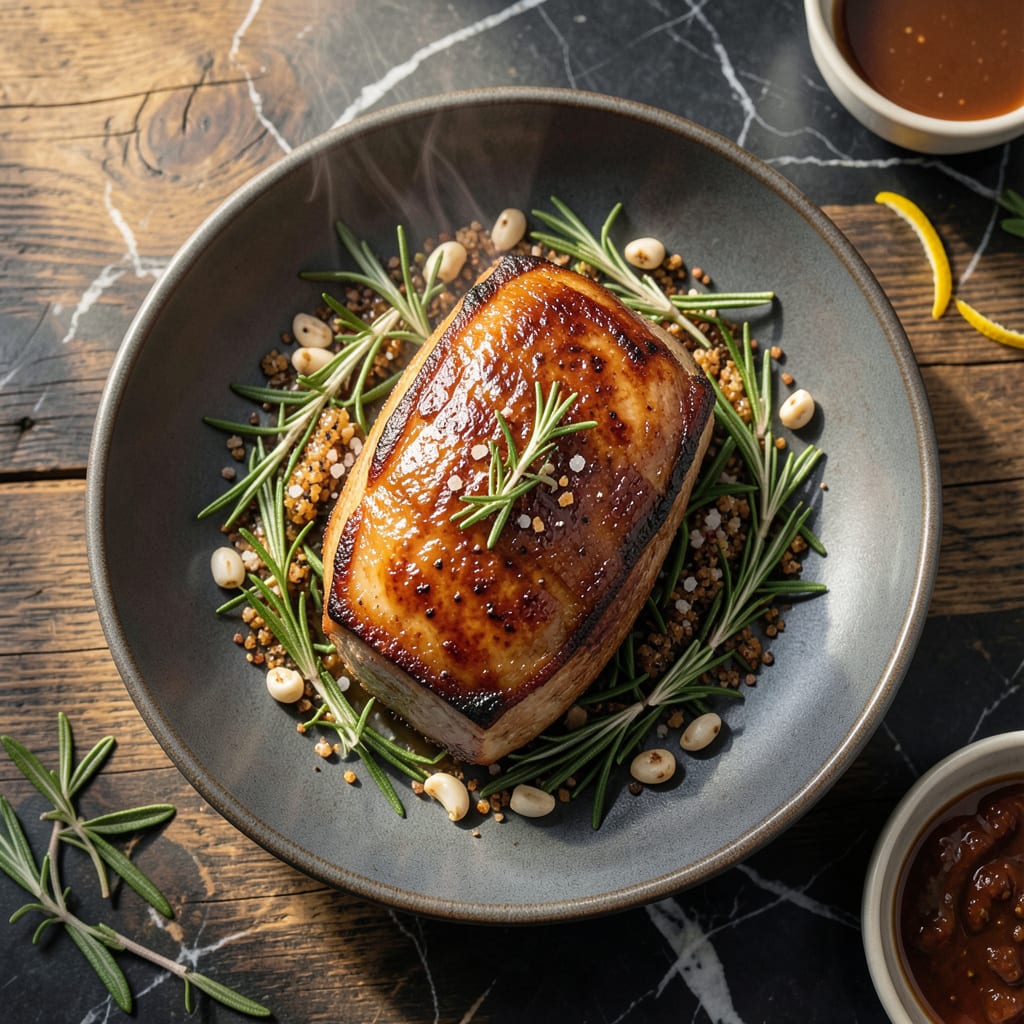
This herb-rubbed pork loin delivers a juicy roast with perfectly crispy fat cap every time. The key is starting with a high-heat sear to render the fat, then finishing low and slow for tender meat.
With a simple spice blend and precise oven temperatures, this method guarantees moist, flavorful pork with minimal effort. The fat cap bastes the meat naturally as it roasts.
Ingredients for Pork Loin with Fat Cap
A simple herb rub and quality pork loin are all you need for this juicy roast with crispy fat cap.
| Ingredient | Amount | Notes |
|---|---|---|
| Pork Loin with Fat Cap 🥩 | 3 lb | Bone-in or boneless, skin-on |
| Kosher Salt 🧂 | 1 tbsp | Diamond Crystal preferred |
| Black Pepper 🌶️ | 1 tsp | Freshly ground |
| Garlic Cloves 🧄 | 4 cloves | Minced finely |
| Fresh Rosemary 🌿 | 2 tbsp | Chopped, stems removed |
| Fresh Thyme 🍃 | 2 tbsp | Chopped, stems removed |
| Olive Oil 🫒 | 2 tbsp | Extra-virgin for richness |
| Dijon Mustard 🟡 | 1 tbsp | Smooth, not whole grain |
| Paprika 🌶️ | 1 tsp | Sweet or smoked variety |
| Dried Oregano 🍃 | 1 tsp | Mediterranean variety preferred |
| Red Wine Vinegar 🍷 | 1 tbsp | For acidity balance |
| Brown Sugar 🟤 | 1 tbsp | Light or dark, packed |
The pork loin quality is paramount. Look for a center-cut roast with a thick fat cap—this ensures even cooking and that coveted crispy exterior. Whole Foods or Costco typically carry excellent options with consistent marbling. Bone-in roasts add depth of flavor, but boneless works equally well if that’s what’s available. Always pat the meat dry before seasoning to ensure a proper sear.
No fresh rosemary or thyme? Dried herbs at one-third the amount will suffice, though fresh provides superior aroma. If Dijon mustard isn’t on hand, whole-grain mustard works but may leave visible seeds. For a sweeter glaze, swap brown sugar for maple syrup. The vinegar can be substituted with apple cider vinegar (same quantity) if that’s what you have.
The herb rub can be prepared 1 day ahead and stored in the fridge. The roasted pork keeps well for 4-5 days refrigerated or up to 3 months frozen. Slice only before serving to retain moisture in the meat.
Why You’ll Love This Recipe
- Minimal Effort: I just rub the pork with salt, pepper, garlic, and rosemary—no marinating, no fuss.
- Crispy & Juicy: That fat cap renders down into the meat, keeping every bite tender with a salty, herby crust.
- Sunday or Tuesday: Honestly, it works for a fancy dinner or a quick weeknight meal with whatever sides I’ve got.
- Leftovers for Days: One roast feeds us for two meals, and the slices reheat beautifully for sandwiches.
Step-by-Step Instructions for Herb-Rubbed Pork Loin With Fat Cap
Master these steps to achieve perfectly seasoned, juicy roasted pork with a caramelized crust.
Step 1: Prepare the Herb Rub
In a small bowl, combine the 1 tbsp Kosher Salt, 1 tsp Black Pepper, minced 4 cloves Garlic Cloves, 2 tbsp Fresh Rosemary, 2 tbsp Fresh Thyme, 1 tsp Paprika, 1 tsp Dried Oregano, 1 tbsp Red Wine Vinegar, and 1 tbsp Brown Sugar. The mixture should resemble a thick, aromatic paste.
I use the back of a spoon to press the herbs into the salt and vinegar, releasing their essential oils. This ensures every bite carries maximum flavor. The vinegar and brown sugar will create a beautiful crust while keeping the meat tender.
Step 2: Score and Season the Pork Loin
Pat the 3 lb Pork Loin with Fat Cap dry with paper towels, focusing on the fat cap surface. Using a sharp knife, score the fat cap in a crosshatch pattern, cutting about ¼ inch deep without piercing the meat. This allows the rub to penetrate and helps render the fat during roasting.
Rub the herb mixture all over the pork, pressing it into the scored fat cap and all surfaces. The meat should be completely coated with a visible layer of seasoning. Drizzle with 2 tbsp Olive Oil and spread it evenly, then brush with 1 tbsp Dijon Mustard for additional adhesion and depth of flavor.
Step 3: Sear for Flavor Foundation
Heat a large oven-safe skillet or roasting pan over medium-high heat. When hot, add the pork loin fat cap-side down. Sear undisturbed for 4-5 minutes until the fat begins to render and the surface develops a deep golden brown crust.
Flip the loin and sear the remaining sides for 2-3 minutes each. The goal is an even, caramelized exterior that will enhance the roasting process. Remove from heat and transfer the pan to a 375°F preheated oven.
Step 4: Roast to Juicy Perfection
Roast the pork loin in the oven for 50-60 minutes, or until the internal temperature reaches 145°F in the thickest part. I check the temperature at the 45-minute mark to avoid overcooking.
Baste the loin with its juices every 15-20 minutes during roasting. This keeps the surface moist and promotes even browning. The fat cap should be crisp and golden, while the meat remains tender and juicy throughout.
Step 5: Rest and Serve
Transfer the pork loin to a cutting board and tent loosely with foil. Let it rest for 15 minutes before slicing. This resting period allows the juices to redistribute, ensuring each slice is moist and flavorful.
Slice against the grain into ½-inch thick pieces. The interior should be slightly pink and the exterior beautifully caramelized. Serve immediately with pan juices spooned over the top for maximum flavor impact.
Pro Tips For Making Pork Loin With Fat Cap
- Score the Fat: Cut shallow slits in the fat cap every ½ inch to help it render and crisp—skip this and you’ll get a chewy layer instead of crackling.
- Room Temp Start: Pull the pork loin out 30-45 minutes before cooking so it cooks more evenly; I learned this the hard way after too many dry edges.
- Don’t Over-Rub: Press the garlic, rosemary, salt, and pepper into the meat lightly—mashing too hard bruises the pork and makes the seasoning bitter.
- Rest Before Slicing: Tent it with foil and let it rest 10-15 minutes after roasting, or all those juices will end up on the cutting board instead of in the meat.
Make-Ahead Tips for This Dish
Prep the Rub
Mix the herb rub up to 24 hours ahead and store in an airtight container. This lets the flavors meld—just press the herbs into the salt and vinegar before using. I often prep this the night before to save time. 💡
Dry Brine Option
Pat the 3 lb Pork Loin with Fat Cap dry, then apply the rub and refrigerate uncovered for 12-24 hours. This dry brine method enhances flavor penetration and ensures a crispier fat cap. Keep it on a wire rack over a tray to allow airflow.
Partial Cooking
Sear the pork loin as directed, then roast for only 30 minutes at 375°F. Cool, wrap tightly in foil, and refrigerate for up to 2 days. Finish roasting just before serving—add 20-30 minutes to the usual time.
Freezing Uncooked
Rub the pork loin and wrap it tightly in plastic wrap, then foil. Freeze for up to 3 months. Thaw overnight in the fridge before cooking, then sear and roast as normal. I label mine with the date to track freshness.
Reheating Slices
Store cooked slices in the fridge for up to 4 days. Reheat in a skillet over medium-low heat with a splash of water or broth, covered, for 5-7 minutes. This keeps the meat moist and revives the crispy fat cap. 🔥
Cold Serving
For sandwiches or salads, chill slices completely before storing. They’ll keep for 5 days refrigerated. I love using leftovers in a panini with Dijon mustard and arugula for a quick lunch.
Nutrition Facts
Frequently Asked Questions
Why score the fat cap before cooking?
Scoring allows the rub to penetrate deeper and helps render the fat evenly during cooking. It also creates more surface area for a crispier finish.
What internal temperature ensures juicy pork?
Remove from heat when the thickest part reaches 145°F. This guarantees tender, moist meat with a slight pink center. Always use a meat thermometer for accuracy.
Can I use dried herbs instead of fresh?
Yes, use 1/3 the amount of dried herbs. While fresh offers superior aroma, dried works well in a pinch. Just rehydrate them slightly in the vinegar.
How do I prevent the fat cap from becoming soggy?
Start with a high-heat sear fat-side down and avoid covering while roasting. Baste frequently during cooking to maintain crispness.

- 5 Spice Roast Chicken Recipe: Fragrant Whole Bird With Crispy Golden Skin - September 25, 2026
- 1.5 Pound White Bread Machine Recipe: Hands-Off Artisan Loaf With Golden Crust - September 25, 2026
- 11×15 Sheet Cake Recipe: Triple-Layered Vanilla Bean Bliss - September 25, 2026