
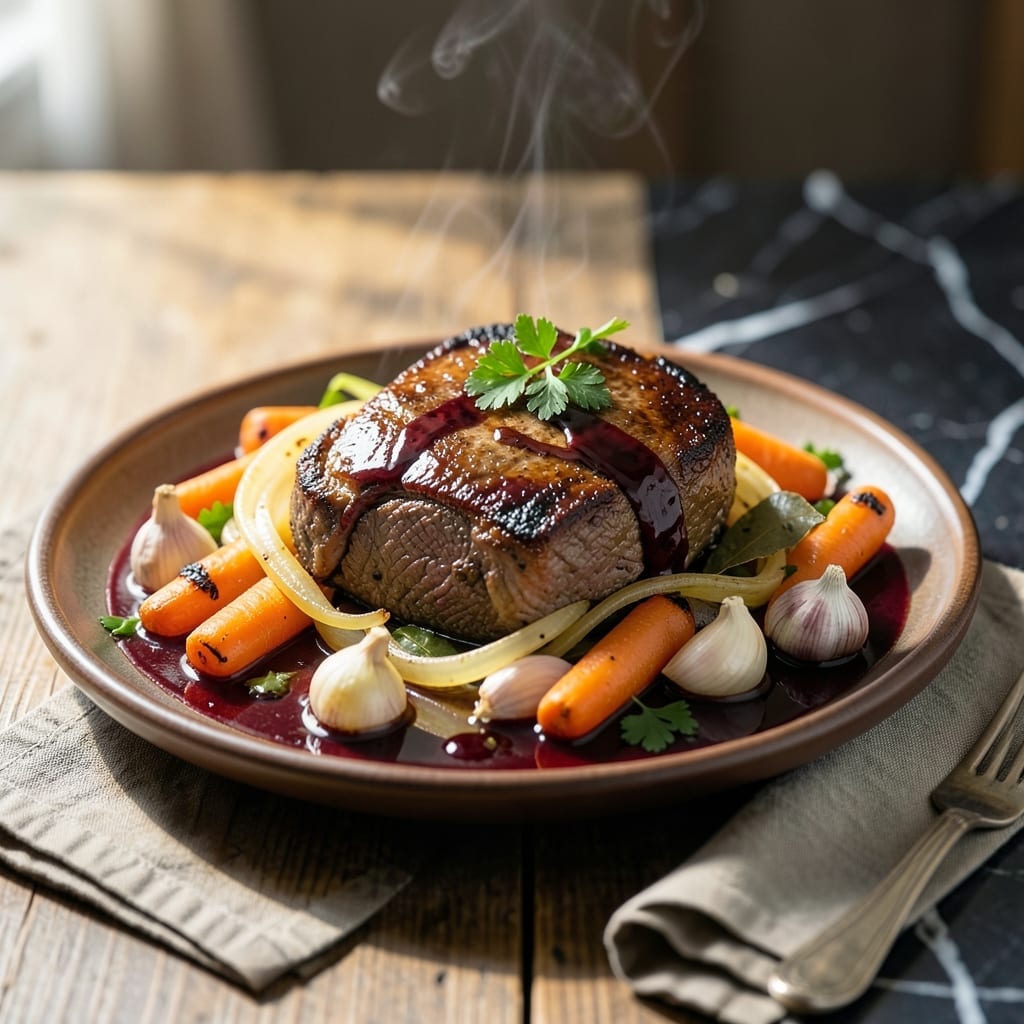
There’s a reason this Portuguese pot roast has been passed down through generations—its deep, wine-infused richness is unmatched. The slow braise transforms tough cuts into fall-apart tender meat, while garlic and herbs build layers of flavor.
What sets this dish apart is the red wine marinade, which tenderizes the beef overnight and creates a luxuriously thick sauce. The low-and-slow cooking method ensures every bite is infused with bold, comforting warmth.
By the time it’s done, the meat will be melt-in-your-mouth tender, and the sauce will have reduced into a velvety glaze. The aroma alone will have everyone gathered at the table, ready to dig in.
Serve with crusty bread or roasted potatoes to soak up every last drop. Here’s how to make this timeless classic at home.
Ingredients for Portuguese Pot Roast
A few quality ingredients and time create this deeply flavorful Portuguese classic.
| Ingredient | Amount | Notes |
|---|---|---|
| Beef Chuck Roast 🥩 | 2 ½ lb | Tough cut for braising, well-marbled |
| Red Wine 🍷 | 2 cups | Dry bold variety like Cabernet |
| Garlic Cloves 🧄 | 8 cloves | Peeled and smashed for marinade |
| Large Yellow Onion 🧅 | 1 whole | Thinly sliced for sauce |
| Carrots 🥕 | 3 whole | Peeled and cut into chunks |
| Bay Leaves 🍃 | 2 pieces | Dried for aromatic depth |
| Dried Thyme 🌿 | 1 tbsp | Rubbed between fingers to release oils |
| Dried Rosemary 🌿 | 1 tbsp | Crushed lightly before adding |
| Beef Stock 🥘 | 2 cups | Low-sodium preferred for control |
| Tomato Paste 🍅 | 2 tbsp | For richness and color |
| Olive Oil 🫒 | 2 tbsp | For searing and sautéing |
| Kosher Salt 🧂 | 1 ½ tsp | Divided for seasoning layers |
| Black Pepper 🌶️ | 1 tsp | Freshly ground for best flavor |
| All-Purpose Flour 🌾 | 2 tbsp | For thickening the sauce |
The beef is everything here. Chuck roast with good marbling (look for bright red meat with white fat streaks) is ideal—it breaks down beautifully during the long braise. Most butchers will cube it for you if asked. Whole Foods and Costco carry excellent pre-cut options. Don’t trim the fat; it adds richness to the sauce as it renders. Buy a day ahead so the wine marinade can work overnight magic.
No red wine? Beef stock with 2 tbsp balsamic vinegar mimics the acidity and depth. Short on time? Skip the marinade and add an extra cup of stock during braising. Fresh herbs can replace dried at triple the amount, but dried are honestly more reliable here. The tomato paste can be tomato sauce reduced by half if that’s what you’ve got open in the fridge.
Leftovers actually improve overnight as flavors meld. Refrigerate in an airtight container for up to 4 days or freeze for 3 months. Reheat gently on the stove with a splash of stock to revive the sauce. The meat shreds easily for sandwiches or tacos the next day (don’t knock it till you try it).
Why You’ll Love This Recipe
- One Pot Wonder: I toss everything in the Dutch oven—beef, wine, garlic, onions, carrots—then let the oven do the work.
- Wine-Infused Depth: That red wine and garlic combo? It turns the chuck roast into something ridiculously tender and rich.
- Feeds a Crowd: I made it for Sunday dinner and had enough for sandwiches the next day.
- Budget Friendly: Chuck roast is affordable, and the veggies stretch it even further.
Step-by-Step Instructions for Portuguese Pot Roast
Here’s the method. Straightforward, tested, works every time.
Step 1: Sear and Season the Beef Chuck Roast
Pat the 2.5 lb Beef Chuck Roast dry with paper towels, then season both sides with 1 tsp Kosher Salt and ½ tsp Black Pepper. Heat the 2 tbsp Olive Oil in a heavy pot over medium-high heat until shimmering.
Sear the roast for 4-5 minutes per side until deeply browned on all surfaces. This creates a rich fond that will deepen the sauce later. Remove the roast to a plate and set aside.
Step 2: Build the Aromatic Base
In the same pot, add the 1 whole Large Yellow Onion (thinly sliced), 3 whole Carrots (peeled and cut into chunks), and 8 cloves Garlic Cloves (peeled and smashed). Cook over medium heat for 5-6 minutes until the onion softens and begins to caramelize.
Add the 2 tbsp Tomato Paste and cook for 1-2 minutes, stirring constantly, until it darkens slightly. Stir in the 1 tbsp Dried Thyme, 1 tbsp Dried Rosemary, and 2 pieces Bay Leaves to bloom their flavors.
Step 3: Deglaze and Braise
Pour in the 2 cups Red Wine and scrape up all the browned bits from the bottom of the pot. Let it simmer for 2-3 minutes until the liquid reduces by about half.
Return the seared roast to the pot. Add the 2 cups Beef Stock and the remaining ½ tsp Kosher Salt and ½ tsp Black Pepper. The liquid should come about halfway up the roast—add a splash of stock if needed.
Step 4: Slow Cook to Tenderness
Cover the pot and reduce the heat to low. Simmer gently for 2.5-3 hours, turning the roast every 45 minutes to ensure even cooking. The meat is done when it shreds easily with a fork and the internal temperature reaches 195-200°F.
Near the end of cooking, mix the 2 tbsp All-Purpose Flour with 2 tbsp of the braising liquid to create a slurry. Stir this into the pot and simmer for 5 minutes until the sauce thickens slightly.
Step 5: Rest and Serve
Transfer the roast to a cutting board and tent loosely with foil. Let it rest for 10-15 minutes while you skim any excess fat from the sauce. Slice the roast against the grain and serve with the rich, wine-infused sauce and tender vegetables.
The sauce should coat the back of a spoon with a velvety texture. Adjust seasoning with additional Kosher Salt or Black Pepper if needed before serving.
Pro Tips For Making Portuguese Pot Roast
- Sear the Chuck First: I learned this the hard way—browning the beef chuck in batches with about 2 tablespoons of oil until deeply caramelized adds a richness that slow-cooking alone can’t achieve.
- Use Bold Red Wine: Skip the cooking wine and go for a dry, drinkable Portuguese red like a Douro or Alentejo; the flavor difference is noticeable, and it’s worth the extra few dollars.
- Don’t Rush the Braise: After adding the wine and veggies, keep the heat low—just a gentle simmer for 3 to 4 hours. A rolling boil toughens the meat, and I’ve ruined a few roasts by cranking the heat too high.
- Smash the Garlic: Instead of mincing, lightly smash the garlic cloves with the side of your knife. It releases the aroma without turning bitter, and you can easily pull the cloves out before serving if you prefer.
Regional Styles of This Recipe
Alentejo Tradition
The Alentejo region adds pimentão (smoked paprika) for depth. I use 1 tbsp toasted in the pot with the tomato paste. The smoky aroma pairs perfectly with the red wine. This version often includes olives for briny contrast.
Minho Approach
Northern Minho uses vinho verde (young white wine) instead of red. The lighter wine creates a brighter sauce. I add 1 tsp lemon zest to enhance the citrus notes. The result is still rich but more refreshing.
Azores Island Twist
On the islands, they incorporate 1 cup pineapple juice for sweetness. The acidity tenderizes the meat beautifully. I also add 1 tsp ground cumin for warmth. The pineapple flavor subtly complements the beef. 🌟
Lisbon Style
In Lisbon, 1 tbsp red wine vinegar is added at the end for brightness. The vinegar cuts through the richness without overpowering. I also notice they prefer serving with crusty bread rather than potatoes.
Algarve Variation
The southern coast adds 1 tsp ground coriander and 1 tsp smoked paprika for North African influence. The spices reflect the region’s historical trade connections. I love the warm, earthy notes these bring.
Madeira Method
Madeira island uses local Madeira wine instead of regular red. The fortified wine adds caramelized depth. I use 1.5 cups for the perfect balance. The sauce becomes luxuriously rich and complex. 💫
Nutrition Facts
Frequently Asked Questions
Can I use a different cut of meat?
Brisket or short ribs work well, but adjust cooking to 3-4 hours. Avoid lean cuts like sirloin—they dry out during braising. Chuck remains the best choice for tenderness and flavor.
What if I don’t have red wine?
Substitute with 2 cups beef stock plus 2 tbsp balsamic vinegar for acidity. The flavor will be milder but still rich. Avoid white wine—it lacks the depth needed.
How do I know when it’s done?
The meat should reach 195-200°F internally and shred easily with a fork. If it resists, cook for another 30 minutes and check again.
Can I make this in a slow cooker?
Yes! Sear the meat first, then transfer everything to the cooker. Use low heat for 8 hours or high for 5-6 hours for the same tender results.

- 4C Bread Crumbs Meatballs Recipe: Crispy Crust and Juicy Centers - September 25, 2026
- 6 Oz Chocolate Chip Cookie Recipe: Perfectly Balanced Crispy Edges and Chewy Hearts - September 25, 2026
- 6-Inch Coffee Cake Recipe: Vanilla Bean Swirls and Buttery Streusel Topping - September 25, 2026