
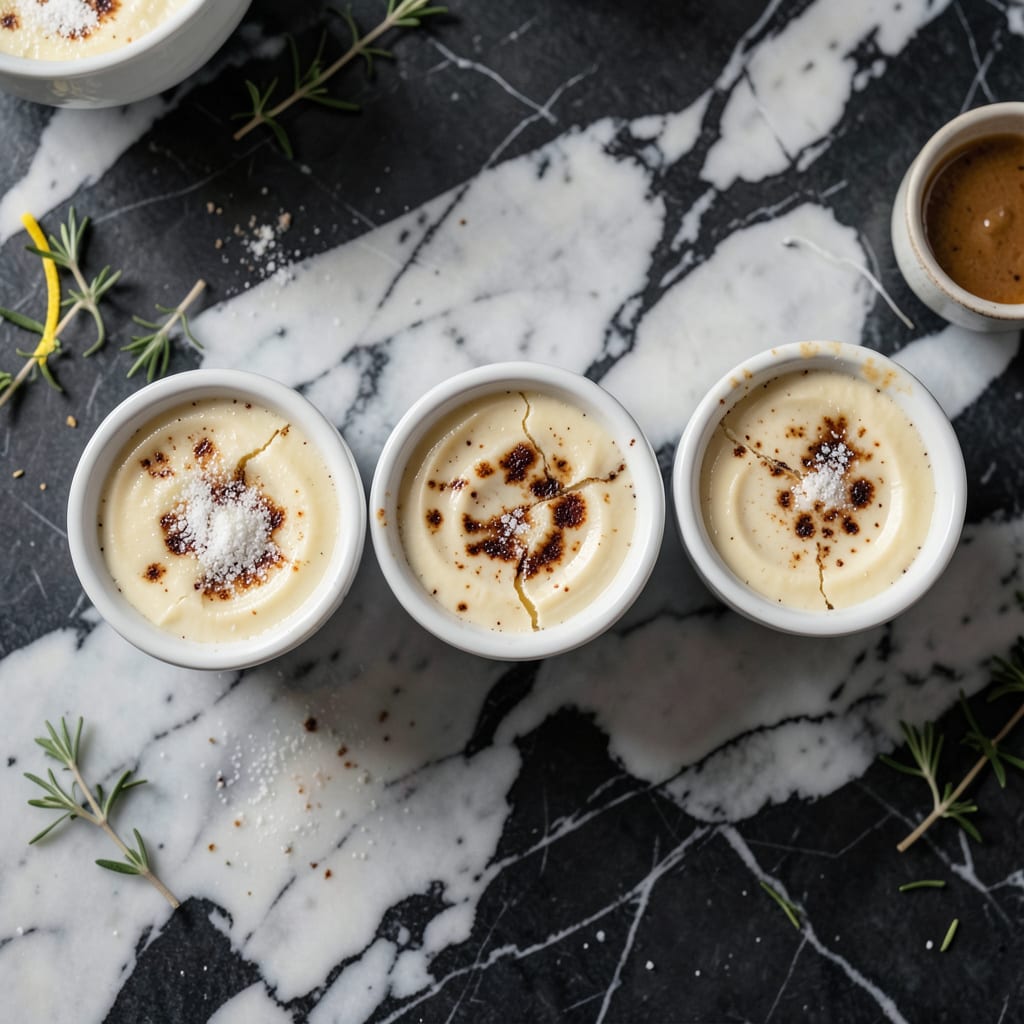
This classic French custard delivers velvety texture with minimal effort. The vanilla bean elevates simple ingredients into something extraordinary.
Baked at a low temperature, the custard sets perfectly every time. The result is a smooth, rich dessert that’s deceptively easy to make.
Ingredients for Pot Au Creme
Rich dairy and vanilla bean create this luxurious French custard with minimal effort.
| Ingredient | Amount | Notes |
|---|---|---|
| Whole Milk 🥛 | 2 cups | Full-fat for creaminess |
| Heavy Cream 🥛 | 1 cup | Cold, at least 36% fat |
| Granulated Sugar 🍚 | ½ cup | Fine white sugar preferred |
| Vanilla Bean 🌿 | 1 whole | Split and scraped |
| Large Eggs 🥚 | 4 whole | Room temperature |
| Egg Yolks 🥚 | 4 whole | From large eggs |
| Pure Vanilla Extract 🌿 | 1 tsp | For depth of flavor |
| Pinch of Salt 🧂 | 1 pinch | Enhances sweetness |
[recipeingredientscaler]
The vanilla bean is non-negotiable for authentic flavor. Look for plump, moist pods at Whole Foods or specialty grocers—dry, brittle ones lack aroma. Whole milk and heavy cream must be full-fat; low-fat versions produce a thin, watery custard. For the best texture, use organic eggs from pasture-raised hens if available.
No vanilla bean? Use 1 tablespoon pure vanilla extract instead (not imitation). Substitute half-and-half for the milk if that’s what’s on hand. The sugar can be superfine for an even smoother texture, but regular granulated works fine. Avoid overmixing the eggs to prevent bubbles in the final custard.
The custard keeps 3-4 days refrigerated in an airtight container. For best results, let it come to room temperature before serving to fully appreciate the velvety texture. Do not freeze—it will separate upon thawing.
Why You’ll Love This Recipe
- One Pot Wonder: I just mix the eggs, cream, and sugar, then let the oven do the work—no whisking for hours like old-school custard.
- Velvety Vanilla: That real vanilla bean flecked throughout? It turns simple milk and cream into something luxuriously smooth.
- Make Ahead Magic: Honestly, it tastes even better the next day, so I always prep it the night before a dinner party.
- Pantry Staples: Between us, I almost always have eggs, milk, and sugar on hand—this is my last-minute dessert lifesaver.
Step-by-Step Instructions for Pot Au Creme
Master the technique for this classic French custard with precise temperature control and careful timing.
Step 1: Infuse the Dairy with Vanilla
In a medium saucepan, combine the 2 cups Whole Milk, 1 cup Heavy Cream, and 0.5 cup Granulated Sugar. Split the 1 whole Vanilla Bean lengthwise with a sharp knife, scrape out the seeds, and add both seeds and pod to the pan.
Heat over medium heat until small bubbles form around the edges and the mixture reaches 180°F. This gentle heating allows the vanilla to fully infuse the dairy without scalding. Stir occasionally to dissolve the sugar completely. Remove from heat, cover, and let steep for 15 minutes to intensify the vanilla flavor.
Step 2: Temper the Eggs for a Smooth Custard
In a large bowl, whisk together the 4 whole Large Eggs, 4 whole Egg Yolks, 1 tsp Pure Vanilla Extract, and 1 pinch Pinch of Salt until the mixture is pale and slightly thickened. This creates the custard base with a silky texture.
Slowly pour about 1 cup of the warm milk mixture into the egg mixture while whisking constantly. This tempering process prevents the eggs from curdling when exposed to heat. Continue adding the remaining milk mixture in a steady stream, whisking continuously until fully combined and smooth.
Step 3: Cook the Custard to the Perfect Consistency
Return the combined mixture to the saucepan and cook over low heat, stirring constantly with a wooden spoon or silicone spatula. The goal is to reach 170-175°F—this is the ideal temperature range where the custard thickens enough to coat the back of a spoon without curdling.
Watch for the first sign of thickening, which typically occurs after 8-12 minutes. The custard should leave a clear path when you run your finger through it on the spoon. Remove from heat immediately at this stage to prevent overcooking, which would result in a lumpy or grainy texture.
Step 4: Strain and Chill for Optimal Texture
Immediately strain the custard through a fine-mesh sieve into a clean bowl to remove the vanilla pod and any potential cooked bits of egg. This ensures an ultra-smooth final product, a hallmark of proper Pot Au Creme.
Press plastic wrap directly onto the surface of the custard to prevent a skin from forming. Chill in the refrigerator for at least 4 hours, or preferably overnight. This extended chilling time allows the flavors to fully develop and the texture to set properly, resulting in a creamy, spoonable custard with a luxurious mouthfeel.
Pro Tips For Making Pot Au Creme
- Temper the Eggs: Whisk a spoonful of the hot cream mixture into the eggs first—this keeps them from scrambling when you combine everything. I learned this the hard way after ruining a batch with stringy egg bits.
- Use Real Vanilla: Skip the extract and scrape a fresh vanilla bean; the flecks and flavor are worth the extra minute. Sounds fussy, but it actually changes the outcome.
- Strain the Custard: Pour the mixture through a fine-mesh sieve before baking to remove any stray egg strands or vanilla pod bits. Does it look weird? Yes. Does it work? Every single time.
- Bake in a Water Bath: Set your ramekins in a deep dish and fill it with hot water halfway up their sides—this guarantees even, gentle heat so the custard sets without curdling. My grandmother swore by this, and she was right.
Make-Ahead Tips for This Dish
Prep Ahead Strategy
You can infuse the dairy mixture with vanilla up to 2 days ahead. Store it covered in the fridge, then gently reheat to 180°F before tempering the eggs. This head start makes day-of prep a breeze.
Custard Base Prep
Whisk and temper your eggs the night before, storing them covered in the fridge. The next morning, simply combine with the warm dairy mixture and proceed with cooking. This saves 10-15 minutes of active prep time.
Chilling Time Management
If you’re short on time, divide the strained custard into individual ramekins before chilling. The increased surface area cools it faster—typically 2-3 hours vs. overnight for a large batch. 💡
Portion Control
For easy serving, pour the custard into 4-ounce ramekins before chilling. This also creates elegant individual portions. I use Le Creuset stoneware for both baking and serving.
Flavor Development
Making this a day ahead actually improves the flavor. The vanilla has more time to meld with the dairy, creating a richer, more complex custard. Just give it a good stir before serving.
Last-Minute Tips
If you need to serve it sooner, place the chilled custard in an ice bath for 30 minutes to speed up the process. Avoid freezing—it alters the texture permanently. ❄️
Nutrition Facts
Frequently Asked Questions
Can I use vanilla extract instead of a vanilla bean?
Yes, substitute 1 tablespoon pure vanilla extract for the bean. Add it with the eggs in step 2. The flavor will be slightly less complex but still delicious.
Why does my custard have lumps?
Lumps usually mean the eggs curdled from too-high heat or uneven tempering. Always temper slowly and cook below 175°F. Straining removes any small lumps.
How long can I store the finished custard?
It keeps 3-4 days refrigerated in an airtight container. Press plastic wrap directly on the surface to prevent a skin from forming.
Can I make this in individual ramekins?
Divide the strained custard into 4-ounce ramekins before chilling. This speeds up cooling and creates elegant single servings.

- 6 Oz Chocolate Chip Cookie Recipe: Perfectly Balanced Crispy Edges and Chewy Hearts - September 25, 2026
- 6-Inch Coffee Cake Recipe: Vanilla Bean Swirls and Buttery Streusel Topping - September 25, 2026
- 1 Hour Soup Recipe: Velvety Richness Without the Wait - September 25, 2026